


 Bekijk op ware grootte
 Verstuur
 Delen
Delen
 Details bekijken
 Gids voor studentenkunstwerken

 Download
 Vergelijkbare items
 Röntgenonderzoek
 Diavoorstelling
 Statistieken
The Spanish Gypsy


Robert Henri's "The Spanish Gypsy" captures a Roma woman’s defiant spirit with striking realism. Explore the painting's story, inspired by Henri's time in Madrid and his empathy for marginalized communities.
 Lees meer
Robert Henri (1865-1929): een Amerikaanse schilder van de Ashcan School die het Amerikaanse realisme versterkte met zijn rauwe en eerlijke portretten & stadsgezichten.
Giclée / Kunstafdrukken
Giclée- of canvasafdruk van museumkwaliteit met een snelle productie en flexibele afwerkingsmogelijkheden. ( Koop handgeschilderd kunstwerk Schakel over naar digitale afbeeldingen)




P118B €10

P118H €10

P118W €10

P438Z €10

P508JH €12

P508YH €12

P805H €10

P805Z €10

P919BZ €10

P919G €10

P919XJ €10

P959ZH €10

P968JZ €12

W106C €8

W218G €10

W218JH €8

W218Y €10

W307PJ €10

W316G €10

W316PJ €8

W316Y €10

W398PJ €8

W4111J €10

W500HY €15

W500JH €15

W692G €12

W849H €8

W940BG €15

W953PJ €8




Standaardformaat
op maat gemaakt
CM
INCH
Kies uit onze vooraf ingestelde maten die overeenkomen met de originele verhoudingen van het kunstwerk.
Loading sizes...

breedte
hoogte
U kunt uw eigen afmetingen opgeven om in een specifieke lijst of ruimte te passen. Als de door u gekozen maat niet overeenkomt met de proporties van het originele kunstwerk, zullen wij de afbeelding bijsnijden of uitbreiden met een gespiegelde of effen rand. Een digitaal mockup wordt ter goedkeuring naar u verzonden voordat de productie begint.
Houd er rekening mee dat de preview op het scherm de werkelijke bijsneding of uitbreiding niet weergeeft. Alleen de mockup toont de uiteindelijke compositie nauwkeurig.
Hoewel aangepaste maten beschikbaar zijn, raden wij aan een afmeting uit de vooraf bepaalde lijst te kiezen om de originele proporties te behouden.
Wereldwijde levering () binnen 2 weken in plaats van de standaard 4/5 weken. (12 oktober)

Gratis wereldwijde expressverzending

Hoogwaardig linnen canvas

Volledige verzendverzekering

Garantie op terugbetaling van invoerrechten

Garantie op exacte kleurweergave

Retourbeleid van 100 dagen (alleen bij defecten)

100% Geld-terug-garantie

Korting bij meerdere afnames
 De optie voor glas is alleen beschikbaar bij een formaat kleiner dan 110 cm.

The Spanish Gypsy
Giclée / Kunstafdrukken
Formaat reproductie
-


Totaalprijs
€ 60
A Glimpse into the Soul: Robert Henri’s “The Spanish Gypsy”
Robert Henri's "The Spanish Gypsy," painted in 1912, isn’t merely a portrait; it’s a carefully constructed tableau of observation and empathy. This arresting image captures a young woman from Madrid’s Roma community, a figure rendered with an uncommon directness that speaks volumes about Henri’s commitment to American Realism – a movement he championed as a rejection of academic art's idealized forms. The painting immediately draws the viewer in, not through grand gestures or dramatic lighting, but through the quiet intensity of her gaze and the subtle details of her attire. Henri wasn’t interested in romanticizing poverty or exoticizing the Roma; instead, he sought to present her as a fully realized human being, imbued with dignity and an unspoken story.
The Ashcan School and the Champion of the Marginalized
To understand “The Spanish Gypsy,” one must appreciate Robert Henri’s place within the Ashcan School. Emerging in New York City around 1908, this group of artists – including George Bellows, John Sloan, and Charles Demuth – deliberately rejected the polished surfaces and historical subjects favored by the established art world. They sought to depict everyday life, particularly the lives of working-class Americans and marginalized communities. Henri’s early life, marked by instability and a deliberate severance from his past identity as Robert Cozad, profoundly shaped this perspective. His experiences instilled within him a deep understanding of displacement and resilience – qualities he powerfully conveyed through his art. The painting reflects this ethos; it's not about judging or presenting the Roma as ‘other,’ but rather offering a respectful and intimate portrayal of a woman living on the fringes of society.
Henri’s decision to paint in Madrid during the summer of 1912 was deliberate. He sought out this community, recognizing their inherent dignity and strength. He famously described her as entering his studio “with austere defiance,” suggesting a quiet resistance to being objectified or reduced to a stereotype. This encounter highlights Henri's belief that genuine art arises from direct observation and an honest engagement with the subject matter.
Decoding Symbolism: Color, Gesture, and Narrative
The painting’s composition is deceptively simple yet remarkably effective. The woman sits in a plain chair – a symbol of her relative lack of privilege, but also of quiet strength. Her pink dress, though modest, possesses a vibrant hue that draws the eye and hints at an underlying vitality. Henri's masterful use of oil paint creates a rich texture and depth, particularly evident in the folds of her clothing and the subtle variations in skin tone. The background is deliberately muted, drawing attention to the subject’s face – a focal point where Henri captures a complex range of emotions: curiosity, perhaps a hint of sadness, and an undeniable sense of self-possession.
The presence of the two other figures—a man standing behind her and another further back—adds layers of narrative ambiguity. Are they guardians, observers, or simply part of her world? Henri leaves these details intentionally vague, inviting the viewer to project their own interpretations onto the scene. The chair itself is a key element; it’s not an ornate piece of furniture but a functional object, grounding the figure in reality and emphasizing her connection to everyday life.
A Legacy of Honest Representation
“The Spanish Gypsy” remains a powerful testament to Robert Henri's artistic vision. It’s a painting that transcends its subject matter to offer a profound meditation on identity, resilience, and the dignity of ordinary people. Henri’s commitment to portraying his subjects with honesty and empathy paved the way for future generations of American artists who sought to capture the complexities of modern life. Today, reproductions of this iconic work continue to resonate with viewers, reminding us of the importance of looking beyond superficial appearances and recognizing the humanity in all individuals.
Vragen & Antwoorden
Bij welke kunststroming behoort "The Spanish Gypsy" door Robert Henri?
"The Spanish Gypsy" is een werk uit de American Realism. De stroming geeft de artistieke traditie aan waartoe het werk behoort.
Waar gaat "The Spanish Gypsy" over?
"The Spanish Gypsy" door Robert Henri toont: gypsy, woman, portrait, spain, ethnicity, interior, clothing, expression.
Hoe komen contrast en harmonie samen in "The Spanish Gypsy"?
De kleuranalyse van "The Spanish Gypsy" door Robert Henri legt een Serene contrast en een Strong Color Unity harmonie vast.
Wat is de creatiedatum van "The Spanish Gypsy" door Robert Henri?
"The Spanish Gypsy" door Robert Henri werd gemaakt in 1912.
Wat deelt "The Spanish Gypsy" met het overige werk van Robert Henri?
"The Spanish Gypsy" behoort tot het American Realism-werk van Robert Henri, waarvan de bekende thema's onder meer ashcan school realism, american life, roma culture, social empathy, urban poverty, marginalized people, henri’s social commentary, portraits” omvatten.
Kan ik "The Spanish Gypsy" bekijken als een diavoorstelling op volledig scherm?
Er is een diavoorstelling beschikbaar: de Diavoorstelling-pagina van "The Spanish Gypsy" door Robert Henri.
Hoe kan ik een digitaal bestand van "The Spanish Gypsy" door Robert Henri verkrijgen?
"The Spanish Gypsy" is verkrijgbaar als een download van een digitale afbeelding in hoge resolutie, direct te koop op deze pagina.
Hoe sterk is het contrast in "The Spanish Gypsy" door Robert Henri?
Het licht-donkercontrast van "The Spanish Gypsy" wordt weergegeven als Serene. Contrast beschrijft hoe sterk de lichte en donkere vlakken van elkaar verschillen.


Biografie van de kunstenaar
A Turbulent Genesis: The Early Life of Robert Henri
Robert Henri, eigenlijk Robert Henry Cozad (Cincinnati, 24 juni 1865 – New York, 12 augustus 1929) was een Amerikaans kunstschilder. Aanvankelijk werd hij beïnvloed door het impressionisme, later schakelde hij over op een meer realistische werkwijze, waarbij hij typisch Amerikaanse thema’s koos.- Vroege jaren: Henri werd geboren als zoon van een onroerendgoedmakelaar. Zijn vader stichtte in 1871 het stadje Cozzadale in Ohio en in 1873 Cozad in Nebraska. In 1882, toen Robert nog maar tien jaar oud was, raakte het gezin betrokken bij een conflict met een rancher, Alfred Pearson, over de rechten op land dat de familie bezat. Het gevolg was een fatale schietpartij, waarbij John Cozad Pearson doodschoot. De spanningen in de gemeenschap waren zo groot dat de familie vluchtte en hun identiteit veranderde. De vader werd Richard Henry Lee, en zijn zonen werden Frank Southern en Robert Henri – namen die bedoeld waren om de connectie met het schandaal te verbreken.
- Nieuwe start in New York: De familie vestigde zich in New York City en later in Atlantic City, waar Robert zijn artistieke talent begon te ontwikkelen. Hij studeerde aan de Pennsylvania Academy of the Fine Arts onder leiding van Thomas Anshutz en Thomas Hovenden, waarbij hij sterk werd beïnvloed door de realistische stijl van Thomas Eakins, die eerder was ontslagen bij de academie vanwege zijn openhartige weergave van anatomie en nagenoeg nude figuren.
Forging a New Vision: Artistic Development and Influences
- Studie in Parijs: In 1888 verliet Henri voorgoed Amerika en reisde hij naar Parijs, waar hij zich liet onderdompelen in de moderne kunststromingen. Hij studeerde aan de Académie Julian en later aan de École des Beaux-Arts. Hoewel hij aanvankelijk werd aangetrokken door de academische traditie, vond hij zijn weg naar het impressionisme en de invloed van schilders als William-Adolphe Bouguereau en François Millet.
- De zoektocht naar authenticiteit: Henri was echter niet tevreden met het simpelweg kopiëren van wat hij zag. Hij zocht een diepere betekenis in zijn kunst, een manier om niet alleen de vluchtige effecten van licht vast te leggen, maar ook de rauwe emotie en vitaliteit van het moderne leven. Deze zoektocht leidde hem tot een meer expressieve benadering, beïnvloed door de Nederlandse realist Franz Hals, wiens losse penseelstijl en psychologische diepgang hem bijzonder aanspraken. Hij begon te experimenteren met *pochades*, kleine houten panelen die hij gebruikte voor snelle schetsen, waardoor spontaniteit en directheid in zijn werk werden bevorderd.
Championing the Real: The Ashcan School and “The Eight”
- De opkomst van de Ashcan School: Robert Henri’s impact op de Amerikaanse kunstwereld ging verder dan zijn eigen schilderijen; hij werd een katalysator voor verandering, uitdaagend aan de conservatieve normen van de gevestigde kunstwereld. Hij was een sleutelfiguur in de opkomst van de Ashcan School – een groep kunstenaars die durfden om de ruwe realiteit van stedelijk leven te portretteren, van bruisende stadsstraten tot overvolle achterkamers. Henri’s toewijding aan realisme en zijn afwijzing van academische pretenties leidden ertoe dat hij in 1908 “The Eight” organiseerde – een collectief van gelijkgestemde kunstenaars, waaronder William Glackens, George Luks en Everett Shinn, die als protest tegen de restrictieve beleidslijnen van de National Academy of Design een onafhankelijke tentoonstelling organiseerden. Dit daad van verzet markeerde een keerpunt in de Amerikaanse kunstgeschiedenis, signalerend een verschuiving weg van Europese dominantie naar een uniek Amerikaans artistiek stemgeluid.
- De “Eight” en hun visie: De leden van "The Eight" streefden ernaar om de onopvallende aspecten van het dagelijks leven vast te leggen, vaak met een scherp oog voor detail en een eerlijke weergave van de harde realiteit. Hun werk werd gekenmerkt door een directe, ongefilterde stijl die in contrast stond met de idealistische representaties die door de gevestigde orde werden gepromoot.
Legacy and Enduring Influence
Robert Henri’s nalatenschap is immens. Als leraar inspireerde hij een indrukwekkende reeks talent, waaronder Joseph Stella, Edward Hopper, Rockwell Kent en George Bellows – kunstenaars die de loop van de 20e-eeuwse kunst vormgaven. Zijn boek *The Art Spirit*, gepubliceerd postuum in 1923, blijft een fundamenteel tekstboek voor aspirant-kunstenaars, met tijdloze wijsheid over observatie, techniek en het belang van artistieke integriteit. Henri’s toewijding aan het vastleggen van de realiteit met eerlijkheid en empathie, zijn afwijzing van conventies en zijn onwrikbare geloof in de kracht van kunst om verbinding te maken met het publiek, blijven kunstenaars vandaag de dag inspireren. Zijn schilderijen zijn niet alleen representaties van de werkelijkheid; ze zijn vensters op de menselijke conditie – getuigenissen van de schoonheid, strijd en veerkracht van de menselijke geest. Hij heeft een onuitwisbare stempel gedrukt op de Amerikaanse Realisme, waardoor de weg vrij werd gemaakt voor een meer democratische en inclusieve kunstwereld die de alledaagse ervaringen van gewone mensen vierde. Zijn nalatenschap leeft voort niet alleen door zijn eigen meesterwerken, maar ook door de talloze kunstenaars die hij inspireerde om hun eigen stemmen te vinden en hun eigen verhalen te vertellen.
Robert Henri
1865 - 1929 , Verenigde Staten van Amerika
Snelle feiten
- Artistic Movement Or Style: Ashcan School, Realisme
- Artists Or Movements Influenced By This Artist:
- Hals
- The Eight
- Artists Who Influenced This Artist:
- Bouguereau
- Millet
- Date Of Birth: 24 juni 1865
- Date Of Death: 12 augustus 1929
- Full Name: Robert Henry Cozad
- Nationality: Amerikaans
- Notable Artworks:
- Woman in Manteau
- La Neige
- Sissy in Yellow
- Place Of Birth: Cincinnati, USA
Gerelateerde artikelen
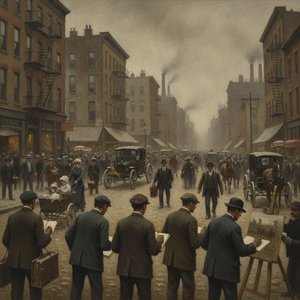
The Ashcan School: Capturing the Raw, Unfiltered Soul of Urban Life through American Realism
Discover the raw beauty of the Ashcan School. Explore how masters like Bellows and Henri captured the gritty, vibrant soul of early 20th-century New York through profound American Realism and evocative urban landscapes.

Capturing the Grey Light: A Journey Through the Soulful Atmosphere of the Hague School
Explore the evocative beauty of the Hague School. Discover how Dutch masters captured the soulful 'grey light' through atmospheric realism and tonalism, paving the way for Impressionism. A deep dive into the misty landscapes and emotional depth of this legendary art movement.

The Raw Truth: A Definitive Guide to the Power and Legacy of Social Realism Art
Explore the profound impact of Social Realism. Discover how masters like Courbet rejected idealism to capture the raw, socio-political truths of the working class through powerful, unvarnished art history and enduring visual critique.

The Unvarnished Truth: A Cultural Journey Through the Soul of American Realism
Explore the profound beauty of American Realism. From the Ashcan School's urban grit to intimate portraits, discover how artists captured the authentic soul of a nation through unvarnished truth and masterful observation.
Ontdek kunstwerken georganiseerd op thema, stijl en kenmerk.
