


 Bekijk op ware grootte
 Verstuur
 Delen
Delen
 Details bekijken
 Gids voor studentenkunstwerken

 Download
 Vergelijkbare items
 Röntgenonderzoek
 Diavoorstelling
 Statistieken
Matilda Lucas
 Impressionism
 31.0 x 26.0 cm
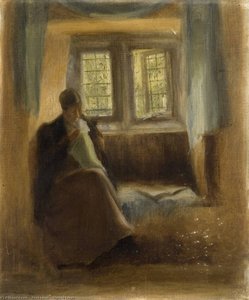
Oil painting by Rosa Lucas depicting an elderly woman’s quiet contemplation. Impressionistic style, soft light & evocative mood. Explore this serene domestic scene.
Rosa Lucas: German Renaissance painter & printmaker. Court artist to Saxony, known for portraits & Reformation art. Explore her legacy at the National Academy of San Luca.
 Lees meer
De kunstwerken die op deze pagina worden weergegeven, zijn beschermd door de auteursrechtwetgeving, wat betekent dat het ons wettelijk niet is toegestaan om identieke reproducties te maken of te verkopen. Deze bescherming wordt gehandhaafd onder internationale overeenkomsten zoals de Conventie van Bern en door nationale wetgeving, waaronder de bepalingen van de Amerikaanse auteurswet - Titel 17. Alle rechten voorbehouden. Reproduceren of distribueren van afbeeldingen is niet toegestaan zonder uitdrukkelijke schriftelijke toestemming van WahooArt.com en de rechthebbenden.
Als een respectvol en legaal alternatief bieden wij op maat gemaakte, handgeschilderde kunstwerken aan die geïnspireerd zijn op het origineel. Onze bekwame en professionele kunstenaars bestuderen zorgvuldig de stijl, sfeer en artistieke essentie van het origineel om een nieuw, uniek werk te creëren dat dezelfde emotie oproept – terwijl het een op zichzelf staande, originele creatie blijft.
Deze methode voldoet volledig aan de auteursrechtwetgeving, omdat het niet gaat om het kopiëren of dupliceren van het beschermde kunstwerk. In plaats daarvan is er sprake van een creatieve herinterpretatie — een nieuw schilderij dat door het origineel wordt geïnspireerd, maar er niet identiek aan is.
Handgemaakte olieverfreproductie
Met de hand geschilderd in olieverf op canvas in uw gewenste maat en lijst, op bestelling gemaakt door onze kunstenaars. ( Schakel over naar print Schakel over naar digitale afbeeldingen)




































Standaardformaat
op maat gemaakt
CM
INCH
Kies uit onze vooraf ingestelde maten die overeenkomen met de originele verhoudingen van het kunstwerk.
Loading sizes...

breedte
hoogte
Voer de breedte en de hoogte in die u nodig heeft, passend bij uw lijst of uw muur. Dit is handgeschilderd, dus bij een afmeting met een andere vormverhouding kan de kunstenaar iets meer rondom het schilderij schilderen of juist iets meer weglaten — u kiest zelf. Wij sturen u een digitaal mockup ter goedkeuring voordat het schilderwerk begint. De afbeelding die op deze pagina wordt getoond, is niet het uiteindelijke resultaat — alleen de mockup geeft dit weer.
Voorbeelden van wat aangepast kan worden: Vervang het gezicht met een eigen foto; Voeg een huisdier toe (bijv. vervang de kat door een hond); Verwerk een verborgen boodschap in de achtergrond; Wijzig het landschap of andere elementen in de achtergrond.
Na de bestelling zal het team van TopImpressionists.com per e-mail contact opnemen met de klant voor instructies en een mockup-voorbeeld sturen.
Na de bestelling zal het team van TopImpressionists.com per e-mail contact opnemen met de klant voor instructies en een mockup-voorbeeld sturen.
Wereldwijde levering () binnen 3 tot 4 weken in plaats van de standaard 5 weken. (24 oktober). Zonder concessies aan de kwaliteit.

Gratis wereldwijde expressverzending

Hoogwaardig linnen canvas

Volledige verzendverzekering

Garantie op terugbetaling van invoerrechten

Garantie op exacte kleurweergave

Retourbeleid van 100 dagen (alleen bij defecten)

100% Geld-terug-garantie

Korting bij meerdere afnames
 De optie voor glas is alleen beschikbaar bij een formaat kleiner dan 110 cm.

Matilda Lucas
Reproductiemethode
Formaat reproductie
-


Totaalprijs
€ 236
Gerelateerde kunstwerken


Biografie van de kunstenaar
Rosa Lucas: A Renaissance of Light and Emotion
Rosa Lucas, a name perhaps less heralded than some of her contemporaries within the grand halls of 16th-century art, nevertheless carved out a significant and deeply personal space for herself as a painter and printmaker. Born in Germany during a period of immense artistic ferment – the tail end of the Northern Renaissance and the burgeoning influence of Italian Mannerism – Lucas’s work offers a unique blend of meticulous technique and intensely felt emotion. Her legacy isn't one of monumental commissions or courtly grandeur, but rather a quiet testament to her ability to capture fleeting moments of beauty, domestic tranquility, and profound human connection.
Lucas’s early life remains somewhat shrouded in the mists of historical record, though it is generally accepted that she received a solid artistic education within the workshops of prominent artists in Saxony. This training instilled in her a rigorous understanding of perspective, anatomy, and color theory – hallmarks of the Renaissance tradition. However, unlike many of her peers who diligently replicated established styles, Lucas quickly developed a distinctive approach, prioritizing emotional resonance over strict adherence to convention. Her subjects often centered on intimate scenes: portraits of women engaged in quiet contemplation, glimpses into domestic interiors bathed in soft light, and evocative depictions of everyday life.
The Court Artist of Saxony
Lucas’s career truly flourished during her tenure as a court artist for the Electorate of Saxony. This appointment, a considerable achievement for a woman in that era, afforded her access to influential patrons – including members of the ruling family and prominent nobility. Her commissions primarily consisted of portraiture, but these were not merely formal representations; they aimed to capture the inner lives and personalities of her subjects. She skillfully employed subtle gestures, expressive glances, and carefully chosen attire to convey a sense of character and mood. Her portraits frequently featured women – often members of the court or their families – rendered with remarkable sensitivity and psychological depth.
Beyond portraiture, Lucas also produced a substantial body of work in the medium of woodcut printmaking. These prints, characterized by their crisp lines and vibrant colors, served as both independent artworks and illustrations for devotional texts and illuminated manuscripts. Her prints frequently depicted religious scenes, but always with an emphasis on human emotion and experience rather than purely theological dogma. The influence of German Expressionism, a movement that would not emerge until centuries later, is subtly present in her use of color and the heightened emotional intensity of her compositions.
Technique and Style
Lucas’s artistic style can be described as a harmonious blend of Northern Renaissance realism and Italianate elegance. She possessed a remarkable command of oil paint, utilizing layering techniques to create rich textures and luminous effects. Her use of light is particularly noteworthy – she masterfully employed chiaroscuro (the contrast between light and dark) to sculpt forms, define volumes, and evoke a sense of atmosphere. Her compositions are typically balanced and harmonious, but never static; there’s always a feeling of movement or anticipation.
In her woodcuts, Lucas demonstrated an exceptional ability to render intricate detail with minimal lines. She skillfully manipulated the grain of the wood to create subtle tonal variations and achieve a remarkable sense of depth. Her prints are not simply reproductions of images; they are carefully crafted works of art in their own right.
Legacy and Influence
Despite her considerable talent, Rosa Lucas’s work has often been overshadowed by that of her male contemporaries. However, recent scholarship is beginning to recognize the unique contributions she made to the artistic landscape of 16th-century Germany. Her paintings and prints offer a valuable glimpse into the lives and experiences of women during this period – a perspective that is often missing from traditional art historical narratives.
Her work continues to be exhibited in museums across Europe, and her paintings are highly sought after by collectors. Rosa Lucas’s legacy lies not only in her artistic achievements but also in her quiet determination to forge a path for herself as an artist in a world dominated by men. She stands as a testament to the enduring power of individual creativity and the importance of recognizing the contributions of all artists, regardless of gender or social status.
Notable Works
- Dining Room at Stanegarth, Cumbria: A captivating impressionistic oil painting capturing a cozy, atmospheric interior.
- Hitchin Market: An evocative watercolor depicting a bustling European market scene.
- Matilda Lucas: Oil painting by Rosa Lucas depicting an elderly woman’s quiet contemplation.
Further Exploration
For more information about Rosa Lucas, we recommend visiting the National Academy of San Luca in Rome, where her work is prominently displayed. The museum's collection offers a comprehensive overview of her artistic career and provides valuable context for understanding her place within the broader history of art.
Snelle feiten
- Artistic Movement Or Style: Renaissance Painting
- Artists Or Movements Influenced By This Artist: ['Italian Renaissance']
- Artists Who Influenced This Artist: ['Lucas Cranach Elder']
- Full Name: Rosa Lucas
- Nationality: German
- Notable Artworks:
- Dining Room at Stanegarth
- Hitchin Market
- Matilda Lucas
- Place Of Birth: WahooArt
Gerelateerde artikelen

Painting with Light: How Impressionist Masterpieces Transform Your Home's Mood
Discover how Impressionist masterpieces transform your home's mood. Explore the luminous beauty of Monet and Renoir through our exquisite, hand-painted oil reproductions designed to bring light, warmth, and timeless elegance to your living space.

The Timeless Charm of Oil on Board: Reimagining Texture and Light through the Impressionist Lens
Discover the profound intimacy of oil on panel. Explore how Impressionist masters used rigid supports to capture light, texture, and impasto depth through exquisite, handmade oil reproductions for discerning collectors.

The Soul of Impressionism: Why Oil on Canvas Captures Eternal Light and Timeless Emotion
Discover the enchanting alchemy of Impressionism. Explore how the mastery of oil on canvas, through glazing and impasto, captures eternal light and emotion. Perfect for lovers of Monet and Van Gogh seeking the profound depth of hand-painted fine art.

The Timeless Beauty of Oil on Panel: Capturing Light and Texture through the Impressionist Lens
Discover the exquisite depth of oil on panel. Explore how Impressionist masters captured light and texture through tactile brushwork, and learn how to bring these museum-quality, hand-painted masterpieces into your home with expert curation.

From Fleeting Moments to Eternal Masterpieces: Transform Your Memories into Bespoke Impressionist Oil Paintings
Elevate your cherished memories with TopImpressionists.com. We transform your photos into exquisite, hand-painted Impressionist oil masterpieces. Experience the timeless texture of real brushstrokes and professional artistry to create a lasting legacy for your home.