


 Verstuur
 Delen
Delen
 Details bekijken
 Gids voor studentenkunstwerken

 Download
 Vergelijkbare items
 Diavoorstelling
 Statistieken
Dogia


Step back in time with this stunning studio shot of a vintage Salvatore Ferragamo shoe! Admire the intricate floral embroidery and classic design of this iconic 1949 masterpiece.
 Lees meer
"meta_description": "Salvatore Ferragamo (1898-1960): Een Italiaanse schoenmaker die bekend staat om innovatie, sculpturale ontwerpen en Hollywood glamour. Zijn iconische designs, waaronder de wedge-hak, hebben de mode veranderd."
Handgemaakte olieverfreproductie
Met de hand geschilderd in olieverf op canvas in uw gewenste maat en lijst, op bestelling gemaakt door onze kunstenaars. ( Schakel over naar print Schakel over naar digitale afbeeldingen)




































Standaardformaat
op maat gemaakt
CM
INCH
Kies uit onze vooraf ingestelde maten die overeenkomen met de originele verhoudingen van het kunstwerk.
Loading sizes...

breedte
hoogte
U kunt uw eigen afmetingen invoeren om in een specifieke lijst of ruimte te passen. Als de door u gekozen maat niet overeenkomt met de verhoudingen van het originele beeld, zullen we het kunstwerk bijsnijden of het schilderij uitbreiden met extra handgeschilderde elementen. Een digitale mockup wordt ter goedkeuring naar u verzonden voordat de productie begint.
Houd er rekening mee dat de preview op het scherm niet de werkelijke uitsnede of uitbreiding weergeeft. Alleen de mockup toont de uiteindelijke compositie nauwkeurig.
Hoewel aangepaste afmetingen mogelijk zijn, raden we aan een maat uit de vooraf gedefinieerde lijst te selecteren om de originele verhoudingen te behouden.
Voorbeelden van wat aangepast kan worden: Vervang het gezicht met een eigen foto; Voeg een huisdier toe (bijv. vervang de kat door een hond); Verwerk een verborgen boodschap in de achtergrond; Wijzig het landschap of andere elementen in de achtergrond.
Na de bestelling zal het team van TopImpressionists.com per e-mail contact opnemen met de klant voor instructies en een mockup-voorbeeld sturen.
Na de bestelling zal het team van TopImpressionists.com per e-mail contact opnemen met de klant voor instructies en een mockup-voorbeeld sturen.
Wereldwijde levering () binnen 3 tot 4 weken in plaats van de standaard 5 weken. (27 september). Zonder concessies aan de kwaliteit.

Gratis wereldwijde expressverzending

Hoogwaardig linnen canvas

Volledige verzendverzekering

Garantie op terugbetaling van invoerrechten

Garantie op exacte kleurweergave

Retourbeleid van 100 dagen (alleen bij defecten)

100% Geld-terug-garantie

Korting bij meerdere afnames
 De optie voor glas is alleen beschikbaar bij een formaat kleiner dan 110 cm.

Dogia
Reproductiemethode
Formaat reproductie
-


Totaalprijs
$ 269
The Embodiment of Mid-Century Glamour
To gaze upon this exquisite depiction of Salvatore Ferragamo's 1949 "Dogia" is to step directly into the vibrant, sophisticated heart of post-war Italian design. This piece transcends mere footwear; it is a wearable sculpture, a testament to the intersection where meticulous craftsmanship meets ephemeral beauty. The shoe itself, rendered in lustrous black satin, immediately commands attention, its material sheen suggesting an almost liquid elegance. It speaks of an era when fashion was not merely dressing, but a profound statement of identity and aspiration. The composition, captured with the precision of high-end product photography, isolates this single object against a stark white void, forcing the viewer into an intimate dialogue with its form.
A Tapestry of Thread and Time
What elevates this piece beyond simple documentation is the breathtaking artistry woven across its surface. The floral embroidery—a riot of carefully placed pinks, creamy whites, sunny yellows, soft blues, and verdant greens—transforms the structured satin base into a delicate garden blooming upon the foot. This technique requires an almost unbelievable level of dexterity; each petal, every leaf, is individually stitched, creating a rich, tactile contrast against the smooth, dark background. The interplay between the cool sheen of the satin and the raised, textured quality of the embroidery floss is what gives the piece its visual depth. It suggests hours of patient labor, the focused devotion of an artisan whose skill was matched only by his vision.
The Legacy of Ferragamo's Vision
Understanding the context of Salvatore Ferragamo enriches our appreciation immeasurably. Born into a tradition of skilled making, Ferragamo’s career was one of relentless innovation, forever pushing the boundaries of what shoes could be. This 1949 design is a perfect artifact of that genius—a marriage of structural integrity with decorative exuberance. The shoe embodies the glamour associated with Hollywood's golden age, yet it retains an underlying sense of artisanal honesty. For the collector or designer, this piece offers a tangible connection to a pivotal moment in fashion history, representing Italian mastery before the modern deluge of mass production.
Symbolism and Enduring Allure
Emotionally, the "Dogia" whispers tales of springtime renewal and confident femininity. The flowers are universal symbols of beauty and transience, while the shoe itself speaks to empowerment—the ability to move through the world with grace and undeniable style. Owning or reproducing such a piece is not just acquiring an object; it is curating a mood. It infuses any space, be it a gallery wall or a sophisticated dressing room vignette, with an aura of romantic nostalgia and timeless sophistication. It invites contemplation on the enduring power of beauty crafted by human hands.
Biografie van de kunstenaar
Een nalatenschap gesmeed in leer: Het leven en de visie van Salvatore Ferragamo
Salvatore Ferragamo, een naam die synoniem staat voor elegantie, innovatie en het gouden tijdperk van Hollywood-glamour, werd in 1898 geboren in bescheiden omstandigheden in Bonito, Italië. Ver weg van de schitterende wereld die hij later zou gaan definiëren, was de vroege jeugd van de jonge Salvatore doordrenkt van landelijke eenvoud, maar het was juist hier dat zijn buitengewone reis begon. Als het elfde van veertien kinderen toonde hij een aangeboren fascinatie voor schoenmakerswerk; hij bracht talloze uren door met het observeren van de lokale schoenmaker – een ambacht dat aanvankelijk werd ontmoedigd door zijn vader, die het beschouwde als een beroep van lage sociale status. De passie van de jonge Salvatore bleek echter onverzettelijk; op slechts negenjarige leeftijd maakte hij zijn eerste paar schoenen voor de Eerste Communie van zijn zus, een getuigenis van zijn ontluikende talent en vastberadenheid. Deze daad was niet louter het creëren van schoeisel; het was het smeden van een lotbestemming. Het markeerde de geboorte van een artistieke visie die het landschap van de mode voorgoed zou hervormen.Van Boston naar Hollywood: Een transatlantische opmars
Gedreven door ambitie emigreerde Ferragamo in 1915 naar Amerika, waar hij zich bij zijn broers in Boston voegde voordat hij uiteindelijk werd aangetrokken door de opkomende filmindustrie van Californië. Deze verhuizing bleek cruciaal. Hij vestigde zich aanvankelijk in een reparatiewinkel, maar herkende al snel een onvervulde behoefte aan voortreffelijk vervaardigd schoeisel dat was afgestemd op de eisen van het witte doek. De sterren van Hollywood – Lillian Gish, Mary Pickford en spoedig vele anderen – werden zijn toegewijde cliëntèle. Ferragamo maakte niet simpelweg schoenen; hij creëerde illusies en versterkte de personages op het scherm die een hele natie in hun greep hielden. Hij begreep de kracht van visuele storytelling en hoe schoeisel kon bijdragen aan het narratief van een personage. Dit inzicht leidde ertoe dat hij anatomie ging studeren aan de University of Southern California, in de overtuiging dat ware comfort en elegantie voortkomen uit een diep begrip van de structuur van de voet. Zijn innovatieve gebruik van stalen zolen voor voetboogondersteuning revolutioneerd de schoenconstructie, waarbij hij zowel esthetiek als welzijn prioriteit gaf – een handelsmerk van zijn ontwerpfilosofie.Terugkeer naar huis: Florentijnse renaissance en artistieke bloei
In 1927 keerde Ferragamo terug naar zijn geboorteland Italië en vestigde zich in Florence – een stad doordrenkt van artistieke traditie en vakmanschap. Hij richtte een atelier op dat al snel veranderde in een laboratorium voor innovatie. Ondanks financiële tegenslagen tijdens de Grote Depressie, waarbij hij in 1933 failliet ging, hield hij vol, gedreven door een onwankelbaar geloof in zijn visie. Bij het heropbouwen van zijn onderneming in 1938 binnen het historische Palazzo Spini Feroni, begon Ferragamo aan een periode van ongekende creativiteit. Hij experimenteerde zonder angst met onconventionele materialen – kurk, vissenhuid, zelfs metaal – en verlegde de grenzen van wat mogelijk werd geacht in de schoenmakerij. Deze bereidheid om conventies uit te dagen werd zijn handelsmerk. Zijn ontwerpen waren niet louter functionele objecten; het waren sculpturale kunstwerken die een diepe waardering voor geschiedenis en een gedurfde geest van moderniteit weerspiegelden. De iconische sleehak, voortgekomen uit materiaalschaarste tijdens de oorlog, staat als een monument voor zijn vindingrijkheid en vernuft, wat hem in 1947 de prestigieuze Neiman Marcus Award opleverde.Een blijvende indruk: Nalatenschap en invloed
De impact van Salvatore Ferragamo reikt veel verder dan het domein van schoeisel. Hij stichtte Salvatore Ferragamo S.p.A., een luxe imperium dat vandaag de dag nog steeds floreert met honderden boetieks wereldwijd. Hoewel hij wordt gevierd om zijn ontwerpen voor Hollywood-iconen zoals Marilyn Monroe – hij creëerde haar kenmerkende stiletto – en Audrey Hepburn, resoneert zijn invloed door in de hedendaagse mode. Zijn toewijding aan anatomisch comfort, innovatieve materialen en sculpturale vormen baande de weg voor generaties ontwerpers. Het Ferragamo Museum in Florence dient als een levend eerbetoon aan zijn nalatenschap, waarbij niet alleen zijn baanbrekende schoenontwerpen worden getoond, maar ook zijn bredere artistieke interesses, waaronder collecties zoals La Collezione Bonello (Malta) en de Palumbo-Fossati Collectie (Venetië). Zijn werk overstijgt louter mode; het is een viering van kunstzinnigheid, innovatie en de blijvende kracht van Italiaans vakmanschap. Hoewel hij in 1960 overleed, blijft de geest van Salvatore Ferragamo inspireren en herinnert ons eraan dat ware stijl niet alleen ligt in wat we dragen, maar in het verhaal dat het vertelt.Opmerkelijke werken & collecties
- Pollicino: Een levendige Pop Art-schoensculptuur die opvalt door zijn gedurfde kleur en speelse ontwerp.
- Sandal (1952): Een iconisch voorbeeld van luxueus vakmanschap en geometrisch ontwerp, belichaming van de elegantie van die tijd.
- La Collezione Bonello (Malta): Een zorgvuldig samengestelde collectie met werken van meesters als Caravaggio en Alberto Morrocco, wat Ferragamo's waardering voor de schone kunsten weerspiegelt.
- The Palumbo-Fossati Collection (Venetië, Italië): Een gerenommeerde verzameling Europese schilderijen die eeuwen overspant en de bredere culturele interesses van Ferragamo benadrukt.

Salvatore Ferragamo
1898 - 1960 , Italie
Snelle feiten
- Artistic Movement Or Style: Shoemaking innovatie
- Artists Or Movements Influenced By This Artist: ['Christian Dior']
- Artists Who Influenced This Artist: ['Guccio Gucci']
- Date Of Birth: 5 juni 1898
- Date Of Death: 7 augustus 1960
- Full Name: Salvatore Ferragamo
- Nationality: Italiaans
- Notable Artworks:
- Pollicino
- Sandal
- Prototipo di sandalo
- Place Of Birth: Bonito, Italië
Gerelateerde artikelen

Gianfranco Ferré: Deconstructing Haute Couture – A Legacy of Architectural Form
Explore the revolutionary world of Gianfranco Ferré, 'the architect of fashion.' Discover his architectural approach to haute couture, iconic Dior designs, and lasting influence on luxury style. A deep dive for collectors & enthusiasts.

The Lens of Luxury: A Visual Journey Through the Evolution and Artistry of Fashion Photography
Embark on a visual journey through the evolution of fashion photography. Discover how masters like Gianfranco Ferré blended geometry, surrealism, and texture to redefine high-fashion art for collectors and connoisseurs of luxury imagery.

Echoes of Time: Nostalgia, Technique & Cultural Significance in Vintage Paintings
Explore the captivating world of vintage paintings! Discover key styles, cultural significance & collecting tips from art experts at TopImpressionists. Find authentic reproductions and elevate your home décor.
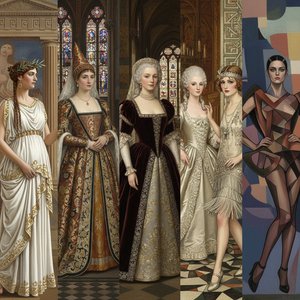
Style Through the Ages: Iconic Artworks That Defined the Evolution of Fashion Design
Explore the breathtaking intersection of fine art and high fashion. Discover how iconic masterpieces from Art Deco to Impressionism have shaped the world of luxury couture and timeless design in this curated visual journey.

Draped Narratives: Fashion as Symbol & Subject in Historical Art
Explore the fascinating history of fashion as a symbol of power & status in art! Discover masterpieces from Gainsborough to Tissot and learn how clothing shaped societal narratives. Find museum-quality reproductions at TopImpressionists.
Ontdek kunstwerken georganiseerd op thema, stijl en kenmerk.

