Voorvertoning
 Verstuur
 Delen
Delen
 Details bekijken
 Gids
Gids

 Download
 Vergelijkbare items
 Röntgenonderzoek
 Diavoorstelling
 Statistieken
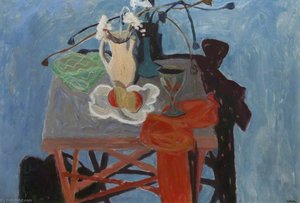
Florence
 Acrylic On Canvas
- WallArt
- Cubist Modernism
 1924
1924 66.0 x 91.0 cm
 Royal Scottish Academy of Art - Architecture
Sir William George Gillies’ "Florence" captures the vibrant Italian city with its iconic bridge and bustling scene. A stunning example of his artistic style, this painting showcases a beautiful representation of Florence's charm.
 Lees meer
"meta_description": "W.G. Gillies schilderde betoverende Schotse landschappen en stillevens met invloeden van Cubisme en Klee. Zijn werk is gekenmerkt door kleurrijke composities en een unieke, nationale stijl – ontdek de meester van de Schotse kunst!"
De kunstwerken die op deze pagina worden weergegeven, zijn beschermd door de auteursrechtwetgeving, wat betekent dat het ons wettelijk niet is toegestaan om identieke reproducties te maken of te verkopen. Deze bescherming wordt gehandhaafd onder internationale overeenkomsten zoals de Conventie van Bern en door nationale wetgeving, waaronder de bepalingen van de Amerikaanse auteurswet - Titel 17. Alle rechten voorbehouden. Reproduceren of distribueren van afbeeldingen is niet toegestaan zonder uitdrukkelijke schriftelijke toestemming van WahooArt.com en de rechthebbenden.
Deze methode voldoet volledig aan de auteursrechtwetgeving, omdat het niet gaat om het kopiëren of dupliceren van het beschermde kunstwerk. In plaats daarvan is er sprake van een creatieve herinterpretatie — een nieuw schilderij dat door het origineel wordt geïnspireerd, maar er niet identiek aan is.
Giclée / Kunstafdrukken
Giclée- of canvasafdruk van museumkwaliteit met een snelle productie en flexibele afwerkingsmogelijkheden. ( Bestel handgeschilderde reproductie Schakel over naar digitale afbeeldingen)




P118B €10

P118H €10

P118W €10

P438Z €10

P508JH €12

P508YH €12

P805H €10

P805Z €10

P919BZ €10

P919G €10

P919XJ €10

P959ZH €10

P968JZ €12

W106C €8

W218G €10

W218JH €8

W218Y €10

W307PJ €10

W316G €10

W316PJ €8

W316Y €10

W398PJ €8

W4111J €10

W500HY €15

W500JH €15

W692G €12

W849H €8

W940BG €15

W953PJ €8




Standaardformaat
op maat gemaakt
CM
INCH
Kies uit onze vooraf ingestelde maten die overeenkomen met de originele verhoudingen van het kunstwerk.
Loading sizes...

breedte
hoogte
Voer de gewenste breedte en hoogte in, passend bij uw lijst of muur. Een afdruk kan alleen worden ingekort en nooit groter worden gemaakt dan het origineel; een formaat met andere verhoudingen zal daarom een deel van de afbeelding verliezen. Wij sturen u een digitaal mockup ter goedkeuring voordat we tot drukwerk overgaan. De afbeelding op deze pagina toont niet de werkelijke uitsnede — dit is alleen te zien op het mockup.
Wereldwijde levering () binnen 2 weken in plaats van de standaard 4/5 weken. (26 oktober)

Gratis wereldwijde expressverzending

Hoogwaardig linnen canvas

Volledige verzendverzekering

Garantie op terugbetaling van invoerrechten

Garantie op exacte kleurweergave

Retourbeleid van 100 dagen (alleen bij defecten)

100% Geld-terug-garantie

Korting bij meerdere afnames
 De optie voor glas is alleen beschikbaar bij een formaat kleiner dan 110 cm.

Florence
Giclée / Kunstafdrukken
Afmetingen reproductie
-


Eindtotaal
€ 61
The Heart of Tuscany Captured: An Exploration of Gillies’ “Florence”
William George Gillies' "Florence," painted in 1924, isn’t merely a depiction of an Italian city; it’s a vibrant distillation of its spirit – a testament to the enduring beauty and bustling life of one of Europe’s most historically significant urban centers. This captivating canvas transports us directly to the heart of Tuscany, offering a glimpse into a world brimming with energy, commerce, and artistic resonance. The painting immediately draws the eye towards the graceful bridge that dominates the composition, its arched form acting as a visual anchor amidst the dynamic scene below. This isn’t a photographic representation; rather, Gillies employs a masterful blend of observation and imagination to create an atmosphere thick with movement and light.
Gillies, a key figure in the 1922 Group – a collective dedicated to promoting modern art in Scotland – was deeply influenced by both the Impressionists and the burgeoning Cubist movement. His early travels to Paris and Italy exposed him to these revolutionary styles, which he skillfully integrated into his own distinctive approach. “Florence” showcases this evolution; while retaining elements of traditional landscape painting, it’s imbued with a sense of fractured perspective and flattened planes reminiscent of Cubism, particularly in the treatment of the buildings lining the riverbank. The careful layering of color and brushstrokes creates an illusion of depth, inviting the viewer to lose themselves within the bustling cityscape.
A Symphony of Color and Light
The painting’s palette is remarkably rich and evocative. Gillies masterfully utilizes a range of warm ochres, deep blues, and vibrant reds to capture the essence of Florentine light. The sun, though not explicitly depicted, casts a golden glow across the scene, illuminating the reflections shimmering on the river's surface. Notice how he employs broken color – small dabs and strokes of contrasting hues – to suggest texture and form, particularly in the details of the buildings and boats. This technique adds a dynamic quality to the composition, preventing it from feeling static or overly formal.
- Dominant Colors: Warm ochres, deep blues, vibrant reds, and touches of green.
- Light & Shadow: Gillies expertly utilizes light and shadow to create a sense of depth and atmosphere.
- Brushwork: Loose, expressive brushstrokes contribute to the painting’s dynamic feel.
Symbolism and Historical Context
Beyond its aesthetic qualities, “Florence” is steeped in historical significance. The city itself represents a pivotal moment in Western civilization – the birthplace of the Renaissance, a period marked by an unprecedented flourishing of art, science, and culture. The bridge, a recurring motif in Gillies’ work, symbolizes connection and transition, linking the past with the present. The numerous boats navigating the river evoke the importance of trade and commerce to Florence's prosperity during this era. Furthermore, the painting subtly references the city’s architectural grandeur – the imposing buildings lining the riverbank are reminiscent of the palaces and churches that define Florence’s iconic skyline.
Painted in 1924, “Florence” reflects a period of renewed interest in classical art and culture following World War I. Gillies' work embodies a spirit of optimism and renewal, capturing the vibrant energy of a city poised to embrace the future while honoring its rich heritage. The painting’s enduring appeal lies not only in its technical brilliance but also in its ability to transport us back in time and evoke the timeless beauty of Florence.
Bringing “Florence” Home: A Reproduction for Your Space
TopImpressionists offers meticulously crafted, hand-painted reproductions of William George Gillies’ "Florence," ensuring that you can experience the full impact of this remarkable artwork within your own home. Our skilled artisans use traditional techniques and high-quality materials to faithfully recreate Gillies' unique style and color palette. Whether you are an art collector, a design enthusiast, or simply someone seeking to add a touch of timeless elegance to your space, our reproduction of “Florence” is the perfect choice. It’s more than just a print; it’s a window into the heart of Tuscany, capturing the spirit and beauty of one of the world's most beloved cities.
Veelgestelde vragen
Op welke leeftijd maakte William Gillies "Florence"?
Toen "Florence" werd gemaakt in 1924, was William Gillies - geboren in 1898 - 26 jaar oud.
Welke kleur valt het meest op in "Florence"?
Espresso (#513e27) is de dominante kleur van "Florence" door William Gillies.
Waar kan ik statistieken vinden over "Florence" door William Gillies?
Er bestaat een Statistieken-pagina voor "Florence". Deze brengt de maandelijkse bezoeken aan het kunstwerk en andere werken van de kunstenaar in kaart, met uitsplitsingen naar land en taal.
Biografie kunstenaar
Early Life and Education
Sir William George Gillies, geboren in Haddington in East Lothian, Schotland, in 1898, was een kunstenaar wiens leven en werk diep verweven waren met de landschappen en tradities van zijn geboortegemeenschap. Zijn artistieke reis begon niet direct op het doek; hij startte zijn opleiding aan de Edinburgh College of Art, maar deze werd onderbroken door dienstplicht in de Royal Engineers tijdens de Eerste Wereldoorlog. Deze ervaring, die hem vroegtijdig blootstelde aan de realiteit van conflict en verlies, zou een blijvende invloed hebben op zijn artistieke visie.
Na de oorlog keerde Gillies terug om zijn studie af te maken aan het Edinburgh College of Art. Daar werd hij niet alleen een getalenteerd kunstenaar, maar ook een toegewijde leraar, die meer dan veertig jaar lang de School for Drawing and Painting leidde. Zijn betrokkenheid bij het onderwijs was een essentieel onderdeel van zijn leven en droeg bij aan de ontwikkeling van vele toekomstige kunstenaars.
Artistic Development and Influences
Gillies’ artistieke reis begon met een fascinatie voor Cubisme, een beweging die hij ontdekte na het studeren onder André Lhote in Parijs (1923) en een bezoek aan Italië in 1924. Deze periode was cruciaal voor zijn ontwikkeling, waarbij hij de principes van geometrische fragmentatie en perspectiefonderzoek leerde toepassen. Zijn vroege werken, zoals “Two Pots, Saucer and Fruit” (1933), getuigen hiervan; ze vertonen een invloed van Cézanne, met zijn zorgvuldige composities en het gebruik van kleur om volume en diepte te suggereren, in combinatie met de understatement van kunstenaars als Braque en Picasso.
Een fundamentele verandering in Gillies’ artistieke benadering kwam in 1934 tot stand door de ontmoeting met de werk van Paul Klee. Klee’s gebruik van kleur, zijn speelse composities en het vermogen om emotie te overbrengen via eenvoudige vormen inspireerden Gillies om een meer expressieve en intuïtieve benadering van de kleur te ontwikkelen. Hij begon elementen uit de folklore en traditie van Schotland op te nemen in zijn werk, waardoor zijn stijl zich onderscheidde van de rigide principes van Cubisme.
The 1922 Group and Collaborative Spirit
In 1922 richtte Gillies samen met andere kunstenaars, waaronder William Crozier, William Geissler en William MacTaggart, de “1922 Group” op. Deze groep was meer dan alleen een artistieke vereniging; het was een platform voor jonge Schotse kunstenaars om hun werk te presenteren aan het publiek via tentoonstellingen in de New Gallery in Edinburgh. De 1922 Group bevorderde een gevoel van gemeenschap en innovatie binnen de Schotse kunstscene, waardoor een vruchtbare omgeving ontstond voor experimenteren en uitwisselen van ideeën.
De groep speelde een cruciale rol bij het stimuleren van de ontwikkeling van nieuwe talenten en het creëren van een platform voor hun werk. De tentoonstellingen waren niet alleen een manier om kunst te presenteren, maar ook om kunstenaars met elkaar in contact te brengen en hen te inspireren.
Themes and Subject Matter
Gillies’ oeuvre is voornamelijk gekenmerkt door zijn liefde voor de Schotse landschappen. Hij schilderde de Lothian, Fife en Border regio's met een intense gevoeligheid, vastleggend niet alleen de fysieke kenmerken van het terrein, maar ook de sfeer en de emoties die hij ermee associeerde. Zijn landschappen zijn vaak doordrenkt van licht en kleur, en ze vertonen een diepe verbinding met de natuur.
Naast landschappen was Gillies ook gefascineerd door stillevenschilderingen. Deze werken, vaak gekenmerkt door de aanwezigheid van keramiek gemaakt door zijn jongere zus, Emma Smith Gillies – wiens vroege dood hem diep heeft getroffen – waren een bron van zowel schoonheid als verdriet. De stillevenschilderingen werden vaak gebruikt om emotionele reflectie te bieden en de complexiteit van het leven te onderzoeken.
Major Achievements and Recognition
Sir William George Gillies werd in 1970 ridder, een erkenning voor zijn bijdrage aan de kunst in Schotland. In 1957 ontving hij de CBE (Commander of the Order of the British Empire) voor zijn diensten aan de kunst. Na zijn pensionering van het Edinburgh College of Art bleef Gillies actief als kunstenaar en werd hij benoemd tot hoofd van de school in 1961, een positie die hij tot 1966 bekleedde. Tijdens deze periode werden belangrijke ontwikkelingen doorgevoerd, waaronder de bouw van een nieuwe architectuurfaculteit.
Zijn werk is te vinden in musea en collecties in heel Schotland, waaronder Aberdeen, Dundee, Edinburgh, Glasgow, en in nationale galerijen in Londen, Ottawa en Peru. De retrospectieve tentoonstelling die de Scottish Arts Council hem gaf trok meer dan 30.000 bezoekers, wat een bewijs is van zijn invloed en populariteit.
Historical Significance and Legacy
Sir William George Gillies wordt beschouwd als een van de meest prominente Schotse kunstenaars van de 20e eeuw. Zijn werk vertegenwoordigt een unieke synthese van moderne invloeden en traditionele Schotse esthetiek. Hij was een belangrijke figuur in de Edinburgh School, een beweging die zich kenmerkte door het gebruik van kleur en licht om emotie te overbrengen. Gillies’ nalatenschap strekt zich verder uit dan zijn eigen kunst; hij heeft generaties van kunstenaars geïnspireerd en de richting van Schotse kunst beïnvloed.
Hij stierf vredig in zijn bed op 15 april 1973, maar zijn werk blijft een bron van inspiratie en bewondering. Gillies’ artistieke visie, gekenmerkt door zijn liefde voor Schotland, zijn expressieve kleurgebruik en zijn vermogen om emotie te overbrengen, zal nog lang voortleven in de geschiedenis van de kunst.

William Gillies
1898 - 1973 , Verenigd Koninkrijk
Belangrijkste feiten
- Artistic Movement Or Style:
- Cubisme
- Landschappen
- Artists Or Movements Influenced By This Artist:
- Cézanne
- Picasso
- Artists Who Influenced This Artist:
- André Lhote
- Paul Klee
- Date Of Birth: 1898
- Date Of Death: 1973
- Full Name: Sir William George Gillies
- Nationality: Schots
- Notable Artworks:
- Twee potten, schaal en fruit
- Mediterrane Landschap
- Place Of Birth: Haddington, Verenigd Koninkrijk
Gerelateerde artikelen

Top 10 Meesterwerken van de Hudson River School: Kunst voor uw interieur
Ontdek de 10 meesterwerken van de Hudson River School! Leer over Thomas Cole, Frederic Church & meer. Prachtige landschappen uit de 19e eeuw voor uw interieur. Kunst reproducties van museumkwaliteit op TopImpressionists.com.

Romantische Landschappen: Top 10 Meesterwerken voor een Sfeervol Interieur | TopImpressionists.nl
Ontdek de 10 meest iconische meesterwerken van de Romantiek! Reis door de tijd met Caspar David Friedrich, Turner & Delacroix. Laat je inspireren en vind museumkwaliteit kunst reproducties voor een sfeervol interieur op TopImpressionists.com.

John Constable's Top 25 Meesterwerken: Landschappen die de Ziel Raaken | TopImpressionists
Ontdek de 25 mooiste schilderijen van John Constable, meester van de Engelse Romantiek. Van idyllische landschappen tot iconische Hay Wain – bewonder zijn techniek en emotie. Museumkwaliteit reproducties & decoratie op TopImpressionists.com.

Evocations of Place: A Historical Journey Through Landscape Art
Explore the rich history of landscape art with TopImpressionists. Discover renowned artists, movements like Impressionism & tonalism, and expert guidance for collecting timeless pieces. Find your perfect serene escape today!

Evocations of Place: A Historical Journey Through Landscape Art
Explore the rich history of landscape art with TopImpressionists. Discover renowned artists, movements like Impressionism & Romanticism, and expert guidance for collecting timeless pieces. Find your perfect serene escape today!
Ontdek kunstwerken georganiseerd op thema, stijl en kenmerk.