Biografie van de kunstenaar
Early Life and Background
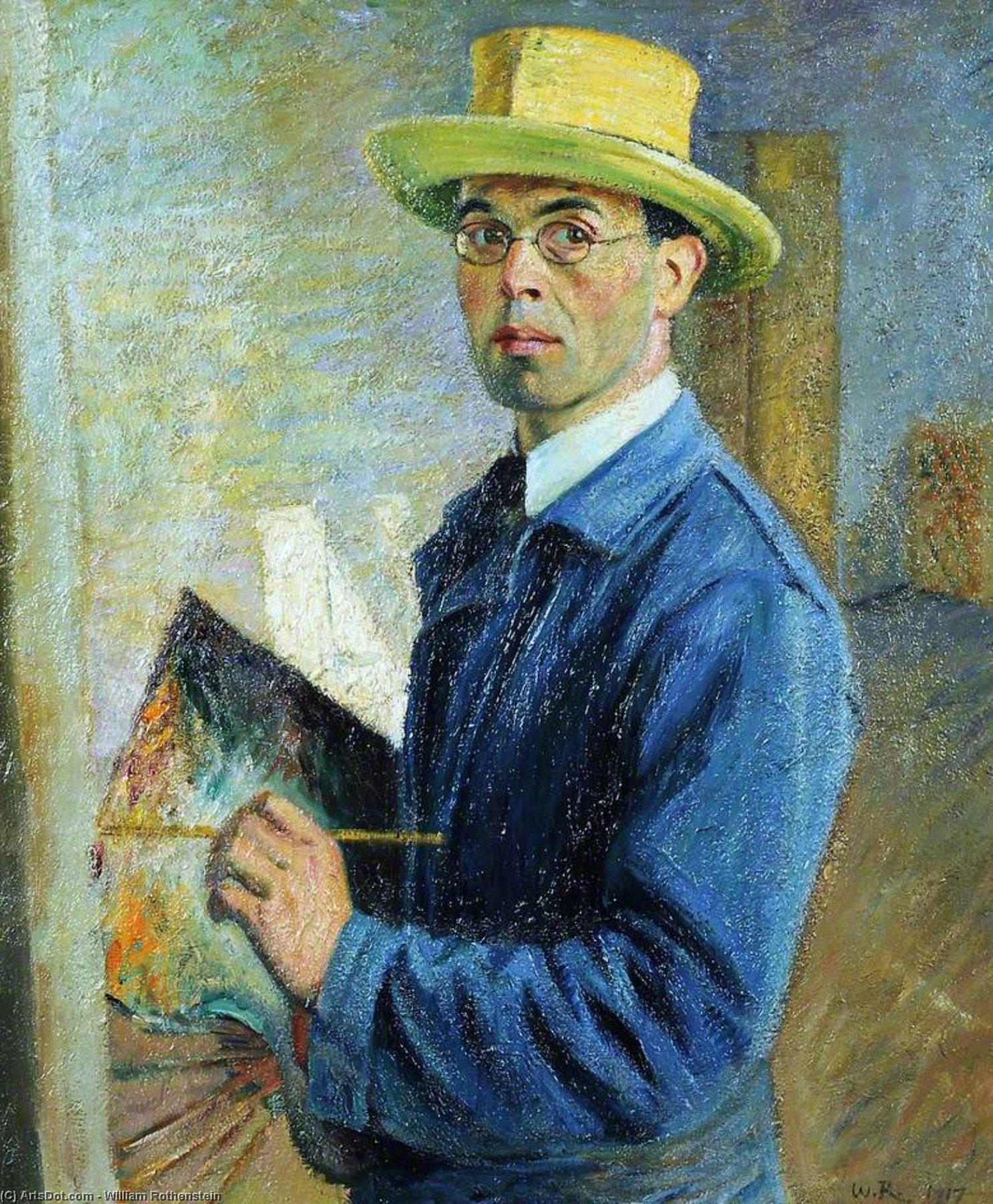
Rothenstein was born in Bradford, Yorkshire, England on January 29, 1872, into a German-Jewish family. His father, Moritz Rothenstein, emigrated from Germany in 1859 to establish himself as a textile merchant in the burgeoning industrial city. Shortly thereafter he married Bertha Dux and they had six children, William being the fifth. He attended Bradford Grammar School before embarking on his artistic education at the Slade School of Art in London (1888-1893), where Alphonse Legros served as his mentor—a teacher who championed the revival of etching techniques in Britain. This formative experience instilled in Rothenstein a deep appreciation for craftsmanship and observation, shaping his future artistic endeavors.
Significant time was spent in Paris studying at the Académie Julian during this period, immersing himself in the vibrant artistic milieu of Belle Époque France. He found inspiration in the works of luminaries like James McNeill Whistler, Edgar Degas, Henri de Toulouse-Lautrec, and Roger Fry—artists who championed Impressionism’s exploration of light and color and whose stylistic innovations profoundly impacted Rothenstein's own approach to painting. These encounters fostered a critical dialogue with artistic traditions and propelled him toward a more expressive style.
Artistic Development and Key Works
Rothenstein’s early career centered on portraiture, producing celebrated collections such as “Oxford Characters” (1896), “English Portraits,” “Twelve Portraits,” and “Contemporaries.” These commissions demanded meticulous attention to detail—capturing not merely likeness but also psychological nuance—demonstrating Rothenstein's mastery of technique and his ability to convey inner character. The success of *Oxford Characters*, particularly its witty portrayal of intellectual figures, solidified his reputation as a gifted satirist and established him as a prominent voice in British art criticism.
He co-founded the Carfax Gallery in 1898 with John Fothergill—a bold initiative that championed modern art and artists like Auguste Rodin. This gallery served as a crucial platform for disseminating avant-garde ideas and fostering connections between artists and collectors, reflecting Rothenstein’s commitment to artistic innovation and cultural engagement. During World War I and II he served as an official war artist documenting significant events and figures through portraiture—a role that underscored his dedication to capturing the spirit of his time and preserving historical memory. His wartime canvases offer poignant glimpses into the anxieties and triumphs of a nation grappling with conflict, showcasing Rothenstein’s artistic versatility and humanist compassion.
Rothenstein held the position of Principal at the Royal College of Art from 1920 to 1935—a period marked by transformative developments in British art education. He nurtured the talents of emerging artists like Jacob Epstein, U Ba Nyan, Henry Moore, and Paul Nash—inspiring them to push boundaries and explore new artistic horizons. His influence extended beyond formal instruction; he fostered a spirit of intellectual curiosity and encouraged experimentation—values that continue to resonate within the College’s ethos today.
Style, Influences, and Artistic Evolution
Rothenstein's style evolved from initial Impressionistic influences toward Expressionism. While retaining Whistler’s subtle tonal harmonies and Degas’s dynamic compositions, he embraced bolder brushstrokes and intensified color palettes—reflecting a growing preoccupation with emotional intensity and psychological depth. His portraits are characterized by an uncanny ability to penetrate the surface appearance of his subjects—revealing hidden emotions and unspoken truths—demonstrating Rothenstein's profound understanding of human psychology. The enduring power of his images testifies to his artistic vision’s capacity to transcend time and capture the essence of human experience.
The influence of Indian art is evident in his later works, demonstrating a sensitivity to color and form inspired by Eastern aesthetics. His fascination with Ajanta frescoes—ancient Buddhist murals depicting scenes from Hindu mythology—fueled his exploration of decorative patterns and symbolic imagery—enriching his artistic vocabulary and broadening his aesthetic horizons. This encounter with Indian visual culture profoundly shaped Rothenstein’s artistic sensibility—underscoring the interconnectedness of cultural traditions and fostering a spirit of intercultural dialogue.
Legacy and Recognition
Rothenstein's son, John Rothenstein, became Director of the Tate Gallery from 1938 to 1964—carrying forward his father’s legacy as a champion of British art and safeguarding its artistic heritage. Michael Rothenstein, his other son, established himself as a respected printmaker—continuing the family tradition of artistic craftsmanship and visual storytelling. He was knighted in 1931 for his contributions to the arts—a testament to his unwavering dedication to creative pursuits and intellectual engagement. His works are held in major collections worldwide—including the Tate Gallery and the National Portrait Gallery—ensuring that his artistic legacy endures as a beacon of British art history.
Rothenstein’s memoirs offer invaluable insights into his life, artistic philosophy, and wartime experiences—providing a compelling portrait of an artist grappling with moral dilemmas and confronting the challenges of his era. His writings illuminate not only his personal journey but also the broader cultural landscape of Britain during the twentieth century—enriching our understanding of art history and fostering empathy for individuals navigating turbulent times.


 Voorvertoning
 Bestel handgeschilderde reproductie
 Verstuur
 Delen
Delen
 Details bekijken

 Download
 Vergelijkbare items
 Röntgenonderzoek
 Diavoorstelling
 Lees meer






































 De optie voor glas is alleen beschikbaar bij een formaat kleiner dan 110 cm.



