


 Bekijk op ware grootte
 Verstuur
 Delen
Delen
 Details bekijken
 Gids
Gids

 Download
 Vergelijkbare items
 Röntgenonderzoek
 Diavoorstelling
 Statistieken
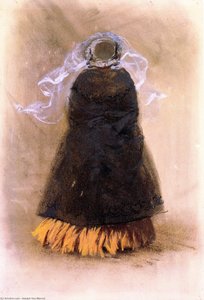
Lady in a Veil


Captivating portrait by Theo van Rysselberghe (1886). 'Lady in a Veil' showcases Post-Impressionism with mystery, elegance & rich textures at Kunsthalle Bremen.
 Lees meer
Théo van Rysselberghe: Een baanbrekende Neo-Impressionist schilder met levendige kleuren & fascinerende portretten. Ontdek zijn invloedrijke kunst en de magie van het licht!
Handgemaakte olieverfreproductie
Met de hand geschilderd in olieverf op canvas in uw gewenste maat en lijst, op bestelling gemaakt door onze kunstenaars. ( Schakel over naar print Schakel over naar digitale afbeeldingen)




P118B $10

P118H $10

P118W $10

P438Z $10

P508JH $12

P508YH $12

P805H $10

P805Z $10

P919BZ $10

P919G $10

P919XJ $10

P959ZH $10

P968JZ $12

W106C $8

W218G $10

W218JH $8

W218Y $10

W307PJ $10

W316G $10

W316PJ $8

W316Y $10

W398PJ $8

W4111J $10

W500HY $15

W500JH $15

W692G $12

W849H $8

W940BG $15

W953PJ $8




Standaardformaat
op maat gemaakt
CM
INCH
Kies uit onze vooraf ingestelde maten die overeenkomen met de originele verhoudingen van het kunstwerk.
Loading sizes...

breedte
hoogte
U kunt uw eigen afmetingen invoeren om in een specifieke lijst of ruimte te passen. Als de door u gekozen maat niet overeenkomt met de verhoudingen van het originele beeld, zullen we het kunstwerk bijsnijden of het schilderij uitbreiden met extra handgeschilderde elementen. Een digitale mockup wordt ter goedkeuring naar u verzonden voordat de productie begint.
Houd er rekening mee dat de preview op het scherm niet de werkelijke uitsnede of uitbreiding weergeeft. Alleen de mockup toont de uiteindelijke compositie nauwkeurig.
Hoewel aangepaste afmetingen mogelijk zijn, raden we aan een maat uit de vooraf gedefinieerde lijst te selecteren om de originele verhoudingen te behouden.
Voorbeelden van wat aangepast kan worden: Vervang het gezicht met een eigen foto; Voeg een huisdier toe (bijv. vervang de kat door een hond); Verwerk een verborgen boodschap in de achtergrond; Wijzig het landschap of andere elementen in de achtergrond.
Na de bestelling zal het team van TopImpressionists.com per e-mail contact opnemen met de klant voor instructies en een mockup-voorbeeld sturen.
Na de bestelling zal het team van TopImpressionists.com per e-mail contact opnemen met de klant voor instructies en een mockup-voorbeeld sturen.
Wereldwijde levering () binnen 3 tot 4 weken in plaats van de standaard 5 weken. (23 september). Zonder concessies aan de kwaliteit.

Gratis wereldwijde expressverzending

Hoogwaardig linnen canvas

Volledige verzendverzekering

Garantie op terugbetaling van invoerrechten

Garantie op exacte kleurweergave

Retourbeleid van 100 dagen (alleen bij defecten)

100% Geld-terug-garantie

Korting bij meerdere afnames
 De optie voor glas is alleen beschikbaar bij een formaat kleiner dan 110 cm.

Lady in a Veil
Reproductiemethode
Formaat reproductie
-


Totaalprijs
$ 294
Lady in a Veil: A Glimpse of Post-Impressionist Elegance
The Lady in a Veil is a captivating portrait painted by Theo Van Rysselberghe in 1886. This oil on canvas masterpiece currently resides at the Kunsthalle Bremen in Germany. The painting showcases a woman wearing a hat with a veil over her face, exuding an air of mystery and elegance. It's more than just a likeness; it’s a study in light, color, and subtle emotion characteristic of the Post-Impressionist movement.
Post-Impressionist Style and Technique
The Lady in a Veil exemplifies Post-Impressionism, an art movement that emerged as a reaction against the naturalistic depiction of light and color. This style, roughly between 1886 and 1905, emphasizes distortion, exaggeration, and primitivism. Van Rysselberghe’s approach moves beyond simply capturing what he saw; he uses color and brushwork to convey mood and atmosphere. Notice the loose, visible brushstrokes that create a sense of movement and vibrancy. The layering of colors—warm browns, ochres, and reds—contributes to an intimate yet somewhat melancholic feeling. The technique isn't about precise detail but rather about capturing a fleeting impression.
A World Within the Frame: Objects and Symbolism
Beyond the central figure, the painting incorporates several objects that enrich its narrative depth. A clock on the wall above the woman’s head suggests the passage of time and perhaps a sense of reflection. Two bowls nearby add to the domestic setting, hinting at everyday life. The book positioned towards the right implies intellectual pursuits or quiet contemplation. The veil itself is symbolic—it obscures part of her face, creating an aura of mystery and suggesting hidden depths. It could represent modesty, privacy, or even a sense of detachment from the world.
Comparison with Contemporaries
Van Rysselberghe’s work shares affinities with other prominent Post-Impressionist artists. Consider Vincent Van Gogh's L'Arlesienne, Madame Joseph-Michel Ginoux and Paul Gauguin's The Meal (The Bananas). While each artist developed a unique style, they all explored similar themes of emotion, subjectivity, and the expressive potential of color. Van Rysselberghe’s approach is perhaps more restrained than Van Gogh’s or Gauguin’s, but his mastery of light and subtle detail creates an equally compelling visual experience.
Emotional Impact and Lasting Appeal
The Lady in a Veil evokes a sense of quiet introspection. The woman's gaze is averted, inviting the viewer to project their own interpretations onto her expression. The painting’s enduring appeal lies in its ability to capture a moment of stillness and contemplation, offering a glimpse into the inner world of its subject. It serves as a testament to Van Rysselberghe’s skill as a portraitist and his contribution to the Post-Impressionist movement.
Gerelateerde kunstwerken




Biografie van de kunstenaar
A Pioneer of Light: The Life and Art of Théo van Rysselberghe
Théophile “Théo” van Rysselberghe, born in Ghent, Belgium, in 1862, emerged as a pivotal figure bridging the gap between Impressionism and Neo-Impressionism. His journey wasn’t one of immediate stylistic conviction but rather an evolving exploration sparked by travel, intellectual exchange, and a relentless pursuit of capturing light's essence. Coming from a comfortably bourgeois French-speaking family, van Rysselberghe received his initial artistic training at the Academy of Ghent under Theo Canneel, followed by studies at the prestigious Académie Royale des Beaux-Arts in Brussels. These formative years instilled in him a foundation rooted in traditional realism, evident in early works like *Self-Portrait with Pipe* (1880), characterized by somber tones and meticulous detail—a reflection of the prevailing Belgian artistic climate. However, even within these early pieces, hints of a burgeoning sensitivity to light and color began to surface, foreshadowing his future trajectory. A pivotal work from this period, *Child in an Open Spot of the Forest* (1880), marked a subtle departure, hinting at the brighter palette and looser brushwork that would define his later style.Moroccan Impressions and the Birth of Les XX
A transformative chapter unfolded with van Rysselberghe’s voyages to Morocco between 1882 and 1888. These extended sojourns immersed him in a world of vibrant colors, intense sunlight, and exotic landscapes—a stark contrast to the subdued tones of his earlier work. Paintings like *Arabian Street Cobbler* (1882), *Arabian Boy* (1882), and *Resting Guard* (1883) demonstrate a growing fascination with capturing the effects of light on form, moving away from strict realism towards a more impressionistic sensibility. The Moroccan experience wasn’t merely about visual observation; it was an immersion into a different culture that broadened his artistic horizons and instilled a lifelong love for travel. He documented these scenes meticulously, creating a series of evocative works that captured the energy and atmosphere of daily life in Tangier and surrounding areas. Upon returning to Brussels, van Rysselberghe became a driving force in the Belgian art scene, co-founding the influential group *Les XX* (The Twenty) in 1883 alongside Octave Maus and Émile Verhaeren. This collective served as a platform for showcasing avant-garde art, introducing new movements like Impressionism and Symbolism to a Belgian audience largely unfamiliar with such innovations. *Arabian Phantasia* (1884), a large-scale exotic painting depicting a bustling marketplace scene, became his most celebrated work from this period, demonstrating his mastery of light and composition.Embracing Neo-Impressionism: A Scientific Approach to Color
The true turning point in van Rysselberghe’s artistic development arrived with his encounter with Georges Seurat's *A Sunday on La Grande Jatte* at the eighth Impressionist exhibition in Paris in 1886. Initially skeptical of Seurat’s meticulous “pointillist” technique—the systematic application of tiny dots of pure color—van Rysselberghe gradually came to appreciate its scientific basis and potential for achieving luminous effects. He began experimenting with divisionism, the Neo-Impressionist method of separating colors into their constituent parts and allowing the viewer’s eye to blend them optically. This wasn't simply a technical shift; it represented a fundamental change in his approach to painting—a move towards a more analytical and objective representation of light and color. He forged close friendships with other Neo-Impressionist painters like Paul Signac, traveling with him along the French Riviera and exchanging ideas about technique and theory. Van Rysselberghe distinguished himself within the movement by applying pointillism not only to landscapes but also to portraiture, creating strikingly vibrant and psychologically insightful likenesses of his family and friends—works such as *Madame Charles Maus* (1890) are prime examples.Portraiture and a Lasting Legacy
While he initially embraced the scientific rigor of Neo-Impressionism, van Rysselberghe never fully abandoned his expressive impulses. He continued to develop his distinctive style, characterized by luminous color palettes, delicate brushwork, and an uncanny ability to capture the fleeting effects of light. His portraits are particularly noteworthy for their psychological depth and emotional resonance—works like *Portrait of Maria Sèthe* (1891) reveal a remarkable sensitivity to human character and expression. He also produced numerous landscapes and seascapes, often infused with a dreamlike quality. Beyond his artistic output, van Rysselberghe was an active participant in the Belgian cultural scene, contributing to the development of decorative arts and design. His influence extended far beyond Belgium, impacting artists like Piet Mondrian and Jan Toorop who were inspired by his innovative use of color and light. Van Rysselberghe’s legacy lies not only in his beautiful paintings but also in his role as a catalyst for artistic change—a champion of modernism who helped introduce new ideas and techniques to the Belgian art world. His works are now held in prominent museum collections worldwide, including the Musée du Luxembourg in Paris and the Museum voor Schone Kunsten in Ghent, ensuring that his contribution to the history of art continues to be celebrated and appreciated by generations to come. His dedication to exploring the interplay of light, color, and form cemented his place as a true pioneer of modern painting.Key Works
* *Self-Portrait with Pipe* (1880) * *Child in an Open Spot of the Forest* (1880) * *Arabian Street Cobbler* (1882) * *Arabian Boy* (1882) * *Resting Guard* (1883) * *La Pointe Perkiridec Near Roscoff in Brittany* (1889) * *Madame Charles Maus* (1890) * *Portrait of Maria Sèthe* (1891)
Théo van Rysselberghe
1862 - 1926 , België
Snelle feiten
- Artistic Movement Or Style: Neo-Impressionisme
- Artists Or Movements Influenced By This Artist:
- Les XX
- Mondrian
- Artists Who Influenced This Artist:
- Portaels
- Seurat
- Date Of Birth: 23 november 1862
- Date Of Death: 14 december 1926
- Full Name: Théophile van Rysselberghe
- Nationality: Belgische
- Notable Artworks:
- Arabian Phantasia
- Sevillan Woman
- Place Of Birth: Gent, België
Gerelateerde artikelen

Rembrandt's Meesterwerken: De Top 25 – Kunst voor uw Interieur | TopImpressionists
Ontdek de 25 meest iconische schilderijen van Rembrandt van Rijn! Duik in de Gouden Eeuw, bewonder zijn portretten & zelfportretten. Museumkwaliteit reproducties voor uw interieur op TopImpressionists.com. Bekijk de collectie!

Voorbij Licht en Kleur: Impressionisme versus Post-Impressionisme voor de Veelzijdige Verzamelaar
Ontdek de nuances tussen Impressionisme en Post-Impressionisme. Expertadvies voor kunstverzamelaars over investeren in tijdloze meesterwerken van Monet, Van Gogh & Cézanne.

Top 10 Post-Impressionistische Meesterwerken: Kunst die de Geschiedenis Schreef | TopImpressionists.nl
Ontdek de 10 meest iconische meesterwerken van het Post-Impressionisme! Van Gogh, Monet, Cézanne en meer. Leer over hun technieken & emoties achter deze tijdloze kunst. Museumkwaliteit reproducties op TopImpressionists.com – Kunst voor uw interieur.

Beyond Impressionism: Exploring the Emotional Depth of Post-Impressionist Painting
Explore the profound emotional depth & innovative techniques of Post-Impressionism with TopImpressionists. Discover Cézanne, Van Gogh, Gauguin & more – and their lasting impact on modern art.

Théo van Rysselberghe: Pioneering Belgian Pointillism & the Pursuit of Luminosity
Explore the captivating world of Théo van Rysselberghe, a pioneer of Belgian Neo-Impressionism. Discover his masterpieces, artistic journey, and lasting impact on modern art. Learn more at TopImpressionists.
Ontdek kunstwerken georganiseerd op thema, stijl en kenmerk.

