


 Bekijk op ware grootte
 Verstuur
 Delen
Delen
 Details bekijken
 Gids voor studentenkunstwerken

 Download
 Vergelijkbare items
 Röntgenonderzoek
 Diavoorstelling
 Statistieken
Zoe Grigorieff (recto)
 Contemporary Realism
 60.0 x 44.0 cm
 Harbour Cottage Gallery
Discover 'Zoe Grigorieff (recto)' by Vera Alabaster – a captivating portrait exploring intimacy & emotion. Explore this serene painting at Harbour Cottage Gallery.
Explore the evocative paintings of Vera Alabaster – capturing intimate portraits & serene landscapes with a distinctive style. Discover her work at Stedley Art Foundation.
 Lees meer
De kunstwerken die op deze pagina worden weergegeven, zijn beschermd door de auteursrechtwetgeving, wat betekent dat het ons wettelijk niet is toegestaan om identieke reproducties te maken of te verkopen. Deze bescherming wordt gehandhaafd onder internationale overeenkomsten zoals de Conventie van Bern en door nationale wetgeving, waaronder de bepalingen van de Amerikaanse auteurswet - Titel 17. Alle rechten voorbehouden. Reproduceren of distribueren van afbeeldingen is niet toegestaan zonder uitdrukkelijke schriftelijke toestemming van WahooArt.com en de rechthebbenden.
Als een respectvol en legaal alternatief bieden wij op maat gemaakte, handgeschilderde kunstwerken aan die geïnspireerd zijn op het origineel. Onze bekwame en professionele kunstenaars bestuderen zorgvuldig de stijl, sfeer en artistieke essentie van het origineel om een nieuw, uniek werk te creëren dat dezelfde emotie oproept – terwijl het een op zichzelf staande, originele creatie blijft.
Deze methode voldoet volledig aan de auteursrechtwetgeving, omdat het niet gaat om het kopiëren of dupliceren van het beschermde kunstwerk. In plaats daarvan is er sprake van een creatieve herinterpretatie — een nieuw schilderij dat door het origineel wordt geïnspireerd, maar er niet identiek aan is.
Handgemaakte olieverfreproductie
Met de hand geschilderd in olieverf op canvas in uw gewenste maat en lijst, op bestelling gemaakt door onze kunstenaars. ( Schakel over naar print Schakel over naar digitale afbeeldingen)




P118B €10

P118H €10

P118W €10

P438Z €10

P508JH €12

P508YH €12

P805H €10

P805Z €10

P919BZ €10

P919G €10

P919XJ €10

P959ZH €10

P968JZ €12

W106C €8

W218G €10

W218JH €8

W218Y €10

W307PJ €10

W316G €10

W316PJ €8

W316Y €10

W398PJ €8

W4111J €10

W500HY €15

W500JH €15

W692G €12

W849H €8

W940BG €15

W953PJ €8




Standaardformaat
op maat gemaakt
CM
INCH
Kies uit onze vooraf ingestelde maten die overeenkomen met de originele verhoudingen van het kunstwerk.
Loading sizes...

breedte
hoogte
Voer de breedte en de hoogte in die u nodig heeft, passend bij uw lijst of uw muur. Dit is handgeschilderd, dus bij een afmeting met een andere vormverhouding kan de kunstenaar iets meer rondom het schilderij schilderen of juist iets meer weglaten — u kiest zelf. Wij sturen u een digitaal mockup ter goedkeuring voordat het schilderwerk begint. De afbeelding die op deze pagina wordt getoond, is niet het uiteindelijke resultaat — alleen de mockup geeft dit weer.
Voorbeelden van wat aangepast kan worden: Vervang het gezicht met een eigen foto; Voeg een huisdier toe (bijv. vervang de kat door een hond); Verwerk een verborgen boodschap in de achtergrond; Wijzig het landschap of andere elementen in de achtergrond.
Na de bestelling zal het team van TopImpressionists.com per e-mail contact opnemen met de klant voor instructies en een mockup-voorbeeld sturen.
Na de bestelling zal het team van TopImpressionists.com per e-mail contact opnemen met de klant voor instructies en een mockup-voorbeeld sturen.
Wereldwijde levering () binnen 3 tot 4 weken in plaats van de standaard 5 weken. (25 oktober). Zonder concessies aan de kwaliteit.

Gratis wereldwijde expressverzending

Hoogwaardig linnen canvas

Volledige verzendverzekering

Garantie op terugbetaling van invoerrechten

Garantie op exacte kleurweergave

Retourbeleid van 100 dagen (alleen bij defecten)

100% Geld-terug-garantie

Korting bij meerdere afnames
 De optie voor glas is alleen beschikbaar bij een formaat kleiner dan 110 cm.

Zoe Grigorieff (recto)
Reproductiemethode
Formaat reproductie
-


Totaalprijs
€ 236
Biografie van de kunstenaar
Vera Alabaster: A Life Painted in Intimacy and Reflection
Born Petschatkinoz in 1889, Vera Alabaster’s life was a tapestry woven across continents and marked by a profound engagement with the human condition. Her early years in St. Petersburg provided a foundation of artistic training, later enriched by studies in Florence and Munich – cities renowned for their rich artistic heritage and diverse cultural influences. These formative experiences shaped her distinctive style, characterized by an intimate portrayal of subjects, often rendered with a delicate sensitivity that belies a deep understanding of psychology and emotion. Alabaster’s journey wasn't merely one of geographical relocation; it was a constant process of absorbing and reinterpreting artistic traditions, ultimately forging a unique voice within the broader landscape of early 20th-century art.
Alabaster’s career unfolded primarily in Britain, particularly during the mid-20th century. She established herself as a significant figure in the Scottish art scene, finding a home and community in Kirkcudbright, a coastal town renowned for its artistic patronage. This period witnessed a shift towards a more personal and introspective approach to her work. Her subjects – frequently women engaged in quiet contemplation or domestic activities – were not simply depicted; they were imbued with a sense of vulnerability and resilience. The influence of Russian Symbolism is evident in the atmospheric quality of many of her paintings, particularly the use of muted colors and subtle lighting to evoke mood and emotion.
The Language of Portraiture
Alabaster’s most celebrated work lies within her portraiture. She possessed a remarkable ability to capture not just physical likeness but also the inner lives of her subjects. Her portraits are rarely static; instead, they convey a sense of movement and feeling—a fleeting expression, a subtle shift in posture, or an unspoken narrative. Works like “Zoe Grigorieff (recto)” exemplify this approach, offering a glimpse into the intimate relationship between artist and model, revealing layers of emotion beneath the surface. The meticulous detail with which she rendered fabrics and textures further enhances the sense of realism and immediacy, drawing the viewer into the scene.
The “Zoe Grigorieff” series, particularly the recto and verso panels, is a cornerstone of Alabaster’s oeuvre. These paintings are not merely representations of a single subject; they are explorations of memory, identity, and the complexities of human connection. The choice to depict Grigorieff in such an intimate setting—a quiet room bathed in soft light—suggests a desire to capture a moment of profound stillness and reflection. The subtle variations between the recto and verso panels offer further insight into Alabaster’s artistic process, revealing her willingness to experiment with composition and technique to achieve her desired effect.
Beyond Portraiture: Landscapes of Emotion
While portraiture constitutes a significant portion of Alabaster's output, she also produced a series of evocative landscapes. These works, often characterized by muted colors and atmospheric perspective, are imbued with a similar emotional depth as her portraits. The “Building in a Landscape (verso)” exemplifies this duality—a seemingly simple depiction of a building set within a rural landscape becomes a meditation on the relationship between humanity and nature. The subtle details – the texture of the stone, the play of light and shadow – invite contemplation and suggest a deeper symbolic meaning.
These landscapes are not merely scenic representations; they are reflections of Alabaster’s own emotional state. The use of color and composition is carefully calibrated to evoke feelings of solitude, nostalgia, and perhaps even melancholy. They stand as testaments to her ability to translate complex emotions into visual form.
Legacy and Recognition
Vera Alabaster's work has enjoyed a resurgence in recent years, with increasing recognition from art historians and collectors alike. Her paintings are now exhibited in galleries and museums across the United Kingdom, and her legacy as one of Britain’s most accomplished portraitists continues to grow. Her unique style—characterized by its intimacy, sensitivity, and psychological depth—has resonated with viewers for decades, and her work remains a powerful reminder of the enduring power of art to capture the complexities of human experience.
Notable sources documenting Alabaster’s life and work include articles from *Reading and Art*, mutualart.com, and artprice.com, which provide valuable insights into her artistic development and career trajectory. Her connection with Kirkcudbright and Anna Hotchkis further illuminates the context in which she created some of her most enduring works.

Snelle feiten
- Artistic Movement Or Style: Portraiture, Landscape
- Artists Or Movements Influenced By This Artist: ['Impressionism']
- Artists Who Influenced This Artist: ['Anna Hotchkis']
- Date Of Birth: 1889
- Date Of Death: 1964
- Full Name: Vera Alabaster
- Nationality: Russian/British
- Notable Artworks:
- Three Indochinese Women
- Portrait of a girl
- Venus De Milo
- Place Of Birth: Petschatkinoz, Russia
Gerelateerde artikelen

Serene Blue Backgrounds: Discover Soulful Art to Transform Your Space with Timeless Elegance
Transform your home with soulful blue art. From serene Monet impressions to modern textured sculptures, discover curated masterpieces designed to inspire calm. Explore expert art consultations and bespoke hand-painted reproductions to create your personal sanctuary.

Liquid Vibes: Bold Water Landscapes & Deep Blue Textures to Level Up Your Space
Elevate your space with bold water landscapes and deep blue textures. Discover trending abstract art, from sculptural textiles to premium oil reproductions, designed to bring high-impact, liquid vibes to modern urban interiors.
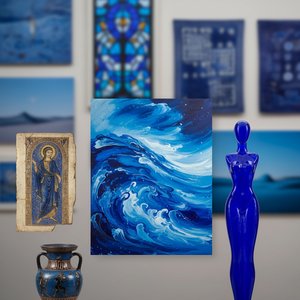
The Allure of Azure: Exploring the Symbolic & Aesthetic Depths of Blue in Art History
Explore the rich history of blue in art! Discover its symbolism, from ancient pigments to modern masterpieces by Kandinsky & Seurat. Uncover the psychological impact and cultural meanings behind this captivating hue.

Azure Visions: Exploring Representations of the Blue Dress in Western Art History
Explore the rich history of the blue dress in Western art! Discover its symbolism, from Renaissance masterpieces to modern interpretations by artists like Martin & Schiele. Uncover cultural meanings and artistic techniques.

Top 10 Meesterwerken gedomineerd door 'Slate Blue': Kunst voor uw interieur
Ontdek 10 beroemde schilderijen gedomineerd door de prachtige tint 'Slate Blue'. Van Monet tot Van Gogh, leer over kunstgeschiedenis & techniek. Museumkwaliteit reproducties voor uw interieur op TopImpressionists.com! Ontdek de collectie online.