Voorvertoning
 Verstuur
 Delen
Delen
 Details bekijken
 Gids
Gids

 Download
 Vergelijkbare items
 Röntgenonderzoek
 Diavoorstelling
 Vraag & antwoord
 Statistieken
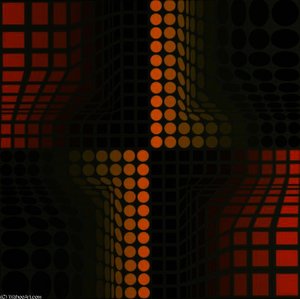
Abstracte compositie 32

Bekijk Abstracte compositie 32 van Victor Vasarely, een prachtige Op Art schildering met dynamische cirkels en kleurrijke vormen. Laat je meevoeren door de geometrische schoonheid van deze iconische kunstenaar.
 Lees meer
Ontdek Victor Vasarely (1906-1997), de pionier van Op Art! Bewonder zijn geometrische abstracties, optische illusies & een blijvende invloed op moderne kunst en design.
De kunstwerken die op deze pagina worden weergegeven, zijn beschermd door de auteursrechtwetgeving, wat betekent dat het ons wettelijk niet is toegestaan om identieke reproducties te maken of te verkopen. Deze bescherming wordt gehandhaafd onder internationale overeenkomsten zoals de Conventie van Bern en door nationale wetgeving, waaronder de bepalingen van de Amerikaanse auteurswet - Titel 17. Alle rechten voorbehouden. Reproduceren of distribueren van afbeeldingen is niet toegestaan zonder uitdrukkelijke schriftelijke toestemming van WahooArt.com en de rechthebbenden.
Deze methode voldoet volledig aan de auteursrechtwetgeving, omdat het niet gaat om het kopiëren of dupliceren van het beschermde kunstwerk. In plaats daarvan is er sprake van een creatieve herinterpretatie — een nieuw schilderij dat door het origineel wordt geïnspireerd, maar er niet identiek aan is.
Giclée / Kunstafdrukken
Giclée- of canvasafdruk van museumkwaliteit met een snelle productie en flexibele afwerkingsmogelijkheden. ( Bestel handgeschilderde reproductie Schakel over naar digitale afbeeldingen)




P118B €10

P118H €10

P118W €10

P438Z €10

P508JH €12

P508YH €12

P805H €10

P805Z €10

P919BZ €10

P919G €10

P919XJ €10

P959ZH €10

P968JZ €12

W106C €8

W218G €10

W218JH €8

W218Y €10

W307PJ €10

W316G €10

W316PJ €8

W316Y €10

W398PJ €8

W4111J €10

W500HY €15

W500JH €15

W692G €12

W849H €8

W940BG €15

W953PJ €8




Standaardformaat
op maat gemaakt
CM
INCH
Kies uit onze vooraf ingestelde maten die overeenkomen met de originele verhoudingen van het kunstwerk.
Loading sizes...

breedte
hoogte
Voer de gewenste breedte en hoogte in, passend bij uw lijst of muur. Een afdruk kan alleen worden ingekort en nooit groter worden gemaakt dan het origineel; een formaat met andere verhoudingen zal daarom een deel van de afbeelding verliezen. Wij sturen u een digitaal mockup ter goedkeuring voordat we tot drukwerk overgaan. De afbeelding op deze pagina toont niet de werkelijke uitsnede — dit is alleen te zien op het mockup.
Wereldwijde levering () binnen 2 weken in plaats van de standaard 4/5 weken. (9 november)

Gratis wereldwijde expressverzending

Hoogwaardig linnen canvas

Volledige verzendverzekering

Garantie op terugbetaling van invoerrechten

Garantie op exacte kleurweergave

Retourbeleid van 100 dagen (alleen bij defecten)

100% Geld-terug-garantie

Korting bij meerdere afnames
 De optie voor glas is alleen beschikbaar bij een formaat kleiner dan 110 cm.

Abstracte compositie 32
Giclée / Kunstafdrukken
Afmetingen reproductie
-


Eindtotaal
€ 62
Victor Vasarely en de Revolutie van Beweging
Victor Vasarely (1906 – 1997), een Hongaars kunstenaar geboren in Pécs, staat bekend om zijn baanbrekende bijdrage aan de Op Art beweging en kinetische kunst. Zijn leven begon niet bepaald met een penseel in zijn hand; aanvankelijk studeerde hij geneeskunde aan het Eötvös Loránd Universiteit in Boedapest, maar de fascinatie voor visuele expressie bleek overweldigend, waardoor hij zijn studie opgaf voor kunst in 1927 en zich aangetrokken voelde tot het Podolini-Volkmann Academie. Deze keuze betekende niet alleen een verschuiving van beroep maar ook het begin van een levenslange zoektocht naar de fundamentele principes die perceptie en vorm vormen. Een belangrijke gebeurtenis was zijn aanmelding bij Sándor Bortnyik’s atelier – Műhely –, een school sterk beïnvloed door de Bauhaus beweging, waar hij de principes van functioneel ontwerp en geometrische abstractie opnam. Deze invloed zou zich manifesteren in zijn kenmerkende stijl: een stijl die gebaseerd is op het verkennen van vormen en kleuren om een gevoel voor beweging en dynamiek te creëren. Vasarely’s kunstpraktijk werd gedreven door een obsessieve aandacht voor geometrische vormen, vooral cirkels en andere geometrische patronen. Hij ontwikkelde een unieke techniek waarbij hij kleurrijke vlakken overlapt met elkaar, waardoor complexe visuele illusies ontstaan die het oog misleiden. Deze stijl staat in schril contrast met de traditionele kunstvormen van zijn tijd en vertegenwoordigt een belangrijke verschuiving naar een nieuwe manier van denken over kunst en schoonheid. Zijn werk werd sterk beïnvloed door de Bauhaus beweging, waar hij leerde hoe je eenvoudige vormen kunt combineren om prachtige en functionele producten te creëren. Deze filosofie zou zich voortzetten in zijn kunstpraktijk en zou hem helpen om een stijl te ontwikkelen die zowel technisch innovatief als esthetisch aantrekkelijk is. Een belangrijk voorbeeld hiervan is zijn beroemde Abstract Composition 32, een kleurrijke geometrische compositie die de aandacht trekt van kunstliefhebbers en verzamelaars wereldwijd. De historische context waarin Vasarely actief was vormde een belangrijke inspiratie voor zijn werk. De jaren ’20 en ’30 waren een tijd van grote veranderingen in Europa, gekenmerkt door het opkomen van nieuwe ideeën over kunst en wetenschap. De Bauhaus beweging stond voor een radicale hervorming van het onderwijs en het ontwerp, waarbij de nadruk werd gelegd op functionaliteit en eenvoud. Deze filosofie zou ook Vasarely’s kunstpraktijk stimuleren om nieuwe vormen van expressie te verkennen die verder gingen dan alleen schoonheid. Bovendien vond hij inspiratie in de wetenschap, vooral in de natuurkunde en de biologie, waar hij onderzoek deed naar het gedrag van licht en beweging. Deze kennis zou hij gebruiken om zijn kunstwerken te creëren en om een gevoel voor dynamiek en beweging te verkennen dat essentieel is voor zijn stijl. De symbolische waarde van Vasarely’s kunst ligt in zijn gebruik van geometrische vormen als een manier om ideeën en emoties uitdrukken. Cirkels staan symbool voor harmonie, balans en eenheid, terwijl andere vormen zoals driehoeken en vierkanten voor stabiliteit en structuur staan. Deze symbolische waarde komt voort uit de filosofie van Pythagoras, die beweerde dat geometrische vormen een essentiële rol spelen bij het begrijpen van het universum. Vasarely gebruikte deze filosofische achtergrond om zijn kunstwerken te creëren en om een gevoel voor ordening en balans te verkennen dat belangrijk is voor zijn stijl. Bovendien wilde hij laten zien dat kunst niet alleen iets mooi moet zijn, maar ook iets waar je iets mee kunt leren over de wereld om je heen. Een prachtige reproductie van Abstract Composition 32 kan een prachtige aanvulling vormen op elke ruimte en biedt een unieke kans om het prachtige werk van Victor Vasarely te bewonderen.Veelgestelde vragen
Zijn de kleuren van "Abstracte compositie 32" levendig of gedempt?
De kleur van "Abstracte compositie 32" heeft een verzadiging van Subtiele verzadiging en een intensiteit van Gebalanceerd.
Wat stelt "Abstracte compositie 32" voor en welke sfeer straalt het uit?
"Abstracte compositie 32" toont geometric patterns, optical illusion, color vibrancy, circular shapes, dynamic composition, bauhaus influence, kinetic art en de vastgelegde stemming is Serene.
Wie is de kunstenaar achter "Abstracte compositie 32"?
"Abstracte compositie 32" is gemaakt door Victor Vasarely. De informatie op deze pagina beschrijft het originele werk van Victor Vasarely.
Biografie kunstenaar
A Life Forged in Geometry: The World of Victor Vasarely
Victor Vasarely’s journey to becoming a pioneer of Op Art and kinetic art was anything but predetermined. Born Károly Vaszary in 1906 in Pécs, a city then nestled within Austria-Hungary (now Croatia), his early life hinted at a path far removed from the canvas. Initially pursuing medical studies at Eötvös Loránd University in Budapest, he abruptly abandoned this ambition for the world of painting in 1927, enrolling at the Podolini-Volkmann Academy. This decision wasn’t merely a career shift; it represented a lifelong dedication to exploring the fundamental principles governing perception and form – a quest rooted in logic and precision. A pivotal moment arrived with his enrollment in Sándor Bortnyik’s workshop – Műhely – a school deeply influenced by the Bauhaus movement. Here, Vasarely absorbed the tenets of functional design and geometric abstraction, seeds that would blossom into his signature style. These formative years weren't simply about acquiring technique; they were about dismantling traditional artistic conventions and embracing a new visual language, one designed to actively engage the viewer’s perception.From Early Abstraction to the Dawn of Op Art
The late 1920s and early 1930s witnessed Vasarely's gradual departure from representational art, as he delved deeper into the realm of geometric abstraction. Works like “Blue Study” and “Green Study,” created in 1929, exemplify this transition – a deliberate shedding of narrative content in favor of pure form and color relationships. He was profoundly influenced by masters such as Piet Mondrian and Kazimir Malevich, yet he wasn’t content to simply emulate their styles. Vasarely sought to transcend the static compositions of his predecessors, aiming for a dynamism that would actively engage the viewer's perception. This quest led him to Paris in 1930, where he established himself as a graphic designer and advertising artist, honing his skills while continuing to develop his unique artistic vision. It was during this period that he began experimenting with techniques that would later become hallmarks of Op Art – manipulating shapes and colors to create illusions of movement and depth. The seeds were sown for a revolution in visual experience.The Systematic Illusion: Defining a Movement
By the 1960s, Victor Vasarely had fully emerged as a leading figure in the burgeoning Op Art movement. Unlike many artists who relied on intuition and spontaneous expression, Vasarely approached his work with a distinctly systematic methodology. He employed grids and mathematical principles to generate patterns that created powerful optical illusions – visual vibrations, swirling effects, and sensations of depth where none physically existed. This wasn’t about trickery; it was about revealing the inherent dynamism within perception itself. He believed in reproducibility and mass appeal, aiming to democratize art by making it accessible beyond the confines of galleries and museums. His work challenged viewers to question their own visual experience, forcing them to actively participate in the creation of meaning. This deliberate engagement with perception set Op Art apart and cemented Vasarely’s place at its forefront. He wasn't merely painting pictures; he was constructing experiences.Historical Significance
Vasarely’s contribution to art history is multifaceted. He moved beyond traditional painting techniques to create works that actively engage the viewer’s perception. His systematic approach challenged conventional notions of artistic creativity and paved the way for computer-generated art and digital design. By embracing reproducibility and commercial applications, Vasarely blurred the boundaries between fine art and popular culture, leaving an enduring mark on both. He wasn't simply creating aesthetically pleasing objects; he was conducting visual experiments that revealed fundamental truths about how we see the world. His work continues to resonate today, reminding us of the power of abstraction, the beauty of geometry, and the endless possibilities of human creativity.Beyond the Canvas: Kinetic Exploration and a Lasting Legacy
Vasarely’s artistic exploration didn't stop at static illusions. He increasingly ventured into kinetic art, creating works that incorporated actual movement or appeared to move through carefully orchestrated visual effects. “Georges Pompidou” (1976), a large kinematic object installed at the Centre Pompidou in Paris, stands as a testament to this ambition – an integration of art with architecture and urban design on a grand scale. He also demonstrated remarkable innovation by applying his designs to commercial products, most notably through his collaboration with Rosenthal porcelain, resulting in the iconic “Suomi” tableware series. This willingness to blur the boundaries between fine art and functional objects further underscored his belief in art’s potential to permeate everyday life. The establishment of the Fondation Vasarely in Aix-en-Provence ensured the preservation and promotion of his extensive body of work, while a remarkable event – the inclusion of serigraphs aboard the French-Soviet spacecraft Salyut 7 in 1982 – symbolized the global recognition of his art and its connection to the broader human endeavor of exploration. Victor Vasarely’s legacy extends far beyond the realm of painting; he profoundly influenced graphic design, fashion, interior design, and even early computer graphics, inspiring generations with his innovative vision and unwavering commitment to exploring the possibilities of perception. He remains a pivotal figure in modern art history, a true visionary who dared to challenge our understanding of what art could be.
Victor Vasarely
1906 - 1997 , Kroatië
Belangrijkste feiten
- Artistic Movement Or Style: Op Art, Kinetic Art
- Artists Or Movements Influenced By This Artist:
- Graphic design
- Interieurdesign
- Artists Who Influenced This Artist:
- Piet Mondrian
- Kazimir Malevich
- Date Of Birth: 9 april 1906
- Date Of Death: 15 maart 1997
- Full Name: Victor Vasarely
- Nationality: Hongaars-Frans
- Notable Artworks:
- Blue Study
- Green Study
- Zebra
- Place Of Birth: Pécs, Kroatië
Gerelateerde artikelen

The Beauty of Order: A Journey Through the Timeless Elegance of Geometric Abstraction
Discover the profound elegance of geometric abstraction. Explore a curated journey through minimalist mastery, from De Stijl to modern textures, and learn how structured beauty brings timeless order and sophisticated serenity to your art collection.

The Beauty of Less: A Sophisticated Guide to the Soul of Minimalist Art and Geometric Harmony
Discover the profound elegance of minimalist art. Explore how geometric abstraction and the beauty of reduction create serene, sophisticated spaces through our expert guide to finding soul and harmony in every line and shape.
Ontdek kunstwerken georganiseerd op thema, stijl en kenmerk.