

Shown: · With its frame:
 Voorvertoning
 Verstuur
 Delen
Delen
 Details bekijken
 Gids
Gids

 Download
 Vergelijkbare items
 Röntgenonderzoek
 Diavoorstelling
 Q&A
Q&A Statistieken

€ 239
Handgemaakte olieverfreproductie
Met de hand geschilderd in olieverf op canvas in uw gewenste maat en lijst, op bestelling gemaakt door onze kunstenaars. ( Schakel over naar print Schakel over naar digitale afbeeldingen)
Size
·Standaardformaat
op maat gemaakt
CM
INCH
Kies uit onze vooraf ingestelde maten die overeenkomen met de originele verhoudingen van het kunstwerk.
Loading sizes...

breedte
hoogte
Voer de breedte en hoogte in die u nodig heeft, passend bij uw lijst of uw muur. Omdat dit handgeschilderd is, kan de kunstenaar bij een afmeting met een andere beeldverhouding iets meer rondom het schilderij schilderen of juist iets meer weglaten — u kiest zelf. Wij sturen u een digitaal mockup ter goedkeuring voordat het schilderwerk begint. De afbeelding die op deze pagina wordt getoond, is niet het uiteindelijke resultaat — alleen de mockup geeft dit weer.
 Lees meer over
Finish
·
White €1

Blurside €1

Extended €1

P118B €10

P118H €10

P118W €10

P438Z €10

P508JH €12

P508YH €12

P805H €10

P805Z €10

P919BZ €10

P919G €10

P919XJ €10

P959ZH €10

P968JZ €12

W106C €8

W218G €10

W218JH €8

W218Y €10

W307PJ €10

W316G €10

W316PJ €8

W316Y €10

W398PJ €8

W4111J €10

W500HY €15

W500JH €15

W692G €12

W849H €8

W940BG €15

W953PJ €8

H24-GOLD €30

H24-SILVER €30

H36-GOLD €45

H36-SILVER €45
Shipped in a protective tube, ready for your own framer.
Above 105 cm the frame is shipped as a kit for a professional framer — read the details.
Extras
optionalWhat do the extras include?
Examples of what can be changed: Replace face with customer photo; Add pet (e.g., replace cat with dog); Include hidden message in background; Change background landscape or elements.
After order, TopImpressionists.com team will email client for instructions and provide a mockup preview
After order, TopImpressionists.com team will email client for instructions and provide a mockup preview
Wereldwijde levering () binnen 3 tot 4 weken in plaats van de standaard 5 weken. (1 november). Zonder concessies aan de kwaliteit.
Beschermende vernislaag
Naamplaatje
Details van de gegraveerde bronzen plaat
This elegant plaque features the artist's name and the title of the artwork, finely engraved for a timeless presentation.
It is made from bronze with a refined, elegant finish. The text is precisely laser-engraved for a sharp and permanent result. Measuring 9x2 cm, the plaque is compact yet easy to read. It's built to be durable and scratch-resistant, offering a professional, museum-quality look. Mounting is simple thanks to the included adhesive backing.
Details transparante acrylplaat
The plaque includes essential engraved details such as the artist's name, the title of the artwork, the date it was created, the type of media used-like oil on canvas or watercolor-a brief description of the piece, and a QR code that links to the complete artwork information.
It is crafted from clear acrylic, offering a sleek, modern appearance. The text is UV-engraved in black to ensure strong visual contrast. With a size of 10x15 cm, it ensures optimal readability. It comes equipped with two metal hooks for secure wall mounting. The plaque is designed to be weather-resistant, making it suitable for various environments, and it includes interactive features that work seamlessly with smartphone scanning.
Details zwarte acrylplaat
This elegant plaque includes engraved information such as the artist's name, the title of the artwork, the date it was created, the type of media used (like oil on canvas or watercolor), a short description of the artwork, and a QR code for quick access to more information.
The plaque itself is made from refined black acrylic with a premium finish. The text is laser-engraved in white for high contrast and readability. Its size is 10x15 cm, designed to be easy to read. It comes with two metal hooks for professional mounting. The design is sleek and fits any interior style. It is also weather-resistant and durable, with built-in digital integration for mobile compatibility.
De optie voor glas is alleen beschikbaar bij een formaat kleiner dan 110 cm.
 De optie voor glas is alleen beschikbaar bij een formaat kleiner dan 110 cm.
- Gratis wereldwijde expressverzending
- Hoogwaardig linnen canvas
- Volledige verzendverzekering
- Garantie op terugbetaling van invoerrechten
- Garantie op exacte kleurweergave
- Retourbeleid van 100 dagen (alleen bij defecten)
- 100% Geld-terug-garantie
- Korting bij meerdere afnames


Beschrijving verzamelobject
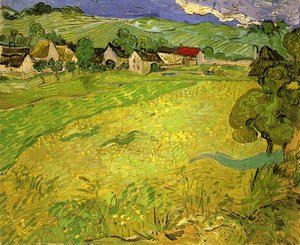
Experience Vincent van Gogh's 'Cottages,' a serene depiction of rural life brimming with vibrant colors and Post-Impressionist charm. A hand-painted reproduction captures the beauty of Dutch countryside.
Biografie kunstenaar
Vincent van Gogh (1853-1890): Ontdek het leven en de kunst van de Nederlandse Postimpressionistische meester achter 'Sterrennacht' en 'Zonnebloemen'. Ontdek zijn gedurfde stijl en blijvende impact op de moderne kunst.
About the painting
Cottages: A Window into Post-Impressionist Tranquility
Vincent van Gogh’s “Cottages,” painted in 1883, isn't merely a depiction of a rural village; it’s an immersive experience—a carefully constructed tableau designed to evoke a profound sense of peace and nostalgia. This oil on canvas, residing within the broader series exploring peasant life, offers a glimpse into Van Gogh’s evolving artistic vision during a pivotal period in his career. The scene unfolds with a quiet dignity: humble cottages, their thatched roofs blending seamlessly with the surrounding greenery, nestled beneath a serene sky. It's a landscape imbued with a palpable sense of warmth and community, yet simultaneously tinged with a subtle melancholy—a characteristic hallmark of Van Gogh’s mature style.
The painting’s genesis lies within the burgeoning Post-Impressionist movement, an era defined by artists seeking to move beyond the fleeting impressions of light and color favored by their predecessors. Post-Impressionism wasn't a rigid school but rather a diverse collection of artists—including Van Gogh himself, Paul Cézanne, Paul Gauguin, and Georges Seurat—who experimented with subjective expression, symbolic content, and emotional depth. Van Gogh’s “Cottages” exemplifies this shift; he abandons the purely observational approach of earlier Impressionists, instead layering his own feelings and interpretations onto the scene. The vibrant yellows dominating the cottages aren't simply a representation of color but rather convey warmth, light, and perhaps even a hint of optimism—a deliberate choice to imbue the humble dwellings with an aura of comfort and security.
The Language of Color and Texture
Van Gogh’s distinctive technique is immediately apparent. He employs thick, impasto brushstrokes – literally building up layers of paint directly onto the canvas – creating a tactile surface that invites close inspection. The individual strokes are visible, contributing to the painting's dynamism and energy. Notice how he uses short, broken lines to depict the thatched roofs, suggesting their texture and movement in the breeze. The greens and blues of the landscape aren’t blended smoothly; instead, they’re applied with a sense of urgency, conveying a feeling of vitality and growth. This deliberate manipulation of color and texture is central to Van Gogh's expressive style—a means of communicating not just what he *saw*, but how he *felt* about what he saw.
The composition itself is carefully considered. The cottages are arranged in a loose, asymmetrical grouping, creating a sense of visual interest and preventing the scene from feeling static. A few figures—likely peasants engaged in daily tasks—are scattered throughout the landscape, adding to the painting’s narrative quality. These figures aren't idealized or romanticized; they appear as ordinary people going about their lives, contributing to the overall sense of authenticity and realism.
Symbolism and Emotional Resonance
Beyond its visual appeal, “Cottages” is rich in symbolism. The humble cottages represent a connection to rural life, a theme that was increasingly important to Van Gogh during this period. He saw in these simple dwellings a sense of stability and community—a stark contrast to the alienation and uncertainty he often experienced in urban environments. The sky, painted in shades of blue and grey, suggests both tranquility and melancholy – reflecting the artist’s own complex emotional state. The presence of animals, likely dogs, adds another layer of meaning, symbolizing loyalty, companionship, and a connection to nature.
Van Gogh's fascination with rural life stemmed from his desire to understand the lives of ordinary people—particularly the working class. He believed that art should serve as a means of social commentary, offering insights into the experiences of those often overlooked by society. “Cottages” is therefore not just a pretty picture; it’s a poignant meditation on themes of poverty, community, and the beauty of the natural world.
Bringing "Cottages" Home: A Hand-Painted Reproduction
At TopImpressionists.com, we are proud to offer meticulously hand-painted oil reproductions of Van Gogh's “Cottages,” capturing the essence of this iconic artwork with unparalleled detail and authenticity. Our skilled artists utilize only the finest materials—traditional oil paints on archival canvas—to faithfully recreate every brushstroke, color nuance, and textural element of the original. Each reproduction is a testament to our commitment to preserving Van Gogh’s legacy and making his art accessible to collectors and admirers worldwide.
Whether you're an avid art collector, an interior designer seeking to add a touch of Post-Impressionist charm to your home, or simply someone who appreciates the beauty of Van Gogh’s work, our hand-painted reproduction of “Cottages” offers a unique opportunity to own a piece of art history. Explore our collection and discover how you can bring this timeless masterpiece into your life today. Special offer on oil paintings.
Veelgestelde vragen
Is de afbeelding van "Cottages" door Vincent Van Gogh vrij van auteursrecht?
De auteursrechtelijke status van "Cottages" door Vincent Van Gogh: het werk is bevindt zich in het publiek domein - de auteursrechten zijn verlopen. Dit bepaalt of reproducties van de afbeelding vrijelijk mogen worden gemaakt.
Welke plaatsing past bij het formaat van "Cottages" door Vincent Van Gogh?
Het Landscape-formaat van "Cottages" door Vincent Van Gogh wordt aanbevolen voor een Living Room. Formaat en ruimte samen bepalen de ideale plaatsing van een reproductie.
Hoeveel licht lijken de kleuren van "Cottages" te reflecteren?
De vastgestelde luminantie voor "Cottages" door Vincent Van Gogh is Soft Shadow.
Quick facts and art quiz
About Vincent Van Gogh

Vincent Van Gogh
1853 - 1890, Nederland
Biografie kunstenaar
Een leven geschilderd in passie: Vincent van Gogh
Vincent Willem van Gogh, een naam die synoniem staat voor levendige kleur en rauwe emotie, blijft een van de meest herkenbare en geliefde figuren uit de kunstgeschiedenis. Geboren op 30 maart 1853 in Zundert, Nederland, is zijn reis van een getroebleerde jonge man op zoek naar een doel tot een artistiek visionair een ontroerend verhaal van toewijding, strijd en uiteindelijk een blijvende erfenis. Hoewel hij tijdens zijn leven weinig commercieel succes behaalde – hij verkocht slechts één schilderij, Het rode wijngaard, voor zijn dood – is de impact van Van Gogh op de moderne kunst onmetelijk; hij plaveide de weg voor het expressionisme en beïnvloedde talloze kunstenaars die hem volgden. Zijn verhaal gaat niet alleen over penseelstreken en canvas; het is een getuigenis van de kracht van menselijke expressie in het aangezicht van tegenspoed.
De vroege jaren en artistieke ontwaking
Van Goghs vroege leven werd gekenmerkt door een reeks onvervulde ambities. Hij probeerde verschillende beroepen – kunsthandelaar, leraar en zelfs missionaris – voordat hij zich op relatief late leeftijd van 27 jaar volledig aan de schilderkunst wijdde. Deze eerdere ervaringen vormden zijn wereldbeeld diepgaand en vonden hun weg naar zijn kunst. Zijn eerste werken, waarin scènes uit het boerenleven in het landelijke België werden afgebeeld, weerspiegelen een diepe empathie voor de arbeidersklasse en een somber palet dat hun ontberingen reflecteerde. Beïnvloed door kunstenaars als Jean-François Millet, zocht Van Gogh naar een manier om de waardigheid en veerkracht van deze mensen vast te leggen door middel van rauw realisme. Het was echter zijn verhuizing naar Parijs in 1886 die transformatief bleek te zijn. Daar maakte hij kennis met het impressionisme en postimpressionisme, waarbij hij de technieken van meesters als Monet, Renoir en Pissarro absorbeerde. Deze blootstelling verbredde zijn artistische horizon en leidde hem tot experimenten met helderdere kleuren en lossere penseelstreken, hoewel hij een duidelijke emotionele intensiteit behield die bij veel van zijn tijdgenoten ontbrak. Zijn broer Theo, een kunsthandelaar, speelde een cruciale rol in deze periode door financiële steun te bieden en als een vitale schakel naar de Parijse kunstwereld te fungeren. Hun uitgebreide correspondentie biedt onschatbare inzichten in Van Goghs artistieke ontwikkeling en persoonlijke strijd.
loosHet zuidelijke licht en explosieve creativiteit
Op zoek naar een levendiger landschap en een gevoel van vernieuwing, verhuisde Van Gogh in 1888 naar Arles in Zuid-Frankrijk. Deze verhuizing markeerde een periode van intense creatieve productie, gekenmerkt door een explosie van kleur en een kenmerkende impasto-techniek – het dik aanbrengen van verf op het canvas, waardoor een textuur ontstaat die lijkt te pulseren met energie. Het was hier dat hij enkele van zijn meest iconische werken produceerde: Zonnebloemen, Het nachtcafé en De sterrennacht. Het intense zonlicht van de Provence leek zijn verbeelding aan te wakkeren, waardoor hij landschappen en stillevens met een ongekende levendigheid kon afbeelden. Zijn verlangen naar artistieke samenwerking leidde ertoe dat hij Paul Gauguin uitnodigde om zich bij hem in Arles te voegen, in de hoop een utopische kunstenaarskolonie te stichten. Hun relatie bleek echter stormachtig en culmineerde in een dramatische confrontatie die resulteerde in het verminken van zijn eigen oor. Deze gebeurtenis onderstreepte de kwetsbaarheid van zijn mentale toestand en markeerde het begin van een periode van institutionalisering en toenemende psychologische nood.
De latere jaren en een blijvende erfenis
Na zijn inzinking trad Van Gogh vrijwillig een inrichting binnen in Saint-Rémy, waar hij productief bleef schilderen en de omringende landschappen met zowel schoonheid als onrust vastlegde. Werken zoals De sterrennacht, geschilderd tijdens deze tijd, zijn doordrenkt van een gevoel van kosmisch wonder en diepe emotionele gelaagdheid. Later verhuisde hij naar Auvers-sur-Oise onder de zorg van Dr. Paul Gachet, maar zijn strijd hield aan. Op 29 juli 1890 stierf Van Gogh op 37-jarige leeftijd tragisch aan een zelfveroorzaakt schotwond. Ondanks het feit dat hij tijdens zijn leven weinig erkenning kreeg, begon zijn werk na zijn dood lof te oogsten, grotendeels dankzij de onvermoeibare inspanningen van zijn schoonzus, Johanna van Gogh-Bonger, die zijn nalatenschap erfde en zich wijdde aan het promoten van zijn kunst. Vandaag de dag worden de schilderijen van Van Gogh wereldwijd gevierd om hun emotionele intensiteit, innovatieve technieken en blijvende schoonheid. Zijn nalatenschap reikt veel verder dan het canvas; hij is een symbool geworden van artistieke passie, doorzettingsvermogen in tijden van tegenspoed en de kracht van kunst om de diepste menselijke emoties uit te drukken.
Belangrijke invloeden en artistieke ontwikkeling
- Vroeg realisme: De afbeeldingen van het boerenleven door Jean-François Millet beïnvloedden Van Goghs vroege werken.
- Impressionisme & Postimpressionisme: Blootstelling aan Monet, Renoir, Pissarro en anderen in Parijs verbreedden zijn palet en techniek.
- Japanse prenten: Van Gogh werd diep beïnvloed door Japanse houtsneden, die hij met passie verzamelde. Hun gedurfde composities en vlakke kleurvlakken hadden een grote impact op zijn eigen stijl.
- Emotionele expressie: Bovenal probeerde Van Gogh emotie over te brengen via zijn kunst, waarbij hij de subjectieve ervaring boven de objectieve representatie stelde. Deze focus op emotionele intensiteit werd een bepalend kenmerk van zijn werk en plaveide de weg voor het expressionisme.
Quick facts about Vincent Van Gogh
- Artistic Movement Or Style: Post-Impressionisme
- Artists Or Movements Influenced By This Artist:
- Expressionisme
- Fauvisme
- Artists Who Influenced This Artist:
- Rembrandt
- Millet
- Date Of Birth: 30 maart 1853
- Date Of Death: 29 juli 1890
- Full Name: Vincent Willem van Gogh
- Nationality: Nederlands
- Notable Artworks:
- Pommes de terre
- Zonnebloemen
- Sterrennacht
- Place Of Birth: Zundert, Nederland
Vergelijkbare kunstwerken



Ontdek kunstwerken georganiseerd op thema, stijl en kenmerk.


Vincent Van Gogh
Cottages
() ·
With its frame: · Hand-painted in oil on linen
Total