Biografie van de kunstenaar
Early Life and Training
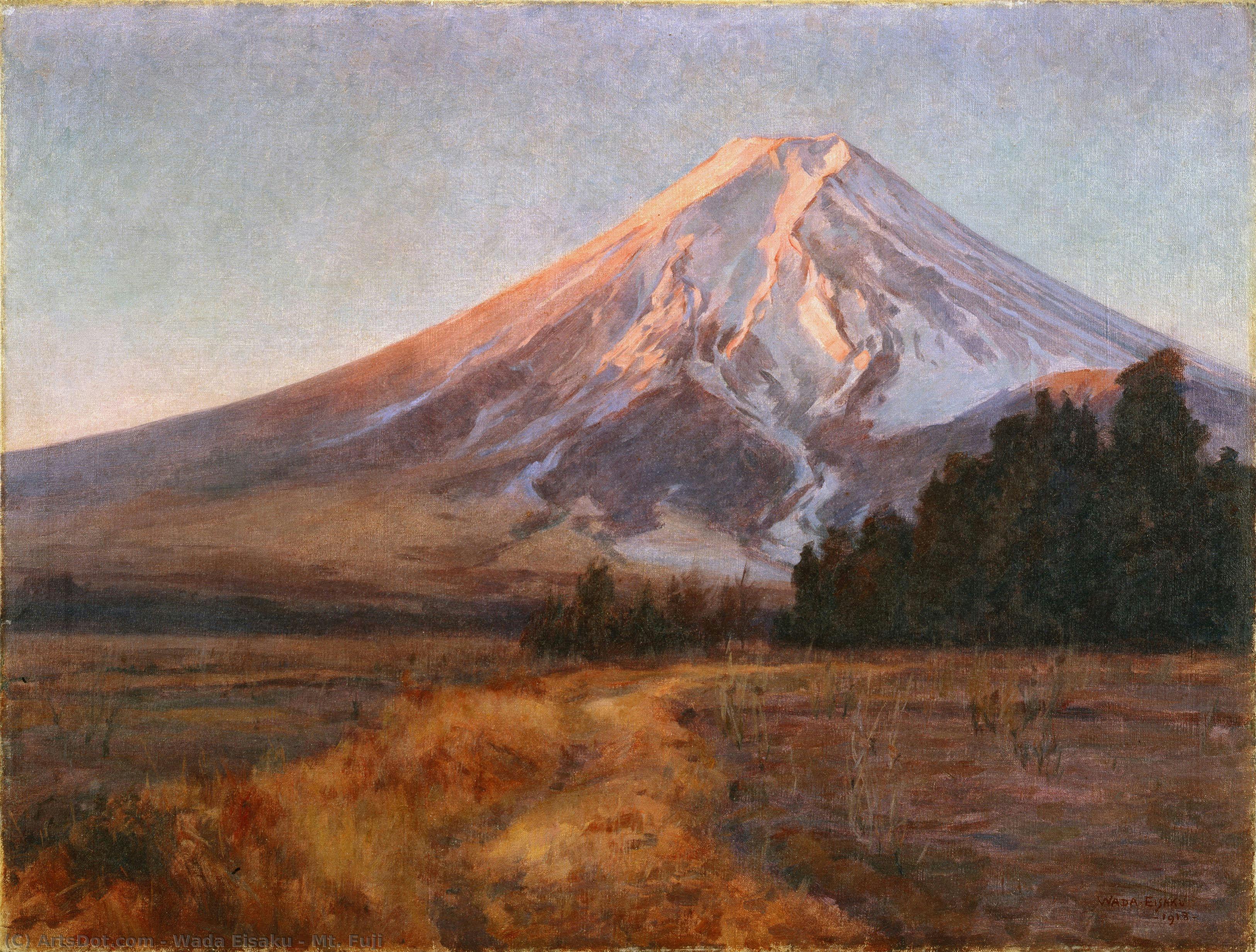
Wada Eisaku (和田英作; December 23, 1874 – January 3, 1959) was a Japanese painter and luminary of the yōga (or Western-style) scene in the late Meiji, Taishō, and Shōwa eras. He was a member of the Japan Art Academy, an Imperial Household Artist, a recipient of the Order of the Sacred Treasure and Order of Culture, an Officier in the Légion d’honneur, and a Person of Cultural Merit. Born in what is now Tarumizu City, Kagoshima Prefecture, Japan, Wada's artistic journey began modestly, shaped by familial circumstances that propelled him to Tokyo at the tender age of four or five when his father, Hidetoyo, a pastor of the Episcopal Church, was appointed as an instructor in English at the Imperial Naval Academy. This relocation instilled in young Eisaku a profound appreciation for Western culture and intellectual pursuits—a formative influence that would permeate his artistic sensibilities throughout his life. His education commenced at Shiba Ward Tomoe Primary School, where he honed foundational skills alongside fellow aspiring artists like Miyake Kokki, establishing a crucial connection to the burgeoning yōga movement. Notably, Wada’s mentor was Uesugi Kumatsu, who had studied with Achille Sangiovanni in Italy—a partnership that exposed him to groundbreaking European artistic innovations and cemented his commitment to mastering Western painting techniques.
Exposure to Western Art and Influential Teachers
The pivotal moment arrived in 1890 when Wada enrolled at Meiji Gakuin, alongside Kokki and Yazaki Chiyoji—institutions that championed the adoption of Western artistic ideals. Among his instructors was Uesugi Kumatsu, who had studied with Sangiovanni in Italy—a connection that instilled in Wada a deep understanding of European painting traditions. This exposure ignited his passion for yōga and propelled him to explore new horizons beyond traditional Japanese aesthetics. Wada’s artistic development continued under the guidance of Kubota Beisen of the Maruyama School, who had returned from France with an unwavering belief in the transformative potential of Western art. He was particularly captivated by Kuroda Seiki's bold use of color—a stylistic approach that challenged conventional notions of beauty and encouraged Wada to experiment with innovative techniques. The influence of Kuroda’s artistic vision profoundly shaped Wada’s oeuvre, fostering a distinctive blend of Eastern sensibility and Western innovation.
The Hakubakai Movement and Early Exhibitions
Recognizing the need for fresh perspectives within Japanese art, Wada joined forces with fellow artists Hiroshi Yoshida, Yokoyama Taikan, and others to form the Hakubakai (白馬會) in June 1896. This collective aimed to revitalize yōga by embracing vibrant colors and capturing the grandeur of nature—a deliberate departure from the muted palettes favored by earlier generations of painters. Wada’s participation in the Hakubakai signaled his unwavering dedication to artistic experimentation and his desire to contribute to a broader cultural dialogue. Shortly thereafter, he secured a position as assistant professor at Tokyo Bijutsu Gakkō (now Tokyo University of the Arts), furthering his scholarly pursuits while simultaneously nurturing his artistic talent. His early exhibitions showcased his burgeoning mastery of yōga—demonstrating his ability to translate European artistic concepts into compelling visual narratives.
Notable Works and Recognition
Wada’s artistic output spanned decades, producing iconic landscapes and portraits that captured the spirit of Japan during its modernization era. Among his most celebrated paintings include “Kiryū Kannon” (観音菩薩騎龍), a monumental depiction of Buddha riding a dragon—a testament to Wada’s ambition and technical prowess—and “Musha Shikoku” (武者四国), which exemplifies the Hakubakai's commitment to portraying heroic themes inspired by Japanese folklore. His work gained international acclaim, earning him membership in prestigious organizations such as the Japan Art Academy and securing his place among the Imperial Household Artists—a distinction reflecting his profound contribution to Japanese cultural heritage. Wada’s artistic legacy endured beyond his lifetime, solidifying his reputation as one of yōga's foremost practitioners and ensuring that his vision would continue to inspire future generations of artists. He was awarded the Order of Culture in 1948 and the Order of the Sacred Treasure in 1950—honors recognizing his unwavering devotion to artistic excellence and his enduring influence on Japanese art history. Wada Eisaku passed away peacefully in Shimizu City, Shizuoka Prefecture, January 3, 1959, leaving behind a rich artistic heritage that continues to resonate with collectors and scholars alike.


 Preview
 Switch to hand made Painting
 Verstuur
 Delen
Delen
 Details bekijken

 Download
 Vergelijkbare werken
 Röntgenonderzoek
 Diavoorstelling
 Lees meer






































 De optie voor glas is alleen beschikbaar bij een formaat kleiner dan 110 cm.



