
 Forhåndsvisning
 Send
Send Del
Del
 Vis detaljer
 Utskriftsvennlig guide

 Last ned bilde
 Liknende objekter
 Røntgenundersøkelse
 Lysbildefremvisning
 Spørsmål og svar
 Statistikk
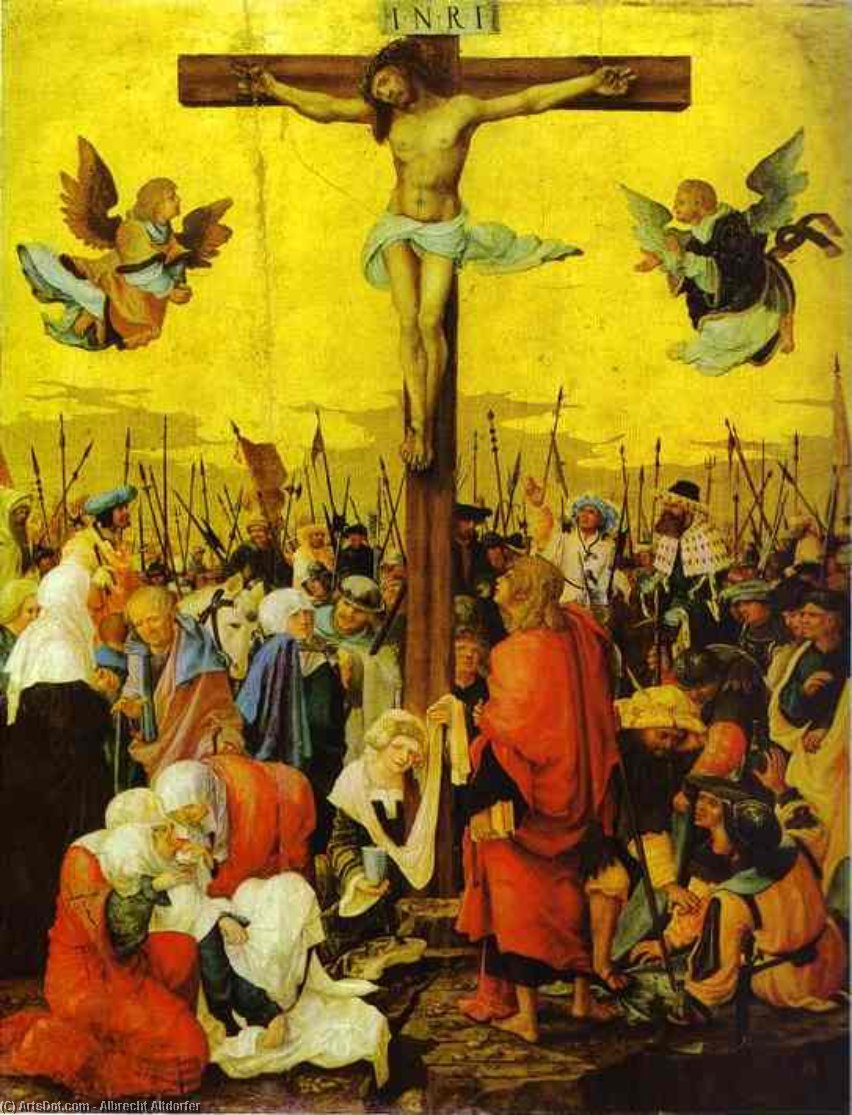
Crucifixion

- 29.0 x 21.0 cm


Albrecht Altdorfer's "Crucifixion" (1526) is a dramatic, evocative depiction of Christ’s suffering, showcasing the artist's pioneering landscape style and masterful use of color within the Northern Renaissance.
 Vis hele teksten
Albrecht Altdorfer (1480-1538): Pioner for tysk landskapsmaleri og en viktig figur i den øvre renessansen. Utforsk hans gravyrer, religiøse verk og innovative kunst.
Få en utskriftsklar fil som går langt utover forhåndsvisningen på nett. Hvert digitale bilde vi selger er hentet fra en høyoppløselig master i vår database – vanligvis mellom 5 000 og 15 000 piksler bred – slik at du kan trykke stort, beskjære tett eller gjenskape fine detaljer med full trygghet.
Ingen filer forlater studioet vårt uten å bli bearbeidet. En digital ekspert kontrollerer fargene mot det originale maleriet og korrigerer dem ved behov, for deretter å forbedre klarhet og detaljrikdom med profesjonelle retusjeringsverktøy — alltid tro mot kunstnerens penselstrøk og stil. Resultatet er et bilde som fremstår som selve maleriet, ikke som en skann med filter.
Du godkjenner før ferdigstilling: vår ekspert sender bildet på e-post til din vurdering innen 72 timer. Ikke fornøyd? Be om forbedringer eller korrigeringer, eller be om refusjon dersom kvaliteten ikke svarer til forventningene.
Dette er kvaliteten forlag, designstudioer, gallerier og trykkerier stoler på.
Digitalt bilde
Last ned en høyoppløselig fil til personlig bruk, utskrift og kreative prosjekter. ( Bytt til trykk Kjøp håndmalt maleri)
Inkludert i alle bestillinger av digitale bilder
Ekspert på digital levering, garantert
Når du velger TopImpressionists.com, får du ikke bare et bilde – du mottar et profesjonelt etterbehandlet digitalt kunstverk, skapt med presisjon og med en garantert tilfredshetsgaranti. Her er alt som automatisk følger med din bestilling:

Rask levering på e-post
Din høyoppløselige digitale bildefil sendes til din e-post innen 72 timer etter bestilling – klar til umiddelbar bruk.

KI-forbedret digital fil
Ditt kunstverk blir profesjonelt optimalisert ved hjelp av avanserte AI-verktøy og manuell redigering, noe som sikrer maksimal detaljrikdom, klarhet og fargegjengivelse.

Gratis livslang nyutlevering
Har du ved et uhell slettet eller mistet filen din? Ingen bekymring – vi sender den på nytt når som helst, helt gratis.

Ingen importavgifter – noen gang
Nyt ditt kunstverk umiddelbart uten toll, avgifter eller leveringskostnader – digitale nedlastinger er alltid avgiftsfrie.

Garantert fargenøyaktighet
Vi sikrer at det digitale bildet gjenspeiler de originale fargene så nøyaktig som mulig ved hjelp av profesjonelle verktøy og fargehåndtering.

100 dagers fornøydhetsgaranti
Hvis du ikke er fornøyd med ditt digitale bilde, vil vi revidere det eller refundere 100% innen 100 dager – uten spørsmål.

100% Penggaranti
Ikke fornøyd? Få full refusjon innen 100 dager etter at du har mottatt din digitale fil – uten spørsmål.

Rabatt ved storkjøp
Kjøp 3 bilder, spar 10% - Kjøp 5, spar 15% - Kjøp 10+, spar 20%. Ideelt for kreative prosjekter, gallerier og byråer.
The Weight of Sorrow: Albrecht Altdorfer’s “Crucifixion”
Albrecht Altdorfer's "Crucifixion," painted in 1526, isn’t merely a depiction of a pivotal religious event; it’s a visceral experience. Emerging from the burgeoning German Renaissance, Altdorfer wasn’t simply replicating biblical narratives; he was forging a new visual language, one deeply rooted in the natural world yet imbued with profound spiritual intensity. This particular rendition transcends simple illustration, becoming a landscape saturated with grief and a haunting meditation on sacrifice. The painting immediately commands attention not through grand scale – it's remarkably intimate, measuring just 29 x 21 cm – but through its masterful manipulation of light, color, and composition to evoke an overwhelming sense of sorrow.
The scene unfolds against a dramatically rendered landscape—a brooding, almost primeval forest. The trees, rendered in thick, layered brushstrokes of deep greens, browns, and purples, seem to writhe with the weight of the event. This isn’t a picturesque vista; it's a wilderness imbued with an unsettling energy. Altdorfer deliberately eschews traditional depictions of serene backgrounds, instead presenting a landscape actively participating in the drama. The distant mountains, shrouded in mist and shadow, amplify the feeling of isolation and despair. Notice how the artist uses atmospheric perspective – lighter hues for objects further away – to create a sense of depth and distance, drawing the viewer’s eye into the heart of the scene.
A Pioneer of Landscape
Albrecht Altdorfer stands as a pivotal figure in art history, largely credited with establishing landscape painting as an independent artistic subject within Europe. Prior to his work, landscapes were typically relegated to mere backgrounds for religious or mythological scenes. However, Altdorfer recognized the power of the natural world to convey emotion and meaning. His meticulous observation of nature—evident in the detailed rendering of foliage, rocks, and atmospheric conditions—transformed the landscape from a passive backdrop into an active participant in the narrative. This shift was revolutionary, paving the way for later generations of landscape artists like Albert Bierstadt and Frederic Church.
His background as a town architect and council member further informs his artistic approach. Altdorfer possessed a keen eye for spatial relationships and a deep understanding of how to create a sense of harmony and balance within a composition. This skill is brilliantly demonstrated in “Crucifixion,” where the human figure—Jesus—is carefully positioned within the landscape, creating a dynamic interplay between the earthly realm and the divine.
Symbolism and Emotional Resonance
Beyond its technical brilliance, "Crucifixion" resonates deeply with viewers through its potent symbolism. The stark simplicity of Jesus’s pose – arms outstretched, head bowed – is profoundly moving. Altdorfer avoids any overtly dramatic or theatrical elements, opting instead for a quiet, understated portrayal of suffering. The figures surrounding the cross—angels and soldiers—are rendered in muted tones, emphasizing the central tragedy. Even the light itself seems to weep, casting long shadows across the landscape.
The choice of a dark, foreboding forest as the setting is particularly significant. Forests have historically been associated with death, mourning, and the unknown. In this context, it serves as a powerful metaphor for the spiritual darkness surrounding Jesus’s sacrifice. The painting isn't simply depicting an event; it’s exploring the profound emotional consequences of that event—the grief, despair, and sense of loss experienced by those who witnessed it.
A Timeless Masterpiece
“Crucifixion” is more than just a religious painting; it’s a testament to Altdorfer's artistic genius and his ability to capture the essence of human emotion. The meticulous detail, masterful use of color and light, and profound symbolism combine to create an unforgettable image that continues to resonate with viewers centuries after its creation. Reproductions, like this one, offer a remarkable opportunity to experience the power and beauty of this iconic work, bringing its haunting message into our own spaces.
Spørsmål og svar
Hva slags kunstverk er "Crucifixion" av Albrecht Altdorfer?
"Crucifixion" er et WallArt-verk.
Hva har "Crucifixion" til felles med resten av Albrecht Altdorfer sin produksjon?
"Crucifixion" deler med Albrecht Altdorfers andre verk sin German Renaissance Landscape-stil og de gjentakende temaene: danube school landscape influence, medieval religious symbolism strong, early renaissance artistic trends, german cultural identity depicted, altdorfer's innovative landscape role.
Oppbevares "Crucifixion" i kunstnerens hjemland?
Nei – kunstverket oppbevares i utlandet. Albrecht Altdorfer er født i Tyskland, og museet som har originalen av "Crucifixion" ligger i Germany.
Om kunstneren
Albrecht Altdorfer: A Pioneer of German Landscape
Albrecht Altdorfer, født rundt 1480 i Regensburg, er en sentral figur som broer mellom den sene gotiske perioden og den spirende tyske renessansen. Han var ikke bare en kunstner *i* sin tid; han formet aktivt dens kunstneriske retning, spesielt innen landskapsmaling. Kommer fra en familie dypt forankret i kunstnerisk tradisjon – hans far, Ulrich Altdorfer, var maler og miniatyrmaler – skilte den yngre Altdorfer seg raskt ut ikke som en slavisk etterkommer, men som en innovatør. Regensburg, en fritt herskende keby by strategisk plassert på Danuberen, ga et levende kulturliv som preget hans formative år. Denne beliggenheten formet hans kunstneriske sanser dypt, og skapte en forbindelse til naturen som skulle bli sentral i hans verk. Ut over sin kunst var Altdorfer en mann av borgerskap, både byarkitekt og rådsmedlem – et bevis på hans allsidige talenter. Likevel var det gjennom sin kunst – spesielt hans tidlige graveringer og tegninger fra rundt 1506, som *Stygmata of St. Francis* og *St. Jerome* – at han først avslørte en unik kunstnerisk stemme, hintende om den emosjonelle intensiteten og det nøyaktige detaljnivået som skulle kjennetegne hans modne stil.The Danube School and a Revolutionary Vision
Altdorfer er mest fremtredende anerkjent som en ledende figur i Danube-skolen, en innflytelsesrik gruppe kunstnere som opererte i det sørlige Tyskland tidlig på 1500-tallet. Denne kunstneriske sirkelen delte en felles fascinasjon for å utforske landskapets uttrykspensler, og hevede det fra å være et rent bakgrunnselement til å bli et sentralt tema i sin egen rett. Før Altdorfer ble landskaper primært brukt som bakgrunner for religiøse eller historiske fortellinger; han turte å male naturen *for seg selv*, innlemt med atmosfære og emosjonell resonans. En transformativ reise nedover Danuberen og inn i Alpene rundt 1511 utløste en lidenskap for å male landskap med uvanlig nøyaktighet og følelse. Han ble, om ikke annet, den første moderne landskapsmaleren, ikke bare å gjenskape det han så, men å formidle en emosjonell respons – en følelse av undring, mystikk og til og med åndelig forbindelse. Dette var ikke bare topografisk nøyaktighet; det handlet om å fange *opplevelsen* av å være i et landskap. Hans verk, som *"The Large Spruce"*, illustrerer denne overgangen, og tilbyr en rolig og intrikat fremstilling av naturens skjønnhet.Masterpieces and Artistic Influences
Gjennom hele sin karriere produserte Altdorfer et mangfoldig utvalg av verk, inkludert malerier, graveringer, tegninger og arkitektoniske design. Blant hans mest berømte prestasjoner er *The Battle of Alexander at Issus* (1529), bestilt av hertug William IV av Bayern. Denne monumentale malingen viser ikke bare hans mesterskap i komposisjon og detalj, men også hans innovative bruk av landskap for å øke den dramatiske spenningen i krigsscenen. De virvlende skyene, de skarpe fjellene og det kaotiske slaget med soldater skaper en følelse av overveldende energi og spektakel. Hans samarbeid med keiser Maximilian I i Innsbruck fra 1513 utvidet ytterligere hans kunstneriske horisonter og ga muligheter for store prosjekter. Altdorfers stil ble ikke dannet i isolasjon; han absorberte innflytelser fra forskjellige kilder. Giorgiones poetiske lyriske, Lucas Cranachs uttrykksfulle figurer og Albrecht Dürers nøyaktige detaljer etterlot sitt spor i hans arbeid. Likevel syntetisere han disse influensene til en unikt personlig visjon, karakterisert av sin emosjonelle intensitet, dramatiske belysning og suggestive landskaper. Hans graveringer, som *"Venus after the Bath"*, demonstrerer hans ferdigheter i dette mediet, og viser delikate linjer og intrikate detaljer.Legacy and Lasting Impact
Albrecht Altdorfers kunstneriske arv strekker seg langt utover de 55 panelene, 120 tegningene og de mange graveringene han skapte i løpet av hans livstid. Han endret fundamentalt måten kunstnere nærmet seg landskapsmaling på, og banet vei for fremtidige generasjoner til å utforske dets uttrykspensler. Hans innflytelse kan sees i verkene til senere tyske romantiske malere som søkte å fange den sublime skjønnheten og den emosjonelle kraften i naturen. I dag er Altdorfers kunst representert i store museam samlinger over hele verden, inkludert Museum Ostdeutsche Galerie i Tyskland – som huser hans *Madonna (Beautiful Maria of Regensburg)* og Kunstsammlungen und Museen Augsburg i Østerrike. Hans innovative ånd, tekniske ferdigheter og dype forbindelse til naturen inspirerer fortsatt kunstnere og fanger publikum i århundrene etter hans død i 1538. Han er en fremtredende figur i den tyske renessansen, en ekte pioner som turte å se landskap ikke bare som bakgrunn, men som en kraftig ressurs for å vekke dype følelser og åndelig mening. Hans verk vitner om kunstens vedvarende kraft til å transformere vår oppfatning av verden rundt oss – en arv som fortsatt resonerer hos publikum i dag.Exploring Altdorfers Diverse Works
Ut over hans ikoniske landskaper og slagscener omfattet Altdorfers kunstneriske rekkevidde religiøse emner, mytologiske fortellinger og til og med arkitektoniske design. Hans fremstillinger av bibelske historier, som *"Abraham's Sacrifice"*, er fylt med dramatisk intensitet og emosjonell dybde som skiller dem fra tidligere tolkninger. Han illustrerte ikke bare Skriften; han utforsket den menneskelige tilstand gjennom Guds perspektiv.- Graveringer: Altdorfers graveringer, som *"Mucius Scaevola Burning His Hand"*, demonstrerer hans ferdigheter i linje og detalj, ofte og formidler en følelse av bevegelse og drama.
- Tegninger: Hans tegninger gir intime glimt inn i hans kreative prosess, og avslører hans nøyaktige observasjonsevner og uttrykksfulle bruk av skyggelegging.
- Arkitektoniske design: Som byarkitekt for Regensburg bidro Altdorfer til byens befestninger og byplanlegging, og viste frem sine praktiske og kunstneriske talenter.

Albrecht Altdorfer
1480 - 1538 , Tyskland
Kort om kunstneren
- Artistic Movement Or Style: Danube Skolen, Renessanse
- Artists Or Movements Influenced By This Artist: ['Tysk Romantik']
- Artists Who Influenced This Artist:
- Giorgione
- Lucas Cranach
- Date Of Birth: c. 1480
- Date Of Death: 1538
- Full Name: Albrecht Altdorfer
- Nationality: Tysk
- Notable Artworks:
- Slaget ved Alexander
- Det Store Furu
- Place Of Birth: Regensburg, Tyskland