

 Forhåndsvisning
 Send
Send Del
Del
 Vis detaljer
 Utskriftsvennlig guide

 Last ned bilde
 Liknende objekter
 Røntgenundersøkelse
 Lysbildefremvisning
 Spørsmål og svar
 Statistikk
Untitled (AQTDFD)


Explore Amédée Masclef’s exquisite 2001 botanical illustration of *Tussilago farfara*. A detailed pen & ink study in classic scientific style – a unique piece for collectors.
Amédée Masclef (1858-1916) was a French Symbolist painter known for his evocative, dreamlike landscapes & portraits. Explore his unique style and artistic legacy.
 Vis hele teksten
Giclée / Kunsttrykk
Giclée- eller lerretsprint av museumskvalitet med rask produksjon og fleksible valgmuligheter for etterbehandling. ( Kjøp håndmalt maleri Bytt til digitalt bilde)




































Standardformat
skreddersydd
CM
INCH
Velg mellom våre forhåndsdefinerte størrelser som bevarer kunstverkets opprinnelige proporsjoner.
Loading sizes...

bredde
høyde
Skriv inn ønsket bredde og høyde for å tilpasse trykket til din ramme eller vegg. Et trykk kan kun beskjæres, aldri skaleres opp utover motivets opprinnelige størrelse, noe som betyr at et format med andre proporsjoner vil føre til tap av deler av bildet. Vi sender deg en digital mockup for godkjenning før vi starter trykkeprosessen. Bildet som vises på denne siden viser ikke den faktiske beskjæringen — det er kun mockuppen som viser dette.
Verdensomspennende levering () på 2 uker i stedet for standard 4/5 uker. (13 November)

Gratis ekspressfrakt over hele verden

Lerretsduk av lin av høy kvalitet

Full transportforsikring

Garanti for refusjon av toll og importavgifter

Garantert fargegjengivelse

100 dagers returrett ved fabrikasjonsfeil

100% pengene tilbake-garanti

Rabatt ved flere kjøp
 Glassalternativet er kun tilgjengelig i størrelser under 110 cm

Untitled (AQTDFD)
Giclée / Kunsttrykk
Størrelse på reproduksjon
-


Totalpris for valgte alternativer
Nkr 664
Om kunstneren
The Sacred Bloom: The Life and Vision of Amédée Masclef
In the twilight of the nineteenth century, as the rigid structures of academic realism began to dissolve into the ethereal mists of Symbolism, the work of Amédée Masclef emerged as a profound bridge between two worlds. Born on August 9, 1858, in Béthune, Masclef did not merely observe nature; he sought to interpret its divine architecture. His journey was one of unique dualities, shaped by his early theological studies at Amiens Cathedral and his eventual ordination as an abbé in 1885. This spiritual foundation infused his artistic practice with a sense of reverence, transforming the act of botanical illustration from a scientific endeavor into a meditative exploration of the sacred order hidden within the natural world.
Masclef’s artistic development was deeply rooted in the traditions of the Barbizon school, a movement that championed the direct, unadorned observation of nature. From this lineage, he inherited a commitment to authenticity and a profound respect for the en plein air spirit. However, Mascle and his contemporaries were increasingly drawn toward the burgeoning Symbolist movement, which sought to capture subjective experience and emotional resonance. In Masclef’s hands, a simple dandelion or a delicate sprig of chamomile became more than mere specimens; they were vessels of sentiment, imbued with a dreamlike quality that transcended their physical forms.
A Botanical Legacy in Watercolor
The pinnacle of Masclef’s contribution to the visual arts lies in his monumental achievement, the Atlas des Plantes de France. Published in 1891 and revised in 1893 in collaboration with Gaston Bonnier, this extraordinary work consists of four hundred meticulously rendered plates. This was not merely a catalog of flora but a triumph of watercolor technique, where precision met poetry. Each plate demonstrates a masterful command of layering and hatching, capturing the delicate textures, translucent petals, and intricate structures of French vegetation with scientific accuracy and an unmistakable artistic soul.
Beyond his famous atlas, Masclef’s oeuvre is characterized by several key achievements that solidified his place in botanical history:
- Scientific Authority: His role as a Professor of Natural Sciences at the Petit séminaire d'Arras and his membership in the Société botanique de France allowed him to blend rigorous academic knowledge with aesthetic grace.
- Thematic Depth: His ability to navigate the transition from the objective realism of the Barbizon masters to the evocative, often spiritualized imagery of Symbolism.
- Enduring Documentation: The publication of works such as Les plantes d'Europe, which ensured his botanical insights reached a wide European audience for decades.
The Intersection of Science and Spirit
To look upon a Masclef watercolor is to witness the intersection of the analytical mind and the searching soul. His work serves as a vital historical record of the French landscape, yet it remains eternally contemporary through its emotional depth. While he may be overshadowed in popular memory by the more flamboyant figures of the Symbolist movement, his legacy persists in the quiet, enduring beauty of his botanical portraits. He remains a pivotal figure who proved that the most minute details of the natural world—the curve of a leaf or the hue of a petal—could hold the weight of the infinite.

Amédée Masclef
1858 - 1916
Kort om kunstneren
- Full Name: Amédée Masclef
- Nationality: French
- Date Of Birth: 1858
- Date Of Death: 1916
- Place Of Birth: Béthune, France
- Notable Artworks: ['Goodyera repens']
- Artistic Movement Or Style: Symbolist Painter
- Artists Who Influenced This Artist:
- Barbizon realism
- Georges de Layens
Relaterte artikler

The Delicate Beauty of Botanical Realism: Capturing Nature's True Essence through the Lens of Art History
Explore the exquisite world of botanical realism. From scientific precision to Impressionist light, discover how master artists capture nature's true essence through timeless, hand-painted oil reproductions and historical insights for the discerning art lover.

The Soul of the Specimen: Exploring the Timeless Dialogue Between Scientific Precision and Artistic Beauty
Embark on a cultured journey through the profound dialogue between scientific precision and artistic beauty. Explore the history of botanical illustration and anatomical mastery, celebrating the delicate intersection of observation and grace in the annals of art history.

Victorian Naturalism: The Art of Capturing Botanical Precision and Raw Wilderness
Explore the profound beauty of Victorian Naturalism. Discover how 19th-century masters captured botanical precision and raw landscapes through meticulous oil painting techniques and scientific observation.

The Soul of the Specimen: A Journey Through the Artistry of Naturalistic Illustration
Explore the profound beauty of naturalistic illustration. From ancient herbals to scientific masterpieces, discover how art captures the soul of nature through meticulous detail and historical grace.
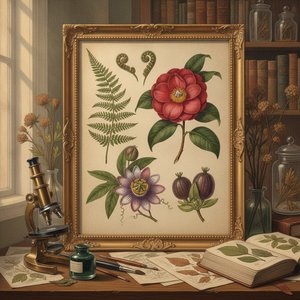
The Timeless Elegance of Victorian Botanical Painting: A Journey Through Nature's Intricate Detail and Scientific Artistry
Discover the exquisite world of Victorian botanical painting, where scientific precision meets profound aesthetic grace. Explore a journey through nature's intricate details, from legendary illustrators to the untamed beauty of Marianne North’s vibrant floral masterpieces.