

Vist: · Med ramme:
 Forhåndsvisning
 Send
Send Del
Del
 Vis detaljer
 Utskriftsvennlig guide

 Last ned bilde
 Liknende objekter
 Røntgenundersøkelse
 Lysbildefremvisning
 Spørsmål og svar
 Statistikk
- 158.0 x 106.0 cm


Nkr 2572
Håndlaget oljereproduksjon
Håndmalt olje på lerret i din valgte størrelse og ramme, laget på bestilling av våre kunstnere. ( Bytt til trykk Bytt til digitalt bilde)
Størrelse
·Standardformat
skreddersydd
CM
INCH
Velg mellom våre forhåndsdefinerte størrelser som bevarer kunstverkets opprinnelige proporsjoner.
Laster inn størrelser...

bredde
høyde
Skriv inn ønsket bredde og høyde for å tilpasse bildet til din ramme eller vegg. Siden dette er håndmalt, kan kunstneren male litt mer rundt motivet eller beskjære det noe dersom du velger et annet format — valget er ditt. Vi sender deg en digital mockup til godkjenning før maleriet påbegynnes. Bildet som vises på denne siden representerer ikke det faktiske resultatet — kun mockuppen viser det endelige uttrykket.
 Les mer om dette
Fullfør
·
Hvit kant Nkr1

Uskarp kantfinish Nkr1

Fortsatt motiv Nkr1

P118B Nkr10

P118H Nkr10

P118W Nkr10

P438Z Nkr10

P508JH Nkr12

P508YH Nkr12

P805H Nkr10

P805Z Nkr10

P919BZ Nkr10

P919G Nkr10

P919XJ Nkr10

P959ZH Nkr10

P968JZ Nkr12

W106C Nkr8

W218G Nkr10

W218JH Nkr8

W218Y Nkr10

W307PJ Nkr10

W316G Nkr10

W316PJ Nkr8

W316Y Nkr10

W398PJ Nkr8

W4111J Nkr10

W500HY Nkr15

W500JH Nkr15

W692G Nkr12

W849H Nkr8

W940BG Nkr15

W953PJ Nkr8

H24-GOLD Nkr30

H24-SILVER Nkr30

H36-GOLD Nkr45

H36-SILVER Nkr45
Sendes i et beskyttende rør, klar til å rammes inn av din egen innrammer.
Over 105 cm sendes rammen som et sett til en profesjonell rammemaker — les detaljene.
Tilleggstjenester
valgfrittHva inkluderer ekstratjenestene?
Eksempler på hva som kan endres: Erstatt ansikt med kundens eget bilde; Legg til kjæledyr (f.eks. bytt ut katt med hund); Inkluder en skjult melding i bakgrunnen; Endre landskap eller elementer i bakgrunnen.
Etter bestilling vil TopImpressionists.com-teamet sende e-post til kunden for instruksjoner og sende et utkast som forhåndsvisning
Etter bestilling vil TopImpressionists.com-teamet sende e-post til kunden for instruksjoner og sende et utkast som forhåndsvisning
Verdensomspennende levering () på 3–4 uker i stedet for standard 5 uker. (4 November). Ingen kompromisser med kvaliteten.
Beskyttende ferniss
Navneskilt
Detaljer om gravert bronseplate
This elegant plaque features the artist's name and the title of the artwork, finely engraved for a timeless presentation.
It is made from bronze with a refined, elegant finish. The text is precisely laser-engraved for a sharp and permanent result. Measuring 9x2 cm, the plaque is compact yet easy to read. It's built to be durable and scratch-resistant, offering a professional, museum-quality look. Mounting is simple thanks to the included adhesive backing.
Detaljer om gjennomsiktig akrylplate
The plaque includes essential engraved details such as the artist's name, the title of the artwork, the date it was created, the type of media used-like oil on canvas or watercolor-a brief description of the piece, and a QR code that links to the complete artwork information.
It is crafted from clear acrylic, offering a sleek, modern appearance. The text is UV-engraved in black to ensure strong visual contrast. With a size of 10x15 cm, it ensures optimal readability. It comes equipped with two metal hooks for secure wall mounting. The plaque is designed to be weather-resistant, making it suitable for various environments, and it includes interactive features that work seamlessly with smartphone scanning.
Detaljer om plakett i svart akryl
This elegant plaque includes engraved information such as the artist's name, the title of the artwork, the date it was created, the type of media used (like oil on canvas or watercolor), a short description of the artwork, and a QR code for quick access to more information.
The plaque itself is made from refined black acrylic with a premium finish. The text is laser-engraved in white for high contrast and readability. Its size is 10x15 cm, designed to be easy to read. It comes with two metal hooks for professional mounting. The design is sleek and fits any interior style. It is also weather-resistant and durable, with built-in digital integration for mobile compatibility.
Glassalternativet er kun tilgjengelig i størrelser under 110 cm
 Glassalternativet er kun tilgjengelig i størrelser under 110 cm
- Gratis ekspressfrakt over hele verden
- Lerretsduk av lin av høy kvalitet
- Full transportforsikring
- Garanti for refusjon av toll og importavgifter
- Garantert fargegjengivelse
- 100 dagers returrett ved fabrikasjonsfeil
- 100% pengene tilbake-garanti
- Rabatt ved flere kjøp


Beskrivelse av objektet
Contemplative portrait of Christ by Andrei Rublev (c. 1410), showcasing masterful Russian iconography; discover this timeless piece today.
Om kunstneren
Andrey Rubljov (ca. 1360-1428): En mester innen russisk ikonmaling, kjent for mystiske og emosjonelle verk som 'Forkynnelsen' og 'Den hellige treenighet'. Utforsk åndelig dybde og bysantinske påvirkninger.
Om maleriet
A Glimpse into Sacred Contemplation: The Aura of Rublev's Deesis
To stand before an image evocative of Andrei Rublev’s profound spiritual vision is to step across the threshold of time itself. This depiction, echoing the solemnity of a Deesis grouping, centers on a figure whose gaze seems to penetrate the veil between worlds. The subject, bearing the unmistakable gravitas associated with Christ or a deeply contemplative saint, commands attention through sheer emotional resonance. It is not merely a portrait; it is an encounter. The artist has captured that fleeting moment where introspection deepens into profound understanding, allowing the viewer to feel the weight of sacred thought emanating from the canvas.
Mastery in Pigment and Spirit: Technique and Craftsmanship
The technical brilliance evident in this work speaks volumes about Andrei Rublev’s unparalleled skill. Observe the meticulous handling of the paint; every visible brushstroke contributes to a tapestry of light and shadow that gives the figure an almost lifelike dimensionality. The contrast between the luminous quality of the face and the simplicity of the background—that striking yellow wall—is nothing short of masterful. This deliberate use of color serves not merely as decoration, but as a structural element guiding the eye directly to the emotional core: the man’s contemplative expression. For those who appreciate fine art reproduction, understanding this technique is key; it allows us to recreate the depth and subtlety that only painstaking hand-painting can achieve.
The Weight of History: Context in Russian Iconography
Dating back to 1410, this piece situates itself within a pivotal era for Russian art. Andrei Rublev was more than just a painter; he was the spiritual chronicler of his age. His work is deeply embedded in the tradition of Orthodox iconography, yet it possesses a unique psychological depth that elevates it beyond mere religious depiction into universal human experience. The style speaks to a period where Byzantine influences mingled with a burgeoning national artistic voice—a confluence that imbues the piece with both timeless sacredness and palpable human drama. Owning a reproduction allows one to bring this historical dialogue into a modern setting.
Symbolism of the Gaze: Emotional Impact for the Modern Collector
The most captivating element remains the subject’s gaze, directed slightly over the shoulder. This averted yet knowing look invites participation from the viewer. Symbolically, it speaks to themes of divine mystery, eternal watchfulness, and quiet wisdom. For collectors and interior designers alike, this piece offers more than just aesthetic beauty; it offers an atmosphere. It suggests a sanctuary within a room—a focal point that encourages pause, reflection, and a deeper appreciation for the enduring narratives of faith and humanity. The rich tones and profound subject matter ensure that this artwork will not merely hang on a wall, but rather inhabit the space with quiet dignity.
Spørsmål og svar
Hvor intense er fargene i "Deesis Range: The Saviour" av Andrei Rubljov?
Fargene i "Deesis Range: The Saviour" av Andrei Rubljov har en Vivid intensitet.
Har "Deesis Range: The Saviour" sterke lys-mørke-kontraster?
"Deesis Range: The Saviour" av Andrei Rubljov viser en Serene kontrast mellom de lyse og mørke partiene.
Hva anbefales en reproduksjon av "Deesis Range: The Saviour" av Andrei Rubljov til?
En reproduksjon av "Deesis Range: The Saviour" av Andrei Rubljov anbefales til Focal. Dette forslaget er basert på verkets motiv, stemning og fargebruk.
Kort om verket og kunstquiz
Om Andrei Rubljov

Andrei Rubljov
1360 - 1428, Russland
Om kunstneren
Andrei Rublev: Sjelen i russisk ikonmaling
Andrei Rublev (ca. 1360 – ca. 1430) forblir en av de mest gåtefulle og dyptgående innflytelsesrike skikkelsene i den russiske kunsthistorien. Mer enn bare en maler, legemliggjør han et sammensmeltingspunkt av åndelig hengivenhet, kunstnerisk mesterskap og selve essensen av middelalderens Russland – en nasjon som kjempet med sin egen identitet under bysantinsk innflytelse og en spirende nasjonal bevissthet. Selv om detaljene rundt hans liv forblir innhyllet i mystikk, er hans ettermæle som sin tids fremste ikonograf ubestridelig; han formet ikke bare det visuelle språket i russisk ortodoks kunst, men satte også dype spor hos påfølgende generasjoner av kunstnere.
Lite konkret informasjon overlever fra Rublevs tidlige år. Det antas at han ble født i Moskva, selv om noen beretninger antyder en mulig opprinnelse ved Trinity-St. Sergius Lavra-klosteret nær byen – et sted som ville ha preget hans kunstneriske utvikling dypt. Hans læretid under Teofanes den greske, en anerkjent bysantinsk ikonmaler som hadde emigrert til Russland, ga ham et uvurderlig fundament i tidens teknikker og stilistiske konvensjoner. Likevel overskred Rublev raskt ren etterligning; han gjennomsyret disse etablerte formene med en unikt russisk sansbarhet – en merkbar følelse av ydmykhet, åndelig dybde og emosjonell resonans som skilte hans verk fra de bysantinske forgjengerne.
- Tidlig karriere i Kreml: Rublevs tidlige karriere er uadskillelig knyttet til Moskva Kreml. I 1405 slo han seg sammen med Teofanes og Prokhor av Gorodets for å dekorere Forkynnelseskatedralen, et vendepunkt i russisk ikonmaling. Dette samarbeidet eksponerte Rublev for maktens øverste sjikt og ga ham uvurlig erfaring med arbeid i storslått skala.
- Treenighetsikonet: Rublevs kanskje mest berømte verk, "Treenigheten" (ca. 1420-1428), er et vitnesbyrd om hans kunstneriske geni. Dette mesterverket, som nå er innkvartert i Tretyakov-galleriet i Moskva, fraviker subtilt fra tradisjonell bysantinsk ikonografi. Figurene av Abraham og Sara er fraværende, erstattet av en mer intim fremstilling av Treenigheten – Faderen, Sønnen og Den hellige ånd – et skifte som har blitt tolket som en refleksjon av Rublev_s egen åndelige forståelse av guddommelig enhet.
- Andronikov-klosteret: Etter arbeidet i Kreml tilbrakte Rublev den siste delen av sin karriere ved Andronikov-klosteret nær Moskva. Her fortsatte han å male ikoner og fresker, inkludert en serie praktfulle veggmalerier i Frelserkatedralen, som viste hans utviklende stil og dypere åndelige utforskning.
Fusjonen av bysantinske og russiske tradisjoner
Rublevs kunstneriske visjon ble ikke født i isolasjon; den var dypt forankret i både bysantinske tradisjoner og fremvoksende russiske sanseligheter. Teofanes' innflytelse er ubestridelig – de nitidige detaljene, de rike fargene og den formelle strukturen i hans komposisjoner er alle kjennetegn ved bysantinsk ikonmaling. Likevel integrerte Rublev dyktig disse elementene med en distinkt russisk estetikk – en dyp følelelse av ydmykhet, en vektlegging av emosjonelt uttrykk og en forbindelse til det åndelige livet i klostersamfunnet.
- Bysantinsk innflytelse: Innflytelsen fra bysantinsk ikonografi er lett gjenkjennelig i Rublev_s bruk av hierarkisk komposisjon, hans nøyaktige gjengivelse av drapering og hans etterlevelse av etablerte ikonografiske konvensjoner. Hans arbeid demonstrerer en dyp forståelse av bysantinske kunstprinsipper, noe som reflekterer den kulturelle og religiøse utvekslingen mellom Russland og Bysants.
- Russisk spiritualitet: Samtidig infuserte Rublev sin kunst med et unikt russisk åndelig perspektiv. Hans figurer er verken idealiserte eller heroiske; de besitter en stille verdighet og en aura av dyp ydmykhet. Denne vektleggingen av indre spiritualitet resonnerte dypt med datidens klosteretos – en periode preget av intens religiøs glød og en lengsel etter guddommelig forening.
- Novgorodsk ikonografi: Rublev_s stil viser også spor av Novgorod-ikonmaling, som var kjent for sine uttrykksfulle ansikter og emosjonelle intensitet. Denne innflytelsen bidro til den psykologiske dybden og emosjonelle resonansen som karakteriserer hans verk.
Symbolikk og åndelig dybde
Rublev_s ikoner er ikke bare vakre bilder; de er gjennomsyret av lag med symbolsk mening, noe som reflekterer en dyp forståelse av kristen teologi og åndelig praksis. Hans komposisjoner inneholder ofte subtile gester, ansiktsuttrykk og romlige arrangementer som formidler komplekse teologiske ideer.
- Treenighetsikonet: "Treenigheten" er spesielt rik på symbolikk. De tre englene representerer Faderen, Sønnen og Den hellige ånd, mens den sentrale figuren – en ydmyk bonde – symboliserer menneskehetens behov for guddommelig nåde. Fraværet av Abraham og Sara i komposisjonen antyder et skifte bort fra tradisjonelle narrativer mot en mer intim og personlig forståelse av Guds forhold til menneskeheten.
- Andre ikonografiske elementer: Rublev benyttet ofte symbolske gester, som hender foldet i bønn eller øyne vendt mot himmelen, for å formidle åndelig lengsel og hengivenhet. Hans bruk av farger – særlig de rike blåtonene og gull – bærer også en symbolsk vekt som fremmaner forestillinger om det guddommelige og transcendens.
Ettermæle og historisk betydning
Til tross for sitt relativt korte liv, etterlot Andrei Rublev et uutslettelig merke på russisk kunst og kultur. Hans arbeid påvirket påfølgende generasjoner av ikonmalere dypt, og formet utviklingen av russisk ikonografi i århundrer fremover. Stoglavi Sobor i 1551 erklærte offisielt Rublev_s stil som en modell for kirkemaling, noe som sementerte hans status som en nasjonal kunstnerisk helt.
- Tarkovskijs film: Andrei Tarkovskijs film fra 1966, Andrei Rublev, spilte en avgjørende rolle i å gjenopplive interessen for kunstnerens liv og virke. Selv om filmen er løst basert på historiske hendelser, fanget den Rublev_s åndelige dybde og kunstneriske geni, og introduserte ham for et bredere publikum.
<Hellig anerkjennelse: I 1988 kanoniserte den russisk-ortodokse kirken Rublev som helgen, som en anerkjennelse av hans dype bidrag til russisk spiritualitet og kunst. Hans festdag feires 29. januar, for å minnes både hans død og hans evige ettermæle.
- Vedvarende innflytelse: I dag forblir Andrei Rublev en av Russlands mest elskede kunstnere – et symbol på åndelig hengivenhet, kunstnerisk mesterskap og troens vedvarende kraft. Hans ikoner fortsetter å inspirere ærefrykt og vørdnad, og tilbyr et glimt inn i middelalderens Russland og den tidløse skjønnheten i kristen ikonografi.
Kort om Andrei Rubljov
- Artistic Movement Or Style: Russisk ikonmaling
- Artists Or Movements Influenced By This Artist:
- Byzantine ikoner
- Russisk ortodoks kunst
- Artists Who Influenced This Artist:
- Theofanes den greske
- Prokhor av Gorodets
- Date Of Birth: ca. 1360
- Date Of Death: ca. 1428
- Full Name: Andrey Rublyov
- Nationality: Russisk
- Notable Artworks:
- Treenighetens ikon
- Forkynnelsens ikon
- Place Of Birth: Moskva, Russland
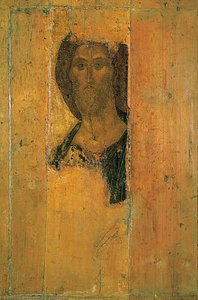
Andrei Rubljov
Deesis Range: The Saviour
() ·
Med ramme: · Håndmalt med olje på lin
Totalt