

Vist: · Med ramme:
 Forhåndsvisning
 Send
Send Del
Del
 Vis detaljer
 Utskriftsvennlig guide

 Last ned bilde
 Liknende objekter
 Røntgenundersøkelse
 Lysbildefremvisning
 Spørsmål og svar
 Statistikk
- 71.0 x 105.0 cm


Nkr 2573
Håndlaget oljereproduksjon
Håndmalt olje på lerret i din valgte størrelse og ramme, laget på bestilling av våre kunstnere. ( Bytt til trykk Bytt til digitalt bilde)
Størrelse
·Standardformat
skreddersydd
CM
INCH
Velg mellom våre forhåndsdefinerte størrelser som bevarer kunstverkets opprinnelige proporsjoner.
Laster inn størrelser...

bredde
høyde
Skriv inn ønsket bredde og høyde for å tilpasse bildet til din ramme eller vegg. Siden dette er håndmalt, kan kunstneren male litt mer rundt motivet eller beskjære det noe dersom du velger et annet format — valget er ditt. Vi sender deg en digital mockup til godkjenning før maleriet påbegynnes. Bildet som vises på denne siden representerer ikke det faktiske resultatet — kun mockuppen viser det endelige uttrykket.
 Les mer om dette
Fullfør
·
Hvit kant Nkr1

Uskarp kantfinish Nkr1

Fortsatt motiv Nkr1

P118B Nkr10

P118H Nkr10

P118W Nkr10

P438Z Nkr10

P508JH Nkr12

P508YH Nkr12

P805H Nkr10

P805Z Nkr10

P919BZ Nkr10

P919G Nkr10

P919XJ Nkr10

P959ZH Nkr10

P968JZ Nkr12

W106C Nkr8

W218G Nkr10

W218JH Nkr8

W218Y Nkr10

W307PJ Nkr10

W316G Nkr10

W316PJ Nkr8

W316Y Nkr10

W398PJ Nkr8

W4111J Nkr10

W500HY Nkr15

W500JH Nkr15

W692G Nkr12

W849H Nkr8

W940BG Nkr15

W953PJ Nkr8

H24-GOLD Nkr30

H24-SILVER Nkr30

H36-GOLD Nkr45

H36-SILVER Nkr45
Sendes i et beskyttende rør, klar til å rammes inn av din egen innrammer.
Over 105 cm sendes rammen som et sett til en profesjonell rammemaker — les detaljene.
Tilleggstjenester
valgfrittHva inkluderer ekstratjenestene?
Eksempler på hva som kan endres: Erstatt ansikt med kundens eget bilde; Legg til kjæledyr (f.eks. bytt ut katt med hund); Inkluder en skjult melding i bakgrunnen; Endre landskap eller elementer i bakgrunnen.
Etter bestilling vil TopImpressionists.com-teamet sende e-post til kunden for instruksjoner og sende et utkast som forhåndsvisning
Etter bestilling vil TopImpressionists.com-teamet sende e-post til kunden for instruksjoner og sende et utkast som forhåndsvisning
Verdensomspennende levering () på 3–4 uker i stedet for standard 5 uker. (7 November). Ingen kompromisser med kvaliteten.
Beskyttende ferniss
Navneskilt
Detaljer om gravert bronseplate
This elegant plaque features the artist's name and the title of the artwork, finely engraved for a timeless presentation.
It is made from bronze with a refined, elegant finish. The text is precisely laser-engraved for a sharp and permanent result. Measuring 9x2 cm, the plaque is compact yet easy to read. It's built to be durable and scratch-resistant, offering a professional, museum-quality look. Mounting is simple thanks to the included adhesive backing.
Detaljer om gjennomsiktig akrylplate
The plaque includes essential engraved details such as the artist's name, the title of the artwork, the date it was created, the type of media used-like oil on canvas or watercolor-a brief description of the piece, and a QR code that links to the complete artwork information.
It is crafted from clear acrylic, offering a sleek, modern appearance. The text is UV-engraved in black to ensure strong visual contrast. With a size of 10x15 cm, it ensures optimal readability. It comes equipped with two metal hooks for secure wall mounting. The plaque is designed to be weather-resistant, making it suitable for various environments, and it includes interactive features that work seamlessly with smartphone scanning.
Detaljer om plakett i svart akryl
This elegant plaque includes engraved information such as the artist's name, the title of the artwork, the date it was created, the type of media used (like oil on canvas or watercolor), a short description of the artwork, and a QR code for quick access to more information.
The plaque itself is made from refined black acrylic with a premium finish. The text is laser-engraved in white for high contrast and readability. Its size is 10x15 cm, designed to be easy to read. It comes with two metal hooks for professional mounting. The design is sleek and fits any interior style. It is also weather-resistant and durable, with built-in digital integration for mobile compatibility.
Glassalternativet er kun tilgjengelig i størrelser under 110 cm
 Glassalternativet er kun tilgjengelig i størrelser under 110 cm
- Gratis ekspressfrakt over hele verden
- Lerretsduk av lin av høy kvalitet
- Full transportforsikring
- Garanti for refusjon av toll og importavgifter
- Garantert fargegjengivelse
- 100 dagers returrett ved fabrikasjonsfeil
- 100% pengene tilbake-garanti
- Rabatt ved flere kjøp


Beskrivelse av objektet
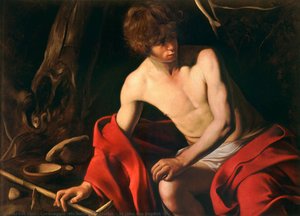
Opplev den rolige skjønnheten i Caravaggios "Sovende Cupid". Dette barokkmesterverket fanger uskyld og sårbarhet med dramatisk chiaroscuro, som viser et hjerteskjærende øyeblikk av hvile midt imot guddommelig plikt.
Om kunstneren
Oppdag Caravaggio (1571-1610): Barokkmester av realisme & tenebrisme. Dramatiske religiøse scener, intens chiaroscuro og en revolusjonerende stil!
Om maleriet
Sleeping Cupid: A Baroque Reverie of Innocence and Shadow
Michelangelo Merisi da Caravaggio’s “Sleeping Cupid,” painted in 1608 and currently residing within the Pitti Palace Museum in Florence, is more than just a depiction of a child; it's a profound meditation on vulnerability, fleeting beauty, and the inherent drama woven into even the most seemingly serene moments. This oil-on-canvas masterpiece encapsulates the essence of Caravaggio’s revolutionary approach to art – his masterful manipulation of light and shadow, his unflinching realism, and his ability to imbue everyday scenes with an extraordinary emotional weight. The painting immediately draws the viewer in with its quiet intimacy; a naked infant angel, or cupid, rests peacefully on a dark ground, enveloped by his delicate wings and abandoned bow and arrow – symbols that collectively speak volumes about the transient nature of love and the inherent fragility of life.
Caravaggio’s genius lay not just in his technical skill but in his profound understanding of human psychology. He wasn't interested in idealized beauty or heroic grandeur; instead, he sought to capture the raw, unfiltered emotions that shaped our experience. “Sleeping Cupid” is a prime example of this approach. The child’s vulnerability is palpable – a sense of utter trust and complete surrender to rest. This isn’t a playful cherub engaged in mischievous pursuits; it's an image of profound peace, almost heartbreaking in its simplicity. The composition itself is remarkably effective: the horizontal format emphasizes the reclining pose, while the diagonal lines created by the wings and bow subtly inject dynamism into the otherwise tranquil scene. The careful arrangement creates a visual rhythm that guides the eye across the canvas, inviting contemplation.
Chiaroscuro and the Dance of Light
The painting’s power is inextricably linked to Caravaggio's signature technique – *tenebrism*. This dramatic use of light and shadow isn’t merely an aesthetic choice; it’s a fundamental element of the artwork’s narrative. A single, intensely bright light source illuminates the cupid’s body, casting deep, velvety shadows that pool around him and define his form with remarkable clarity. This stark contrast between light and dark doesn't simply create depth; it serves to heighten the emotional impact of the scene. The shadows suggest a hidden world, a realm of vulnerability and uncertainty, while the illuminated figure embodies innocence and peace. Notice how the warm highlights on the skin subtly contrast with the cool tones of the background – this interplay creates a visual tension that mirrors the painting’s thematic concerns.
Interestingly, the dark background is unusually extensive, obscuring a significant portion of the cupid's right wing. This deliberate choice adds to the sense of mystery and invites speculation about Caravaggio’s intentions. Some scholars suggest it might be a reference to the concept of “opacity,” symbolizing the hidden aspects of human nature or perhaps alluding to the fleeting nature of beauty itself. The technique employed – direct application of paint to the canvas without extensive underdrawing – allowed Caravaggio to achieve an astonishing level of immediacy and detail, contributing significantly to the painting’s raw emotional power.
Symbolism and a Reflection on Human Condition
Beyond its technical brilliance, “Sleeping Cupid” is rich in symbolism. The abandoned bow and arrow, typically associated with Cupid's role as the god of love, represent a temporary respite from his duties – a moment of peace and quietude amidst the chaos of desire. This imagery speaks to the human condition itself: even the most powerful forces are subject to rest, vulnerability, and the inevitable ebb and flow of experience. The painting can be interpreted as a meditation on mortality, reminding us that beauty is fleeting and that even love, in its most passionate forms, must eventually yield to tranquility.
Caravaggio’s influence extends far beyond his own time. Artists like Peter Paul Rubens, who also explored themes of human emotion with dramatic intensity, were deeply inspired by his work. Rubens' "Madonna and Child Enthroned with Saints" shares a similar blend of realism and religious symbolism, demonstrating the lasting impact of Caravaggio’s innovations. “Sleeping Cupid” remains a testament to Caravaggio’s genius – a timeless masterpiece that continues to captivate viewers with its serene beauty and profound emotional depth.
Bringing Caravaggio Home: A Reproduction for Your Space
TopImpressionists offers meticulously crafted, hand-painted reproductions of "Sleeping Cupid" that capture the essence of this iconic Baroque painting. Our skilled artists replicate Caravaggio’s masterful use of *tenebrism*, recreating the dramatic interplay of light and shadow with stunning accuracy. We utilize archival-quality materials to ensure that your reproduction will retain its beauty and vibrancy for generations to come. Whether you're an art collector, a design enthusiast, or simply seeking a piece of timeless artistry to enhance your home or office, our “Sleeping Cupid” reproduction provides an authentic and exquisite representation of this remarkable work.
Spørsmål og svar
Når og innen hvilken stilretning ble "Sovende Cupid" laget?
"Sovende Cupid" ble skapt i 1608 som et verk innenfor Baroque Painting-retningen. Datoen og kunstretningen forankrer verket i kunsthistorien.
Hva er dateringen til "Sovende Cupid" av Caravaggio?
"Sovende Cupid" av Caravaggio ble skapt i 1608.
Finnes det verk som ligner på "Sovende Cupid"?
Siden Lignende verk for "Sovende Cupid" av Caravaggio viser relaterte kunstverk.
Kort om verket og kunstquiz
Om Caravaggio

Caravaggio
1571 - 1610, Spania
Om kunstneren
Et Liv Smidd i Skygge og Lys
Michelangelo Merisi da Caravaggio, et navn synonymt med barokkmaleriets dramatiske intensitet, ble født i Milano i 1571, en periode preget av både kunstnerisk blomstring og samfunnsmessige omveltninger. Hans tidlige liv var merket av tap; pest herjet hjembyen hans, og krevde livet til faren og bestefaren da han bare var seks år gammel. Oppdratt i relativ fattigdom, innplantet de formative årene en skarp bevissthet om menneskelig lidelse og motstandskraft – temaer som senere skulle dominere hans lerret. Han begynte sin kunstneriske utdannelse i Milano under Simone Peterzano, en tidligere elev av Tizian, absorberte grunnleggende renessanseteknikker, men antydet allerede et opprørsk sinn som snart skulle knuse konvensjonelle normer. Denne lærlingtiden ga et solid fundament, men det var i Roma, rundt 1592, at Caravaggio virkelig fant sin stemme, om enn ikke uten innledende kamp og vanskeligheter. Byen, et pulserende sentrum for kunstnerisk beskyttelse og religiøs glød, viste seg både forlokkende og nådeløs for den ambisiøse unge maleren.En Revolusjonerende Visjon: Teknikk og Stil
Caravaggios ankomst til Roma varslet et seismisk skifte i det italienske kunstlandskapet. Han forkastet den rådende manierismestilen – preget av dens kunstige eleganse og forlengede former – til fordel for en kompromissløs realisme som sjokkerte og fengslet publikum. Hans mest definerende innovasjon var hans mesterlige bruk av chiaroscuro, den dramatiske kontrasten mellom lys og mørke, som han hevet til et nytt nivå av uttrykksfull kraft. Denne teknikken, ofte referert til som tenebrisme, var ikke bare et estetisk valg; det var et middel for å intensivere emosjonell innvirkning, trekke seerne inn i hjertet av scenen og gi figurene hans en håndgripelig følelse av nærvær. Han forkastet idealiserte fremstillinger, befolket i stedet sine malerier med vanlige mennesker – ofte hentet fra gatene i Roma – som modeller for religiøse figurer. Denne radikale tilnærmingen utfordret tradisjonelle forestillinger om skjønnhet og hellighet, og gjorde det hellige relatert og dypt menneskelig. Hans komposisjoner var ofte nakne og direkte, med fokus på kritiske øyeblikk av intens drama, enten det var den brutale realismen i «Peters fangst» eller den stille kontemplasjonen i "Sankt Frans av Assisi i ekstase".Nøkkelverk og Varig Innflytelse
Gjennom sin relativt korte karriere produserte Caravaggio et verk som fortsetter å resonere med publikum i dag. Tidlige arbeider som «Spåkonen» (1594) demonstrerer hans spirende talent for å fange realistisk detalj og psykologisk nyansering. «Supperen i Emmaus» (1601-1602), som finnes på National Gallery i London, eksemplifiserer hans mestring av chiaroscuro og evnen til å formidle dyp emosjonell dybde innenfor en bibelsk fortelling. «David med Goliat hode» (ca. 1610) er spesielt hjemsøkende, ofte tolket som et selvportrett som gjenspeiler Caravaggios egen problematiske tilstand. Hans innflytelse strakte seg langt utover Italia og inspirerte en generasjon kunstnere kjent som Caravaggistene, eller «skyggemalerne», som adopterte hans stil i hele Europa. Bemerkelsesverdige etterfølgere inkluderte Peter Paul Rubens, Jusepe de Ribera og Gerrit van Honthorst, som hver tilpasset Caravaggios teknikker til sine egne unike kunstneriske visjoner.En Tumultarisk Eksistens og Vedvarende Arv
Caravaggios liv var like dramatisk og turbulent som kunsten hans. Et ustabilt temperament og en forkjærlighet for slagsmål førte ham ofte i trøbbel med loven, kulminerende i en mordtiltale i 1606 som tvang ham til å flykte fra Roma. Han tilbrakte de neste fire årene på vandring gjennom Napoli, Malta og Sicilia, fortsatte å male mens han desperat søkte pavelig benådning. Til tross for sine anstrengelser forble han en lovløs mann, hjemsøkt av fortiden sin og plaget av personlige konflikter. Han døde i Porto Ercole, Italia, i 1610 under mystiske omstendigheter – årsaken til hans død er fortsatt omdiskutert, med teorier som spenner fra feber til forgiftning. Selv om livet hans ble kortsluttet, varer Caravaggios kunstneriske arv som et vitnesbyrd om hans revolusjonerende visjon og urokkelige engasjement for realisme. Han utfordret konvensjonene i sin tid, banet vei for en mer moderne tilnærming til maleri og satte et uutslettelig preg på vestlig kunsthistorie. Hans arbeid fortsetter å inspirere ærefrykt og provosere kontemplasjon, og minner oss om kraften i kunsten til å belyse de mørkeste hjørnene av den menneskelige opplevelsen.Kort om Caravaggio
- Artistic Movement Or Style: Barokk, Tenebrisme
- Artists Or Movements Influenced By This Artist:
- Rubens
- Ribera
- Artists Who Influenced This Artist:
- Titian
- Leonardo da Vinci
- Date Of Birth: 29. september 1571
- Date Of Death: 18. juli 1610
- Full Name: Michelangelo Merisi da Caravaggio
- Nationality: Italiensk
- Notable Artworks:
- Fortune Teller
- Supper at Emmaus
- David med Goliat
- Place Of Birth: Milano, Spania
Utforsk kunstverk organisert etter temaer, stiler og kjennetegn.




Caravaggio
Sovende Cupid
() ·
Med ramme: · Håndmalt med olje på lin
Totalt