

 Forhåndsvisning
 Send
Send Del
Del
 Vis detaljer
 Utskriftsvennlig guide

 Last ned bilde
 Liknende objekter
 Røntgenundersøkelse
 Lysbildefremvisning
 Spørsmål og svar
 Statistikk
Suit


Admire Christian Dior’s iconic 1949 ‘New Look’ suit – a timeless masterpiece of navy blue tailoring, padded shoulders & velvet trim. Explore this elegant mid-century fashion piece.
Discover Christian Dior's revolutionary designs! From the 'New Look' to iconic silhouettes, explore the legacy of this French fashion icon & his timeless style.
 Vis hele teksten
Kunstverket som vises på denne siden er beskyttet av opphavsretten, noe som betyr at vi ikke har juridisk tillatelse til å lage eller selge identiske reproduksjoner. Denne beskyttelsen håndheves i henhold til internasjonale avtaler som for eksempel Bernerkonvensjonen og av nasjonale lover, inkludert de som er fastsatt i Amerikansk lov om opphavsrett – Tittel 17.
Denne metoden er i fullt samsvar med opphavsrettslige regler, da den ikke innebærer kopiering eller duplisering av det beskyttede kunstverket. I stedet er det snakk om en kreativ nytolkning – et nytt maleri som er inspirert av originalen, men ikke identisk med den.
Giclée / Kunsttrykk
Giclée- eller lerretsprint av museumskvalitet med rask produksjon og fleksible valgmuligheter for etterbehandling. ( Kjøp håndmalt maleri Bytt til digitalt bilde)




































Standardformat
skreddersydd
CM
INCH
Velg mellom våre forhåndsdefinerte størrelser som bevarer kunstverkets opprinnelige proporsjoner.
Loading sizes...

bredde
høyde
Skriv inn ønsket bredde og høyde for å tilpasse trykket til din ramme eller vegg. Et trykk kan kun beskjæres, aldri skaleres opp utover motivets opprinnelige størrelse, noe som betyr at et format med andre proporsjoner vil føre til tap av deler av bildet. Vi sender deg en digital mockup for godkjenning før vi starter trykkeprosessen. Bildet som vises på denne siden viser ikke den faktiske beskjæringen — det er kun mockuppen som viser dette.
Verdensomspennende levering () på 2 uker i stedet for standard 4/5 uker. (6 November)

Gratis ekspressfrakt over hele verden

Lerretsduk av lin av høy kvalitet

Full transportforsikring

Garanti for refusjon av toll og importavgifter

Garantert fargegjengivelse

100 dagers returrett ved fabrikasjonsfeil

100% pengene tilbake-garanti

Rabatt ved flere kjøp
 Glassalternativet er kun tilgjengelig i størrelser under 110 cm

Suit
Giclée / Kunsttrykk
Størrelse på reproduksjon
-


Totalpris for valgte alternativer
Nkr 670
Om kunstneren
The Dawn of a New Silhouette: Christian Dior’s Revolutionary Vision
Christian Ernest Dior, born in the coastal town of Granville, France, on January 21, 1905, was more than just a fashion designer; he was an architect of dreams, a sculptor of femininity who irrevocably altered the landscape of post-war style. His story is one woven with threads of artistic ambition, wartime resilience, and ultimately, the triumphant rebirth of elegance. Unlike many of his contemporaries who began sketching designs as children, Dior initially pursued studies in political science, a path dictated by familial expectations. However, the allure of art proved too strong to resist. He briefly opened an art gallery in Paris with financial support from his father, showcasing works by luminaries like Picasso and Dalí – a formative experience that instilled within him a deep appreciation for form, color, and the power of creative expression. The closure of the gallery due to economic hardship marked a turning point, leading Dior towards the world of fashion, initially through selling sketches before securing positions with Robert Piguet and later Lucien Lelong.Navigating Wartime Shadows: A Foundation Forged in Constraint
The outbreak of World War II cast a long shadow over Europe, profoundly impacting the fashion industry. During this period, Dior’s work at Lucien Lelong, while providing a livelihood, presented a complex moral landscape. Like many designers operating under occupation, he created garments for both French citizens and the wives of Nazi officers – a necessity for survival but one that would later be subject to scrutiny. However, it was during these years of austerity and restriction that Dior honed his skills, observing the subtle desires for beauty simmering beneath the surface of wartime practicality. The severe rationing, limited fabric availability, and utilitarian styles created a pent-up longing for opulence and extravagance, a yearning that would become the catalyst for his groundbreaking success. This period wasn’t merely about survival; it was an incubation period where Dior meticulously studied what women *wanted*, anticipating a dramatic shift in aesthetic preferences once liberation arrived.The ‘New Look’: A Revolution Unveiled
In 1946, with backing from Marcel Boussac, a powerful textile magnate, Christian Dior established his own fashion house. The debut of his first collection on February 12, 1947, was nothing short of sensational. Carmel Snow, the influential editor-in-chief of *Harper’s Bazaar*, famously christened it the “New Look,” and the name stuck. This wasn't simply a new style; it was a complete rejection of the boxy, masculine silhouettes that had dominated fashion during the war years. Dior reintroduced rounded shoulders, a cinched waist – achieved through innovative corsetry – and full, voluminous skirts cascading to mid-calf. The collection celebrated ultra-femininity, emphasizing curves, luxury fabrics, and an overall sense of joyous extravagance. It was a deliberate embrace of opulence, a defiant statement against the austerity that had defined the previous decade.Beyond the Silhouette: A Legacy of Innovation
Dior’s impact extended far beyond the iconic ‘New Look’. He understood that fashion wasn't just about clothing; it was about creating an entire lifestyle. He pioneered licensing agreements, expanding his brand into accessories, perfumes (Miss Dior remains a timeless classic), and even home décor. This strategic move not only generated substantial revenue but also solidified Christian Dior as a global empire. Each subsequent collection presented a new theme – “Carolle,” “Tulip,” and the revolutionary “A-line” in 1955 – demonstrating his constant pursuit of innovation and his ability to anticipate evolving tastes. He wasn’t afraid to experiment with shapes, textures, and historical references, seamlessly blending them into modern designs.An Enduring Influence: The Timeless Appeal of Dior
Christian Dior's tragically short career—he died in 1957 at the age of 52—left an indelible mark on the world of fashion. His emphasis on femininity, luxury, and meticulous craftsmanship continues to inspire designers today. While his designs were initially met with some resistance from those accustomed to wartime practicality, they ultimately captured the collective imagination, offering a renewed sense of hope and optimism in the aftermath of conflict. The House of Dior remains one of the most prestigious fashion houses globally, a testament to the enduring power of its founder’s vision. His legacy isn't just about beautiful clothes; it’s about empowering women through style, celebrating their individuality, and reminding them of the transformative magic of elegance.
Christian Ernest Dior
1905 - 1957 , France
Kort om kunstneren
- Full Name: Christian Ernest Dior
- Nationality: French
- Date Of Birth: 1905
- Date Of Death: 1957
- Place Of Birth: Granville, France
- Notable Artworks:
- Two-piece dress in navy blue silk taffeta with cream foulard pattern
- Dress with Stole
- Coat Dress
- Artistic Movement Or Style: Haute Couture
- Artists Who Influenced This Artist: ['Coco Chanel']
- Artists Or Movements Influenced By This Artist: ['Postmodernism']
Relaterte artikler

Gianfranco Ferré: Deconstructing Haute Couture – A Legacy of Architectural Form
Explore the revolutionary world of Gianfranco Ferré, 'the architect of fashion.' Discover his architectural approach to haute couture, iconic Dior designs, and lasting influence on luxury style. A deep dive for collectors & enthusiasts.

The Lens of Luxury: A Visual Journey Through the Evolution and Artistry of Fashion Photography
Embark on a visual journey through the evolution of fashion photography. Discover how masters like Gianfranco Ferré blended geometry, surrealism, and texture to redefine high-fashion art for collectors and connoisseurs of luxury imagery.

Draped Narratives: Fashion as Symbol & Subject in Historical Art
Explore the fascinating history of fashion as a symbol of power & status in art! Discover masterpieces from Gainsborough to Tissot and learn how clothing shaped societal narratives. Find museum-quality reproductions at TopImpressionists.
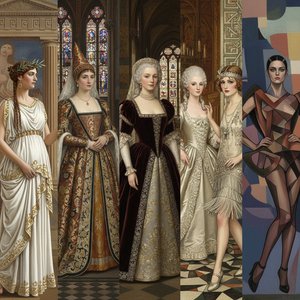
Style Through the Ages: Iconic Artworks That Defined the Evolution of Fashion Design
Explore the breathtaking intersection of fine art and high fashion. Discover how iconic masterpieces from Art Deco to Impressionism have shaped the world of luxury couture and timeless design in this curated visual journey.

Style on Canvas: The Timeless Allure of Fashion Illustration Artworks
Discover the exquisite world of fashion illustration art. From Art Deco elegance to bespoke oil reproductions, explore how timeless sartorial beauty transforms luxury interiors through masterfully crafted canvas works and curated historical masterpieces.