


 Se i rommet
 Del som digitalt kort
 Del
Del
 Detaljer
 Studentguide

 Last ned
 Liknende objekter
 Røntgen
 Lysbildefremvisning
 Besøksstatistikk
Model


Cristóbal Balenciaga’s ‘Model’ (1967) captures a striking tweed suit – elegant, geometric & timeless. Explore this iconic fashion photograph and discover the legacy of the 'Master Couturier'.
 Les mer
Cristóbal Balenciaga: En spansk motelegende kjent for sin elegante og banebrytende design. Oppdag hans kunstneriske arv og ikoniske kreationer!
Kunstverket som vises på denne siden er beskyttet av opphavsretten, noe som betyr at vi ikke har juridisk tillatelse til å lage eller selge identiske reproduksjoner. Denne beskyttelsen håndheves i henhold til internasjonale avtaler som for eksempel Bernerkonvensjonen og av nasjonale lover, inkludert de som er fastsatt i Amerikansk opphavsrettslov – Tittel 17.
Som et respektfullt og lovlig alternativ tilbyr vi skreddersydde, håndmalte kunstverk inspirert av originalen. Våre dyktige og profesjonelle kunstnere studerer nøye originalens stil, stemning og kunstneriske essens for å skape et nytt og unikt verk som vekker den samme følelsen – samtidig som det forblir en original skapelse i seg selv.
Denne metoden er i fullt samsvar med opphavsrettslige regler, da den ikke innebærer kopiering eller duplisering av det beskyttede kunstverket. I stedet er det snakk om en kreativ nytolkning – et nytt maleri som er inspirert av originalen, men ikke identisk med den.
Håndlaget oljereproduksjon
Håndmalt olje på lerret i din valgte størrelse og ramme, laget på bestilling av våre kunstnere. ( Bytt til trykkversjon Gå til digitalt bilde)




P118B Nkr10

P118H Nkr10

P118W Nkr10

P438Z Nkr10

P508JH Nkr12

P508YH Nkr12

P805H Nkr10

P805Z Nkr10

P919BZ Nkr10

P919G Nkr10

P919XJ Nkr10

P959ZH Nkr10

P968JZ Nkr12

W106C Nkr8

W218G Nkr10

W218JH Nkr8

W218Y Nkr10

W307PJ Nkr10

W316G Nkr10

W316PJ Nkr8

W316Y Nkr10

W398PJ Nkr8

W4111J Nkr10

W500HY Nkr15

W500JH Nkr15

W692G Nkr12

W849H Nkr8

W940BG Nkr15

W953PJ Nkr8




Standardformat
tilpasset
CM
INCH
Velg mellom våre forhåndsdefinerte størrelser som bevarer kunstverkets opprinnelige proporsjoner.
Loading sizes...

bredde
høyde
Skriv inn bredden og høyden du trenger, slik at den passer til din ramme eller vegg. Dette er håndmalt, så for en størrelse med en annen form kan kunstneren male litt mer rundt bildet, eller beskjære det noe — du velger selv. Vi sender deg en digital mockup for godkjenning før maleriet påbegynnes. Bildet som vises på denne siden viser ikke det faktiske resultatet — kun mockuppen gjør det.
Eksempler på hva som kan endres: Erstatt ansikt med bilde av kunden; Legg til kjæledyr (f.eks. bytt ut katt med hund); Inkluder en skjult melding i bakgrunnen; Endre bakgrunnslandskap eller elementer.
Etter bestilling vil TopImpressionists.com-teamet sende e-post til kunden for instruksjoner og sende et utkast (mockup) som forhåndsvisning.
Etter bestilling vil TopImpressionists.com-teamet sende e-post til kunden for instruksjoner og sende et utkast (mockup) som forhåndsvisning.
Verdensomspennende levering () på 3–4 uker i stedet for standard 5 uker. (24 October). Ingen kompromisser med kvaliteten.

Gratis ekspressfrakt over hele verden

Lerretsduk av høykvalitets lin

Full transportforsikring

Garanti for refusjon av toll og importavgifter

Garantert fargeekthet

100 dagers returrett ved fabrikasjonsfeil

100% pengene tilbake-garanti

Mengderabatt
 Glassalternativet er kun tilgjengelig i størrelser under 110 cm

Model
Reproduksjonsmetode
Format på reproduksjon
-


Totalpris
Nkr 2557
The Enigmatic Silhouette: Unpacking Cristóbal Balenciaga’s ‘Model’
Cristóbal Balenciaga’s 1966 photograph, “Model,” isn't merely a portrait; it’s a distilled essence of the designer’s revolutionary approach to fashion. The image captures a woman, her form enveloped in a striking tweed suit – a garment that immediately speaks of geometric precision and timeless elegance. Yet, beneath this surface simplicity lies a profound exploration of structure, proportion, and the very nature of representation. The photograph, often cited as one of Balenciaga’s most iconic works, transcends its status as a simple fashion image, offering a glimpse into the meticulous process and philosophical underpinnings of his design philosophy.
Balenciaga's genius wasn’t simply about creating beautiful clothes; it was about dissecting them, understanding their fundamental components, and rebuilding them with an almost architectural rigor. “Model” exemplifies this perfectly. The tweed itself is a deliberate choice – a robust, slightly stiff material that resists the drape of traditional fabrics, demanding a precise construction. Notice how the seams are barely visible, suggesting a layering technique designed to create volume without adding bulk. This restraint, this careful control over the fabric’s behavior, is characteristic of Balenciaga's work and reflects his deep understanding of materials – he considered himself more a craftsman than a designer in the conventional sense.
A Masterclass in Architectural Form
The suit’s silhouette isn’t simply flattering; it’s deliberately constructed to evoke a sense of solidity and strength. The fitted bodice, the subtly flared skirt – each element contributes to an overall impression of contained power. Balenciaga was deeply influenced by the art movements of his time, particularly Surrealism and Cubism, which encouraged him to deconstruct familiar forms and reassemble them in unexpected ways. This is evident in the suit’s sharp angles and its almost sculptural quality. The photograph itself becomes a study in form – a meditation on how shape can convey meaning and emotion.
The choice of David Bailey as the photographer further enhances the image's impact. Bailey, known for his stark, black-and-white portraits, captures the subject with an unflinching gaze, emphasizing her posture and the suit’s impeccable tailoring. The lighting is carefully controlled, highlighting the textures of the tweed and casting subtle shadows that accentuate the garment’s three-dimensional form. Bailey's skill lies in revealing the underlying structure of the image, mirroring Balenciaga’s own approach to design.
Echoes of a Lost Era: Context and Legacy
“Model” was created during a pivotal moment in fashion history – the mid-1960s. While Yves Saint Laurent was injecting youthful energy into Parisian couture with his Le Smoking tuxedo, Balenciaga remained steadfastly committed to his own vision of timeless elegance. His designs were often perceived as being ahead of their time, challenging conventional notions of beauty and femininity. The photograph serves as a reminder of this period of creative experimentation and the enduring influence of Balenciaga’s work.
The image also speaks to the broader cultural context of the era – a fascination with architecture, technology, and industrial design. Balenciaga's designs were often described as “architectural,” reflecting a growing interest in geometric forms and functional aesthetics. The photograph captures this spirit perfectly, suggesting that fashion could be both beautiful and intellectually stimulating.
A Timeless Icon: Reproduction and Inspiration
Today, “Model” remains one of the most recognizable images in the history of fashion photography. Its enduring appeal lies in its combination of technical skill, artistic vision, and emotional resonance. Reproductions of this photograph are highly sought after by collectors and interior designers alike, who appreciate its timeless elegance and its ability to evoke a sense of sophistication and refinement. When commissioning a hand-painted reproduction, it’s crucial to select an artist who understands Balenciaga's meticulous approach to detail and his commitment to capturing the essence of his designs.
Spørsmål og svar
Hva forklarer opphavsrettssituasjonen til "Model" av Cristóbal Balenciaga?
Opphavsrettslig status for "Model" - fortsatt beskyttet av opphavsrett - følger av kunstnerens dødsår i 1972.
Hva er "Model" laget med, og i hvilken stil?
"Model" er utført i Acrylic On Canvas, i Early Modernism-stil.
Ble "Model" værende i kunstnerens hjemland?
Ja – kunstverket oppbevares i kunstnerens hjemland. Fødelandet til Cristóbal Balenciaga er Spania, og museet som innehar originalen av "Model" ligger i Spania.
Kunstnerbiografi
Early Life and Artistic Roots
Cristóbal Balenciaga Eizaguirre, a name synonymous with revolutionary elegance in the world of haute couture, was born in 1895 in Getaria, a picturesque fishing village nestled on the rugged coast of northern Spain. His early life, steeped in the traditions of Basque culture, profoundly shaped his artistic sensibilities. His mother, a skilled seamstress, instilled in him from a young age an appreciation for meticulous craftsmanship and the transformative power of textiles. Growing up amidst the vibrant colors and textures of her work, Cristobal developed an innate understanding of fabric – its drape, its weight, and its potential to sculpt form. This formative experience, coupled with his father’s role as a local skipper, fostered in him a deep connection to the sea and a respect for the natural world, themes that would subtly permeate his later designs. A pivotal moment occurred when he was just twelve years old; the Marquesa de Casa Torres, a prominent figure in Getaria society, commissioned him to recreate one of her exquisite gowns. This challenge ignited within him a passion for design and solidified his determination to pursue a career as a couturier. He then moved to San Sebastian, where he began an apprenticeship at the renowned Casa Gómez tailoring house, laying the foundation for his future mastery of technique.The Rise in Paris: Influences and Early Success
In 1917, Cristobal embarked on a transformative journey to Paris, the undisputed heart of the fashion world. He sought formal training, immersing himself in the techniques of established couturiers and absorbing the avant-garde artistic currents that were reshaping European culture. He studied under Jacques Doucet, gaining invaluable experience in pattern making and garment construction – skills he would later refine to an unparalleled degree. It was during this period that he encountered Coco Chanel, a kindred spirit who recognized his exceptional talent and fostered a lifelong friendship. Balenciaga’s early designs drew inspiration from the rich history of Spain, particularly the opulent styles of the Spanish Renaissance. His “Infanta” dresses, with their intricate embroidery and flowing silhouettes, were directly inspired by portraits painted by Diego Velázquez, capturing the grace and dignity of the Spanish royal family. He also embraced elements of Flamenco culture, incorporating vibrant colors and dramatic textures into his collections. Crucially, Balenciaga distinguished himself from many of his contemporaries through a rigorous approach to design – he insisted on creating his own muslin patterns, known as “toiles,” meticulously shaping each garment before cutting the final fabric. This dedication to precision and control became a hallmark of his work.Revolutionizing Silhouette: The 1950s and Beyond
The 1950s marked a period of radical innovation for Cristobal Balenciaga. Rejecting the prevailing hourglass silhouette popularized by Christian Dior’s “New Look,” he instead championed fluid, sculptural forms that redefined the female figure. He moved away from traditional waistlines, dropping them dramatically and then raising them again in unexpected ways, creating garments that appeared to float effortlessly around the body. His designs were characterized by a remarkable sense of volume – balloon sleeves, pouf skirts, and cocoon coats—all executed with an astonishing mastery of fabric manipulation. Balenciaga’s influence extended far beyond fashion; he was deeply inspired by Surrealism, evident in his willingness to challenge conventional notions of beauty and form. He embraced asymmetry, unexpected juxtapositions, and a playful disregard for established rules. His creations were not merely clothing but works of art – sculptural statements that demanded attention. He famously stated, “It’s the fabric that decides,” reflecting his belief that the material itself should dictate the design process.Legacy and Enduring Influence
Cristóbal Balenciaga's career spanned several decades, culminating in his retirement in 1968. Despite the rise of ready-to-wear fashion, his designs continued to command respect and admiration from critics and clients alike. His legacy extends far beyond the world of haute couture; he profoundly influenced generations of designers, shaping the aesthetic sensibilities of countless artists and creatives. His emphasis on impeccable craftsmanship, innovative silhouettes, and a fearless approach to design continues to inspire today’s fashion industry. He remains an icon— “The Master” of haute couture, celebrated for his unparalleled skill, his uncompromising vision, and his enduring contribution to the art of dressmaking. His work is now housed in museums around the world, serving as a testament to his genius and a reminder of his profound impact on the history of fashion.
Cristóbal Balenciaga
1895 - 1972 , Spania
Kort om kunstneren
- Artistic Movement Or Style: Avantgarde / Surrealisme
- Artists Or Movements Influenced By This Artist: ['Velázquez']
- Artists Who Influenced This Artist:
- Chanel
- Dior
- Date Of Birth: 21. januar 1895
- Date Of Death: 23. mars 1972
- Full Name: Cristóbal Balenciaga Eizaguirre
- Nationality: Spansk
- Notable Artworks:
- Song of Songs IV
- Tree Roots
- Acrobat
- Place Of Birth: Getaria, Spania
Relaterte artikler

Gianfranco Ferré: Deconstructing Haute Couture – A Legacy of Architectural Form
Explore the revolutionary world of Gianfranco Ferré, 'the architect of fashion.' Discover his architectural approach to haute couture, iconic Dior designs, and lasting influence on luxury style. A deep dive for collectors & enthusiasts.

Cristóbal Balenciaga: Deconstructing Haute Couture's Architectural Legacy
Explore the revolutionary world of Cristóbal Balenciaga, the 'couturier's couturier'. Discover his architectural designs, lasting influence on haute couture, and guide to collecting rare pieces. A connoisseur’s resource.

Draped Narratives: Fashion as Symbol & Subject in Historical Art
Explore the fascinating history of fashion as a symbol of power & status in art! Discover masterpieces from Gainsborough to Tissot and learn how clothing shaped societal narratives. Find museum-quality reproductions at TopImpressionists.
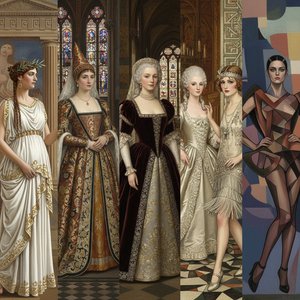
Style Through the Ages: Iconic Artworks That Defined the Evolution of Fashion Design
Explore the breathtaking intersection of fine art and high fashion. Discover how iconic masterpieces from Art Deco to Impressionism have shaped the world of luxury couture and timeless design in this curated visual journey.

The Lens of Luxury: A Visual Journey Through the Evolution and Artistry of Fashion Photography
Embark on a visual journey through the evolution of fashion photography. Discover how masters like Gianfranco Ferré blended geometry, surrealism, and texture to redefine high-fashion art for collectors and connoisseurs of luxury imagery.
Utforsk kunstverk organisert etter temaer, stiler og kjennetegn.

