

 Forhåndsvisning
 Send
Send Del
Del
 Vis detaljer
 Utskriftsvennlig guide

 Last ned bilde
 Liknende objekter
 Røntgenundersøkelse
 Lysbildefremvisning
 Spørsmål og svar
 Statistikk
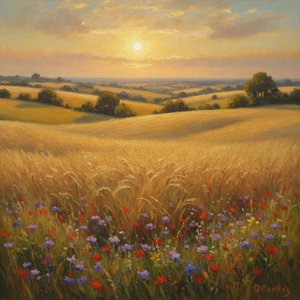
Meadow Lands


A serene impressionistic meadow filled with sunlit grass and lush trees by American Impressionist Dennis Miller Bunker captures a tranquil countryside mood, inviting you to bring this peaceful landscape into your home.
 Vis hele teksten
Dennis Miller Bunker (1861-1890): Amerikansk impresjonist kjent for lystfulle landskap og raffinert portrettkunst. Inspirert av Barbizon-skolen og Sargent, en kortfattet men betydningsfull kunstner i sen 1800-talls kunst.
Giclée / Kunsttrykk
Giclée- eller lerretsprint av museumskvalitet med rask produksjon og fleksible valgmuligheter for etterbehandling. ( Kjøp håndmalt maleri Bytt til digitalt bilde)




P118B Nkr10

P118H Nkr10

P118W Nkr10

P438Z Nkr10

P508JH Nkr12

P508YH Nkr12

P805H Nkr10

P805Z Nkr10

P919BZ Nkr10

P919G Nkr10

P919XJ Nkr10

P959ZH Nkr10

P968JZ Nkr12

W106C Nkr8

W218G Nkr10

W218JH Nkr8

W218Y Nkr10

W307PJ Nkr10

W316G Nkr10

W316PJ Nkr8

W316Y Nkr10

W398PJ Nkr8

W4111J Nkr10

W500HY Nkr15

W500JH Nkr15

W692G Nkr12

W849H Nkr8

W940BG Nkr15

W953PJ Nkr8




Standardformat
skreddersydd
CM
INCH
Velg mellom våre forhåndsdefinerte størrelser som bevarer kunstverkets opprinnelige proporsjoner.
Loading sizes...

bredde
høyde
Skriv inn ønsket bredde og høyde for å tilpasse trykket til din ramme eller vegg. Et trykk kan kun beskjæres, aldri skaleres opp utover motivets opprinnelige størrelse, noe som betyr at et format med andre proporsjoner vil føre til tap av deler av bildet. Vi sender deg en digital mockup for godkjenning før vi starter trykkeprosessen. Bildet som vises på denne siden viser ikke den faktiske beskjæringen — det er kun mockuppen som viser dette.
Verdensomspennende levering () på 2 uker i stedet for standard 4/5 uker. (6 November)

Gratis ekspressfrakt over hele verden

Lerretsduk av lin av høy kvalitet

Full transportforsikring

Garanti for refusjon av toll og importavgifter

Garantert fargegjengivelse

100 dagers returrett ved fabrikasjonsfeil

100% pengene tilbake-garanti

Rabatt ved flere kjøp
 Glassalternativet er kun tilgjengelig i størrelser under 110 cm

Meadow Lands
Giclée / Kunsttrykk
Størrelse på reproduksjon
-


Totalpris for valgte alternativer
Nkr 670
A Symphony of Light and Serenity
In the quietude of Meadow Lands, painted in 1890, we encounter a masterclass in American Impressionism that feels less like a static image and more like a captured breath. Dennis Miller Bunker, an artist whose brilliance was tragically extinguished at the age of twenty-nine, possessed a rare ability to translate the ephemeral qualities of light into enduring visual poetry. This particular landscape invites the viewer into a lush, verdant sanctuary where the boundaries between earth and sky seem to soften under a warm, golden glow. The composition is anchored by a sprawling field of grass, rendered with such sensitivity that one can almost feel the gentle sway of the blades in a summer breeze. Scattered throughout this idyllic setting are trees and bushes that provide structural depth, acting as silent sentinels within a landscape that celebrates the harmonious coexistence of flora and sunlight.
The technique employed in Meadow Lands reflects the profound influence of the Barbizon school and the sophisticated brushwork of contemporaries like John Singer Sargent. Bunker utilizes a delicate interplay of color to evoke texture; the greenery is not merely a single shade of emerald, but a complex tapestry of moss, lime, and deep forest tones that catch the light at varying angles. His approach to the meadow's flowers and shrubs adds a layer of intricate detail that rewards close inspection, revealing a painterly touch that prioritizes atmosphere over rigid anatomical precision. This soft-focus brilliance is a hallmark of the Impressionist movement, where the goal was not to document reality, but to capture the sensory experience of a fleeting moment in time.
An Invitation to Tranquility and Timeless Elegance
Beyond its technical mastery, this artwork serves as a profound emotional vessel. The symbolism within the piece is rooted in the concept of the pastoral ideal—a nostalgic return to a state of nature that remains untouched by the industrial anxieties of the late 19th century. The warmth radiating from the sun-drenched meadow evokes feelings of peace, nostalgia, and a deep-seated connection to the natural world. It is a painting that does not demand attention through loud or jarring colors, but rather earns it through a subtle, rhythmic beauty that settles the soul.
For the discerning collector or interior designer, Meadow Lands offers an unparalleled opportunity to introduce a sense of calm and historical prestige into a living space. As a high-quality reproduction, this piece functions as a sophisticated focal point that complements both classical and contemporary decor. Whether placed in a sunlit library, a quiet study, or a grand hallway, the painting brings with it the luminous spirit of the American Impressionist era. It is more than a mere decoration; it is an atmospheric window into a lost era of pastoral grace, offering any room a sense of enduring light and restorative harmony.
Spørsmål og svar
Hvilket rom anbefales for "Meadow Lands" av Dennis Miller Bunker?
Det anbefalte rommet for "Meadow Lands" av Dennis Miller Bunker er en Living Room. Forslaget kan selvfølgelig tilpasses ditt interiør.
Hvilken kunstretning og hvilken epoke tilhører "Meadow Lands" av Dennis Miller Bunker?
"Meadow Lands" av Dennis Miller Bunker tilhører American Impressionism-retningen, innenfor skaperens tallet-epoke.
Hvor gammel var Dennis Miller Bunker da hen laget "Meadow Lands"?
Dennis Miller Bunker var 29 år gammel da Meadow Lands ble skapt i 1890. Alderen er beregnet ut fra kunstnerens fødselsår, 1861.
Lignende kunstverk


Om kunstneren
A Fleeting Glimpse of Brilliance: The Life and Art of Dennis Miller Bunker
Dennis Miller Bunker, a name perhaps less immediately recognized than those of his contemporaries like Sargent or Cassatt, nevertheless occupies a pivotal position in the narrative of American Impressionism. His tragically short life – he succumbed to meningitis at just twenty-nine years old – belies an artistic output brimming with innovation and sensitivity, a testament to a talent that burned intensely but briefly. Born in New York City in 1861, Bunker’s path toward becoming a significant painter was nurtured by a supportive family background; his father held a position with the Union Ferry Company, while his mother came from a lineage of artistic inclination through her brother, the celebrated illustrator Sol Eytinge Jr. This early exposure to creative pursuits undoubtedly played a role in shaping young Dennis's aspirations. He formally began his training at the Art Students League and the National Academy of Design in 1876, laying a foundation steeped in academic tradition that would later be beautifully disrupted by his embrace of more modern techniques.From Barbizon to Brilliance: Artistic Development and Influences
Bunker’s artistic journey was marked by a constant evolution, a willingness to absorb influences and synthesize them into something uniquely his own. A crucial period in this development came with his travels to Paris in 1882, where he studied at the École nationale supérieure des beaux-arts under Jean-Léon Gérôme. However, it wasn’t within the confines of the studio that Bunker truly found his artistic voice. Rather, it was during excursions through France and Brittany alongside fellow artists Charles A. Platt and Kenneth R. Cranford that he encountered the Barbizon school – a group renowned for their direct observation of nature and naturalistic approach to painting. This exposure proved transformative, instilling in Bunker a deep appreciation for *plein air* painting and a commitment to capturing the subtleties of light and atmosphere. His early works reflected this influence, often depicting marine subjects like beached boats with meticulous detail honed through preparatory sketches. Yet, even within these academic exercises, hints of his future direction were emerging. The Brittany period (1883-1884) saw a shift towards softer atmospheric effects and tonal subtleties in scenes featuring church spires, cemetery crosses, and solitary trees against expansive skies. Upon returning to America, Bunker’s landscapes, particularly those painted in South Woodstock, Connecticut, began to demonstrate a bolder palette and more saturated colors – clear indicators of his burgeoning Impressionistic leanings. A pivotal friendship with John Singer Sargent further accelerated this transition; Sargent's influence encouraged Bunker to embrace brighter hues and looser brushwork, pushing him towards a style that was both innovative and deeply personal.Recognition and a Patron’s Embrace
Bunker’s talent did not go unnoticed by the art community. He was elected to the Society of American Artists in 1885, a significant acknowledgment of his growing reputation. That same year marked another milestone: his first solo exhibition at Noyes and Blakeslee Gallery in Boston. Simultaneously, he secured a teaching position at the Cowles Art School in Boston, where he served as chief instructor of figure and cast drawing, artistic anatomy, and composition from 1885 to 1889. This period allowed him to refine his skills while also imparting knowledge to aspiring artists. However, perhaps one of the most impactful relationships of Bunker’s career was his connection with Isabella Stewart Gardner, a prominent art collector and patroness. Gardner recognized Bunker's exceptional talent and became a valuable friend and supporter, providing both financial assistance and encouragement. This patronage allowed him greater artistic freedom and contributed to his ability to explore new avenues in his work. His 1890 exhibition at the St. Botolph Club in Boston showcased his evolving Impressionistic landscapes, further solidifying his position as a rising star within the American art world.A Lasting Legacy: Bunker’s Place in Art History
Though his life was cut short, Dennis Miller Bunker left an indelible mark on late 19th-century American art. He stands as a key figure in the development of American Impressionism, skillfully bridging traditional academic training with emerging modern artistic trends. His ability to seamlessly blend Barbizon influences with the vibrant energy of Impressionism resulted in works that are both technically masterful and emotionally resonant. His paintings are not merely representations of landscapes or portraits; they are evocative glimpses into a fleeting moment in time, imbued with a sense of atmosphere and emotion that transcends their subject matter. He remains a testament to the power of artistic vision and the enduring impact of a life dedicated to beauty, even one tragically abbreviated. His work continues to inspire artists today, demonstrating a transition from academic realism to Impressionistic techniques that paved the way for future generations to explore new modes of expression. *Bunker’s landscapes capture the ethereal quality of light filtering through foliage and the serene stillness of coastal vistas,* reflecting his profound understanding of color and texture—a legacy that resonates powerfully with contemporary artists seeking inspiration in capturing the essence of nature's beauty.
Dennis Miller Bunker
1861 - 1890 , USA
Kort om kunstneren
- Artistic Movement Or Style: Impressionisme
- Artists Or Movements Influenced By This Artist: ['Barbizon skole']
- Artists Who Influenced This Artist:
- Jean-Léon Gérôme
- John Singer Sargent
- Date Of Birth: November 6, 1861
- Date Of Death: December 28, 1890
- Full Name: Dennis Miller Bunker
- Nationality: Amerikaner
- Notable Artworks:
- Eleanor Hardy Bunker
- Marshland, Medfield
- Stasjon
- Place Of Birth: New York City, USA
Relaterte artikler
Golden Fields & Sun-Drenched Meadows: Capturing the Soul of Impressionist Landscapes
Immerse yourself in the luminous world of Impressionist landscapes. Discover how masters like Monet and Gauguin captured ephemeral light through plein air painting, and learn to bring the soul of sun-drenched meadows into your home with exquisite, hand-painted oil reproductions.

Capturing the Soul: The Most Emotionally Moving Impressionist and Post-Impressionist Masterpieces
Discover the profound emotional depth of Impressionist and Post-Impressionist masterpieces. Explore how legends like Monet, Van Gogh, and Gauguin captured light and soul through evocative landscapes and vibrant brushwork for a timeless connection to art history.

Whispers of the Meadow: Capturing the Serenity of the Quiet Countryside in Impressionist Masterpieces
Embark on a visual journey through Impressionist masterpieces. Discover how masters like Monet and Renoir captured the serene beauty of the countryside through light, color, and emotion. Explore timeless landscapes designed to bring tranquility and cultural elegance to your home sanctuary.

The Beauty of Impermanence: Capturing Decay through Impressionist Eyes
Explore the profound beauty of impermanence through Impressionist and Post-Impressionist eyes. Discover how masters like Monet and Van Gogh captured fleeting light and the poetic essence of nature's transitions in our deep dive into art history and emotional landscapes.

Beyond the Light: Capturing Raw Emotion and Subjective Vision in Post-Impressionist Landscapes
Explore the profound emotional depth of Post-Impressionist landscapes. Discover how masters like Van Gogh moved beyond light to capture raw human feeling through vibrant color and expressive texture in this expert art history retrospective.