


 Se i rommet
 Del som digitalt kort
 Del
Del
 Detaljer
 Studentguide

 Last ned
 Liknende objekter
 Røntgen
 Lysbildefremvisning
 Besøksstatistikk
Døden til Marat I
 Oljemaling
- Veggkunst
- Expressionist Revolution
 1907
1907- Moderne kunst
 150.0 x 200.0 cm
En gripende og symbolsk fremstilling av Marats død, fylt med angst og revolusjonens smerte. Munchs mesterverk utforsker lidelse og politisk vold i et intenst og uforglemmelig bilde.
 Les mer
Edvard Munch (1863-1944): Pioner innen ekspresjonismen, kjent for malerier som «Skrik». Utforsker angst, sorg og menneskets indre verden med kraftfuld fargebruk og følelser.
Håndlaget oljereproduksjon
Håndmalt olje på lerret i din valgte størrelse og ramme, laget på bestilling av våre kunstnere. ( Bytt til trykkversjon Gå til digitalt bilde)




P118B Nkr10

P118H Nkr10

P118W Nkr10

P438Z Nkr10

P508JH Nkr12

P508YH Nkr12

P805H Nkr10

P805Z Nkr10

P919BZ Nkr10

P919G Nkr10

P919XJ Nkr10

P959ZH Nkr10

P968JZ Nkr12

W106C Nkr8

W218G Nkr10

W218JH Nkr8

W218Y Nkr10

W307PJ Nkr10

W316G Nkr10

W316PJ Nkr8

W316Y Nkr10

W398PJ Nkr8

W4111J Nkr10

W500HY Nkr15

W500JH Nkr15

W692G Nkr12

W849H Nkr8

W940BG Nkr15

W953PJ Nkr8




Standardformat
tilpasset
CM
INCH
Velg mellom våre forhåndsdefinerte størrelser som bevarer kunstverkets opprinnelige proporsjoner.
Loading sizes...

bredde
høyde
Skriv inn bredden og høyden du trenger, slik at den passer til din ramme eller vegg. Dette er håndmalt, så for en størrelse med en annen form kan kunstneren male litt mer rundt bildet, eller beskjære det noe — du velger selv. Vi sender deg en digital mockup for godkjenning før maleriet påbegynnes. Bildet som vises på denne siden viser ikke det faktiske resultatet — kun mockuppen gjør det.
Eksempler på hva som kan endres: Erstatt ansikt med bilde av kunden; Legg til kjæledyr (f.eks. bytt ut katt med hund); Inkluder en skjult melding i bakgrunnen; Endre bakgrunnslandskap eller elementer.
Etter bestilling vil TopImpressionists.com-teamet sende e-post til kunden for instruksjoner og sende et utkast (mockup) som forhåndsvisning.
Etter bestilling vil TopImpressionists.com-teamet sende e-post til kunden for instruksjoner og sende et utkast (mockup) som forhåndsvisning.
Verdensomspennende levering () på 3–4 uker i stedet for standard 5 uker. (24 October). Ingen kompromisser med kvaliteten.

Gratis ekspressfrakt over hele verden

Lerretsduk av høykvalitets lin

Full transportforsikring

Garanti for refusjon av toll og importavgifter

Garantert fargeekthet

100 dagers returrett ved fabrikasjonsfeil

100% pengene tilbake-garanti

Mengderabatt
 Glassalternativet er kun tilgjengelig i størrelser under 110 cm

Døden til Marat I
Reproduksjonsmetode
Format på reproduksjon
-


Totalpris
Nkr 2557
A Haunting Echo of Revolution and Trauma
Edvard Munch's Death of Marat, painted in 1907, isn’t merely a depiction of a historical event; it’s a visceral plunge into the artist’s own tormented psyche. This iconic image, housed within the Munch Museum in Oslo, transcends its subject matter to become a potent symbol of mortality, political violence, and the enduring scars of personal suffering. The painting immediately commands attention with its dramatic composition – a stark contrast between the pale, vulnerable figure of Marat lying in his blood-soaked bath and the determined, almost predatory posture of the woman tending to him. It’s a scene saturated with an unsettling stillness, punctuated by the swirling, agitated brushstrokes that define Munch's signature expressionistic style.
The genesis of this powerful work lies within a complex web of personal tragedy and artistic experimentation for Munch. He was grappling with a severe mental breakdown at the time, exacerbated by years of alcohol abuse and haunted by the early deaths of his mother and sister – losses that fundamentally shaped his worldview. The assassination of Jean-Paul Marat, a radical revolutionary leader, provided a potent catalyst for Munch’s exploration of these themes. However, it's crucial to understand that Munch wasn’t simply recreating a historical event; he was channeling his own anxieties and emotional turmoil into the canvas, transforming a political narrative into a deeply personal allegory.
The Language of Color and Form: Expressionist Techniques
Munch’s masterful use of color is central to the painting's impact. The dominant palette—a blend of bruised purples, sickly greens, and stark whites—evokes a sense of decay, illness, and impending doom. These aren’t the vibrant hues typically associated with classical portraiture; instead, they are deliberately muted and unsettling, mirroring the emotional landscape of the scene. The elongated, almost hallucinatory brushstrokes contribute to this atmosphere of instability and unease. Munch employs a technique he called “striping,” applying layers of paint in long, parallel strokes that create a sense of movement and agitation across the canvas. This method not only captures the physicality of Marat’s body but also suggests the chaotic state of mind within which the painting was created.
Notice particularly how Munch utilizes the background—a swirling vortex of color that seems to both contain and amplify the drama unfolding in the foreground. This abstract backdrop isn't merely decorative; it represents the turbulent political climate of revolutionary France, mirroring the internal chaos experienced by Munch himself. The stark contrast between the relatively realistic depiction of Marat’s body and the amorphous background further emphasizes the painting’s emotional intensity.
Symbolism and the Enigmatic Figure
The figure of the woman attending to Marat is shrouded in ambiguity, adding another layer of complexity to the scene. Her nudity—a deliberate reference to classical imagery—introduces an element of vulnerability and erotic tension. Some scholars interpret her as representing Charlotte Corday, the assassin who murdered Marat, while others see her as a more generalized symbol of compassion or perhaps even complicity in violence. The knife lying on the surface is a stark reminder of the brutal act that has occurred, yet it’s almost obscured by the surrounding chaos, suggesting that the event itself is being subsumed by the overwhelming emotional atmosphere.
The positioning of Marat's body—lying prone in his bath—is also significant. Bathing was a common practice for revolutionaries like Marat, who suffered from skin ailments and often spent considerable time immersed in water. This detail underscores the painting’s connection to both the physical realities of revolutionary life and Munch’s own struggles with illness and vulnerability. The inclusion of the discarded cups further hints at the immediacy of the event—a scene frozen in a moment of desperate action.
A Legacy of Emotional Intensity
Death of Marat stands as a pivotal work in the development of Expressionism, influencing generations of artists with its raw emotional honesty and innovative use of color and form. Munch’s willingness to confront difficult subjects—death, violence, mental illness—without resorting to sentimentality or conventional representation paved the way for future artistic explorations of the human psyche. Reproductions of this powerful image continue to resonate today, offering a haunting glimpse into the mind of one of art history's most tormented and visionary figures. For those seeking to delve deeper into Munch’s oeuvre, we encourage you to explore our meticulously crafted hand-painted reproductions, including *The Hands*, *Despair*, and *Jens Thiis*. To learn more about Edvard Munch and his artistic journey, visit Edvard Munch at TopImpressionists.com.
Spørsmål og svar
Hvordan beskrives stemningen i "Døden til Marat I" av Edvard Munch?
Den overordnede stemningen i "Døden til Marat I" av Edvard Munch er Dramatisk intensitet. Stemningen beskriver verkets generelle atmosfære.
Hvilken form og hvilke dimensjoner har "Døden til Marat I" av Edvard Munch?
"Døden til Marat I" av Edvard Munch har proporsjonene til et Liggende format-verk på 150 x 200 cm.
Hva er teknikk og dimensjoner på "Døden til Marat I" av Edvard Munch?
Det originale verket "Døden til Marat I" av Edvard Munch er et Oljemaling utført i størrelsen 150 x 200 cm. Teknikk og størrelse beskriver det originale objektet.
Kunstnerbiografi
Et liv i skyggenes rike: Edvard Munchs verden
Edvard Munch, født i 1863 under de barske landskapene i Norge, ble en kunstner hvis verk kom til å symbolisere angst og emosjonell uro i den moderne æra. Hans liv, dypt preget av tap og en gjennomgripende melankoli, var kilden til hans uttrykksfulle kunst. Fra en barndom skyggelagt av tidlig død – moren og søsteren bukket under for tuberkulose – utviklet Munch en hjemsøkende besettelse med dødelighet, sykdom og menneskelig eksistens’ skrøpelighet. Disse opplevelsene var ikke bare biografiske detaljer; de ble selve kjernen i hans kunstneriske visjon, som drev en ustoppelig utforskning av det indre landskapet av frykt, sorg og lengsel. Farens strenge religiøse overbevisninger og Munchs egne kamper med psykisk sykdom bidro ytterligere til en følelse av uro som gjennomsyret hans verden, formet ikke bare hans personlige liv, men også det symbolske språket i maleriene hans. Han skildret ikke bare scener; han eksternaliserte en indre tilstand, oversatte psykisk nød til visuell form.
Fra tidlig trening til sjelens maleri
Munchs kunstneriske reise begynte med formell utdannelse ved Royal School of Art and Design i Kristiania (Oslo), men det var møtet med bohemske kretser og Hans Jægers nihilistiske filosofi som virkelig tente hans kreative ild. Jæger oppmuntret Munch til å forlate konvensjonelle akademiske stilarter og heller fordype seg i dybden av sin egen subjektive erfaring, et konsept han kalte “sjelens maleri”. Dette vendepunktet markerte begynnelsen på Munchs særegne stil – preget av rå følelser, forvrengte former og en forkastelse av naturalistisk fremstilling. Hans reiser til Paris på 1890-tallet eksponerte ham for den spirende postimpresjonistiske bevegelsen, hvor han absorberte innflytelser fra kunstnere som Paul Gauguin, Vincent van Gogh og Henri de Toulouse-Lautrec. Den dristige bruken av farge, uttrykksfulle penselstrøk og psykologiske intensitet hos disse mestrene resonerte dypt med Munchs egne kunstneriske tilbøyeligheter. Han imiterte ikke bare deres teknikker; han syntetiserte dem til noe unikt sitt eget – et visuelt språk som var i stand til å formidle de dypeste og mest urovekkende menneskelige følelsene. Hans tid i Berlin viste seg også avgjørende, da han kom i kontakt med dramatikeren August Strindberg, hvis utforskning av psykologiske temaer ytterligere drev Munchs kunstneriske undersøkelser.
Ikoniske visjoner: Hovedverk og deres symbolske vekt
Munchs oeuvre er befolket av bilder som har blitt dypt inngrodd i den kollektive bevisstheten. The Scream, kanskje hans mest ikoniske verk, overskrider sin status som et maleri for å bli et universelt symbol på eksistensiell angst. Det virvlende, flammende landskapet og figurens forvridde ansikt legemliggjør et primitivt skrik mot universets likegyldighet. Madonna, et kontroversielt og dypt personlig stykke, utforsker temaer som seksualitet, moderskap og dødelighet med urovekkende åpenhet. Gjentakende motiver som The Sick Child – inspirert av tapet av søsteren Sophie – fungerer som hjerteskjærende påminnelser om Munchs barndomstraume og det allestedsnærværende spøkelset av døden. Melancholy I & II, kraftige fremstillinger av dyp tristhet og isolasjon, avslører en sårbarhet som er både dypt personlig og universelt relatert. Disse verkene er ikke bare representasjoner av ytre virkelighet; de er vinduer inn i kunstnerens sjel, som tilbyr seerne et nådeløst blikk på menneskesinnets mørkeste kroker. Munch hadde ikke til hensikt å skape vakre bilder; han søkte å formidle sannhet – selv om den sannheten var smertefull og urovekkende.
En varig arv: Historisk betydning og vedvarende innflytelse
Edvard Munchs bidrag til moderne kunst er umålelig. Han står som en sentral figur i utviklingen av ekspresjonismen, og banet vei for kunstnere som prioriterte subjektiv følelse over objektiv fremstilling. Hans nådeløse utforskning av universelle menneskelige opplevelser – kjærlighet, tap, angst og død – fortsetter å resonere med publikum i dag, og befester hans plass som en av de mest innflytelsesrike og varige figurene i kunsthistorien. Hans arbeid påvirket dypt etterfølgende generasjoner av kunstnere, og påvirket bevegelser som tysk ekspresjonisme og utover. Han våget å konfrontere menneskets mørkere sider, utfordret konvensjonelle forestillinger om skjønnhet og kunstnerisk fremstilling. Selv etter at han oppnådde berømmelse og anerkjennelse – kulminerende i etableringen av Munch-museet i Oslo – forble hans personlige liv turbulent, preget av perioder med psykisk ustabilitet og isolasjon. Likevel fortsatte han å skape gjennom alt dette, og etterlot seg et verk som fortsetter å provosere, utfordre og inspirere. Munchs arv handler ikke bare om maleriene i seg selv; det handler om motet til å konfrontere kompleksiteten i menneskelig eksistens og oversette disse opplevelsene til kunst som snakker til de dypeste delene av vårt vesen.

Edvard Munch
1863 - 1944 , Sverige
Kort om kunstneren
- Artistic Movement Or Style: Ekspresjonisme
- Artists Or Movements Influenced By This Artist: ['Tysk ekspresjonisme']
- Artists Who Influenced This Artist:
- Paul Gauguin
- Van Gogh
- Toulouse-Lautrec
- Date Of Birth: 12. desember 1863
- Date Of Death: 23. januar 1944
- Full Name: Edvard Munch
- Nationality: Norsk
- Notable Artworks:
- The Scream
- Madonna
- The Sick Child
- Place Of Birth: Ådalsbruk, Sverige
Relaterte artikler

Oljemaleri på plate: 10 mesterverk som revolusjonerte kunsten | TopImpressionists
Oppdag 10 legendariske oljemalerier på plate som forandret kunsthistorien! Lær om impresjonisme, ekspresjonisme og kjente kunstnere. Finn inspirasjon til interiørdesign & kjøp reproduksjoner av høy kvalitet på TopImpressionists.com.

Edvard Munch: Anxiety, Modernity & the Dawn of Expressionism
Explore the profound world of Edvard Munch, pioneer of Expressionism. Discover the origins of 'The Scream' & his haunting depictions of anxiety, mortality, and love. Expert analysis & high-quality reproductions at TopImpressionists.
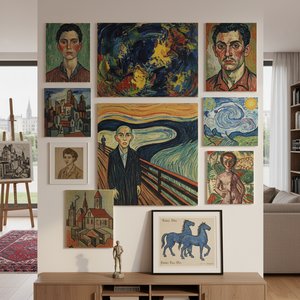
Topp 10 Ekspresjonistiske Mesterverk: Kunst som Rører Sjelen – TopImpressionists.no
Utforsk de 10 mest ikoniske ekspresjonistiske mesterverkene! Oppdag historien bak Munch, Kirchner, Kandinsky og andre. Finn inspirasjon til din interiørkunst og kjøp museumskvalitets reproduksjoner på TopImpressionists.no – der kunsten lever videre.

Edvard Munchs 25 Mesterverk: En Reise Inn i Sjelen – Kunsttrykk for Ditt Hjem
Oppdag Edvard Munchs 25 mest ikoniske malerier! Fordyp deg i ekspresjonismens verden, fra 'Skrik' til 'Livets dans'. Finn kunsttrykk og inspirasjon for ditt hjem på TopImpressionists.com – museumskvalitet & eksklusive dekorideer.

The Enduring Legacy of Oil on Canvas: Technique, History & Aesthetic Impact
Explore the rich history & techniques of oil painting – from Renaissance masters to Impressionism. Discover pigments, layering methods, and why this timeless medium endures. Expert insights for artists & art enthusiasts.
Utforsk kunstverk organisert etter temaer, stiler og kjennetegn.


