Forhåndsvisning
 Send
Send Del
Del
 Vis detaljer
 Utskriftsvennlig guide

 Last ned bilde
 Liknende objekter
 Røntgenundersøkelse
 Lysbildefremvisning
 Spørsmål og svar
 Statistikk
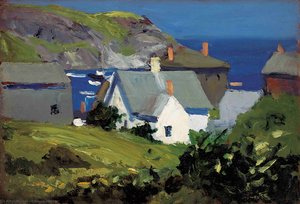
the el station


Edward Hopper’s evocative painting captures the stillness of an old train station, bathed in muted light—a hallmark of American Realism—revealing a poignant glimpse into urban solitude and prompting contemplation on connection amidst isolation.
 Vis hele teksten
En mester i amerikansk realisme som fanget ensomhet i Nighthawks. Oppdag hans ikoniske malerier og stemningsfulle lys og skygge i dag.
Kunstverket som vises på denne siden er beskyttet av opphavsretten, noe som betyr at vi ikke har juridisk tillatelse til å lage eller selge identiske reproduksjoner. Denne beskyttelsen håndheves i henhold til internasjonale avtaler som for eksempel Bernerkonvensjonen og av nasjonale lover, inkludert de som er fastsatt i Amerikansk lov om opphavsrett – Tittel 17.
Denne metoden er i fullt samsvar med opphavsrettslige regler, da den ikke innebærer kopiering eller duplisering av det beskyttede kunstverket. I stedet er det snakk om en kreativ nytolkning – et nytt maleri som er inspirert av originalen, men ikke identisk med den.
Giclée / Kunsttrykk
Giclée- eller lerretsprint av museumskvalitet med rask produksjon og fleksible valgmuligheter for etterbehandling. ( Kjøp håndmalt maleri Bytt til digitalt bilde)




P118B Nkr10

P118H Nkr10

P118W Nkr10

P438Z Nkr10

P508JH Nkr12

P508YH Nkr12

P805H Nkr10

P805Z Nkr10

P919BZ Nkr10

P919G Nkr10

P919XJ Nkr10

P959ZH Nkr10

P968JZ Nkr12

W106C Nkr8

W218G Nkr10

W218JH Nkr8

W218Y Nkr10

W307PJ Nkr10

W316G Nkr10

W316PJ Nkr8

W316Y Nkr10

W398PJ Nkr8

W4111J Nkr10

W500HY Nkr15

W500JH Nkr15

W692G Nkr12

W849H Nkr8

W940BG Nkr15

W953PJ Nkr8




Standardformat
skreddersydd
CM
INCH
Velg mellom våre forhåndsdefinerte størrelser som bevarer kunstverkets opprinnelige proporsjoner.
Loading sizes...

bredde
høyde
Skriv inn ønsket bredde og høyde for å tilpasse trykket til din ramme eller vegg. Et trykk kan kun beskjæres, aldri skaleres opp utover motivets opprinnelige størrelse, noe som betyr at et format med andre proporsjoner vil føre til tap av deler av bildet. Vi sender deg en digital mockup for godkjenning før vi starter trykkeprosessen. Bildet som vises på denne siden viser ikke den faktiske beskjæringen — det er kun mockuppen som viser dette.
Verdensomspennende levering () på 2 uker i stedet for standard 4/5 uker. (11 November)

Gratis ekspressfrakt over hele verden

Lerretsduk av lin av høy kvalitet

Full transportforsikring

Garanti for refusjon av toll og importavgifter

Garantert fargegjengivelse

100 dagers returrett ved fabrikasjonsfeil

100% pengene tilbake-garanti

Rabatt ved flere kjøp
 Glassalternativet er kun tilgjengelig i størrelser under 110 cm

the el station
Giclée / Kunsttrykk
Størrelse på reproduksjon
-


Totalpris for valgte alternativer
Nkr 670
A Study in Urban Solitude
In the quiet, heavy atmosphere of Edward Hopper’s “The El Station,” we are invited into a moment suspended in time, where the bustling energy of the American metropolis is distilled into a singular, poignant observation of stillness. The painting presents a quintessential urban landscape, capturing a train station platform bathed in the muted, melancholic glow of late afternoon light. At its heart, the work depicts a scene that feels both deeply familiar and hauntingly distant; several figures inhabit the space, yet they exist in separate worlds. There is no shared glance, no whispered conversation—only the quiet dignity of individuals absorbed in their own private rhythms. This tableau of modern life serves as a profound meditation on the nature of presence and absence within the crowded architecture of the city.
Hopper’s mastery lies in his ability to manipulate light to evoke what he termed “luminosity.” Eschewing the frantic, broken brushstrokes of the Impressionists, he employs a signature style of stark realism that prioritizes form and structural clarity. Through a deliberate use of shadow, he creates a sense of depth that is as much psychological as it is physical. The technique involves a meticulous layering of oil paints on canvas, building up tonal gradations that breathe life into the weathered red brick of the station’s façade and the diffused, amber light that spills across the platform. This precision allows the texture of the urban environment—the grit of the station, the weight of the architecture—to feel palpable, inviting the viewer to step into the scene and feel the cool, evening air.
The Echoes of a Changing Era
Painted in 1927, “The El Station” emerged during a period of seismic shifts in the American consciousness. As industrialization and rapid urbanization transformed the landscape, they simultaneously birthed a new kind of social anxiety: the fear of anonymity. The painting captures this tension perfectly, acting as a window into the Jazz Age’s more introspective side. While the era is often remembered for its frantic energy, Hopper focuses on the shadow cast by progress—the sense of being alone even when surrounded by others. The solitary figures on the platform become symbols of the modern condition, representing individuals adrift in the vastness of an expanding world, grappling with the unspoken emotions of a life lived in transit.
For the discerning collector or interior designer, this piece offers more than mere decoration; it provides a focal point of profound emotional resonance. The painting’s palette of muted earth tones and dramatic shadows makes it a versatile and sophisticated addition to any curated space, particularly those seeking to introduce a sense of contemplative calm or intellectual depth. Whether placed in a contemporary gallery setting or a classic study, “The El Station” commands attention through its quiet strength. It is an invitation to pause, to reflect, and to find beauty in the subtle, often overlooked nuances of the human experience.
Spørsmål og svar
Hva forestiller "the el station" av Edward Hopper, og hvilken stemning formidler det?
"the el station" av Edward Hopper skildrer train station, urban landscape, solitude, architecture, passengers, light, brick building i en Calm stemning. Motiv og atmosfære beskriver verket sammen.
Hvilken teknikk er brukt i "the el station" av Edward Hopper?
Edward Hopper brukte Oil On Canvas-teknikken i "the el station". Teknikken definerer det materielle uttrykket til det originale verket.
Bruker "the el station" av Edward Hopper sterke kontraster eller myke harmonier?
Fargeanalysen av "the el station" av Edward Hopper viser en Statement kontrast og en Strong Color Unity harmoni.


Om kunstneren
Den amerikanske scenens stillhet
Edward Hopper ble født i Upper Nyack, USA. Hans tidlige år ble tilbrakt med å observere verden med et stødig blikk, en vane som startet med barndomsskisser som var møysommelig datert og signert. Selv om foreldrene hans foreslo en praktisk karriere innen kommersiell illustrasjon, forble hans fokus rettet mot finkunsten. Han studerte ved New York School of Art under William Merritt Chase og Robert Henri. Disse årene lærte ham den tekniske ferdigheten som kreves for å skildre verden usminket og ærlig. Han søkte ikke de flyktige penselstrøkene til impresjonistene han møtte i Paris. I stedet utviklet han en måte å se på som favoriserte et øyeblikks stillhet fremfor folkemengdens bevegelser.
Hans arbeid sentrerer ofte rundt det hverdagslige. Han betraktet hus, spisesteder, kontorer og hotellrom. Han skrellet bort unødvendige detaljer for å finne den underliggende emosjonelle sannheten i en scene. I House by the Railroad (1925) avslører en enkel komposisjon en følelse av mystikk og isolasjon. Han brukte lys og skygge ikke bare for å beskrive et rom, men for å skape en stemning. Den presise gjengivelsen av en skygge på en vegg, eller måten lyset treffer et vindu på, ble hans måte å kommunisere motivenes psykologiske tilstand på.
Lys og det urbane interiøret
Måten lyset trenger inn i et rom på, er en sentral karakter i hans malerier. I Nighthawks (1942) skjærer det skarpe lyset fra lysrørene i en nattåpen diner gjennom mørket i en forlatt urban gate. Figurene på innsiden er fysisk nær hverandre, men virker fortapt i egne tanker, frakoblet hverandre. Denne følelsen av anonymitet i en overfylt by ble et tilbakevendende tema. Han fanget spenningen ved å være alene på et offentlig sted, en følelse som gjenklinger i verk som Automat og Office in a Small City. Han var fascinert av hvordan kunstig lys samhandler med nattens naturlige mørke.
Hans kone, Josephine Nivison Hopper, var en konstant tilstedeværelse. Hun var selv kunstner og fungerte ofte som hans modell. Hennes nærvær kan merkes i karakteriseringen av mange av hans kvinnelige figurer. Sammen levde de et beskjedent liv, og tilbrakte ofte somrene i New England, noe som påvirket landskapene han malte. Hans skildringer av det amerikanske landskapet, både det rurale og det urbane, fremhever ofte en viss råhet eller tomhet. Enten det er en bensinstasjon langs veien i Gas (1940) eller et stille rom på et hotell, er motivet alltid skjæringspunktet mellom et fysisk sted og en privat, indre opplevelse.
En arv av observasjon
Hoppers innflytelse strekker seg inn i det visuelle språket i både film og litteratur. Hans evne til å skape en følelse av psykologisk spenning gjennom komposisjon har blitt lagt merke til av mange som studerer hvordan historier fortelles gjennom bilder. Hans malerier finnes i store museer verden over, i samlinger som Whitney Museum of American Art og Museum of Fine Arts i Boston. Han etterstrebet ikke de store historiske narrativene. Han fant sitt motiv i de stille hjørnene av dagliglivet, og forvandlet et enkelt vindu eller en forbipasserende fremmed til en studie av menneskets tilstand. Hans arbeid forblir en utforskning av stillheten som eksisterer mellom mennesker.

Edward Hopper
1931 - 1967 , USA
Kort om kunstneren
- Artistic Movement Or Style: Amerikansk realisme
- Artists Or Movements Influenced By This Artist: ['Pierre Sanford Ross']
- Artists Who Influenced This Artist:
- William Merritt Chase
- Robert Henri
- Edgar Degas
- Édouard Manet
- Date Of Birth: 1931
- Date Of Death: 1967
- Full Name: Edward Hopper
- Nationality: Amerikansk
- Notable Artworks:
- Nighthawks
- Gas
- House by the Railroad
- Automat
- Office in a Small City
- Summertime
- Place Of Birth: Upper Nyack, USA
Relaterte artikler

The Unvarnished Truth: A Cultural Journey Through the Soul of American Realism
Explore the profound beauty of American Realism. From the Ashcan School's urban grit to intimate portraits, discover how artists captured the authentic soul of a nation through unvarnished truth and masterful observation.

The Ashcan School: Capturing the Raw, Unfiltered Soul of Urban Life through American Realism
Discover the raw beauty of the Ashcan School. Explore how masters like Bellows and Henri captured the gritty, vibrant soul of early 20th-century New York through profound American Realism and evocative urban landscapes.
Utforsk kunstverk organisert etter temaer, stiler og kjennetegn.