


 Forhåndsvisning
 Send
Send Del
Del
 Vis detaljer
 Utskriftsvennlig guide

 Last ned bilde
 Liknende objekter
 Røntgenundersøkelse
 Lysbildefremvisning
 Q&A
Q&A Statistikk
Le Tournesol (The Sunflower)
 Oil On Canvas
- WallArt
- Precisionism
 1920
1920- Modern
 96.0 x 86.0 cm
This 1920 Precisionist painting by Edward Steichen features vibrant geometric sunflowers. Shop this stunning modernist masterpiece today.
 Vis hele teksten
Edward Steichen: En pioner innen fotografering og kunstner med en unik stil, kjent for "Family of Man" og sin innflytelse på motefotografi og moderne kunst. Oppdag hans ikoniske bilder og arv!
Kunstverket som vises på denne siden er beskyttet av opphavsretten, noe som betyr at vi ikke har juridisk tillatelse til å lage eller selge identiske reproduksjoner. Denne beskyttelsen håndheves i henhold til internasjonale avtaler som for eksempel Bernerkonvensjonen og av nasjonale lover, inkludert de som er fastsatt i Amerikansk lov om opphavsrett – Tittel 17.
Denne metoden er i fullt samsvar med opphavsrettslige regler, da den ikke innebærer kopiering eller duplisering av det beskyttede kunstverket. I stedet er det snakk om en kreativ nytolkning – et nytt maleri som er inspirert av originalen, men ikke identisk med den.
Giclée / Kunsttrykk
Giclée- eller lerretsprint av museumskvalitet med rask produksjon og fleksible valgmuligheter for etterbehandling. ( Kjøp håndmalt maleri Bytt til digitalt bilde)




P118B Nkr10

P118H Nkr10

P118W Nkr10

P438Z Nkr10

P508JH Nkr12

P508YH Nkr12

P805H Nkr10

P805Z Nkr10

P919BZ Nkr10

P919G Nkr10

P919XJ Nkr10

P959ZH Nkr10

P968JZ Nkr12

W106C Nkr8

W218G Nkr10

W218JH Nkr8

W218Y Nkr10

W307PJ Nkr10

W316G Nkr10

W316PJ Nkr8

W316Y Nkr10

W398PJ Nkr8

W4111J Nkr10

W500HY Nkr15

W500JH Nkr15

W692G Nkr12

W849H Nkr8

W940BG Nkr15

W953PJ Nkr8




Standardformat
skreddersydd
CM
INCH
Velg mellom våre forhåndsdefinerte størrelser som bevarer kunstverkets opprinnelige proporsjoner.
Loading sizes...

bredde
høyde
Skriv inn ønsket bredde og høyde for å tilpasse trykket til din ramme eller vegg. Et trykk kan kun beskjæres, aldri skaleres opp utover motivets opprinnelige størrelse, noe som betyr at et format med andre proporsjoner vil føre til tap av deler av bildet. Vi sender deg en digital mockup for godkjenning før vi starter trykkeprosessen. Bildet som vises på denne siden viser ikke den faktiske beskjæringen — det er kun mockuppen som viser dette.
Verdensomspennende levering () på 2 uker i stedet for standard 4/5 uker. (29 October)

Gratis ekspressfrakt over hele verden

Lerretsduk av lin av høy kvalitet

Full transportforsikring

Garanti for refusjon av toll og importavgifter

Garantert fargegjengivelse

100 dagers returrett ved fabrikasjonsfeil

100% pengene tilbake-garanti

Rabatt ved flere kjøp
 Glassalternativet er kun tilgjengelig i størrelser under 110 cm

Le Tournesol (The Sunflower)
Giclée / Kunsttrykk
Størrelse på reproduksjon
-


Totalpris for valgte alternativer
Nkr 663
A Burst of Geometry and Light
The eye meets a sudden, bright collision of color where a stylized sunflower rests against a fractured sky. A large, yellow disk dominates the center, its hue shifting from a pale canary to a deep, warm goldenrod as it moves toward a dark honey outline. At the very heart of this bloom, a pine-green circle sits nestled within a ring of celery green. The flower head appears propped over the edge of a wide-mouthed vase, a shape defined by a spring-green oval that cuts straight across the lower half of the canvas. A single green stem curves with purpose from the blossom into the vessel on the left. Everything feels structured, almost architectural, as if the organic life of the plant has been distilled into precise, geometric components.
Behind this central figure, the background breaks into bold, flat bands of color. Crimson red, black, eggplant purple, and pumpkin orange clash and mingle with blocks of white, blue, and green. These shapes do not recede; they press forward, creating a rhythmic pattern of light and shadow. A pale pink disk surrounds the yellow head of the flower, adding a soft contrast to the sharp, straight lines that define the composition. The entire scene vibrates with a sense of organized energy.
The Precision of a Modern Moment
Created in 1920, this painting captures a specific tension within the movement known as Precisionism. The work utilizes streamlined forms and sharp lines to suggest a machine-like clarity, even when depicting a natural subject. There is a deliberate use of the Golden Section here, guiding the viewer's gaze through a carefully calibrated design. The circular burst of yellow does more than represent a flower; it carries the weight of the sun and the sudden, bright flash of photography. This duality reflects a period of intense artistic evolution, where the boundaries between capturing reality through a lens and interpreting it with a brush begin to blur.
The technique relies on flat areas of color and heavy outlines to strip away the softness of nature. By using these bold, unadorned shapes, the artist achieves a sense of directness. The painting does not seek to mimic the texture of petals or the translucency of light, but rather to capture the essence of a moment through weight and balance. It is a study in how much life can be contained within a series of calculated, geometric strikes.
Spørsmål og svar
Hva er målene på det originale verket "Le Tournesol (The Sunflower)"?
Det originale verket "Le Tournesol (The Sunflower)" av Edward Steichen måler 96 x 86 cm.
Hvilken følelse formidler "Le Tournesol (The Sunflower)" av Edward Steichen?
Stemningen i "Le Tournesol (The Sunflower)" av Edward Steichen kan beskrives som Bold, og den emosjonelle tonen er Joyful.
Hvilken kunstner og hvilken stil står bak "Le Tournesol (The Sunflower)"?
"Le Tournesol (The Sunflower)" ble skapt av Edward Steichen i Precisionism-stil. Kunstneren og stilen identifiserer verkets tradisjon.


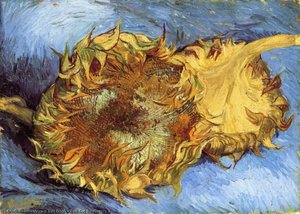


Om kunstneren
Et liv som bygger bro mellom verdener: Edward Steichens kunstneriske odyssé
Édouard Jean Steichen, senere kjent som Edward Steichen, var en skikkelse som overskred enkle kategoriseringer. Han ble født i 1879 i den lille landsbyen Bivange i Luxembourg, og hans liv ble en ekstraordinær reise fra europeiske røtter til å bli en av Americas mest innflytende kunstnere – ikke bare som fotograf, men som maler, kurator og en visjonær som omformet vår oppfatning av den visuelle kulturen. De tidlige årene var preget av en betydelig flytting; i 1881 emigrerte Steichen-familien til Hancock i Michigan på jakt etter nye muligheter. Denne forflytningen ga den unge Edward en følelse av rotløshet og kanskje en skjerpet observasjonsevne – egenskaper som skulle prege hans kunstneriske visjon dypt. Allerede som barn var et medfødt talent for tegning tydelig, næret av støttende foreldre som anerkjente og oppmuntret hans kreative tilbøyeligheter. Det avgjørende øyeblikket kom da han i sekstenårsalderen mottok sitt første kamera, noe som startet en periode med i stor grad selvstendig læring gjennom utrettelig eksperimentering. Dette handlet ikke bare om å mestre teknikk; det handlet om å oppdage et nytt språk, en måte å fange verden på med en umiddelbarhet og intimitet som tidligere var uoppnåelig. En påfølgende flytting til Milwaukee førte ham i lære som litograf, noe som ga ham verdifulle tekniske ferdigheter samtidig som det lot hans kunstneriske ambisjoner blomstre.Fra piktorialisme til moderne visjon: Steichens kunstneriske evolusjon
Steichens fremvekst sammenfalt med den voksende piktorialistiske bevegelsen, et forsøk på å heve fotografiet til status som finkunst. Han ble raskt en sentral skikkelse som omfavnet mykt fokus og maleriske effekter for å skape bilder som fremkalte stemning og atmosfære snarere enn bare å dokumentere virkeligheten. Denne søken ledet ham til Alfred Stieglitz, en åndsfrende som anerkjente Steichens eksepsielle talent. Sammen grunnla de Photo-Secession i 1902, en gruppe dedikert til å fremme fotografi som en legitim kunstform. Utgivelsen av *Camera Work*, et svært innflytelsesrikt fotografisk tidsskrift, ble deres plattform for å spre ideer og vise frem banebrytende arbeid. Etableringen av galleri 291 i New York City sementerte ytterligere deres innflytelse ved å tilby et rom der avantgardistisk europeisk kunst – Picasso, Matisse, Cézanne – ble stilt ut side om side med fotografi, noe som fremmet tverrkulturell dialog og utfordret konvensjonelle kunstneriske grenser. Likevel var ikke Steichens kunstneriske reise preget av en statisk tilknytning til én enkelt stil. Omveltningene under første verdenskrig viste seg å være katalytiske. Han forlot piktorialismens eteriske kvaliteter og omfavnet i stedet en "Straight Photography"-estetikk – karakterisert av skarpt fokus, presise detaljer og en uutsmykket representasjon av virkeligheten. Dette skiftet reflekterte en bredere kulturell bevegelse mot modernitet og en avvisning av sentimentalitet til fordel for klarhet og direktehet.En mester av mange medier: Mote, film og menneskets tilstand
Steichens allsidighet var bemerkelsesverlig. Han begrenset seg ikke til ett kunstnerisk domene; han beveget seg sømløst mellom fotografi, maleri og til og med film. Hans inntog i motefotografiet i løpet av 1920- og 30-tallet revolusjonerte bransjen. Gjennom arbeid for *Vogue* og *Vanity Fair* beveget han seg forbi ren dokumentasjon av klær for å skape bilder som var sofistikerte, glamorøse og gjennomsyret av en følelse av narrativ. Han forsto hvordan man bruker lys, posering og komposisjon for å formidle ikke bare stil, men også personlighet og emosjon. Denne perioden etablerte ham som en pioner på feltet og satte standarden for generasjoner av motefotografer som skulle komme. Under andre verdenskrig tjente Steichen sitt adoptivland ved å regissere *The Fighting Lady* (1944), en anerkjent dokumentarfilm for den amerikanske marinen som tilbød en visceral skildring av luftkamp. Men kanskje ligger hans mest varige arv i *The Family of Man*, kuratert ved Museum of Modern Art i 1955. Denne monumentale utstillingen, med fotografier fra sekstiåtte land, var et kraftfullt utsagn om universelle menneskelige erfaringer – kjærlighet, fødsel, død, glede, sorg – som overskred kulturelle og geografiske grenser. Anerkjent av UNESCOs Memory of the World Register, står den som et vitnesbyrd om Steichens tro på fotografiets forenende kraft.Arv og innflytelse: Et varig avtrykk på den visuelle kulturen
Edward Steichen døde i 1973 og etterlot seg et ekstraordinært arbeid som fortsetter å inspirere og provosere. Hans innflytelse er mangefasettert. Han endret fundamentalt oppfatningen av fotografi ved å heve det fra en rent teknisk prosess til en anerkjent kunstform. Hans banebrytende arbeid innen motefotografi definerte ikke bare en æras estetikk, men etablerte også nye standarder for visuell historiefortelling i bransjen. Galleri 291 spilte, gjennom sin fremme av europeisk modernisme, en avgjørende rolle i å introdusere amerikanske publikummere for banebrytende kunstbevegelser. Og *The Family of Man*, med sitt budskap om et delt menneskeverd, forblir dypt relevant i en stadig mer fragmentert verden. Hans evne til å navigere sømløst mellom kommersielle og kunstneriske ambisjoner demonstrerte at kreativitet kan blomstre i ulike kontekster. Steichens karriere var et vitnesbyrd om kraften i eksperimentering, innovasjon og en urokkelig jakt på en kunstnerisk visjon. Han dokumenterte ikke bare verden; han tolket den, formet den og endret til slutt måten vi ser den på.Merkverdige verk
- The Pond–Moonlight (1904): Et milepælsfotografi innen piktorialismen, hyllet for sin atmosfæriske dybde og tonale rikdom; en rekordhøy auksjonspris bekrefter dets vedvarende appell.
- The Flatiron (1904): Et annet betydelig tidlig verk som viser hans mestring av fotografisk teknikk og komposisjon, som også oppnådde en bemerkelsesverdig pris på auksjon.
- Portretter av kjendiser: En omfattende samling som fanger essensen av fremtredende skikkelser innen kunst, litteratur og underholdning med innsiktsfull sensitivitet.
- The Fighting Lady (1944): En anerkjent dokumentarfilm fra andre verdenskrig som gir et fengslende innblikk i luftkamp.
- The Family of Man (1955): En banebrytende utstilling ved MoMA, med fotografier fra hele verden som utforsket universelle menneskelige erfaringer og oppnådde UNESCO-anerkjennelse.

Edward Steichen
1900 - 1973 , Luxembourg
Kort om kunstneren
- Artistic Movement Or Style: Pictorialisme; Straight Photography; Fotografi
- Artists Or Movements Influenced By This Artist: ['Fotografi']
- Artists Who Influenced This Artist: ['Alfred Stieglitz']
- Date Of Birth: 27. mars 1879
- Full Name: Édouard Jean Steichen
- Nationality: Amerikansk
- Notable Artworks:
- The Pond–Moonlight
- The Flatiron
- Place Of Death: West Redding, Connecticut
Relaterte artikler

Precisionism: Capturing the Sharp Beauty and Geometric Order of the Modern Machine Age
Discover the sharp elegance of Precisionism. Explore how American artists captured the Machine Age through geometric clarity, industrial beauty, and modern precision. A deep dive into the movement's legacy for art enthusiasts and collectors.

Mastering the Machine Age: The 25 Best Artworks by Fernand Léger
Immerse yourself in the vibrant world of Fernand Léger. Explore 25 iconic Cubist masterpieces that celebrate the machine age through bold colors and geometric forms. Find inspiration for your collection with museum-quality art reproductions. Discover all masterpieces on TopImpressionists.com.

10 Iconic Masterpieces That Defined Geometric Abstraction
Journey through history with 10 iconic geometric abstraction masterpieces. From Mondrian to Malevich, explore the stories behind these timeless shapes and colors. Find museum-quality art reproductions and decor inspiration at TopImpressionists.com. Discover all masterpieces online.
Utforsk kunstverk organisert etter temaer, stiler og kjennetegn.


