
 Forhåndsvisning
 Send
Send Del
Del
 Vis detaljer
 Utskriftsvennlig guide

 Last ned bilde
 Liknende objekter
 Røntgenundersøkelse
 Lysbildefremvisning
 Q&A
Q&A Statistikk
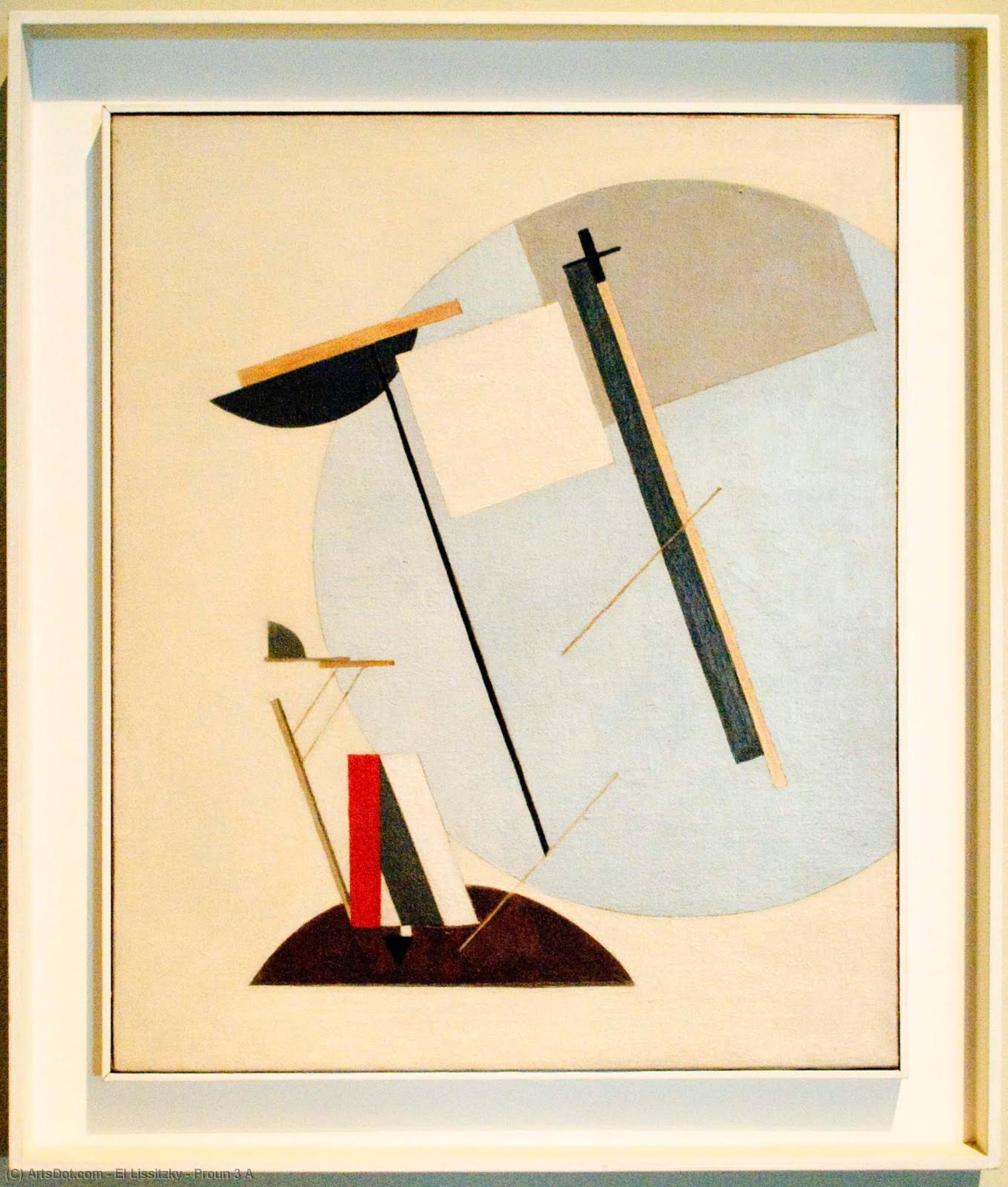
Proun 3 A

Explore El Lissitzky’s Constructivist masterpiece, Proun 3 A – a striking lithograph featuring a central circle intersected by a cross, embodying revolutionary geometric abstraction and inviting viewers to contemplate its enduring visual impact.
 Vis hele teksten
El Lissitzky (1890-1941): Russisk avantgarde-kunstner innen suprematisme, konstruktivisme og Proun. Utforsk hans Bauhaus-påvirkning, typografi & kraftfulle design.
Giclée / Kunsttrykk
Giclée- eller lerretsprint av museumskvalitet med rask produksjon og fleksible valgmuligheter for etterbehandling. ( Kjøp håndmalt maleri Bytt til digitalt bilde)




P118B Nkr10

P118H Nkr10

P118W Nkr10

P438Z Nkr10

P508JH Nkr12

P508YH Nkr12

P805H Nkr10

P805Z Nkr10

P919BZ Nkr10

P919G Nkr10

P919XJ Nkr10

P959ZH Nkr10

P968JZ Nkr12

W106C Nkr8

W218G Nkr10

W218JH Nkr8

W218Y Nkr10

W307PJ Nkr10

W316G Nkr10

W316PJ Nkr8

W316Y Nkr10

W398PJ Nkr8

W4111J Nkr10

W500HY Nkr15

W500JH Nkr15

W692G Nkr12

W849H Nkr8

W940BG Nkr15

W953PJ Nkr8




Standardformat
skreddersydd
CM
INCH
Velg mellom våre forhåndsdefinerte størrelser som bevarer kunstverkets opprinnelige proporsjoner.
Loading sizes...

bredde
høyde
Skriv inn ønsket bredde og høyde for å tilpasse trykket til din ramme eller vegg. Et trykk kan kun beskjæres, aldri skaleres opp utover motivets opprinnelige størrelse, noe som betyr at et format med andre proporsjoner vil føre til tap av deler av bildet. Vi sender deg en digital mockup for godkjenning før vi starter trykkeprosessen. Bildet som vises på denne siden viser ikke den faktiske beskjæringen — det er kun mockuppen som viser dette.
Verdensomspennende levering () på 2 uker i stedet for standard 4/5 uker. (2 November)

Gratis ekspressfrakt over hele verden

Lerretsduk av lin av høy kvalitet

Full transportforsikring

Garanti for refusjon av toll og importavgifter

Garantert fargegjengivelse

100 dagers returrett ved fabrikasjonsfeil

100% pengene tilbake-garanti

Rabatt ved flere kjøp
 Glassalternativet er kun tilgjengelig i størrelser under 110 cm

Proun 3 A
Giclée / Kunsttrykk
Størrelse på reproduksjon
-


Totalpris for valgte alternativer
Nkr 664
A Geometric Symphony of Revolution
El Lissitzky’s Proun 3 A stands as a testament to the fervent idealism of Constructivism—a movement that sought to liberate art from representational illusion and forge it into a tool for social transformation. Created in 1920, this lithograph is part of a larger portfolio exploring Lissitzky's groundbreaking concept of Proun, which aimed to visualize the underlying structure of reality itself. Unlike traditional painting, Proun abandons depiction; instead, it presents a complex geometric arrangement designed to convey an emotional and intellectual resonance far beyond mere visual appearance.- Subject Matter: The composition centers around a prominent circle intersected by a cross—a motif that recurs throughout Lissitzky’s Proun series. This seemingly simple form embodies profound symbolic significance, representing the unity of cosmos and human consciousness according to Lissitzky's philosophical framework.
- Style & Technique: Lissitzky’s meticulous execution demonstrates Constructivist precision. Lithography—a printing process known for its ability to reproduce intricate detail—was chosen to capture the essence of Proun’s geometric abstraction. The artist employed a bold palette, utilizing shades of ochre and crimson to heighten the visual impact.
Symbolism Beyond Geometry
Beyond its formal structure, Proun 3 A resonates with deeper symbolic meanings rooted in Lissitzky’s spiritual explorations. The circle represents wholeness and unity—a concept central to Eastern philosophy and embraced by Lissitzky as a means of overcoming Western dualisms. Simultaneously, the cross symbolizes faith and transcendence—a visual counterpoint that underscores the artist's desire to reconcile reason and spirituality.Emotional Impact & Artistic Legacy
Ultimately, Proun 3 A transcends mere aesthetic contemplation; it invites viewers into a dialogue about the nature of reality and the role of art in shaping perception. Lissitzky’s masterful manipulation of geometric form conveys an aura of intellectual conviction—a palpable sense of optimism tempered by awareness of social responsibility. This lithograph remains a cornerstone of Constructivist art, inspiring generations of artists to explore the expressive potential of abstraction while grappling with pressing societal concerns. Its enduring appeal lies in its ability to communicate profound ideas through deceptively simple visual elements—a testament to Lissitzky’s genius as both artist and visionary.Spørsmål og svar
Hva forestiller "Proun 3 A" av El Lissitzky?
Motivene i "Proun 3 A" er geometric abstraction, russian art, symbolic design, bauhaus influence, avant-garde, circular motif, lithograph print.
Hvilken stemning ville "Proun 3 A" tilføre et rom?
"Proun 3 A" av El Lissitzky har en Modern atmosfære og anbefales for et Living Room. Stemningen er det verket tilfører rommet rundt seg.
Er El Lissitzky, skaperen av "Proun 3 A", kjent under andre navn?
El Lissitzky er også kjent under navnene Lazar Markovich Lissitzky, Lasar Markowitsch Lissitzky.
Om kunstneren
A Revolutionary Vision: The Life and Art of El Lissitzky
El Lissitzky, født Lazar Markovich Lissitzky i den lille russiske landsby Pochinok i 1890, steg frem som en sentral figur i det turbulente kunstlandskapet tidlig på 20 århundre. Hans liv var preget av konstant omdefinering, drevet av en brennende tro på kunstens makt til å forme samfunnet og gjenspeile den moderne verdens dynamikk. Fra sin opprinnelige utdannelse som arkitekt og ingeniør – studier hindret av restriksjoner for jødiske studenter – avtok Lissitzky mot et kunstnerisk uttrykk, først gjennom illustrasjoner fylt med jiddisk folklore. Disse tidlige verkene, som hans omslag til ‘Chad Gadya’, avslører en spirende talent allerede som kjempet med fortelling og visuell historiefortelling, og antyder de dype kulturelle røttene som ville fortsette å forme hans estetikk. En flytting til Berlin og Darmstadt utvidet horisonten hans, men det var først da han returnerte til Russland at Lissitzky virkelig fant sin kunstneriske stemme, og ble uomtvistelig knyttet til den revolusjonære lidenskapen som raste gjennom nasjonen.The Embrace of Abstraction: Suprematism and Proun
Et definerende øyeblikk kom med hans møte med Kazimir Malevich og omfavnelsen av Suprematisme. Denne radikale bevegelsen, dedikert til ren geometrisk abstraksjon, resonerte dypt med Lissitzky’s ønske om å overskride representasjonell kunst og gripe inn i et universelt visuelt språk. Han ble en nøkkelperson i UNovis, den Suprematistiske gruppen etablert i Vitebsk, aktivt spredde dens prinsipper gjennom undervisning og kunstproduksjon. Men Lissitzky kopierte ikke bare Malevich’s stil; han skapte sin egen distinkte vei med utviklingen av *Proun*. Denne unike serien, født fra en fusjon av Suprematisme og Konstruktivisme, utforsket romforhold og geometriske former i dynamiske komposisjoner som ofte minnet om arkitektoniske tegninger eller eksploderende diagrammer. Proun var ikke bare maleri; det var en undersøkelse av selve rommets struktur, en forløsning av fremtidige arkitekturmuligheter. Disse verkene, med sine flytende plan og kryssende linjer, gjenspeilte Lissitzky’s tro på kunst som en kraft i stand til å konstruere nye virkeligheter. Hans ingeniørbakgrunn er tydelig her, og gir en strukturell logikk til de abstrakte formene.Art as Propaganda and Social Commentary
Lissitzky’s kunstneriske visjon utvidet seg langt utover lerretet. Han trodde inderlig at kunst skulle tjene et sosialt formål, og engasjerte seg aktivt i politiske ideologier og søkte måter å integrere design inn i hverdagen. Denne overbevisningen førte ham til å bli dypt involvert i sovjetisk propagandakampanje, og skapte kraftige plakater og grafiske design som var ment å mobilisere publikum for den bolsjevikiske regjeringen. Hans 1941-plakat som oppfordrer til tankeskyttelproduksjon er et bevis på denne forpliktelsen – et skarpt, virkningsfullt bilde som gjenspeiler krigens hastverk. Ut over propaganda ble Lissitzky en revolusjonær innen typografi, utstillingsdesign og fotomontasje. Han forsto at effektiv kommunikasjon krevde innovative visuelle strategier, og eksperimenterte fryktløst med nye teknikker for å formidle sitt budskap. Hans fotomontasjer, som ‘The Constructor’ (1924), er spesielt slående – selvportretter som blander fotografi med geometrisk abstraksjon, og tilbyr en kompleks kommentar til identitet og kunstnerens rolle i samfunnet.Influences and Legacy
Lissitzky var dypt påvirket av både europeisk og russisk kunst. Han studerte verkene til De Stijl og Bauhaus, og deres vektlegging av funksjonalisme og geometrisk form ble en viktig del av hans egen stil. Samtidig var han inspirert av den russiske folkeeventyret og tradisjonene i jiddisk kultur. Hans arbeid reflekterer ofte disse motsetningene – en blanding av moderne abstraksjon og gamle røtter. Etter andre verdenskrig fortsatte Lissitzky å utvikle sine ideer, og hans verk ble en viktig del av den sovjetiske kunstbevegelsen. Han døde i Moskva i 1941, men hans arv lever videre gjennom hans innflytelse på generasjoner av kunstnere og designere. Hans innovasjoner innen typografi, utstillingsdesign og fotomontasje inspirerer fortsatt samtidige kunstnere og designere, mens hans tro på kunst som en kraft for sosial endring er dypt relevant.Key Works
Noen av Lissitzky’s mest kjente verk inkluderer:- “The Constructor” (1924) – En ikonisk plakat som fremhever viktigheten av tankeskyttler i krigen.
- “Chad Gadya” cover (1918) – Et tidlig eksempel på hans evne til å kombinere visuell abstraksjon med fortelling.
- Proun-serien (1914-1923) – En banebrytende serie som utforsker rom og form i dynamiske komposisjoner.

El Lissitzky
1890 - 1941 , Russland
Kort om kunstneren
- Artistic Movement Or Style:
- Suprematisme
- Konstruktivisme
- Artists Or Movements Influenced By This Artist:
- Bauhaus
- De Stijl
- Artists Who Influenced This Artist: ['Kazimir Malevich']
- Date Of Birth: 23. nov 1890
- Date Of Death: 30. des 1941
- Full Name: El Lissitzky
- Nationality: Russisk
- Notable Artworks:
- Byggeren
- Chad Gadya
- Place Of Birth: Pochinki, Russland
Relaterte artikler

The Beauty of Order: A Journey Through the Timeless Elegance of Geometric Abstraction
Discover the profound elegance of geometric abstraction. Explore a curated journey through minimalist mastery, from De Stijl to modern textures, and learn how structured beauty brings timeless order and sophisticated serenity to your art collection.
Utforsk kunstverk organisert etter temaer, stiler og kjennetegn.


