

 Forhåndsvisning
 Send
Send Del
Del
 Vis detaljer
 Utskriftsvennlig guide

 Last ned bilde
 Liknende objekter
 Røntgenundersøkelse
 Lysbildefremvisning
 Q&A
Q&A Statistikk
The First Communion

- 65.0 x 53.0 cm


Eugene Anatole Carrière’s ‘The First Communion’ (1896) is a haunting Symbolist monochrome painting of a young girl receiving communion. Explore its ethereal beauty & influence on Picasso.
 Vis hele teksten
Eugène Anatole Carrière var en fransk symbolist konstnär av fin-de-siècle-perioden. Carrière's målningar är mest kända för sin nästan monokroma brun färgskala och deras eteriska, drömlika kvalitet.
Giclée / Kunsttrykk
Giclée- eller lerretsprint av museumskvalitet med rask produksjon og fleksible valgmuligheter for etterbehandling. ( Kjøp håndmalt maleri Bytt til digitalt bilde)




P118B Nkr10

P118H Nkr10

P118W Nkr10

P438Z Nkr10

P508JH Nkr12

P508YH Nkr12

P805H Nkr10

P805Z Nkr10

P919BZ Nkr10

P919G Nkr10

P919XJ Nkr10

P959ZH Nkr10

P968JZ Nkr12

W106C Nkr8

W218G Nkr10

W218JH Nkr8

W218Y Nkr10

W307PJ Nkr10

W316G Nkr10

W316PJ Nkr8

W316Y Nkr10

W398PJ Nkr8

W4111J Nkr10

W500HY Nkr15

W500JH Nkr15

W692G Nkr12

W849H Nkr8

W940BG Nkr15

W953PJ Nkr8




Standardformat
skreddersydd
CM
INCH
Velg mellom våre forhåndsdefinerte størrelser som bevarer kunstverkets opprinnelige proporsjoner.
Loading sizes...

bredde
høyde
Skriv inn ønsket bredde og høyde for å tilpasse trykket til din ramme eller vegg. Et trykk kan kun beskjæres, aldri skaleres opp utover motivets opprinnelige størrelse, noe som betyr at et format med andre proporsjoner vil føre til tap av deler av bildet. Vi sender deg en digital mockup for godkjenning før vi starter trykkeprosessen. Bildet som vises på denne siden viser ikke den faktiske beskjæringen — det er kun mockuppen som viser dette.
Verdensomspennende levering () på 2 uker i stedet for standard 4/5 uker. (2 November)

Gratis ekspressfrakt over hele verden

Lerretsduk av lin av høy kvalitet

Full transportforsikring

Garanti for refusjon av toll og importavgifter

Garantert fargegjengivelse

100 dagers returrett ved fabrikasjonsfeil

100% pengene tilbake-garanti

Rabatt ved flere kjøp
 Glassalternativet er kun tilgjengelig i størrelser under 110 cm

The First Communion
Giclée / Kunsttrykk
Størrelse på reproduksjon
-


Totalpris for valgte alternativer
Nkr 664
The Haunting Beauty of "The First Communion": A Symbolist Portrait of Innocence
Eugène Anatole Carrière’s “The First Communion,” painted in 1896, isn't merely a depiction of a religious ceremony; it’s a profoundly evocative exploration of childhood innocence, spiritual yearning, and the subtle anxieties that lie beneath the surface of faith. This masterpiece, now housed within the collections of art institutions worldwide, exemplifies Carrière’s signature style – a near-monochrome palette dominated by muted browns and greys, creating an atmosphere of ethereal mystery and quiet melancholy. The painting immediately draws the viewer into a dreamlike space, where reality seems to soften and blur at the edges.
Carrière's artistic journey was deeply influenced by his time as a prisoner in Dresden during the Franco-Prussian War. Exposure to the works of Peter Paul Rubens, with their rich, glowing colors and dramatic lighting, left an indelible mark on his approach to painting. This influence is subtly present in “The First Communion,” though Carrière ultimately developed his own distinctive style – one characterized by a deliberate reduction of color to its most essential tones, emphasizing mood and atmosphere over precise representation. The use of brown creates a sense of timelessness, suggesting that the scene unfolds outside of specific time or place, existing instead within a realm of spiritual contemplation.
A Study in Symbolism: Veil, Light, and Shadow
The central figure of the painting – a young girl receiving communion – is enveloped in a veil, a potent symbol of purity, concealment, and nascent faith. The veil isn’t simply an article of clothing; it acts as a visual barrier, hinting at the mysteries surrounding religious initiation and the vulnerability inherent in entering into a sacred tradition. The lighting within the painting is equally significant. A diffused light source casts long shadows across the girl's face and gown, contributing to the overall sense of solemnity and introspection. The interplay of light and shadow creates a visual metaphor for the spiritual journey – a movement from darkness towards enlightenment.
Carrière’s technique is notable for its meticulous layering of paint and subtle blending. He eschews sharp outlines and bold brushstrokes, opting instead for a fluid, almost watercolor-like application that lends the scene an ethereal quality. The smooth texture of the canvas, combined with the delicate gradations of color, creates a sense of translucence, as if the girl herself is partially obscured by a veil of spiritual mist. The simplified forms and flattened perspective further enhance this dreamlike effect, distancing the viewer from a realistic portrayal and inviting them to contemplate the painting’s symbolic meaning.
Historical Context and Artistic Legacy
"The First Communion" was created during the late 19th century, a period of profound social and artistic change. The Symbolist movement, which Carrière embraced, sought to express subjective emotions and spiritual experiences through art, often rejecting the realism and materialism of earlier artistic traditions. This painting aligns perfectly with the Symbolist aesthetic – it’s not about depicting a literal event but rather conveying a complex range of feelings associated with religious initiation and the transition from childhood innocence to adult faith.
Carrière's work had a significant impact on subsequent generations of artists, particularly Pablo Picasso. The influence of Carrière’s monochrome palette and his exploration of psychological themes can be seen in Picasso’s Blue Period, demonstrating the enduring legacy of this enigmatic French artist. “The First Communion” remains a powerful testament to Carrière's artistic vision – a hauntingly beautiful portrayal of faith, innocence, and the mysteries of the human spirit.
Collecting a Timeless Masterpiece: Reproductions and Beyond
TopImpressionists offers high-quality reproductions of “The First Communion,” allowing art lovers worldwide to experience the beauty and emotional depth of this iconic painting. Whether you’re seeking a stunning addition to your home or office, or simply want to connect with the artistic legacy of Eugène Carrière, our meticulously crafted reproductions capture the essence of the original while offering exceptional value. Explore our collection today and bring this evocative masterpiece into your world.
Spørsmål og svar
Hvilken reproduksjonsstørrelse anbefales for "The First Communion" av Eugène Anatole Carrière?
Anbefalt trykkstørrelse for "The First Communion" av Eugène Anatole Carrière er Medium.
Hvor og til hvilket formål anbefales "The First Communion"?
"The First Communion" av Eugène Anatole Carrière anbefales til Statement, ideelt sett i en Living Room. Bruksområde og rom gir veiledning for hvor en reproduksjon passer inn.
Bruker "The First Communion" av Eugène Anatole Carrière sterke kontraster eller myke harmonier?
Fargekomposisjonen i "The First Communion" av Eugène Anatole Carrière forener en Serene kontrast med en Unified Palette harmoni.
Om kunstneren
**tidlig liv og utdanning**
eugène anatole carrière, en anerkjent fransk symbolistisk kunstner, ble født 16. januar 1849 i gournay-sur-marne, seine-saint-denis. Han studerte ved école des beaux-arts i paris og senere under cabanel, noe som la selve fundamentet for hans fremtidige kunstneriske virke.**kunstnerisk stil og påvirkninger**
Carrières malerier er best kjent for sin karakteristiske brune monokrome palett, som har vært et objekt for fascinasjon hos mange kunstentusiaster. Hans arbeid var preget av kunsten til peter paul rubens, som han ble eksponert for under sin tid som fange i dresden. Denne påvirkningen er tydelig i de glødende fargene i hans tidlige malerier. **den unge moren (1879)**, et av Carrières tidligste bemerkelsesverdige verk, er i dag innlemmet i samlingen til musée des beaux-arts de rouen. Dette verket markerte begynnelsen på hans temaer knyttet til det domestiske livet, som skulle bli et kjennetegn ved hans kunstneriske stil.**bemerkelsesverdige verk og utstillinger**
**det syke barnet (montargis)**, **den første kommunion (toulon)** og **portrett av louis-henri devillez (1887)** er alle høyt priset arbeid som viser Carrières ferdighet i å fange essensen av sine motiver. Disse verkene har, blant andre, blitt stilt ut ved société nationale des beaux-arts, som Carrière selv var med på å etablere. Hans bidrag til kunstverdenen strekker seg langt utover hans malerier, da han også spilte en innflytelsesrik rolle som kunstlærer ved académie de la palette.**arv og innflytelse på moderne kunst**
Carrières monokrome stil kan spores i verkene til pablo picasso, særlig under hans blå periode. Denne påvirkningen står som et vitnesbyrd om Carrières varige betydning for den moderne kunsten.- se flere av Carrières verk hos TopImpressionists.com/eugène anatole carrière
- utforsk musée des beaux-arts de rouen, som huser noen av Carrières tidlige verk, ved discovering the musée des beaux-arts de carcassonne (france)
- lær mer om symbolismen og dens innflytelse på kunsten hos the symbolism art movement

Eugène Anatole Carrière
1849 - 1906 , Frankrike
Kort om kunstneren
- Artistic Movement Or Style: Symbolism, Monokrom
- Artists Or Movements Influenced By This Artist: ['Pablo Picasso']
- Artists Who Influenced This Artist: ['Peter Paul Rubens']
- Date Of Birth: 16 januar 1849
- Full Name: Eugène Anatole Carrière
- Nationality: Fransk
- Notable Artworks:
- The Sick Child
- Young Mother
- Place Of Birth: Gournay-sur-Marne, Frankrike
Relaterte artikler

Sacred Narratives on Canvas: Exploring Religious Painting Through History
Explore the rich history of religious painting with TopImpressionists.com! Discover iconic artworks, symbolism & techniques from antiquity to the Renaissance. Enhance your art appreciation today.

Simon Vouet: A Baroque Master's Journey from Italian Influence to French Classicism
Explore the life & art of Simon Vouet, a pivotal French Baroque painter who introduced Italian styles to France. Discover his masterpieces and lasting influence on 17th-century art.
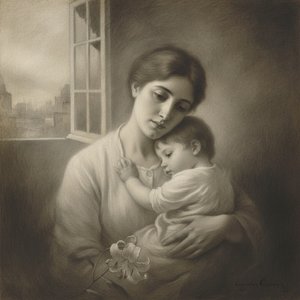
Eugène Carrière: The 'Peintre d'Âme' & Symbolist Portraiture’s Intimate Vision
Explore the haunting world of Eugène Carrière, a pivotal French Symbolist artist known for his deeply intimate portraits & 'peinture d'âme'. Discover his life, style, and lasting influence on modern masters like Picasso. Shop high-quality reproductions at TopImpressionists.

Sacred Narratives Embodied: A Comprehensive Exploration of Religious Iconography in Art History
Explore the rich history of religious iconography in art! Discover symbolism, movements & masterpieces from Byzantine to Renaissance periods. Expert insights for collectors and enthusiasts at TopImpressionists.

Charles Le Brun: Master of French Baroque Classicism & His Enduring Legacy
Explore the life & art of Charles Le Brun, master of French Baroque Classicism. Discover his royal commissions, influence on Versailles, and enduring legacy through detailed analysis & stunning artworks.