

Vist: · Med ramme:
 Forhåndsvisning
 Send
Send Del
Del
 Vis detaljer
 Utskriftsvennlig guide

 Last ned bilde
 Liknende objekter
 Røntgenundersøkelse
 Lysbildefremvisning
 Spørsmål og svar
 Statistikk

Nkr 2572
Håndlaget oljereproduksjon
Håndmalt olje på lerret i din valgte størrelse og ramme, laget på bestilling av våre kunstnere. ( Bytt til trykk Bytt til digitalt bilde)
Størrelse
·Standardformat
skreddersydd
CM
INCH
Velg mellom våre forhåndsdefinerte størrelser som bevarer kunstverkets opprinnelige proporsjoner.
Laster inn størrelser...

bredde
høyde
Skriv inn ønsket bredde og høyde for å tilpasse bildet til din ramme eller vegg. Siden dette er håndmalt, kan kunstneren male litt mer rundt motivet eller beskjære det noe dersom du velger et annet format — valget er ditt. Vi sender deg en digital mockup til godkjenning før maleriet påbegynnes. Bildet som vises på denne siden representerer ikke det faktiske resultatet — kun mockuppen viser det endelige uttrykket.
 Les mer om dette
Fullfør
·
Hvit kant Nkr1

Uskarp kantfinish Nkr1

Fortsatt motiv Nkr1

P118B Nkr10

P118H Nkr10

P118W Nkr10

P438Z Nkr10

P508JH Nkr12

P508YH Nkr12

P805H Nkr10

P805Z Nkr10

P919BZ Nkr10

P919G Nkr10

P919XJ Nkr10

P959ZH Nkr10

P968JZ Nkr12

W106C Nkr8

W218G Nkr10

W218JH Nkr8

W218Y Nkr10

W307PJ Nkr10

W316G Nkr10

W316PJ Nkr8

W316Y Nkr10

W398PJ Nkr8

W4111J Nkr10

W500HY Nkr15

W500JH Nkr15

W692G Nkr12

W849H Nkr8

W940BG Nkr15

W953PJ Nkr8

H24-GOLD Nkr30

H24-SILVER Nkr30

H36-GOLD Nkr45

H36-SILVER Nkr45
Sendes i et beskyttende rør, klar til å rammes inn av din egen innrammer.
Over 105 cm sendes rammen som et sett til en profesjonell rammemaker — les detaljene.
Tilleggstjenester
valgfrittHva inkluderer ekstratjenestene?
Eksempler på hva som kan endres: Erstatt ansikt med kundens eget bilde; Legg til kjæledyr (f.eks. bytt ut katt med hund); Inkluder en skjult melding i bakgrunnen; Endre landskap eller elementer i bakgrunnen.
Etter bestilling vil TopImpressionists.com-teamet sende e-post til kunden for instruksjoner og sende et utkast som forhåndsvisning
Etter bestilling vil TopImpressionists.com-teamet sende e-post til kunden for instruksjoner og sende et utkast som forhåndsvisning
Verdensomspennende levering () på 3–4 uker i stedet for standard 5 uker. (4 November). Ingen kompromisser med kvaliteten.
Beskyttende ferniss
Navneskilt
Detaljer om gravert bronseplate
This elegant plaque features the artist's name and the title of the artwork, finely engraved for a timeless presentation.
It is made from bronze with a refined, elegant finish. The text is precisely laser-engraved for a sharp and permanent result. Measuring 9x2 cm, the plaque is compact yet easy to read. It's built to be durable and scratch-resistant, offering a professional, museum-quality look. Mounting is simple thanks to the included adhesive backing.
Detaljer om gjennomsiktig akrylplate
The plaque includes essential engraved details such as the artist's name, the title of the artwork, the date it was created, the type of media used-like oil on canvas or watercolor-a brief description of the piece, and a QR code that links to the complete artwork information.
It is crafted from clear acrylic, offering a sleek, modern appearance. The text is UV-engraved in black to ensure strong visual contrast. With a size of 10x15 cm, it ensures optimal readability. It comes equipped with two metal hooks for secure wall mounting. The plaque is designed to be weather-resistant, making it suitable for various environments, and it includes interactive features that work seamlessly with smartphone scanning.
Detaljer om plakett i svart akryl
This elegant plaque includes engraved information such as the artist's name, the title of the artwork, the date it was created, the type of media used (like oil on canvas or watercolor), a short description of the artwork, and a QR code for quick access to more information.
The plaque itself is made from refined black acrylic with a premium finish. The text is laser-engraved in white for high contrast and readability. Its size is 10x15 cm, designed to be easy to read. It comes with two metal hooks for professional mounting. The design is sleek and fits any interior style. It is also weather-resistant and durable, with built-in digital integration for mobile compatibility.
Glassalternativet er kun tilgjengelig i størrelser under 110 cm
 Glassalternativet er kun tilgjengelig i størrelser under 110 cm
- Gratis ekspressfrakt over hele verden
- Lerretsduk av lin av høy kvalitet
- Full transportforsikring
- Garanti for refusjon av toll og importavgifter
- Garantert fargegjengivelse
- 100 dagers returrett ved fabrikasjonsfeil
- 100% pengene tilbake-garanti
- Rabatt ved flere kjøp


Beskrivelse av objektet
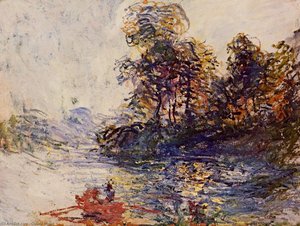
Experience Paul Gauguin's 'Mountain Landscape' (1882) – a vibrant post-impressionist masterpiece capturing nature’s essence with bold colors & expressive brushstrokes. Hand-painted reproductions available.
Om kunstneren
Paul Gauguin: En revolusjonerende post-impressionist maler kjent for dristige farger, eksotiske motiver og symbolske temaer. Utforsk hans reise fra finans til kunstlegendar!
Om maleriet
A Journey Into Gauguin’s Soul: “Mountain Landscape”
Paul Gauguin's "Mountain Landscape," painted in 1882, isn’t merely a depiction of a hillside; it’s a profound distillation of the artist’s evolving vision and his yearning for a deeper connection with nature and spirituality. Emerging from the vibrant, yet ultimately superficial, world of Impressionism, Gauguin embarked on a radical shift—a deliberate rejection of objective representation in favor of subjective experience and symbolic resonance. This painting stands as a pivotal moment in that transformation, showcasing a nascent style that would profoundly influence generations of artists to come. The scene itself is deceptively simple: a rugged, almost primordial landscape dominated by towering mountains and a swirling, cloudy sky. Yet, within this apparent simplicity lies a complex interplay of color, texture, and emotion—a testament to Gauguin’s innovative approach to capturing the essence of his subject. He wasn't striving for photographic accuracy; instead, he sought to translate the *feeling* of being amidst such grandeur, an experience deeply rooted in personal intuition and spiritual contemplation.- The Palette of Emotion: Gauguin’s masterful use of color is immediately striking. Gone are the delicate pastel hues of Impressionism; here, we encounter a bolder, more assertive palette—deep greens, rich browns, ochre yellows, and dramatic blues. These aren't colors that simply describe the landscape; they *become* the landscape itself, imbued with an emotional charge. The vibrant greens suggest life and vitality, while the earthy browns ground the scene in a sense of solidity and permanence. The sky, rendered in swirling shades of blue and grey, evokes both serenity and turbulence—a reflection perhaps of Gauguin’s own inner turmoil during this period of intense artistic exploration.
- Brushstrokes as Voices: Gauguin's distinctive brushwork is equally crucial to the painting’s impact. His strokes are not smooth or blended; they are loose, expressive, and often deliberately uneven. These visible marks—a hallmark of his style—inject a sense of movement and energy into the scene, suggesting the constant flux of nature and the artist’s own restless spirit. The brushstrokes seem to dance across the canvas, creating a tactile quality that invites the viewer to reach out and touch the landscape.
- A Departure from Realism: Notice how Gauguin simplifies forms—the mountains are not meticulously rendered but rather suggested through broad masses of color and texture. This simplification isn’t an act of carelessness; it's a deliberate choice to prioritize emotional impact over literal representation. He is less concerned with depicting *what* he sees than with conveying *how* he feels about what he sees.
The Context of Transformation: Gauguin and Post-Impressionism
To fully appreciate “Mountain Landscape,” it’s essential to understand its place within the broader context of Post-Impressionism—a movement that arose in reaction to the limitations of Impressionism. While Impressionists sought to capture fleeting moments of light and color, Post-Impressionist artists like Gauguin aimed to delve deeper into the underlying emotions and symbolic meanings of their subjects. They rejected the purely optical approach of Impressionism, embracing a more subjective and expressive style. Gauguin’s journey began in Paris, where he initially experimented with Impressionistic techniques. However, disillusioned by what he perceived as its superficiality, he sought refuge in Brittany, immersing himself in rural life and drawing inspiration from Celtic folklore and mythology. This experience profoundly shaped his artistic vision, leading him to develop a style characterized by bold colors, simplified forms, and symbolic imagery—a style that would become synonymous with Post-Impressionism. Key Influences:- Synthetism: Gauguin’s exploration of Synthetism – an artistic style focused on the synthesis of form and color – is evident in this work.
- Primitivism: His fascination with non-Western cultures, particularly those of Tahiti, fueled his desire to strip away Western conventions and embrace a more primal, intuitive approach to art.
Decoding the Symbolism
“Mountain Landscape” isn’t simply a landscape painting; it's a visual poem—a meditation on nature, spirituality, and the human condition. The towering mountains themselves can be interpreted as symbols of strength, permanence, and the sublime—evoking a sense of awe and humility in the face of nature’s grandeur. The swirling clouds suggest both tranquility and turbulence, reflecting the complexities of life and the artist's own inner struggles. Notably, the absence of human figures reinforces this focus on the landscape itself, transforming it into a sacred space—a realm where the viewer can connect with something larger than themselves. Gauguin was deeply interested in exploring themes of spirituality and mythology, often incorporating symbolic elements into his work to convey hidden meanings. The painting invites contemplation: What does the rugged terrain represent? How does the sky’s movement affect your mood?A Legacy of Innovation
“Mountain Landscape” is a remarkably prescient work—a harbinger of the radical artistic movements that would emerge in the early 20th century. Gauguin's bold experimentation with color, texture, and symbolism paved the way for Expressionism, Fauvism, and other avant-garde styles. His willingness to challenge conventional notions of representation and embrace a more subjective approach to art continues to inspire artists today. Reproductions of this iconic painting offer a unique opportunity to experience Gauguin’s visionary spirit—to step into his world and contemplate the timeless beauty and profound mystery of the natural landscape.Spørsmål og svar
Hvilken teknikk er "Mountain landscape" laget med?
"Mountain landscape" er utført i Oil On Canvas.
Hvilken følelse formidler "Mountain landscape" av Paul Gauguin?
Den emosjonelle tonen som er registrert for "Mountain landscape" av Paul Gauguin, er Tranquil. Den oppsummerer følelsen verket uttrykker.
Hvilken teknikk og hvilket årstall er "Mountain landscape" av Paul Gauguin fra?
"Mountain landscape" ble skapt i 1882 med teknikken Oil On Canvas. Materiale og dato beskriver hvordan og når originalen ble laget.
Kort om verket og kunstquiz
Om Paul Gauguin

Paul Gauguin
1848 - 1903, Frankrike
Om kunstneren
A Life Painted in Bold Strokes: The World of Paul Gauguin
Eugène Henri Paul Gauguin, et navn som runger med livfull farge og opprørsk ånd, står som en sentral figur i overgangen fra impresjonismen til moderne kunst. Han ble født i Paris i 1848, og livet hans var langt ifra konvensjonell. Hans tidlige år ble formet av et uvanlig barndomsliv; faren hans var journalist, og moren hans nedstammet fra peruansk aristokrati – bestemorenen hennes, Flora Tristan, en banebrytende feminist og sosialistisk forfatter hvis idealer utvilsomt gjenspeilet seg i familien. Dette arvet ville dypt påvirke Gauguins kunstneriske visjon, og gi ham en fascinasjon for kulturer utenfor Europa. En dannelsestid brukt i Peru som barn, etterfulgt av familiens flytting i 1850, fordypet ham i en verden svært forskjellig fra parisisk samfunn, en opplevelse som hang igjen og til syvende og sist drev ham med å søke autentisitet i kunsten. Etter hjemkomst til Frankrike etter farens død, mottok Gauguin formell utdanning, men fant seg tiltrukket av verdenen til finansverdenen, og begynte en karriere som aksjehandler – en vei som virket i strid med den kunstneriske skjebnen som ventet ham.Fra Finans til Kunstnerisk Kall
I mange år ledet Gauguin et dobbeltliv, ivrig etter å forfølge sine forretningsinteresser samtidig som han hemmelig pleide en lidenskap for maling. I utgangspunktet ble han påvirket av impresjonistene og begynte å eksperimentere med farge og lys i sin fritid, men følte snart at de var begrenset av deres dedikasjon til å fange flyktige øyeblikk av virkeligheten. Den økonomiske krisen i 1882 viste seg som et vendepunkt, og tvang ham til å forlate sin lønningsomme karriere og helhjertet omfavne sin kunstneriske kall. Dette var ikke bare en endring i yrke; det var en fundamental endring i verdenssyn. Han søkte veiledning fra Camille Pissarro, som oppmuntret ham og introduserte ham for de avantgarde-kretsene i Paris. Likevel begynte Gauguin raskt å avvike fra impresjonistiske prinsipper, lengtet etter noe mer uttrykksfullt, noe mer symbolsk – et middel til å formidle ikke bare det han *så*, men det han *følte*. Dette ønsket førte ham på en reise for kunstnerisk utforskning som ville ta ham langt utenfor parisiske salonger og inn i hjertet av «primitiv» kultur. Han var ikke bare interessert i å forestille seg disse kulturene; han søkte å absorbere deres essens, og mente at de holdt en renhet som var tapt i vestlig sivilisasjon.Kall til Bretagne og Tahiti
Gauguins kunstneriske utvikling var uatskillelig knyttet til hans reiser. Han brukte tid i Bretagne, fascinert av landskapenes robuste uttrykk og de dype røttene til tradisjonene i dets folk. Denne perioden så han eksperimentere med flate former, kraftige konturer og forenkling av komposisjonen – teknikker som drev ham lenger fra naturalismen og nærmere en mer symbolsk språk. Men hans reise til Tahiti i 1891 løsnet virkelig hans kreative potensial. Søkende et fristed fra det han oppfattet som de kvalmende begrensningene i europeisk sivilisasjon, håpet Gauguin å finne inspirasjon i polynesisk kultur, og mente at den tilbød en renere, mer autentisk livsform. Dette var ikke bare en kunstnerisk søken; det var en åndelig søken. Han fordypet seg i lokale skikker og tro, og forestilte polynesiske kvinner, landskap og religiøse praksiser gjennom sitt unike perspektiv. Påvirket av japanske trykk – *Japonisme* – og middelalderkunst, utviklet han en distinkt estetikk preget av livlige farger, eksotisk motivmateriale og et preg av mystikk. Ikoniske malerier som «Vahine no te miti» (Kvinne med mango), «Manao Tupapau» (Overvåket av den døde ånd) og «Dagen til gudene» oppsto i denne perioden, og solidifiserte hans rykte som en visjonær kunstner. Hans bruk av farger ble stadig mer dristig og ikke-naturlig, tjente ikke til å reprodusere virkeligheten, men for å uttrykke følelser og åndelig mening.Arv og Kontrovers
Til tross for sine kunstneriske gjennombrudd var Gauguins liv ofte preget av vanskeligheter. Han kjempet med økonomiske problemer og svekkende helse under oppholdet i Tahiti og senere på Marquesasøyene, hvor han til slutt etablerte seg. Likevel fortsatte han å male produktivt, utrettelig utforsket temaer om liv, død og åndelighet. Han døde i 1903 på Hiva Oa, en avsidesliggende øy i Marquesasarkipelaget, stort sett ukjent for sin genialitet. Det var først etter hans død at Gauguins verk begynte å motta den anerkjennelsen det fortjente. I dag feires han som en sentral figur i utviklingen av moderne kunst, og forbinder gapet mellom impresjonismen og symbolismen, og baner vei for bevegelser som fauvisme. Hans bruk av farger, forenklede former og symbolske bilder har hatt en dyp innflytelse på kunstnere som Pablo Picasso, Henri Matisse og utallige andre. Likevel er Gauguin fortsatt en kontroversiell figur på grunn av aspekter ved hans personlige liv – spesielt hans forhold til unge polynesiske kvinner – som fortsetter å bli debattert og tolket i lys av samtidige etiske hensyn. Likevel er hans kunstneriske bidrag ubestridelige, og hans arv inspirerer fortsatt kunstnere og kunstelskere over hele verden. Han var en ekte innovatør, en opprører som torde utfordre konvensjoner og forme sin egen vei, og etterlot seg et verk som er like fengslende og gåtfullt som mannen selv.Nøkkelpåvirkninger & Kunstneriske Karakteristikker
- Impresjonisme: Tidlig påvirkning av farge og lys, senere forkastet for sin fokus på flyktige øyeblikk.
- Japonisme: Inspirert til flate perspektiver, kraftige konturer og dekorative mønstre.
- Middelalderkunst: Påvirket symbolske bilder og en avvisning av streng realisme.
- Syntetisme: En stil utviklet av Gauguin som legger vekt på å skape kunst basert på subjektiv opplevelse snarere enn objektiv observasjon.
- Primitivism: Fascinasjon med ikke-vestlige kulturer, og mente at de tilbød en renere og mer åndelig livsform. Dette gjenspeiles i motivmaterialet hans og stilvalgene.
Kort om Paul Gauguin
- Artistic Movement Or Style: Post-Impressionisme
- Artists Or Movements Influenced By This Artist:
- Picasso
- Matisse
- Artists Who Influenced This Artist: ['Camille Pissarro']
- Date Of Birth: 1848
- Date Of Death: 1903
- Full Name: Eugène Henri Paul Gauguin
- Nationality: Fransk
- Notable Artworks:
- Når vil du gifte deg?
- To kvinner på stranden
- Place Of Birth: Paris, Frankrike
Lignende kunstverk


Utforsk kunstverk organisert etter temaer, stiler og kjennetegn.


Paul Gauguin
Mountain landscape
() ·
Med ramme: · Håndmalt med olje på lin
Totalt