


 Se i rommet
 Del som digitalt kort
 Del
Del
 Detaljer
 Studentguide

 Last ned
 Liknende objekter
 Røntgen
 Lysbildefremvisning
 Besøksstatistikk
Indian Power


A powerful depiction of a man on horseback with raised arms captures the dynamic energy of Fritz Scholder's 1972 masterpiece Indian Power, inviting you to explore this iconic piece of modern Native American art.
 Les mer
Fritz Scholder (1937-2005) was a pivotal Native American artist known for his Abstract Expressionist paintings challenging stereotypes & Pop Art depictions of modern Indian life. Explore his iconic series and legacy.
Håndlaget oljereproduksjon
Håndmalt olje på lerret i din valgte størrelse og ramme, laget på bestilling av våre kunstnere. ( Bytt til trykkversjon Gå til digitalt bilde)




P118B Nkr10

P118H Nkr10

P118W Nkr10

P438Z Nkr10

P508JH Nkr12

P508YH Nkr12

P805H Nkr10

P805Z Nkr10

P919BZ Nkr10

P919G Nkr10

P919XJ Nkr10

P959ZH Nkr10

P968JZ Nkr12

W106C Nkr8

W218G Nkr10

W218JH Nkr8

W218Y Nkr10

W307PJ Nkr10

W316G Nkr10

W316PJ Nkr8

W316Y Nkr10

W398PJ Nkr8

W4111J Nkr10

W500HY Nkr15

W500JH Nkr15

W692G Nkr12

W849H Nkr8

W940BG Nkr15

W953PJ Nkr8




Standardformat
tilpasset
CM
INCH
Velg mellom våre forhåndsdefinerte størrelser som bevarer kunstverkets opprinnelige proporsjoner.
Loading sizes...

bredde
høyde
Du kan angi egne mål for å tilpasse en spesifikk ramme eller plass. Dersom den valgte størrelsen ikke samsvarer med originalbildets proporsjoner, vil vi enten beskjære kunstverket eller utvide maleriet med ytterligere håndmalte elementer. En digital mockup vil bli sendt til din godkjenning før produksjonen starter.
Vennligst merk at forhåndsvisningen på skjermen ikke gjenspeiler den faktiske beskjæringen eller utvidelsen. Kun mockuppen vil vise den endelige komposisjonen nøyaktig.
Selv om tilpassede størrelser er tilgjengelige, anbefaler vi å velge et mål fra den forhåndsdefinerte listen for å bevare de originale proporsjonene.
Eksempler på hva som kan endres: Erstatt ansikt med bilde av kunden; Legg til kjæledyr (f.eks. bytt ut katt med hund); Inkluder en skjult melding i bakgrunnen; Endre bakgrunnslandskap eller elementer.
Etter bestilling vil TopImpressionists.com-teamet sende e-post til kunden for instruksjoner og sende et utkast (mockup) som forhåndsvisning.
Etter bestilling vil TopImpressionists.com-teamet sende e-post til kunden for instruksjoner og sende et utkast (mockup) som forhåndsvisning.
Verdensomspennende levering () på 3–4 uker i stedet for standard 5 uker. (7 October). Ingen kompromisser med kvaliteten.

Gratis ekspressfrakt over hele verden

Lerretsduk av høykvalitets lin

Full transportforsikring

Garanti for refusjon av toll og importavgifter

Garantert fargeekthet

100 dagers returrett ved fabrikasjonsfeil

100% pengene tilbake-garanti

Mengderabatt
 Glassalternativet er kun tilgjengelig i størrelser under 110 cm

Indian Power
Reproduksjonsmetode
Format på reproduksjon
-


Totalpris
Nkr 2487
A Vision of Unbridled Spirit
In the powerful strokes of Indian Power, created in 1972, we encounter a moment of profound kinetic energy that transcends the canvas. Fritz Scholder, a master of reimagining the Native American narrative, presents us with a figure that is both grounded in history and soaring in spirit. The painting captures a man atop a horse, his arm thrust toward the heavens in a gesture of triumph or perhaps a call to ancestral strength. This is not merely a portrait of a rider; it is an exploration of sovereignty and the indomitable will. The composition is masterfully balanced, with the horse occupying a commanding presence on the right, its form suggesting a rhythmic movement that mirrors the heartbeat of the plains. Against a backdrop of a vast, crystalline blue sky, the vibrant red of the man's shirt serves as a visual heartbeat, pulling the viewer’s eye into the center of this dramatic encounter.
The technique employed in this oil on canvas reflects Scholder’s unique ability to blend the raw emotion of Abstract Expressionism with a striking, almost Pop Art-inspired clarity. The brushwork is deliberate and bold, creating textures that give life to the horse's musculature and the flowing movement of the rider's hair. There is a magnificent contrast at play here—the stillness of the infinite sky clashing with the dynamic, muscular tension of the subject. This interplay of color and form creates a sense of depth that invites the observer to step into the scene, feeling the wind and the heat of the sun. For the collector or interior designer, such a piece offers more than just decoration; it provides a focal point of intense character that can anchor a room with its commanding presence.
The Legacy of a Renegade Perspective
To understand the emotional weight of Indian Power, one must look toward the revolutionary context in which Fritz Scholder worked. Moving away from the romanticized, often static depictions of Native life that dominated the early 20th century, Scholder utilized his art to interrogate and deconstruct stereotypes. He brought a modern, often gritty honesty to his subjects, refusing to let them be trapped in a nostalgic past. In this work, we see the culmination of that mission: a depiction of strength that is contemporary and vital. The symbolism of the raised arm suggests a reclamation of agency—a refusal to be silenced or relegated to the margins of history.
For those seeking to adorn a space with art that sparks conversation and evokes deep reflection, this reproduction serves as a window into a pivotal era of American art history. It is a piece that resonates with themes of resilience, identity, and the enduring power of the human spirit. Whether placed in a sophisticated gallery setting or a curated residential collection, Indian Power stands as a testament to Scholder's legacy—a legacy that continues to challenge, inspire, and captivate the modern eye.
Spørsmål og svar
Hvor gammel var Fritz Scholder da "Indian Power" ble skapt i 1972?
Da "Indian Power" ble skapt i 1972, var Fritz Scholder – født i 1937 – 35 år gammel.
Hvem har skapt "Indian Power"?
"Indian Power" ble skapt av Fritz Scholder. Informasjonen på denne siden beskriver Fritz Scholder sitt originale verk.
Hva er produksjonsåret til "Indian Power" av Fritz Scholder?
"Indian Power" dateres til 1972. Datoen plasserer verket innenfor Fritz Scholder sin karriere og sin epoke.
Når og med hvilke materialer ble "Indian Power" laget?
"Indian Power" ble skapt i 1972 ved bruk av teknikken Oil On Canvas. Materiale og dato beskriver hvordan og når originalen ble laget.
Kan jeg se "Indian Power" som et lysbildefremvisning i fullskjerm?
"Indian Power" av Fritz Scholder kan vises som et lysbildefremvisning på verkets Lysbildefremvisning-side.
Hva har "Indian Power" til felles med resten av Fritz Scholder sin produksjon?
"Indian Power" deler med Fritz Scholders andre verk sin Pop Art-stil og de gjentakende temaene: abstract expressionism influence, pop art style, challenging native stereotypes, modern indian life themes, iconic mid-career work.
Hva foreslås brukt til "Indian Power" av Fritz Scholder?
En reproduksjon av "Indian Power" av Fritz Scholder anbefales til Focal. Dette forslaget er basert på verkets motiv, stemning og fargebruk.
Kunstnerbiografi
Fritz Scholder: A Renegade Voice in Native American Art
Fritz Scholder (1937-2005) wasn’t born into a world of tradition or steeped in the lore of his ancestry. He was, in many ways, an outsider—a European-American raised in Minnesota and California, with only a quarter Luiseno bloodline connecting him to the California Mission tribes. Yet, this very distance became the cornerstone of his revolutionary approach to Native American art, forging a path that challenged established stereotypes and offered a brutally honest, often uncomfortable, portrayal of modern Indian life. Scholder’s legacy isn't one of romanticized depictions; it’s a testament to the power of perspective—a refusal to simply observe but instead to actively interrogate and deconstruct the narratives surrounding Native Americans in American culture.
Scholder’s early artistic development was shaped by a confluence of influential figures. His initial exposure to art came through his high school teacher, Oscar Howe, a prominent Yanktonai Dakota artist who instilled in him an appreciation for traditional forms and storytelling. This foundation was further strengthened during the summer of 1955 at the Mid-West Art and Music Camp, where he encountered Robert B. Green and James Grittner. Later, his move to Sacramento in 1957 brought him into contact with Wayne Thiebaud, a pivotal figure in Abstract Expressionism, who introduced Scholder to the possibilities of modern abstraction. This exposure proved crucial, laying the groundwork for his later stylistic innovations.
The “Real Indian” Series and Controversy
Scholder’s most significant contribution to Native American art arrived in 1967 with the launch of his controversial "Indian Image" series. Rejecting the prevalent romanticized depictions of Native Americans—the stoic warrior, the noble savage—Scholder presented a starkly different reality. He depicted Indians engaging in everyday activities: drinking beer, smoking cigarettes, driving cars, and even wearing Western clothing. These images, rendered in bold acrylics with a textured surface reminiscent of folk art, were deliberately provocative, confronting viewers with the uncomfortable truth that Native Americans were not relics of the past but modern individuals grappling with contemporary issues.
The series ignited immediate controversy within the art world and among Native American communities. Some viewed it as disrespectful and exploitative, accusing Scholder of appropriating a culture he didn’t fully understand. Others recognized its power—its unflinching honesty and its challenge to ingrained prejudices. Despite the criticism, the "Indian Image" series cemented Scholder's reputation as a daring and uncompromising artist who refused to shy away from difficult subjects. It marked a turning point in Native American art, shifting the focus from traditional representations to explorations of contemporary identity.
Technique and Influences
Scholder’s artistic style evolved significantly throughout his career. Initially influenced by Abstract Expressionism, he gradually developed a distinctive approach characterized by bold colors, layered textures, and a flattened perspective—a technique that echoed the visual language of folk art and advertising. He was particularly adept at using acrylic paint to create thick, impasto surfaces, imbuing his canvases with a sense of physicality and immediacy.
Beyond painting, Scholder explored various mediums, including monotypes, lithographs, and sculpture. His work was deeply influenced by the teachings of Lloyd Kiva New, a Cherokee designer who encouraged him to embrace Native American aesthetics and storytelling traditions. He also drew inspiration from Hopi jeweler Charles Loloma, incorporating elements of indigenous craftsmanship into his artistic practice. His time at the Institute of American Indian Arts in Santa Fe exposed him to a diverse range of Native American artists and perspectives, further broadening his creative horizons.
Legacy and Historical Significance
Fritz Scholder’s impact on Native American art is undeniable. He shattered conventional representations, forcing viewers to confront uncomfortable truths about the relationship between Native Americans and mainstream America. His work paved the way for a new generation of artists who dared to explore complex issues of identity, culture, and history with honesty and vulnerability.
Scholder’s legacy extends beyond his individual artworks. He was a dedicated teacher and mentor, shaping the careers of numerous Native American artists. His willingness to challenge established norms and embrace unconventional approaches continues to inspire artists today. Fritz Scholder wasn't simply an artist; he was a catalyst for change—a voice that refused to be silenced and a testament to the power of art to provoke dialogue and foster understanding.

Fritz Scholder
1937 -
Kort om kunstneren
- Full Name: Fritz William Scholder V
- Nationality: American (Luiseño)
- Date Of Birth: 1937
- Date Of Death: February 10, 2005
- Place Of Birth: Breckenridge, Minnesota
- Notable Artworks:
- Indian Image
- Indian and Storefront
- Indian Power
- Artistic Movement Or Style: Abstract Expressionism, Pop Art
- Artists Who Influenced This Artist:
- Oscar Howe
- Wayne Thiebaud
- Artists Or Movements Influenced By This Artist: ['T.C. Cannon']
Relaterte artikler

Crimson Threads of Narrative: Exploring Symbolism & Representation in Artworks Featuring the Red Dress
Explore the rich symbolism of the red dress in art history! From ancient power displays to iconic portraits like Cézanne’s 'Madame Cezanne', discover the cultural and artistic significance behind this captivating color. Expert analysis & insights.

Azure Visions: Exploring Representations of the Blue Dress in Western Art History
Explore the rich history of the blue dress in Western art! Discover its symbolism, from Renaissance masterpieces to modern interpretations by artists like Martin & Schiele. Uncover cultural meanings and artistic techniques.
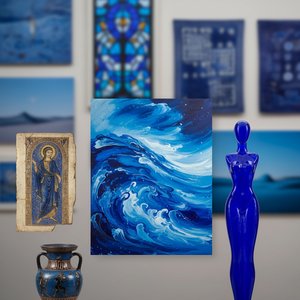
The Allure of Azure: Exploring the Symbolic & Aesthetic Depths of Blue in Art History
Explore the rich history of blue in art! Discover its symbolism, from ancient pigments to modern masterpieces by Kandinsky & Seurat. Uncover the psychological impact and cultural meanings behind this captivating hue.

De 10 mest ikoniske malerier dominert av slåttegrå – Kunsthistorie og interiørinspirasjon
Oppdag de 10 mest ikoniske malerier dominert av slåttegrå – fra Monet til Van Gogh. Lær om kunsthistorien, fargetoner og teknikker bak disse mesterverkene. Finn din perfekte veggkunst og interiørinspirasjon på TopImpressionists.com! Utforsk samlingen online.

Henri Matisse' Mesterverk: Topp 25 Kunstverk for Din Vegg – TopImpressionists.no
Utforsk 25 ikoniske malerier av Henri Matisse! Oppdag historien bak fauvismens fargerike mesterverk, fra 'The Dance' til 'Red Studio'. Finn kunsttrykk og reproduksjoner i museumskvalitet for din interiørdesign på TopImpressionists.com.