


 Se i rommet
 Del som digitalt kort
 Del
Del
 Detaljer
 Studentguide

 Last ned
 Liknende objekter
 Røntgen
 Lysbildefremvisning
 Besøksstatistikk
untitled (2612)


Experience the tranquility of Georges Seurat’s Pointillist masterpiece—a luminous beach scene brimming with detail and capturing the serene beauty of Impressionism's final flourish. Explore this iconic artwork and bring its captivating vision home.
 Les mer
Oppdag Georges Seurat (1859-1891), pioneren bak Pointillisme & Neo-Impressionisme! Utforsk 'A Sunday on La Grande Jatte' og hans revolusjonerende fargeteori som fanger moderne liv. Kjøp håndmalte reproduksjoner!
Håndlaget oljereproduksjon
Håndmalt olje på lerret i din valgte størrelse og ramme, laget på bestilling av våre kunstnere. ( Bytt til trykkversjon Gå til digitalt bilde)




P118B Nkr10

P118H Nkr10

P118W Nkr10

P438Z Nkr10

P508JH Nkr12

P508YH Nkr12

P805H Nkr10

P805Z Nkr10

P919BZ Nkr10

P919G Nkr10

P919XJ Nkr10

P959ZH Nkr10

P968JZ Nkr12

W106C Nkr8

W218G Nkr10

W218JH Nkr8

W218Y Nkr10

W307PJ Nkr10

W316G Nkr10

W316PJ Nkr8

W316Y Nkr10

W398PJ Nkr8

W4111J Nkr10

W500HY Nkr15

W500JH Nkr15

W692G Nkr12

W849H Nkr8

W940BG Nkr15

W953PJ Nkr8




Standardformat
tilpasset
CM
INCH
Velg mellom våre forhåndsdefinerte størrelser som bevarer kunstverkets opprinnelige proporsjoner.
Loading sizes...

bredde
høyde
Skriv inn bredden og høyden du trenger, slik at den passer til din ramme eller vegg. Dette er håndmalt, så for en størrelse med en annen form kan kunstneren male litt mer rundt bildet, eller beskjære det noe — du velger selv. Vi sender deg en digital mockup for godkjenning før maleriet påbegynnes. Bildet som vises på denne siden viser ikke det faktiske resultatet — kun mockuppen gjør det.
Eksempler på hva som kan endres: Erstatt ansikt med bilde av kunden; Legg til kjæledyr (f.eks. bytt ut katt med hund); Inkluder en skjult melding i bakgrunnen; Endre bakgrunnslandskap eller elementer.
Etter bestilling vil TopImpressionists.com-teamet sende e-post til kunden for instruksjoner og sende et utkast (mockup) som forhåndsvisning.
Etter bestilling vil TopImpressionists.com-teamet sende e-post til kunden for instruksjoner og sende et utkast (mockup) som forhåndsvisning.
Verdensomspennende levering () på 3–4 uker i stedet for standard 5 uker. (24 October). Ingen kompromisser med kvaliteten.

Gratis ekspressfrakt over hele verden

Lerretsduk av høykvalitets lin

Full transportforsikring

Garanti for refusjon av toll og importavgifter

Garantert fargeekthet

100 dagers returrett ved fabrikasjonsfeil

100% pengene tilbake-garanti

Mengderabatt
 Glassalternativet er kun tilgjengelig i størrelser under 110 cm

untitled (2612)
Reproduksjonsmetode
Format på reproduksjon
-


Totalpris
Nkr 2557
A Symphony of Light and Color: The Luminous World of Georges Seurat
In the quiet transition between the fleeting impressions of the late 19th century and the structured dawn of modernism, there exists a moment of pure, scientific magic. This is captured profoundly in Georges Seurat’s untitled masterpiece from 1887. At first glance, the viewer is greeted by a serene seascape, a tranquil slice of the coast where the ocean meets the shore under a heavy, contemplative sky. Yet, to look closer is to enter a different realm entirely—one where the very air seems to vibrate with a rhythmic, optical energy. This painting is not merely a depiction of a beach; it is an exploration of how the human eye perceives the world through the delicate interplay of light and pigment.
The scene unfolds with a masterful sense of depth and atmosphere. In the foreground, the sandy shore serves as a stage for life in its most peaceful forms: birds scattered across the sand, a solitary dog enjoying the coastal breeze, and figures that anchor the composition within a shared moment of leisure. Out on the water, boats drift with a quiet grace, some anchored near the shoreline while others vanish into the hazy distance of the sea. The sky, draped in soft, heavy clouds, adds a layer of atmospheric weight, suggesting a mood that is both tranquil and slightly melanchative, mirroring the subtle anxieties of the Belle Époque.
The Science of the Dot: Mastering Pointillist Precision
What distinguishes this work from the broader strokes of his Impressionist contemporaries is Seurat’s revolutionary commitment to Pointillism, or what he preferred to call "chromo-luminosity." Eschewing the traditional method of blending pigments on a palette, Seurat applied thousands of tiny, distinct dots of pure color directly onto the canvas. This technique was deeply rooted in the scientific theories of his time, particularly the study of optical mixing. By placing complementary colors side-by-side, he allowed the viewer's retina to perform the work of blending, creating a luminosity and brilliance that traditional brushwork could never achieve.
Every dot acts as a miniature prism, refracting light to create a shimmering effect that makes the water glisten and the clouds glow with an internal radiance. This meticulous, almost mathematical approach to painting transformed the canvas into a living mosaic. For the collector or the admirer of fine art, this technique offers a tactile richness; even in a high-quality reproduction, the structural integrity and the "vibration" of the color remain palpable, providing a sense of movement that is both static and alive.
An Eternal Moment for the Modern Interior
Beyond its technical brilliance, this painting possesses an emotional resonance that makes it a timeless addition to any curated space. It captures the essence of serenity—a momentary pause in the rush of existence. The balance between the structured, scientific application of paint and the organic, flowing subject matter creates a sophisticated tension that is perfect for contemporary interior design. Whether placed in a sun-drenched living room or a quiet study, the piece invites contemplation and serves as a focal point of calm.
For those seeking to bring the prestige of the Musée d'Orsay into their own homes, this reproduction offers more than just decoration; it offers an invitation to experience the evolution of modern art. It is a piece that speaks to the intellect through its history and to the soul through its beauty, making it an indispensable treasure for anyone who appreciates the profound intersection of science, nature, and human emotion.
Spørsmål og svar
Viser "untitled (2612)" sterke lys-mørke-kontraster?
"untitled (2612)" av Georges Pierre Seurat viser en Bold kontrast mellom de lyse og mørke partiene.
Hva er den dominerende fargetonen i "untitled (2612)" av Georges Pierre Seurat?
En Ochre to Sepia nyanse preger "untitled (2612)" av Georges Pierre Seurat.
Hvor plasseres "untitled (2612)" av Georges Pierre Seurat i kunsthistorien?
"untitled (2612)" av Georges Pierre Seurat tilhører Impressionistic Precision-retningen, innenfor 19th Century-perioden. Sammen gir de verket dets plass i kunsthistorien.
Relaterte kunstverk


Kunstnerbiografi
En pioner for lysets presisjon: Georges Seurats liv og kunst
Georges Pierre Seurat, født i Paris den 2. desember 1859, dukket opp som en sentral skikkelse i overgangen fra impresjonismen til moderne kunst. Hans korte, men intense karriere revolusjonerte maleriet gjennom utviklingen av punktillisme, en teknikk forankret i vitenskapelige prinsipper og et urokkelig søk etter optisk sannhet. Seurats historie er en fortelling om nøye observasjon, intellektuell stringens og en dyp følsomhet for lysets og fargens nyanser – kvaliteter som skilte ham fra hans samtidige og som fortsatt fengsler publikum i dag. Hans tidlige liv, selv om det virket konvensjonelt, la grunnlaget for hans fremtidige kunstneriske utforsninger. Familien flyttet til Boulevard de Magenta kort tid etter fødselen hans, og hans far, Antoine Chrysostome Seurat, en tidligere juridisk embetsmann som ble eiendomsspesulant, sørget for en komfortabel oppvekst som ga unge Georges tilgang til kunstutdanning. Han begynte formell trening ved École Municipale de Sculpture et Dessin under billedhuggeren Justin Lequien, etterfulgt av innskrivning på det prestisjetunge École des Beaux-Arts i 1878, hvor han studerte under Henri Lehmann. Disse formative årene ga ham et solid grunnlag i tradisjonelle teknikker, men selv da begynte en unik kunstnerisk personlighet å ta form – en blanding av delikat følsomhet og en voksende fascinasjon for systematisk analyse.Fra akademiske røtter til kromoluminarisme
Seurats kunstneriske utvikling var ikke et plutselig sprang inn i innovasjon, men snarere en gradvis evolusjon drevet av intellektuell nysgjerrighet og streng eksperimentering. I utgangspunktet speilet arbeidet hans de akademiske standardene for tiden, og demonstrerte dyktighet i tegning og respekt for etablerte komposisjonsprinsipper. Han begynte imidlertid snart å stille spørsmål ved disse konvensjonene og søkte en mer vitenskapelig tilnærming til maleriet. Han fordypet seg i det voksende feltet fargeteori, studerte skriftene til forskere som Michel Eugène Chevreul og Ogden Rood, som utforsket de optiske effektene av sammenlignede farger. Denne forskningen ble hjørnesteinen i hans revolusjonerende teknikk, kromoluminarisme – vitenskapen om farge – og dens praktiske anvendelse, punktillisme. Kjernen i ideen var enkelt sagt: å påføre små, distinkte prikker med ren farge på et lerret, stole på betrakterens øye for å optisk blande dem og skape en levende, lysende effekt. Dette handlet ikke bare om å oppnå klarere farger; det handlet om å forstå hvordan det menneskelige synssystem oppfattet lys og farge, og utnytte den kunnskapen til å skape en mer dynamisk og engasjerende maleopplevelse. Han forberedte nøye sine store komposisjoner med Conté kritttegninger på grovt papir, kartla plasseringen av hver prikk, og demonstrerte nesten matematisk presisjon i sin kunstneriske prosess.Landemerker av innovasjon: Viktige verk og kunstnerisk visjon
Kulminasjonen av Seurats forskning og eksperimentering kommer kanskje best til uttrykk i A Sunday Afternoon on the Island of La Grande Jatte (1884-1886), et monumentalt verk som markerte starten på neoimpresjonismen. Dette ikoniske maleriet, som skildrer parisere som nyter en avslappet ettermiddag ved Seinen, viser hans punktillistiske teknikk i sin fulle prakt. Figurene, gjengitt som nøye plasserte fargesprik, ser ut til å skimre og vibrere med lys, og skaper en atmosfære av rolig stillhet. Alfalfa, Saint-Denis (1886-1887) demonstrerer hans anvendelse av fargeteori i et landskap, mens tidligere verk som Landscape at Saint-Ouen (1882-1883) avslører hans utviklende stil og voksende interesse for å fange effektene av lys og atmosfære. Selv skildringer av moderne parisisk liv, som The Eiffel Tower (1889), ble transformert gjennom sin unike teknikk, og viste en harmonisk blanding av industriell modernitet og kunstnerisk innovasjon. Bathers at Asnières (1884), et annet viktig verk, utforsket temaer som fritid og moderne liv med sin særegne stil, og varslet den mer raffinerte tilnærmingen man ser i *La Grande Jatte*. Disse maleriene var ikke bare representasjoner av scener; de var nøye konstruerte visuelle eksperimenter designet for å utforske mulighetene for farge og persepsjon.En varig arv: Innflytelse og historisk betydning
Til tross for et tragisk kort liv – Seurat døde i en alder av 31 år i 1891 – var hans innvirkning på kunstverdenen dyp og vidtrekkende. Hans arbeid utfordret tradisjonelle kunstneriske konvensjoner, banet vei for mange etterfølgende bevegelser. Vekten på subjektivt uttrykk og utforskning av nye teknikker resonerte med kunstnere som søkte å bryte seg løs fra akademiske begrensninger. Seurats innflytelse kan sees i verkene til fauvistene, som omfavnet dristige farger og ekspressive penselstrøk; kubistene, som dekonstruerte former til geometriske figurer; og abstrakt ekspresjonister, som prioriterte emosjonell intensitet og spontan gester. Seurats vitenskapelige tilnærming til maleri, selv om den opprinnelig var kontroversiell, utvidet i sin tur definisjonen av kunstnerisk mulighet. Han demonstrerte at kunst kunne være både intellektuelt streng og emosjonelt virkningsfull – en syntese som fortsetter å inspirere kunstnere i dag. Seurats arv strekker seg utover hans tekniske innovasjoner; han etterlot seg et verk som fanger essensen av moderne liv med uovertruffen presisjon og skjønnhet, og befester sin plass som en sann pioner innen moderne kunst. Hans malerier er fortsatt vitnesbyrd om kraften i observasjon, eksperimentering og det varige menneskelige ønsket om å forstå verden rundt oss gjennom linsen av kunstnerisk uttrykk.
Georges Pierre Seurat
1859 - 1891 , Frankrike
Kort om kunstneren
- Artistic Movement Or Style: Neo-Impressionisme, Punktillisme
- Artists Or Movements Influenced By This Artist:
- Fauvisme
- Kubisme
- Abstrakt ekspresjonisme
- Artists Who Influenced This Artist:
- Michel Eugène Chevreul
- Ogden Rood
- Date Of Birth: 2. desember 1859
- Date Of Death: 29. mars 1891
- Full Name: Georges Pierre Seurat
- Nationality: Fransk
- Notable Artworks:
- A Sunday on La Grande Jatte
- Baders ved Asnières
- Alfalfa, Saint-Denis
- Eiffeltårnet
- Place Of Birth: Paris, Frankrike
Relaterte artikler
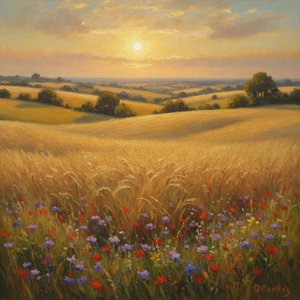
Golden Fields & Sun-Drenched Meadows: Capturing the Soul of Impressionist Landscapes
Immerse yourself in the luminous world of Impressionist landscapes. Discover how masters like Monet and Gauguin captured ephemeral light through plein air painting, and learn to bring the soul of sun-drenched meadows into your home with exquisite, hand-painted oil reproductions.

The Beauty of Impermanence: Capturing Decay through Impressionist Eyes
Explore the profound beauty of impermanence through Impressionist and Post-Impressionist eyes. Discover how masters like Monet and Van Gogh captured fleeting light and the poetic essence of nature's transitions in our deep dive into art history and emotional landscapes.

Capturing the Soul: The Most Emotionally Moving Impressionist and Post-Impressionist Masterpieces
Discover the profound emotional depth of Impressionist and Post-Impressionist masterpieces. Explore how legends like Monet, Van Gogh, and Gauguin captured light and soul through evocative landscapes and vibrant brushwork for a timeless connection to art history.

Soft Light & Velvet Touch: The Ethereal Magic of Pastel Artistry in Impressionist Masterpieces
Discover the ethereal beauty of pastel art through an Impressionist lens. Explore how masters like Monet and Renoir captured light and velvet textures, and learn to curate a collection of luminous, museum-quality masterpieces for your home.

Beyond the Light: Capturing Raw Emotion and Subjective Vision in Post-Impressionist Landscapes
Explore the profound emotional depth of Post-Impressionist landscapes. Discover how masters like Van Gogh moved beyond light to capture raw human feeling through vibrant color and expressive texture in this expert art history retrospective.
Utforsk kunstverk organisert etter temaer, stiler og kjennetegn.


