


 Se i rommet
 Del som digitalt kort
 Del
Del
 Detaljer
 Studentguide

 Last ned
 Liknende objekter
 Røntgen
 Lysbildefremvisning
 Besøksstatistikk
Christ before the High Priest
 Oil On Canvas
- WallArt
- Dutch Baroque
 1617
1617 272.0 x 183.0 cm
 Nasjonalgalleriet
Experience the dramatic intensity of Gerard van Honthorst’s ‘Christ Before the High Priest.’ This 1617 oil painting, rich with chiaroscuro and biblical drama, captures a pivotal moment in art history. Own a stunning reproduction today!
 Les mer
Gerard van Honthorst var en nederlandsk maler kjent for sin dramatiske bruk av lys og skygge (tenebrism) i portretter og bibelske scener fra den gullalderen. Oppdag hans mesterverk og inspirerende Caravaggisti-stil!
Giclée / Kunsttrykk
Giclée- eller lerretsprint av museumskvalitet med rask produksjon og fleksible valgmuligheter for etterbehandling. ( Bestill håndmalt reproduksjon Gå til digitalt bilde)




P118B Nkr10

P118H Nkr10

P118W Nkr10

P438Z Nkr10

P508JH Nkr12

P508YH Nkr12

P805H Nkr10

P805Z Nkr10

P919BZ Nkr10

P919G Nkr10

P919XJ Nkr10

P959ZH Nkr10

P968JZ Nkr12

W106C Nkr8

W218G Nkr10

W218JH Nkr8

W218Y Nkr10

W307PJ Nkr10

W316G Nkr10

W316PJ Nkr8

W316Y Nkr10

W398PJ Nkr8

W4111J Nkr10

W500HY Nkr15

W500JH Nkr15

W692G Nkr12

W849H Nkr8

W940BG Nkr15

W953PJ Nkr8




Standardformat
tilpasset
CM
INCH
Velg mellom våre forhåndsdefinerte størrelser som bevarer kunstverkets opprinnelige proporsjoner.
Loading sizes...

bredde
høyde
Skriv inn bredden og høyden du trenger, slik at den passer til din ramme eller vegg. Et trykk kan kun beskjæres, aldri gjøres større enn bildet, så et format med en annen form vil miste en del av motivet. Vi sender deg en digital mockup for godkjenning før vi trykker noe som helst. Bildet som vises på denne siden viser ikke den faktiske beskjæringen — det er kun mockuppen som gjør det.
Verdensomspennende levering () på 2 uker i stedet for standard 4/5 uker. (26 October)

Gratis ekspressfrakt over hele verden

Lerretsduk av høykvalitets lin

Full transportforsikring

Garanti for refusjon av toll og importavgifter

Garantert fargeekthet

100 dagers returrett ved fabrikasjonsfeil

100% pengene tilbake-garanti

Mengderabatt
 Glassalternativet er kun tilgjengelig i størrelser under 110 cm

Christ before the High Priest
Giclée / Kunsttrykk
Format på reproduksjon
-


Totalpris
Nkr 657
A Dramatic Encounter: Gerard van Honthorst’s “Christ Before the High Priest”
Gerard van Honthorst's "Christ Before the High Priest," painted in 1617, is more than just a biblical scene; it’s a masterclass in Baroque drama rendered in oil on canvas. Currently residing within the esteemed National Gallery in London, this work immediately commands attention with its masterful manipulation of light and shadow – a signature technique that firmly establishes Honthorst as a key figure in the Dutch Golden Age. The painting depicts a pivotal moment: Jesus Christ facing interrogation by High Priest Caiaphas, just hours before his crucifixion. It’s a scene brimming with tension, spiritual weight, and an undeniable sense of impending doom, all expertly conveyed through the artist's keen eye for detail and profound understanding of human emotion.
The Language of Light: Tenebrism and Chiaroscuro
Honthorst’s artistic journey was profoundly shaped by his time in Rome, where he encountered the revolutionary work of Caravaggio. This encounter ignited within him a passion for tenebrism – an approach to painting that utilizes stark contrasts between light and dark to create a theatrical effect. In “Christ Before the High Priest,” this technique is flawlessly executed. A single, unseen light source illuminates Christ’s face and upper body, casting the surrounding figures and the shadowed room in deep darkness. This dramatic interplay of light and shadow isn't merely aesthetic; it serves to draw the viewer’s eye directly to the central figure, emphasizing his vulnerability and the gravity of the situation. The use of chiaroscuro – a specific type of chiaroscuro focusing on subtle gradations of light – adds depth and volume to the figures, making them appear almost tangible within the space.
Composition and Symbolism: A Triangular Narrative
The composition of the painting is carefully constructed, employing a deliberate triangular arrangement that lends stability and balance to the scene. Christ occupies the apex of this triangle, immediately establishing him as the focal point. To his left stands an elderly man, gesturing emphatically towards the figure of Christ – a gesture laden with judgment and perhaps even accusation. Opposite him is a young woman, her expression one of quiet contemplation or perhaps apprehensive interest. These figures, along with the high priest (though not explicitly depicted), contribute to a complex narrative that speaks to themes of faith, betrayal, and divine justice. The dark background, adorned with what appear to be classical sculptures and paintings – remnants of the Marquis Giustiniani’s collection in Rome – subtly references the artistic traditions Honthorst encountered during his formative years, creating a dialogue between Italian Baroque influences and Dutch realism.
A Window into the Dutch Golden Age: Faith, Drama, and Artistic Innovation
“Christ Before the High Priest” stands as a powerful testament to the artistic flourishing of the Dutch Golden Age. Beyond its technical brilliance, the painting reflects the era’s fascination with religious themes and dramatic storytelling. Honthorst wasn't simply replicating biblical scenes; he was imbuing them with an emotional intensity that resonated deeply with his audience. His work exemplifies the period’s commitment to realism while simultaneously embracing theatricality and a heightened sense of drama – qualities that would become hallmarks of Dutch Baroque painting. The piece offers a compelling glimpse into the spiritual and artistic climate of 17th-century Holland, showcasing a dynamic interplay between faith, art, and social context.
TopImpressionists is proud to offer exquisite, hand-painted reproductions of Gerard van Honthorst’s “Christ Before the High Priest.” Each reproduction captures the original's dramatic intensity and meticulous detail, allowing you to bring this iconic masterpiece into your home or office. Explore our collection today and experience the power of Baroque art firsthand.
Spørsmål og svar
Hvor plasserer "Christ before the High Priest" seg blant Gerard van Honthorst sine gjentakende motiver?
Blant Gerard van Honthorst sine dokumenterte temaer – caravaggio’s tenebrism, roman influence, religious interrogation, biblical scene, marquis giustiniani’s collection piece, dramatic light, emotional intensity, honthorst's signature baroque style – retter "Christ before the High Priest" sitt eget fokus mot christ, high priest, drama, light, shadow, biblical, baroque, tension.
Tillater opphavsretten til "Christ before the High Priest" av Gerard van Honthorst reproduksjoner?
Opphavsretten til "Christ before the High Priest" av Gerard van Honthorst er klar: verket er i det frie domene – opphavsretten har utløpt. At det befinner seg hos Nasjonalgalleriet, endrer ikke denne statusen.
Kan jeg se "Christ before the High Priest" av Gerard van Honthorst under ulike lysforhold?
"Christ before the High Priest" kan undersøkes lag for lag på verkets Røntgen-side, en visning inspirert av en konservators lysbord med elleve optiske avlesninger av bildet.
Kunstnerbiografi
A Master of Light and Shadow: The Life and Art of Gerard van Honthorst
Gerard van Honthorst emerged from Utrecht in 1592, a pivotal figure poised to illuminate the Dutch Golden Age with his dramatic artistry. Initially guided by his father, a decorative painter, young Gerard’s talent blossomed under the tutelage of Abraham Bloemaert, establishing a solid foundation in draftsmanship and composition. However, it was a transformative journey to Rome that irrevocably altered the course of his artistic development. There, amidst the fervent energy of the Italian Baroque, he encountered the groundbreaking work of Caravaggio – an encounter that would define his signature style and earn him the evocative nickname “Gherardo delle Notti,” or Gerard of the Nights. The dramatic use of *tenebrism*, a technique employing stark contrasts between light and dark, became Honthorst’s hallmark, imbuing his canvases with a palpable sense of drama and emotional intensity. He wasn't merely imitating Caravaggio; he was translating the Italian master’s innovations into a distinctly Dutch sensibility, focusing on intimate scenes illuminated by artificial light sources – candles, lamps, and fires – creating an atmosphere both realistic and deeply theatrical. This mastery over light wasn’t simply technical skill; it was a means of revealing character, of drawing the viewer into the emotional core of each scene.Early Life and Artistic Training
Van Honthorst was born in Utrecht, the son of a decorative painter, and received his initial artistic training from his father. This early exposure to the world of visual decoration instilled in him an appreciation for detail and craftsmanship. However, it was Abraham Bloemaert, a prominent Utrecht painter himself, who provided him with a more formal education in drawing and composition. Bloemaert’s influence is evident in Honthorst's early works, characterized by their meticulous draftsmanship and balanced compositions. Around 1610, seeking further artistic development and exposure to new styles, Van Honthorst embarked on a journey to Rome – a pivotal moment that would profoundly shape his career. The Italian capital offered an unparalleled opportunity to study the masterpieces of the Renaissance and Baroque periods, particularly those of Michelangelo and Caravaggio. It was in Rome that he truly began to develop his distinctive style, absorbing the dramatic lighting and emotional intensity of Caravaggio’s paintings. This period marked a significant shift in his artistic approach, moving away from the more restrained styles prevalent in Northern Europe towards a bolder, more expressive manner.The Roman Period: Influence of Caravaggio
Honthorst's time in Rome was marked by considerable success and patronage. He quickly gained recognition for his ability to capture the drama and intensity of Italian Baroque painting. He lodged at the *palazzo* of Vincenzo Giustiniani, a prominent art collector and patron who provided him with invaluable opportunities to study and experiment with new techniques. It was during this period that Honthorst’s style began to take shape, characterized by its dramatic use of light and shadow, its dynamic compositions, and its focus on human emotion. He produced numerous paintings depicting scenes from the Bible, mythology, and everyday life, all infused with a distinctly Caravaggian sensibility. Notably, he created *Christ Before the High Priest*, a work now residing in London’s National Gallery, which exemplifies his masterful command of light and shadow and his ability to convey profound psychological depth within his figures. This painting stands as a testament to his assimilation of Caravaggio's techniques while simultaneously injecting them with a uniquely Dutch perspective.Return to the Netherlands and Courtly Commissions
Upon returning to Utrecht around 1620, Honthorst quickly established himself as a leading portrait painter in the Dutch Republic. His ability to capture not just physical likeness but also the character and social standing of his sitters made him highly sought after by wealthy merchants, nobles, and even royalty. He became president of the Guild of St. Luke in Utrecht in 1623, a testament to his growing influence within the artistic community. This period saw a flourishing of commissions, allowing Honthorst to refine his style and establish a distinctive voice within Dutch painting. He also undertook significant courtly commissions, including portraits for Cosimo II de' Medici, Grand Duke of Tuscany, further solidifying his reputation as one of the most accomplished artists of his time. These works demonstrate his versatility and his ability to adapt his style to suit the tastes of different patrons.Legacy and Artistic Significance
Gerard van Honthorst’s influence resonated far beyond his lifetime. He was a key figure in the *Utrecht Caravaggisti* movement – a group of Dutch painters who embraced Caravaggio's dramatic realism and *tenebrism*. Alongside artists like Hendrick ter Brugghen and Dirck van Baburen, he helped to establish a distinctly Dutch interpretation of Italian Baroque style. His emphasis on genre scenes illuminated by artificial light, his masterful portraits, and his ability to convey emotional depth through skillful use of chiaroscuro left an indelible mark on the development of Dutch Golden Age painting. His paintings continue to captivate audiences today, demonstrating his enduring artistic skill and his profound understanding of human emotion. He cemented his place as a pivotal figure in art history, bridging the gap between Italian Baroque innovation and the flourishing artistic landscape of the Netherlands. Van Honthorst’s legacy lies not only in his individual masterpieces but also in his role as a catalyst for artistic change within the Dutch Republic.
Gerard van Honthorst
1590 - 1656 , Nederland
Kort om kunstneren
- Artistic Movement Or Style: Barok, Caravaggisme
- Artists Or Movements Influenced By This Artist: ['Utrecht Caravaggisti']
- Artists Who Influenced This Artist: ['Caravaggio']
- Date Of Birth: 1590
- Date Of Death: 1656
- Full Name: Gerard van Honthorst
- Nationality: Nederlands
- Notable Artworks:
- Kristus foran høvdingen
- Messaselskapet
- Diana og Apollo
- Place Of Birth: Utrecht, Nederland
Relaterte artikler

De 10 Mesterverkene Som Definerte Tidlig Nederlandsk Maleri | Kunst og Interiør
Utforsk de 10 mest ikoniske verkene fra tidlig nederlandsk maleri! Lær om Jan van Eyck, Robert Campin og renessansens mestere. Finn kunsttrykk av høy kvalitet og interiørinspirasjon på TopImpressionists.com – ditt hjem fortjener et mesterverk.

Rembrandts Mesterverk: Topp 25 Kunstverk for Din Vegg | TopImpressionists.no
Utforsk Rembrandts 25 mest ikoniske kunstverk! Oppdag historiene bak mestermalerier, portretter og bibelske scener fra den nederlandske barokken. Finn museumskvalitets reproduksjoner & interiørinspirasjon på TopImpressionists.com.

De 10 Mesterverkene Som Definerte Tidlig Nederlandsk Renessanse | Kunst & Interiør
Utforsk de 10 ikoniske mesterverkene fra tidlig nederlandsk renessanse! Jan van Eyck, Bosch & Van der Weyden – lær om historien og teknikken bak disse flotte oljemaleriene. Finn kunst til ditt hjem på TopImpressionists.com.

Charles-André van Loo: A Study in Rococo Portraiture & the French Court's Artistic Dynamics
Explore the elegant world of Charles-André van Loo, a master of Rococo portraiture at the French court. Discover his life, techniques, and enduring influence on 18th-century art. Hand-painted reproductions available.
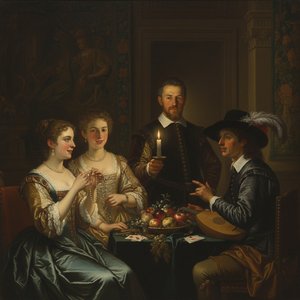
Gerard van Honthorst: Illuminating the Dutch Golden Age with Caravaggism & Courtly Grace
Explore the captivating world of Gerard van Honthorst, a Dutch Golden Age master renowned for his dramatic chiaroscuro & courtly portraits. Discover his life, art, and lasting influence on Baroque painting.
Utforsk kunstverk organisert etter temaer, stiler og kjennetegn.
