


 Se i rommet
 Del som digitalt kort
 Del
Del
 Detaljer
 Studentguide

 Last ned
 Liknende objekter
 Røntgen
 Lysbildefremvisning
 Besøksstatistikk
North-South
 Acrylic On Canvas
- WallArt
- Cubism
 46.0 x 33.0 cm
 Galleria Civica di Arte Moderna e Contemporanea Torino
Discover Gino Severini’s ‘North-South,’ a vibrant Futurist masterpiece capturing Parisian dynamism. Explore Cubist forms & motion in this 1912 oil painting – a unique art investment.
 Les mer
Utforsk Gino Severini (1883-1966), en nøkkel italiensk futurist & kubist maler. Oppdag hans dynamiske kunst som fanger moderne liv, parisiske scener og bevegelsens energi. Fantastiske verk inkluderer «Nord-Sør» og «Bal Tabarin».
Kunstverket som vises på denne siden er beskyttet av opphavsretten, noe som betyr at vi ikke har juridisk tillatelse til å lage eller selge identiske reproduksjoner. Denne beskyttelsen håndheves i henhold til internasjonale avtaler som for eksempel Bernerkonvensjonen og av nasjonale lover, inkludert de som er fastsatt i Amerikansk opphavsrettslov – Tittel 17.
Denne metoden er i fullt samsvar med opphavsrettslige regler, da den ikke innebærer kopiering eller duplisering av det beskyttede kunstverket. I stedet er det snakk om en kreativ nytolkning – et nytt maleri som er inspirert av originalen, men ikke identisk med den.
Giclée / Kunsttrykk
Giclée- eller lerretsprint av museumskvalitet med rask produksjon og fleksible valgmuligheter for etterbehandling. ( Bestill håndmalt reproduksjon Gå til digitalt bilde)




P118B Nkr10

P118H Nkr10

P118W Nkr10

P438Z Nkr10

P508JH Nkr12

P508YH Nkr12

P805H Nkr10

P805Z Nkr10

P919BZ Nkr10

P919G Nkr10

P919XJ Nkr10

P959ZH Nkr10

P968JZ Nkr12

W106C Nkr8

W218G Nkr10

W218JH Nkr8

W218Y Nkr10

W307PJ Nkr10

W316G Nkr10

W316PJ Nkr8

W316Y Nkr10

W398PJ Nkr8

W4111J Nkr10

W500HY Nkr15

W500JH Nkr15

W692G Nkr12

W849H Nkr8

W940BG Nkr15

W953PJ Nkr8




Standardformat
tilpasset
CM
INCH
Velg mellom våre forhåndsdefinerte størrelser som bevarer kunstverkets opprinnelige proporsjoner.
Loading sizes...

bredde
høyde
Du kan oppgi egne mål for å tilpasse en spesifikk ramme eller et bestemt område. Dersom den valgte størrelsen ikke samsvarer med det originale bildets proporsjoner, vil vi enten beskjære kunstverket eller utvide bildet med en speilet eller ensfarget kant. En digital mockup vil bli sendt til din godkjenning før produksjonen starter.
Vennligst merk at forhåndsvisningen på skjermen ikke gjenspeiler den faktiske beskjæringen eller utvidelsen. Kun mockuppen vil vise den endelige komposisjonen nøyaktig.
Selv om tilpassede størrelser er tilgjengelige, anbefaler vi å velge et mål fra den forhåndsdefinerte listen for å bevare de originale proporsjonene.
Verdensomspennende levering () på 2 uker i stedet for standard 4/5 uker. (12 October)

Gratis ekspressfrakt over hele verden

Lerretsduk av høykvalitets lin

Full transportforsikring

Garanti for refusjon av toll og importavgifter

Garantert fargeekthet

100 dagers returrett ved fabrikasjonsfeil

100% pengene tilbake-garanti

Mengderabatt
 Glassalternativet er kun tilgjengelig i størrelser under 110 cm

North-South
Giclée / Kunsttrykk
Format på reproduksjon
-


Totalpris
Nkr 641
A Symphony of Motion: Gino Severini’s “North-South”
Gino Severini's "North-South," painted in 1912, isn’t merely a depiction of a Parisian marketplace; it’s an exhilarating embodiment of the Futurist spirit – a visual explosion capturing the dynamism and frenetic energy of modern urban life. Born in Cortona, Italy, in 1883, Severini initially embraced Divisionism before being swept into the revolutionary currents of Futurism, a movement that sought to dismantle traditional artistic conventions and celebrate speed, technology, and the raw power of the industrial age. This painting represents a pivotal moment in his career, showcasing a shift towards a more synthetic approach, heavily influenced by Cubist principles while retaining the core Futurist obsession with capturing fleeting moments of intense motion. The work immediately transports the viewer into a vibrant, almost overwhelming scene – a sensory overload rendered with remarkable precision and emotional intensity.Deconstructing Reality: Style and Technique
Severini’s style in “North-South” is undeniably Cubist, yet distinctly Futurist. He employs what's known as "simultaneous view," a technique pioneered by Futurists like Boccioni, where multiple perspectives are presented simultaneously within a single composition. This creates an illusion of movement and depth, mimicking the experience of navigating a bustling city street. The painting’s fragmented forms – the overlapping stalls, the blurred figures, the fractured signage – aren't simply stylistic choices; they represent a deliberate attempt to break down traditional spatial relationships and convey the sensation of speed and disorientation inherent in urban environments. Notice how the artist utilizes sharp, angular lines to define architectural elements and create a sense of dynamism, contrasting with the softer, more rounded forms of the human figures. The application of paint is equally significant; Severini employs broken brushstrokes and layered glazes, building up texture and creating a palpable sense of surface – you can almost feel the heat radiating from the marketplace and hear the clamor of voices.A Marketplace of Modernity: Historical Context
“North-South” was created during a period of immense social and technological change in Europe. The rise of industrialization, the proliferation of railways and automobiles, and the rapid growth of cities were fundamentally altering people’s lives and perceptions of space and time. Futurism, born out of this context, sought to capture these changes on canvas, rejecting the past and embracing the future with a fervent enthusiasm. Severini's choice of subject – a busy marketplace in Pigalle, a district known for its entertainment venues and vibrant nightlife – is particularly revealing. It’s not simply a snapshot of commerce; it’s a microcosm of modern urban life, teeming with activity, noise, and sensory stimulation. The inclusion of signs like “METRO” and “SORTIE” further emphasizes the painting's connection to the burgeoning infrastructure of Paris, highlighting the city’s role as a hub of innovation and progress.Symbolism in Motion: Interpreting the Details
Beyond its immediate visual impact, "North-South" is rich with symbolic meaning. The fragmented forms can be interpreted as representing the breakdown of traditional values and social structures under the pressures of modernity. The blurred figures suggest the anonymity and alienation experienced by individuals within a rapidly changing urban landscape. Even the seemingly random arrangement of objects – the fruits, vegetables, and merchandise displayed on the stalls – contributes to the painting’s overall sense of chaos and dynamism. The prominent signage, particularly “PIGALLE,” hints at the district's reputation as a center of entertainment and vice, adding another layer of complexity to the scene. The title itself, "North-South," subtly references the intersecting paths of movement within the city – the flow of people, goods, and information that define modern urban life.A Legacy of Velocity: Emotional Impact
Ultimately, “North-South” is a powerfully evocative work of art that captures the exhilarating and disorienting experience of navigating a rapidly changing world. It’s not a comfortable or serene scene; it's deliberately jarring and unsettling, reflecting the anxieties and uncertainties of modern life. Yet, within this chaos lies a sense of energy and vitality – a celebration of speed, innovation, and the relentless pursuit of progress. Severini masterfully translates these complex emotions onto canvas, creating an artwork that continues to resonate with viewers today, reminding us of the transformative power of art to capture the spirit of its time. It remains a testament to the Futurist vision—a bold declaration of modernity’s frenetic beauty.Spørsmål og svar
Hvilken teknikk ble brukt for "North-South" av Gino Severini?
Gino Severini brukte Acrylic On Canvas-teknikken i "North-South". Teknikken definerer det materielle uttrykket til det originale verket.
Hvilken kunstretning er "North-South" av Gino Severini en del av?
"North-South" er et verk innenfor Cubism. Retningen angir den kunstneriske tradisjonen verket er en del av.
Hvor kan jeg finne en guide til "North-South"?
Veiledning-siden for "North-South" av Gino Severini tilbyr et utskrivbart faktaark på to sider: kunstverket med sin identitetstabell, en tidslinje som plasserer det i kunstnerens levetid, andre verk av kunstneren, den målte fargepaletten og ferdigformaterte kildehenvisninger i fire stiler.
Hva er "North-South" laget med, og i hvilken stil?
I "North-South" møter Acrylic On Canvas-teknikken Cubism-retningen.
Hvilken reproduksjonsstørrelse anbefales for "North-South" av Gino Severini?
Anbefalt trykkstørrelse for "North-South" av Gino Severini er Medium.
Finnes det verk som ligner på "North-South"?
Verker som ligner på "North-South" er oppført på verkets Lignende verk-side.
Hva er reproduksjonsrettighetene til "North-South" hos Galleria Civica di Arte Moderna e Contemporanea Torino?
Originalen av "North-South" befinner seg hos Galleria Civica di Arte Moderna e Contemporanea Torino, og verket er fortsatt beskyttet av opphavsrett.
Hvor kan jeg se originalen av "North-South" av Gino Severini?
"North-South" av Gino Severini er utstilt på Galleria Civica di Arte Moderna e Contemporanea Torino, Torino, Italia. Museumsoppføringen refererer til originalverket, ikke til reproduksjoner.
Kunstnerbiografi
Early Life and the Seeds of Artistic Rebellion
Gino Severini emerged into the world on April 7, 1883, in the picturesque Tuscan town of Cortona, Italy. His beginnings were humble; his father a junior court official, his mother a dressmaker – a background that instilled in him both a sensitivity to form and an awareness of societal structures. Formal education proved ill-fitting for the young Severini’s restless spirit. Expelled at fifteen alongside classmates for a youthful indiscretion involving stolen exam papers, he found himself cast adrift from conventional schooling. This expulsion, however, wasn't a derailment but rather a catalyst, freeing him to pursue his burgeoning artistic inclinations independently while working as a shipping clerk. The move to Rome in 1899 marked a turning point; it was there, amidst the ancient ruins and vibrant street life, that he began formal art classes, quickly becoming captivated by the shimmering effects of Divisionism – a technique championed by artists like Giacomo Balla and Umberto Boccioni, who would soon become pivotal figures in his artistic journey. These formative years laid the essential groundwork for Severini’s eventual embrace of Futurism, igniting within him a desire to capture the dynamism of modern life.Embracing the Velocity of Futurism
The invitation to join Filippo Tommaso Marinetti and Umberto Boccioni in the burgeoning Futurist movement proved transformative for Severini. He became a signatory of the *Manifesto of the Futurist Painters* in 1910, aligning himself with a revolutionary ideology that celebrated speed, technology, and the intoxicating energy of modernity. This wasn’t merely an artistic choice; it was a philosophical commitment to shattering tradition and forging a new aesthetic language for a rapidly changing world. Severini played a crucial role in disseminating Futurist ideas internationally, notably organizing the movement's first exhibition outside Italy at Galerie Bernheim-Jeune in Paris in 1912. His work during this period, exemplified by paintings like *North-South* (1915), embodies the Futurist obsession with capturing motion and energy through fragmented forms and a vibrant, almost explosive palette. Unlike some of his colleagues who focused on machines, Severini often turned to urban scenes and dancers as subjects, reflecting his fascination with portraying the rhythms and sensations of modern life – the swirling skirts, the flashing lights, the pulsating crowds. He helped organize the first Futurist exhibition outside Italy at Galerie Bernheim-Jeune in Paris in 1912. His work during this period, exemplified by paintings like *North-South* (1915), embodies the Futurist obsession with capturing motion and energy through fragmented forms and a vibrant, almost explosive palette.A Synthesis of Styles: Cubism and Beyond
Severini’s artistic style was never confined by rigid dogma; it was a constantly evolving synthesis of influences. While deeply rooted in the Futurist aesthetic, his work also demonstrated a profound engagement with Cubism, particularly after his pivotal visit to Paris in 1911. He absorbed elements of geometric abstraction and fragmented perspectives, incorporating them into his compositions to create dynamic arrangements that conveyed a sense of simultaneity and movement. Artists like Umberto Boccioni, Carlo Carrà, and Giovanni Francesco Romanelli were significant influences, but Severini’s unique vision allowed him to forge his own path. *Waltz*, for instance, showcases this masterful fusion of styles – the swirling energy of dance rendered through a Cubist lens, resulting in a painting that feels both chaotic and harmonious. He continued to experiment with diverse artistic media, including mosaic and fresco, expanding his creative horizons beyond the canvas.Notable Achievements and Legacy
Severini’s contribution to Italian art history is undeniable. His pioneering exploration of Divisionism and Futurism established him as one of the foremost innovators of his time, shaping the trajectory of modern painting in Italy. His paintings—particularly *Dynamic Hieroglyph of the Bal Tabarin* (1912) and *The Boulevard* (1913)—remain iconic representations of Futurist aesthetics and continue to inspire artists today. Severini’s unwavering dedication to artistic experimentation, coupled with his ability to synthesize disparate styles into a cohesive visual language, cemented his place as a visionary artist who anticipated the stylistic developments of the 20th century. His legacy extends beyond individual artworks; it resides in his influence on subsequent generations of painters and sculptors, fostering a spirit of innovation and challenging conventional artistic norms. Gino Severini passed away in Paris on February 26, 1966, at the age of 83, leaving behind a rich and multifaceted body of work that continues to captivate audiences worldwide.
Gino Severini
1883 - 1966 , Italia
Kort om kunstneren
- Artistic Movement Or Style: Futurism, Cubism
- Artists Who Influenced This Artist:
- Giacomo Balla
- Umberto Boccioni
- Date Of Birth: 7 april 1883
- Date Of Death: 26 februar 1966
- Full Name: Gino Severini
- Nationality: Italian
- Notable Artworks:
- North-South
- Waltz
- Self-Portrait
- Place Of Birth: Cortona, Italia
Relaterte artikler

Fragmented Beauty: Exploring the Soul and Geometric Depth of Cubist Landscapes
Embark on a cultural journey through the soul of Cubist landscapes. Discover how masters like Braque and Rivera redefined nature through geometric beauty, fragmented forms, and profound abstraction in this expert art-history exploration.
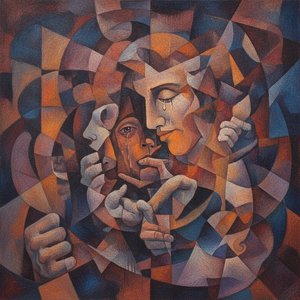
Beyond the Surface: Exploring the Emotional Depth of Cubist Expressionism
Discover the profound emotional resonance within Cubist Expressionism. Explore how fragmented forms and geometric abstraction convey deep human feeling through an expert art-historical lens for the discerning collector.

Beyond the Lens: Deconstruct Your Memories into Geometric Masterpieces with AI-Driven Cubist Artistry
Transform your cherished photos into breathtaking Cubist masterpieces. Using proprietary AI technology and master oil painters, we deconstruct reality into geometric elegance. Elevate your home with a bespoke, hand-painted legacy piece that merges modern innovation with timeless artistry.

Breaking Reality: A Sophisticated Guide to the Power of Cubist Fragmentation and Geometric Reimagination
Explore the profound depth of Cubist fragmentation. Our expert guide delves into the revolutionary techniques of Picasso and Braque, offering art collectors a sophisticated understanding of how deconstructed forms redefine modern perception and luxury curation.