

Shown: · With its frame:
 Forhåndsvisning
 Send
Send Del
Del
 Vis detaljer
 Utskriftsvennlig guide

 Last ned bilde
 Liknende objekter
 Røntgenundersøkelse
 Lysbildefremvisning
 Q&A
Q&A Statistikk
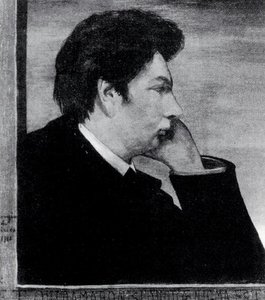
Self-portrait 7


Nkr 2581
Håndlaget oljereproduksjon
Håndmalt olje på lerret i din valgte størrelse og ramme, laget på bestilling av våre kunstnere. ( Bytt til trykk Bytt til digitalt bilde)
Dette kunstverket er beskyttet av opphavsrett
Kunstverket som vises på denne siden er beskyttet av opphavsretten, noe som betyr at vi ikke har juridisk tillatelse til å lage eller selge identiske reproduksjoner. Denne beskyttelsen håndheves i henhold til internasjonale avtaler som for eksempel Bernerkonvensjonen og av nasjonale lover, inkludert de som er fastsatt i Amerikansk lov om opphavsrett – Tittel 17.
Som et respektfullt og lovlig alternativ tilbyr vi skreddersydde, håndmalte kunstverk inspirert av originalen. Våre dyktige og profesjonelle kunstnere studerer nøye originalens stil, stemning og kunstneriske essens for å skape et nytt og unikt verk som vekker den samme følelsen – samtidig som det forblir en original skapelse i seg selv.
Denne metoden er i fullt samsvar med opphavsrettslige regler, da den ikke innebærer kopiering eller duplisering av det beskyttede kunstverket. I stedet er det snakk om en kreativ nytolkning – et nytt maleri som er inspirert av originalen, men ikke identisk med den.
 Les mer om dette
Size
·Standardformat
skreddersydd
CM
INCH
Velg mellom våre forhåndsdefinerte størrelser som bevarer kunstverkets opprinnelige proporsjoner.
Loading sizes...

bredde
høyde
Skriv inn ønsket bredde og høyde for å tilpasse bildet til din ramme eller vegg. Siden dette er håndmalt, kan kunstneren male litt mer rundt motivet eller beskjære det noe dersom du velger et annet format — valget er ditt. Vi sender deg en digital mockup til godkjenning før maleriet påbegynnes. Bildet som vises på denne siden representerer ikke det faktiske resultatet — kun mockuppen viser det endelige uttrykket.
Finish
·
White Nkr1

Blurside Nkr1

Extended Nkr1

P118B Nkr10

P118H Nkr10

P118W Nkr10

P438Z Nkr10

P508JH Nkr12

P508YH Nkr12

P805H Nkr10

P805Z Nkr10

P919BZ Nkr10

P919G Nkr10

P919XJ Nkr10

P959ZH Nkr10

P968JZ Nkr12

W106C Nkr8

W218G Nkr10

W218JH Nkr8

W218Y Nkr10

W307PJ Nkr10

W316G Nkr10

W316PJ Nkr8

W316Y Nkr10

W398PJ Nkr8

W4111J Nkr10

W500HY Nkr15

W500JH Nkr15

W692G Nkr12

W849H Nkr8

W940BG Nkr15

W953PJ Nkr8

H24-GOLD Nkr30

H24-SILVER Nkr30

H36-GOLD Nkr45

H36-SILVER Nkr45
Shipped in a protective tube, ready for your own framer.
Above 105 cm the frame is shipped as a kit for a professional framer — read the details.
Extras
optionalWhat do the extras include?
Examples of what can be changed: Replace face with customer photo; Add pet (e.g., replace cat with dog); Include hidden message in background; Change background landscape or elements.
After order, TopImpressionists.com team will email client for instructions and provide a mockup preview
After order, TopImpressionists.com team will email client for instructions and provide a mockup preview
Verdensomspennende levering () på 3–4 uker i stedet for standard 5 uker. (29 October). Ingen kompromisser med kvaliteten.
Beskyttende ferniss
Navneskilt
Detaljer om gravert bronseplate
This elegant plaque features the artist's name and the title of the artwork, finely engraved for a timeless presentation.
It is made from bronze with a refined, elegant finish. The text is precisely laser-engraved for a sharp and permanent result. Measuring 9x2 cm, the plaque is compact yet easy to read. It's built to be durable and scratch-resistant, offering a professional, museum-quality look. Mounting is simple thanks to the included adhesive backing.
Detaljer om gjennomsiktig akrylplate
The plaque includes essential engraved details such as the artist's name, the title of the artwork, the date it was created, the type of media used-like oil on canvas or watercolor-a brief description of the piece, and a QR code that links to the complete artwork information.
It is crafted from clear acrylic, offering a sleek, modern appearance. The text is UV-engraved in black to ensure strong visual contrast. With a size of 10x15 cm, it ensures optimal readability. It comes equipped with two metal hooks for secure wall mounting. The plaque is designed to be weather-resistant, making it suitable for various environments, and it includes interactive features that work seamlessly with smartphone scanning.
Detaljer om plakett i svart akryl
This elegant plaque includes engraved information such as the artist's name, the title of the artwork, the date it was created, the type of media used (like oil on canvas or watercolor), a short description of the artwork, and a QR code for quick access to more information.
The plaque itself is made from refined black acrylic with a premium finish. The text is laser-engraved in white for high contrast and readability. Its size is 10x15 cm, designed to be easy to read. It comes with two metal hooks for professional mounting. The design is sleek and fits any interior style. It is also weather-resistant and durable, with built-in digital integration for mobile compatibility.
Glassalternativet er kun tilgjengelig i størrelser under 110 cm
 Glassalternativet er kun tilgjengelig i størrelser under 110 cm
- Gratis ekspressfrakt over hele verden
- Lerretsduk av lin av høy kvalitet
- Full transportforsikring
- Garanti for refusjon av toll og importavgifter
- Garantert fargegjengivelse
- 100 dagers returrett ved fabrikasjonsfeil
- 100% pengene tilbake-garanti
- Rabatt ved flere kjøp


Beskrivelse av objektet
A haunting self-portrait by Giorgio de Chirico (1922). Explore the artist's melancholic style, surreal imagery, and philosophical depth in this iconic masterpiece.
Om kunstneren
Utforsk Giorgio de Chiricos surrealistiske verden! Fra 'byens gåte' til filosofiske temaer og ikoniske statuer. En stor påvirkning for surrealismen.
About the painting
A Dreamscape in Gray: De Chirico’s “Self-Portrait 7”
Giorgio de Chirico's "Self-Portrait 7," painted around 1922, isn’t merely a depiction of an artist; it’s a distilled essence of the anxieties and intellectual currents swirling through Europe at the dawn of the 20th century. This haunting monochrome study, housed within the Toledo Museum of Art, invites us into a realm where reality fractures, memory bleeds into dream, and the self becomes both subject and object—a captivating paradox that defines much of de Chirico’s oeuvre. The painting immediately arrests with its stark simplicity: a figure rendered in muted grays, positioned slightly off-center against a subtly receding backdrop, his hand partially obscuring his mouth as if holding back a profound thought or perhaps a secret sorrow.
The work belongs firmly within de Chirico’s “Metaphysical” period, a movement he pioneered alongside his brother, Andrea Savinio. This style rejected the superficiality of contemporary art and sought to capture not just appearances but the underlying anxieties and irrationalities of human experience. Influenced by philosophers like Arthur Schopenhauer and Friedrich Nietzsche, de Chirico aimed to depict a world where logic dissolves, and the familiar becomes unsettlingly strange. The painting’s palette—a carefully orchestrated symphony of grays—is crucial to this effect. It's not simply black and white; it’s a spectrum of tones that evokes both melancholy and a sense of timelessness, mirroring the artist’s own preoccupation with mortality and the passage of time.
Deconstructing Form: Technique and Composition
Technically, “Self-Portrait 7” is characterized by a meticulous layering of oil paint—a technique de Chirico revisited after abandoning his earlier, more vibrant style. He employed subtle gradations of tone to create an illusion of depth and texture, suggesting the rough surface of clothing and the smooth planes of the face. The composition itself is deceptively simple, yet profoundly effective. The figure’s placement off-center creates a dynamic tension, drawing the eye across the canvas and inviting contemplation. Notice how the background recedes sharply, almost dissolving into an indeterminate space—a technique that reinforces the painting's sense of unease and disorientation.
The use of line is equally deliberate. The strong outlines defining the face and body are softened by the surrounding tones, creating a sense of ambiguity. There’s a deliberate lack of detail; de Chirico wasn’t interested in photographic realism but rather in capturing the *feeling* of a scene—the emotional weight of a moment. The inclusion of the bust of Eudipides, subtly referenced in the painting's title and further explored in another work by the artist, adds an additional layer of symbolic complexity, hinting at themes of fate, suffering, and the burden of knowledge.
Symbolism and Emotional Resonance
The obscured mouth is perhaps the most potent symbol within the portrait. It suggests restraint, introspection, or even a suppressed emotion—a refusal to fully articulate the anxieties that plague the artist’s mind. The overall mood is undeniably melancholic, yet there's also an undercurrent of quiet dignity and resilience. De Chirico wasn’t simply depicting sadness; he was exploring the complex relationship between the self and the world, revealing a profound sense of isolation within a rapidly changing society.
The painting’s setting—a vaguely architectural space—further contributes to its unsettling atmosphere. It's reminiscent of Roman arcades, which de Chirico frequently depicted in his work, but here they feel strangely deserted and devoid of life. This reinforces the sense of alienation and loneliness that permeates the portrait. The subtle inclusion of a tangerine adds an unexpected element of warmth and color—a fleeting reminder of beauty amidst the prevailing gloom.
A Legacy of Dreamlike Visions
“Self-Portrait 7” stands as a quintessential example of de Chirico’s unique artistic vision. It's a painting that defies easy interpretation, inviting viewers to engage with its mysteries and grapple with its emotional complexities. It’s not merely a portrait; it’s a window into the artist’s psyche—a glimpse behind the curtain of his creative process. De Chirico’s work continues to resonate today because it taps into universal anxieties about identity, mortality, and the nature of reality. Reproductions of this powerful image offer a chance to bring this dreamlike vision into your own space, prompting reflection and sparking conversation.
Spørsmål og svar
Hvilken kunstretning tilhører "Self-portrait 7" av Giorgio de Chirico?
"Self-portrait 7" er et verk innenfor Metaphysical Art. Retningen angir den kunstneriske tradisjonen verket er en del av.
Er "Self-portrait 7" av Giorgio de Chirico et lyst eller mørkt kunstverk?
De registrerte verdiene for "Self-portrait 7" av Giorgio de Chirico er: deep_shadow lysstyrke, Soft Shadow luminans.
Hvor anbefales det å stille ut Portrait-formatet av "Self-portrait 7"?
Portrait-formatet til "Self-portrait 7" av Giorgio de Chirico anbefales for et Living Room. Format og romfølelse fungerer sammen som en veiledning for plassering av en reproduksjon.
Quick facts and art quiz
About Giorgio de Chirico

Giorgio de Chirico
1888 - 1978, Gresland
Om kunstneren
Giorgio de Chirico: En Drømmeaktig Verden
Giorgio de Chirico, født Giuseppe Maria Alberto Giorgio de Chirico i Volos, Hellas, den 10. juli 1888, var en italiensk kunstner og forfatter hvis kunst ofte beskrives som surrealistisk, men som faktisk var en pioner innenfor et unikt kunstuttrykk kjent som “Metafysisk” maleri. Hans liv var preget av en kompleks bakgrunn – hans mor var en fransk baroness fra Genova, og faren en siciliansk adelsmann. Denne blandingen av europeisk arv bidrog til den særegne atmosfæren i hans verk. Etter tidlig utdannelse ved Atene Universitet, fortsatte han studiene i München, hvor han ble sterkt påvirket av kunstnere som Arnold Böcklin og Max Klinger, kjent for sine symbolistiske landskap og dype, ofte melankolske bilder. Filosofer som Friedrich Nietzsche, Arthur Schopenhauer og Otto Weininger ga ham et rammeverk for å utforske eksistensielle spørsmål, den irrasjonelle naturen av menneskelig lengsel og subjektiviteten i virkeligheten – ideer som ble sentrale i hans kunstneriske visjon.Opprinnelsen til Metafysisk Kunst
Omtrent 1909 begynte en unik stil å forme seg rundt de Chiricos arbeid – en stil han selv kalte “Metafysisk” kunst. Dette var mer enn bare en estetisk innovasjon; det var et dyp forsøk på å avsløre de skjulte realitetene under overflaten av hverdagen, å avdekke den urovekkende poesi som lurte i kjente rom. Et avgjørende øyeblikk fant sted under et besøk til Firenze og en opplevelse på Piazza Santa Croce, som inspirerte hans ikoniske “Metaphysical Town Square” serie. Disse maleriene er karakterisert av deres uhyggelige stillhet, lange dramatiske skygger, logisk inkonsekvente perspektiver og en sammenstilling av klassisk arkitektur med urovekkende elementer som livløse statuer og manneformer. Resultatet er dypt forstyrrende, og vekker følelser av nostalgi, isolasjon og en nesten uutholdelig lengsel etter noe tapt eller utilgjengelig. De Chirico grunnla Scuola Metafisica, og hadde dermed en enorm innflytelse på Surrealismen, selv om han senere distanserte seg fra tolkningene av hans verk. Hans malerier var ikke ment som illustrasjoner av drømmer, men heller forsøk på å representere en virkelighet hinsides synligheten – et rike der tid og rom er flytende, og grensene mellom bevissthet og ubevissthet utviskes. Verk som *The Vexations of the Thinker*, *The Enigma of an Autumn Afternoon* og *The Song of Love* illustrerer denne foruroligende estetikk, og inviterer betrakterne til å reflektere over livets mysterier og den sprøheten i vår opplevelse.En Endring i Stil og Et Varig Arv
Etter første verdenskrig, rundt 1919, tok de Chiricos kunstneriske vei en uventet vending. Han forlot sin tidligere metafysiske tilnærming og omfavnet i stedet en mer tradisjonell neoklassisk eller neobarokk stil. Denne endringen møtte betydelig kritikk; mange kritikere mente at det var et fall i kvalitet, og anklaget ham for å ha forlatt den innovative ånden som hadde definert hans tidlige arbeid. Likevel holdt de Chirico fast ved sine kunstneriske valg, utforsket ulike stiler og motiver samtidig som han opprettholdt en konsekvent forpliktelse til håndverk og teknisk dyktighet. Til tross for kritikken har hans innflytelse på etterfølgende generasjoner av kunstnere vært overveldende. Hans innovative bruk av rom, perspektiv og symbolikk utfordret tradisjonelle kunstneriske normer og banet vei for nye former for uttrykk.Innvirkninger og Et Varig Arv
De Chiricos verk står som en viktig bro mellom den sene 1800-tallets Symbolistbevegelse og oppkomsten av Surrealismen i begynnelsen av det 20. århundre. Han ble direkte påvirket av kunstnere som Arnold Böcklin og Max Klinger, hvis evocative bilder resonerte med hans egen fascinasjon for mytologi og den ubevisste sjel. Filosofer som Nietzsche og Schopenhauer ga ham et rammeverk for å utforske temaer knyttet til eksistensiell angst, isolasjon og søket etter mening i en tilsynelatende meningsløs verden. Likevel utvidet de Chiricos innflytelse seg langt utover Surrealismen. Kunstnere som René Magritte og Salvador Dalí ble dypt inspirert av hans metafysiske malerier, adopterte hans teknikker for sammenstilling, inkonsekvent perspektiv og symbolske bilder for å skape sine egne drømmelignende verdener. Hans verk påvirket også senere bevegelser som Magic Realism, som søkte å representere hverdagsrealitet med en økt følelse av mystikk og psykologisk dybde.Nøkkelinnflytelser & Kunstnerisk Linje
- Innvirket av: Arnold Böcklin, Max Klinger, Friedrich Nietzsche, Arthur Schopenhauer.
- Innvirket av: Surrealismen, spesielt kunstnere som René Magritte og Salvador Dalí. Hans verk påvirket også senere bevegelser som Magic Realism.
Kort om kunstneren
- Artistic Movement Or Style: Metaphysisk kunst
- Artists Or Movements Influenced By This Artist: ['Surrealisme']
- Artists Who Influenced This Artist:
- Arnold Böcklin
- Max Klinger
- Date Of Birth: 10. juli 1888
- Date Of Death: 20. november 1978
- Full Name: Giorgio de Chirico
- Nationality: Italiensk
- Notable Artworks:
- Enigma av et høsttermiddag
- Sangens melodi
- Place Of Birth: Volos, Hellas
Utforsk kunstverk organisert etter temaer, stiler og kjennetegn.


Self-portrait 7
·