

 Send
Send Del
Del
 Vis detaljer
 Utskriftsvennlig guide

 Last ned bilde
 Liknende objekter
 Lysbildefremvisning
 Spørsmål og svar
 Statistikk
27


Giotto's revolusjonerende fresko 'Utvisningen av pengeutlevererne'. Et øyeblikks guddommelig rettferdighet i Scrovegni-kapellet. Opplev den tidløse skjønnheten og historien!
 Vis hele teksten
Giotto revolusjonerte kunsten med freskene i Scrovegni-kapellet. Oppdag renessansens far i dag.
Giclée / Kunsttrykk
Giclée- eller lerretsprint av museumskvalitet med rask produksjon og fleksible valgmuligheter for etterbehandling. ( Kjøp håndmalt maleri Bytt til digitalt bilde)




































Standardformat
skreddersydd
CM
INCH
Velg mellom våre forhåndsdefinerte størrelser som bevarer kunstverkets opprinnelige proporsjoner.
Loading sizes...

bredde
høyde
Skriv inn ønsket bredde og høyde for å tilpasse trykket til din ramme eller vegg. Et trykk kan kun beskjæres, aldri skaleres opp utover motivets opprinnelige størrelse, noe som betyr at et format med andre proporsjoner vil føre til tap av deler av bildet. Vi sender deg en digital mockup for godkjenning før vi starter trykkeprosessen. Bildet som vises på denne siden viser ikke den faktiske beskjæringen — det er kun mockuppen som viser dette.
Verdensomspennende levering () på 2 uker i stedet for standard 4/5 uker. (10 November)

Gratis ekspressfrakt over hele verden

Lerretsduk av lin av høy kvalitet

Full transportforsikring

Garanti for refusjon av toll og importavgifter

Garantert fargegjengivelse

100 dagers returrett ved fabrikasjonsfeil

100% pengene tilbake-garanti

Rabatt ved flere kjøp
 Glassalternativet er kun tilgjengelig i størrelser under 110 cm

27
Giclée / Kunsttrykk
Størrelse på reproduksjon
-


Totalpris for valgte alternativer
Nkr 670
A Moment of Divine Justice: Giotto’s Expulsion from the Temple
Giotto di Bondone's *Expulsion of the Money-changers from the Temple* is a pivotal work within his Scrovegni Chapel cycle, and a landmark achievement in Western art. Completed around 1305, this fresco doesn’t merely depict a biblical event; it *dramatizes* it with an unprecedented level of emotional intensity and naturalism for its time. It marks a decisive break from the stylized conventions of Byzantine art, ushering in the Proto-Renaissance.The Scene Unfolds: Narrative & Composition
The painting bursts with dynamic energy. Jesus Christ, powerfully rendered, is at the center of the chaos, wielding a whip to drive out merchants and money-changers who have profaned the sacred space of the Temple. Thirteen figures are caught in various states of reaction – shock, fear, anger, and desperate attempts to salvage their wares. The architectural setting, suggested by arches that could represent either a church or palace portico, provides a believable, though simplified, spatial context. Notice how Giotto masterfully uses gesture and body language to convey the turmoil of the scene. The two dogs scampering amongst the fleeing figures are a particularly striking detail, adding an element of everyday realism rarely seen in religious art of this period. The composition isn’t static; it's a swirling vortex of movement focused on Christ’s righteous fury.Giotto’s Revolutionary Technique
Giotto employed the fresco technique – applying pigment to wet plaster – demanding swift and decisive execution. This method contributes to the painting’s luminosity and enduring quality. But it wasn't just *how* he painted, but *what* he painted that was revolutionary.- Volume & Form: Giotto moved away from flat, symbolic representation towards a more three-dimensional depiction of figures, giving them weight and presence.
- Emotional Realism: He imbued his characters with genuine human emotions – fear, anger, piety – making the scene relatable and impactful.
- Naturalistic Detail: The inclusion of details like the dogs, the varied expressions on faces, and the realistic folds in clothing ground the narrative in a tangible reality.
Historical & Religious Context
The scene depicts an event recounted in all four Gospels (Matthew 21:12-13, Mark 11:15-19, Luke 19:45-48, and John 2:13-16). Jesus’s act was a symbolic cleansing of the Temple, a condemnation of commercialism within a sacred space. Commissioned by Enrico Scrovegni, a wealthy Paduan merchant, the chapel itself served as an act of penance for his father's usurious lending practices – ironically, a connection to the very sin depicted in this fresco! This adds another layer of complexity and meaning to the artwork.Symbolism & Emotional Resonance
Beyond its literal depiction, *The Expulsion* carries profound symbolic weight. It represents:- Divine Authority: Jesus’s forceful action asserts his authority as the Son of God.
- Moral Purity: The cleansing of the Temple symbolizes the need for spiritual purity and a rejection of corruption.
- The Coming Judgment: The scene foreshadows the eventual judgment of those who prioritize material gain over spiritual values.
A Lasting Legacy & Modern Appreciation
Giotto's influence on subsequent generations of artists is immeasurable. He paved the way for the Renaissance masters – Masaccio, Michelangelo, and Leonardo da Vinci – who built upon his innovations in realism, perspective, and emotional expression. Today, *Expulsion of the Money-changers from the Temple* continues to inspire awe and admiration. High-quality reproductions allow art lovers and interior designers alike to bring this masterpiece into their homes, adding a touch of historical significance and artistic brilliance to any space. It’s not just a painting; it's a window into a pivotal moment in art history and a timeless exploration of faith, justice, and human emotion.Spørsmål og svar
Hva forestiller "27"?
Temaene i "27" av Giotto Di Bondone inkluderer biblical scene, divine justice, giotto, temple, chaos, emotion, fresco, realism. Sammen oppsummerer de verkets motiv.
Kan man se en lysbildefremvisning av "27" av Giotto Di Bondone?
"27" av Giotto Di Bondone kan vises som en lysbildefremvisning på verkets Bildekarusell-side.
Hvordan relaterer motivet i "27" seg til Giotto Di Bondone sine vanlige temaer?
"27" skildrer biblical scene, divine justice, giotto, temple, chaos, emotion, fresco, realism, mens de dokumenterte temaene til Giotto Di Bondone er byzantine, religious drama, early renaissance, divine justice, pivotal cycle. En sammenligning av disse viser hvordan verket relaterer seg til kunstnerens faste motiver.
Om kunstneren
Livet og opprinnelsen til Giotto Di Bondone
Giotto Di Bondone sprang ut fra de bølgende åsene nær Firenze i Italia rundt år 1267. Han var en maler og arkitekt som viet sitt liv til å navigere gjennom overgangen fra middelalderen mot renessansen. Selv om hans fulle navn bærer tyngden av hans slekt, ble han ofte bare kjent som Giotto. Hans tilstedeværelse i det florentinske landskapet ble markert av et fundamentalt skifte i hvordan figurer okkuperte rommet; han beveget seg bort fra de flate, gullbakte ikonene fra den bysantinske tradisjonen og mot en mer håndgripelig følelse av tyngde og menneskelig nærvær.
Hans liv var dypt forankret i det toskanske landskapet, og han forble en sentral skikkelse i det kunstneriske livet i Firenze frem til sin død den 8. januar 1337. Han vandret gjennom de italienske byene og etterlot seg spor av sin hånd i en rekke kapeller og offentlige verk. Hans kunstneriske virke var ikke et plutselig brudd med det som kom før ham, men snarere en stødig og observant evolusjon av hvordan lys og skygge kan definere en form. Han betraktet verden med et søkende blikk og forsøkte å fange dens fysiske virkelighet, noe som ga hans motiver en følelse av gravitasjon og en plass i et troverdig, tredimensjonalt miljø.
Tidlig liv, familie og opplæring
Født i Firenze i Italia, var han sønn av en smed ved navn Bondone. Hans tidlige år blir ofte beskrevet gjennom legenden om en gjetergutt. I denne fortellingen tilbrakte han tiden sin med å skissere sauer på flate steiner. Denne vanen fanget oppmerksomheten til mesteren Cimabue, som tok gutten til seg som lærling. Enten denne historien er en bokstavelig sannhet eller en måte å forklare hans medfødte talent på, peker den mot en barndom tilbrakt med å observere bevegelsen og tyngden i levende vesener.
Opplæringen under Cimabue la det tekniske fundamentet for hans senere virke. Han beveget seg bort fra de rigide, flate stilartene som definerte epoken, og fokuserte i stedet på hvordan figurer okkuperer rommet. Han lærte å betrakte verden direkte, med et ønske om å fange måten en kropp bærer sin egen vekt på. Dette fokuset på motivets fysiske virkelighet ble et kjennetegn for hans tilnærming. Han kopierte ikke bare sin tids ikoner; han søkte å forstå anatomien og selve nærværet til menneskene han malte.
Arbeidet i Roma og Assisi
Mot slutten av det trettende århundre utvidet Giotto Di Bondone sitt kunstneriske virke langt utover den florentinske sfæren. Mellom 1297 og 1300 arbeidet han i Roma, en periode preget av møtet med de monumentale religiøse sentrene i byen. En av de mest betydningsfulle oppgavene fra denne tiden var skapelsen av et massivt mosaikkverk til Navicella, som prydet fasaden til den gamle Peterskirken. Dette arbeidet krevde en helt annen form for presisjon enn de freskene fra hans ungdom; her måtte han mestre steinens og glassets uforgjengelighet for å forme et hellig rom.
Hans innflytelse nådde også de bølgende åsene i Assisi. Selv om den nøyaktige arten av hans involvering fortsatt er gjenstand for vitenskapelig debatt, gjenkjenner mange hans hånd i freskene i den øvre basilikaen i Assisi. I disse rommene arbeidet han i takt med tidens religiøse glød, i en epoke der han var en samtidig med skikkelser som Dante Alighieri og Duccio di Buoninsegna. Hans virke i Assisi bidro til å løsrive det religiøse bildespråket fra fortidens flate og stiliserte mønstre, og rettet i stedet søkelyset mot en følelse av tyngde og menneskelig nærvær innenfor kapellets vegger.
Mesterverket i Scrovegni-kapellet
I Padua finner vi Scrovegni-kapellet—ofte kjent som Arena-kapellet—som rommer det monumentale verket Giotto Di Bondone fullførte rundt 1305. Enrico Scrovegni bestilte dette rommet, og de resulterende freskene dekker veggene i en sammenhengende fortelling. Scenene skildrer Jomfru Marias liv og Jesu liv. I stedet for de flate, gulltunge bakgrunnene som var vanlige i denne epoken, befinner figurene her seg i et rom som føles både tungt og virkelig. Man kan fornemme tyngden i kroppene deres og se hvordan de reagerer på hverandre gjennom enkle, direkte gester.
Veggene beveger seg gjennom Bibelens historier med en dyp følelse av menneskelig drama. I scenene fra Kristi liv eksisterer ikke figurene bare som symboler; de bærer med seg den fysiske tilstedeværelsen til mennesker som opplever sorg eller stille betraktning. Bruken av lys og skygge bidrar til å forme draperingen i klærne deres og konturene i ansiktene deres. Denne tilnærmingen gjør at de hellige hendelsene føles som om de utspiller seg i et håndgripelig, tredimensjonalt miljø, snarere enn i et fjernt, åndelig tomrom.
Omfanget av verket er enormt, og det dekker kapellets interiør fra gulv til tak. Dommedag opptar en stor del av veggen og presenterer et nakent og kraftfullt syn av verdens undergang. Figurene er jordnære, med føttene plantet på fast grunn, og ansiktsuttrykkene deres reflekterer et bredt spekter av menneskelige emosjoner. Dette er et sted hvor det guddommelige bringes ned til en menneskelig skala gjennom en mesterlig anvendelse av farge og form.
Arkitektoniske bidrag og Firenze
I 1334 tok kommunen i Firenze en avgjørende beslutning som skulle forme byens fremtidige silhuett. Etter bortgangen til Arnolfo di Cambio, ble Giotto Di Bondone nominert som hans etterfølger. Han viet mye av sin senere energi til designet og konstruksjonen av et nytt campanile – et klokketårn – til katedralen. Dette tårnet var ment å reise seg majestetisk ved siden av Basilica di Santa Maria del Fiore, og den første grunnsteinen ble lagt den 19. juli 1334.
Hans tilnærming til tårnet brøt med det enkle, skjelettaktige gotiske rammeverket som var vanlig i samtiden. I stedet dekket han overflaten med farget marmor i geometriske mønstre, en harmonisk komposisjon av hvit marmor fra Carrara, grønn marmor fra Prato og rød marmor fra Siena. Gjennom sitt design benyttet han seg av chiaroscuro og en tidlig form for perspektiv, og behandlet selve strukturen som om den var et malt objekt. Tårnet har en kvadratisk grunnplan, rager 84,7 meter opp i høyden og er delt inn i fem horisontale etasjer. Selv om han gikk bort før arbeidet nådde sin fulle høyde, forblir hans design for de nedre etasjene en uunngåelig og integrert del av Firenzes ikoniske skyline.
Teknikk og kunstnerisk stil
Giotto Di Bondone beveget seg bort fra den rigide og flate stiliseringen som definerte mye av middelalderens kunst. I stedet for de fjerne, symbolske figurene som var vanlige i den bysantinske tradisjonen, fokuserte han på en klar og enkel struktur. Han søkte å skildre verden slik den fremstod for øyet, og introduserte praksisen med å tegne nøyaktig etter livet. Dette skiftet brakte en følelse av tyngde og volum til motivene hans, noe som gjorde at de okkuperte et håndgripelig, tredimensjonalt rom fremfor å sveve mot en gullbakgrunn.
Det finnes en stille psykologisk dybde i måten han håndterer sine figurer på. Han brukte lys og skygge for å skulpturere form, noe som ga kroppen en følelse av fysisk tilstedeværelse og tyngdekraft. Denne oppmerksomheten på den menneskelige tilstand gjorde det mulig for ham å formidle et bredt spekter av følelser gjennom gester og ansiktsuttrykk. I hans verk er det guddommelige ikke en fjern abstraksjon, men noe som føles jordnært og virkelig. Hans tilnærming pekte frem mot innovasjonene i renessansestilen, og beveget kunsten mot en mer naturalistisk representasjon av den menneskelige erfaring.
- Crucifix (1290)
- Madonna in Maest (ca. 1310)
- The Stefaneschi Triptych (1320)
Viktige verk og religiøse malerier
I skipet i Santa Maria Novella i Firenze henger et stort trekors, malt i tempera og gull. Verket, som ble til rundt 1290–1295, fremstiller Kristi kropp i en vertikal og naturalistisk positur. Tyngden i figuren trekker nedover, med et bøyd hode og synlige ribben. Ved foten hviler korset på tørre klipper som antyder Golgata, der Kristi blod drypper ned i en fordypning som inneholder Adams knokler.
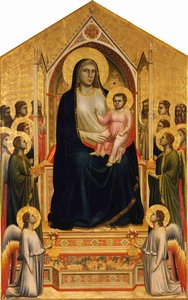
Badia-polyptykon, som nå befinner seg i Uffizi-galleriet i Firenze, viser en annen side av hans evne til å håndtere hellige motiver. Hans arbeid fokuserte ofte på den menneskelige erfaringen innenfor de religiøse fortellingene. Dette kommer tydelig til uttrykk i Ognissanti Madonna, også kjent som Madonna i Maesta, malt rundt 1310. I dette verket besitter figurene en følelse av tyngde og volum, et brudd med fortidens flate og gulltunge stiler. Han malte også Nedstigningen til dødsriket, en scene som viderefører dette fokuset på psykologisk dybde og fysisk nærvær.
- Crucifix (Santa Maria Novella)
- Badia-polyptykon
- Ognissanti Madonna
- Nedstigningen til dødsriket
Arv og innflytelse på kunsthistorien
Skiftet i hvordan malere tilnærmet seg den menneskelige form, begynte med hans hender. Ved å bevege seg bort fra de flate, gullbakte figurene i den bysantinske tradisjonen, endret han retningen for italiensk malerkunst. Han introduserte en måte å se på som fokuserte på tyngde og hvordan lyset legger seg på en overflate. Denne endringen gjorde det mulig for kunsten å bevege seg mot renessansen, og la et fundament av naturalisme som senere kunstnere kunne bygge videre på. Han blir ofte kalt den europeiske malerkunstens far, fordi han bidro til å flytte kunsten fra symbolske ikoner mot en mer håndgripelig virkelighet.
Hans innflytelse kan spores gjennom verkene til dem som fulgte ham. Måten han brukte rom og menneskelige følelser på, fungerte som en blåkopi for både Masaccio og Michelangelo. Han viste at en figur kunne ha volum og oppta et ekte, tredimensjonalt rom. Denne tilnærmingen forvandlet religiøse scener til levde erfaringer, hvor karakterene besatt en psykologisk dybde som hadde manglet i tidligere, mer rigide stiler. Hans arbeid bygget bro mellom middelalderen og den tidlige renessansen, og satte en standard for hvordan historier kunne fortelles gjennom visuell tyngde og gestikulering.
- Crucifix (1290)
- The Stefaneschi Triptych (1330)
- Baroncelli Polyptych (1334)
Hvor man kan se verkene i dag
For å oppleve hans mesterlige håndverk på nært hold, må man reise til Padua i Italia. Scrovegni-kapellet rommer de monumentale freskosyklusene som fundamentalt endret måten historier ble fortalt på veggene. Fargenes spill og måten figurene okkuperer rommet på, kan best forstås ved å stå midt i selve kapellet. Det er et sted preget av en dyp ro, hvor tyngden i de malte kroppene føles påfallende ekte mot den omkringliggende arkitekturen.
I Firenze er flere av hans verk fremdeles bevart. Det storslåtte kruksifikset i Santa Maria Novella er plassert sentralt i skipet. Det viser en kropp som synker under sin egen vekt, et radikalt brudd med fortidens stive og ubevegelige former. I nærheten finner man Uffizi-galleriet, som huser Badia-polyptykon. Å se disse verkene i deres opprinnelige italienske omgivelser gir en unik følelse for den enorme skalaen han arbeidet med.
Andre mesterverk har funnet veien til ulike samlinger. Stefaneschi-triptykket befinner seg i Vatican Pinacoteca i Vatikanstaten. Å betrakte disse verkene på deres nåværende lokasjoner gir oss muligheten til å spore hvordan hans revolusjonerende stil beveget seg gjennom ulike religiøse rom.

Giotto Di Bondone
1267 - 1337 , Italia
Kort om kunstneren
- Artistic Movement Or Style: Proto-renessanse
- Artists Or Movements Influenced By This Artist: ['Masaccio']
- Artists Who Influenced This Artist: ['Cimabue']
- Date Of Birth: ca. 1267
- Date Of Death: 1337
- Full Name: Giotto di Bondone
- Nationality: Italiensk
- Notable Artworks: ['Scrovegni Chapel']
- Place Of Birth: Firenze, Italia
Relaterte artikler

The Eternal Glow of Fresco: Capturing Light, Spirit, and the Timeless Majesty of Wall Art
Discover the enduring beauty of fresco painting. Explore the history, technique, and spiritual depth of mural art, from Michelangelo to modern luxury design. Learn how to bring the timeless glow of masterworks into your home through exquisite, hand-painted reproductions.
Utforsk kunstverk organisert etter temaer, stiler og kjennetegn.




![Scrovegni - Sistensdømmene (detalj) [03]](/media/artworks/images-thumb/7d/a9/7da93e3737abc9f37453cee26f9f9796.jpg)
