

 Forhåndsvisning
 Send
Send Del
Del
 Vis detaljer
 Utskriftsvennlig guide

 Last ned bilde
 Liknende objekter
 Røntgenundersøkelse
 Lysbildefremvisning
 Spørsmål og svar
 Statistikk
Skiffs on the Yerres

- 116.0 x 88.0 cm


Discover 'Skiffs on the Yerres' by Gustave Caillebotte – a serene Impressionist painting capturing Parisian river life. Explore its loose brushstrokes & atmospheric beauty.
 Vis hele teksten
Gustave Caillebotte (1848-1894): En fransk maler som fanget moderne Paris med realistisk og impresjonistisk stil – kjent for «Paris Street; Rainy Day» og unike perspektiver.
Giclée / Kunsttrykk
Giclée- eller lerretsprint av museumskvalitet med rask produksjon og fleksible valgmuligheter for etterbehandling. ( Kjøp håndmalt maleri Bytt til digitalt bilde)




P118B Nkr10

P118H Nkr10

P118W Nkr10

P438Z Nkr10

P508JH Nkr12

P508YH Nkr12

P805H Nkr10

P805Z Nkr10

P919BZ Nkr10

P919G Nkr10

P919XJ Nkr10

P959ZH Nkr10

P968JZ Nkr12

W106C Nkr8

W218G Nkr10

W218JH Nkr8

W218Y Nkr10

W307PJ Nkr10

W316G Nkr10

W316PJ Nkr8

W316Y Nkr10

W398PJ Nkr8

W4111J Nkr10

W500HY Nkr15

W500JH Nkr15

W692G Nkr12

W849H Nkr8

W940BG Nkr15

W953PJ Nkr8




Standardformat
skreddersydd
CM
INCH
Velg mellom våre forhåndsdefinerte størrelser som bevarer kunstverkets opprinnelige proporsjoner.
Loading sizes...

bredde
høyde
Skriv inn ønsket bredde og høyde for å tilpasse trykket til din ramme eller vegg. Et trykk kan kun beskjæres, aldri skaleres opp utover motivets opprinnelige størrelse, noe som betyr at et format med andre proporsjoner vil føre til tap av deler av bildet. Vi sender deg en digital mockup for godkjenning før vi starter trykkeprosessen. Bildet som vises på denne siden viser ikke den faktiske beskjæringen — det er kun mockuppen som viser dette.
Verdensomspennende levering () på 2 uker i stedet for standard 4/5 uker. (4 November)

Gratis ekspressfrakt over hele verden

Lerretsduk av lin av høy kvalitet

Full transportforsikring

Garanti for refusjon av toll og importavgifter

Garantert fargegjengivelse

100 dagers returrett ved fabrikasjonsfeil

100% pengene tilbake-garanti

Rabatt ved flere kjøp
 Glassalternativet er kun tilgjengelig i størrelser under 110 cm

Skiffs on the Yerres
Giclée / Kunsttrykk
Størrelse på reproduksjon
-


Totalpris for valgte alternativer
Nkr 672
A Moment Suspended on the Yerres River
To gaze upon Skiffs on the Yerres is to be gently ushered into a pocket of profound tranquility, a vision steeped in the luminous atmosphere of late nineteenth-century Parisian leisure. This painting does not merely depict a river scene; it captures the very breath of a slow afternoon. The composition draws the eye immediately to the small wooden skiff, where two figures paddle downstream, their activity imbued with a quiet rhythm that seems almost audible across the canvas. It is an immersion into nature’s embrace, rendered with an immediacy that belies its age.
The Impressionist Gaze: Light and Brushwork
Gustave Caillebotte masterfully employs the techniques of Impressionism to elevate a simple outing into an art experience. Observe how the light—soft, diffused, and hazy—seems to emanate from within the scene itself. The artist utilizes visible, broken brushstrokes, allowing the viewer’s eye to complete the picture, much as one completes a perfect memory. These strokes build up color in patches of greens and browns, giving the water and foliage a palpable texture. While the overall impression is one of fluidity, note the underlying structure: the strong horizontal lines echoing the river's steady flow provide a grounding counterpoint to the organic, rounded shapes of the boat and the surrounding reeds. This technical brilliance transforms mere paint into an atmospheric event.
Echoes of Modern Parisian Life
Painted in 1877, this work situates itself at a fascinating crossroads in art history. Caillebotte, deeply influenced by the burgeoning modernity of Paris and his own early fascination with photography, captured life not as it was formally posed, but as it was experienced—fleeting, unscripted, and beautifully ephemeral. The subject matter speaks to a growing appreciation for the pleasures of the bourgeoisie engaging with the natural world outside the rigid confines of the city center. It is a testament to leisure, suggesting a time when the rhythm of life could slow down enough to simply drift downstream.
Symbolism of Passage and Serenity
Beyond its technical merits, Skiffs on the Yerres resonates with deep symbolic weight. The river itself has always been an ancient metaphor for the passage of time—a constant, unstoppable flow against which human moments are measured. The skiff represents a journey, perhaps one of introspection or escape. For the contemporary collector or designer, this piece offers more than mere decoration; it offers an emotional anchor. It whispers promises of peace, suggesting that true connection—whether with nature or with another person—is found in these quiet, unhurried moments.
Bringing the Riverside Calm Home
Reproducing the depth and luminosity of this original oil on canvas allows one to bring a piece of this pastoral serenity into any interior space. The palette, dominated by earthy greens and muted browns, integrates seamlessly into sophisticated decor schemes, while the visible texture of the brushwork adds an undeniable layer of artisanal richness. Owning a reproduction of Skiffs on the Yerres is to curate not just art, but a feeling—the profound, restorative calm found at the edge of a slow-moving river.
Spørsmål og svar
Finnes det et faktablad om "Skiffs on the Yerres" av Gustave Caillebotte for studenter?
En Faktablad for studenter-side er tilgjengelig for "Skiffs on the Yerres" av Gustave Caillebotte: et utskrivbart faktablad om kunstverket, designet for studenter og bruk i klasserommet.
Hvor bør en reproduksjon av "Skiffs on the Yerres" av Gustave Caillebotte henges opp?
Med sin Landscape form anbefales en reproduksjon av "Skiffs on the Yerres" for et Lounge.
I hvilket år ble "Skiffs on the Yerres" av Gustave Caillebotte skapt?
"Skiffs on the Yerres" dateres til 1877. Denne datoen plasserer verket innenfor Gustave Caillebotte sin karriere og sin epoke.
Lignende kunstverk


Om kunstneren
A Parisian of the New Age: The Life and Art of Gustave Caillebotte
Gustave Caillebotte, born in Paris in 1848, was an artist uniquely positioned to witness and capture the dramatic transformations sweeping through his city. His father, Martial Caillebotte, a successful textile businessman and judge, provided Gustave with both financial stability and a privileged vantage point—allowing him to observe firsthand the burgeoning modernity of Parisian life. Initially drawn to the structured world of law, earning degrees in 1868 and 1870, Caillebotte’s true passion ignited within the realm of art. He began his formal training under Léon Bonnat, immersing himself in painting while simultaneously developing a keen fascination with photography—a relatively new medium that would profoundly shape his artistic vision and approach to composition. This early exposure to photographic principles – its framing, perspective, and ability to freeze fleeting moments – became integral to his distinctive style, influencing how he captured the dynamism of urban life. Caillebotte wasn’t simply documenting change; he was actively engaging with the aesthetic possibilities presented by this rapidly evolving world.Realism Meets Impressionist Light
Caillebotte's artistic trajectory diverged from the rigid traditions of academic painting, yet he never fully embraced the purely optical explorations championed by many of his Impressionist contemporaries. He found a kindred spirit in artists like Edgar Degas and Giuseppe de Nittis, sharing a fascination with modern life but approaching it through a lens of meticulous realism. His early masterpiece, Les Raboteurs de Parquet (The Floor Scrapers), exhibited at the 1875 Salon, immediately established his reputation as a bold and unconventional painter. The work depicts three laborers painstakingly scraping a wooden floor – a scene rarely depicted in the high art of the time – rendered with an unflinching honesty that both shocked and captivated viewers. It wasn’t merely the subject matter—the depiction of the working class—but also the composition itself: cropped, almost jarringly direct, and deliberately devoid of sentimental idealization or romantic embellishment. This commitment to portraying contemporary life without resorting to idealized representations continued in works like View of Rooftops (Snow), where he masterfully employed a high vantage point and atmospheric effects, subtly influenced by his early interest in photography and the aesthetics of Japanese prints. However, Caillebotte wasn’t immune to the allure of Impressionism; gradually, his palette lightened, and he began experimenting with broken brushstrokes and capturing the ephemeral qualities of light – particularly evident in his stunning depictions of Parisian rooftops blanketed in snow.A Patron and a Pioneer: Navigating the Art World
Beyond his own artistic pursuits, Gustave Caillebotte played an unexpectedly significant role in supporting the burgeoning Impressionist movement. His family’s considerable wealth provided him with financial independence, allowing him to become a crucial patron of many leading artists – including Monet, Renoir, Pissarro, Cézanne, Degas, and Sisley. He wasn't merely a collector; he actively championed these artists, organizing and financing several of the Impressionist exhibitions that challenged the established norms of the official Salon. This dedication to fostering innovation extended beyond his own collection, as he meticulously curated works for galleries and museums, contributing significantly to their collections. Caillebotte’s unique perspective also manifested in his compositions; works like Boulevard vu d’en haut (Boulevard Seen from Above), painted in 1880, demonstrate a strikingly modern sensibility – employing an elevated viewpoint and dynamic cropping that subtly foreshadowed the photographic perspectives of the 20th century. This innovative approach to composition, possibly influenced by Japanese prints and his own photographic experiments, set him apart as a true pioneer within the Parisian art scene.Notable Works
- Les Raboteurs de Parquet (The Floor Scrapers) (1875): A groundbreaking work showcasing Caillebotte’s realism and unconventional composition.
- View of Rooftops (Snow) (1878): Demonstrates his use of high vantage points and atmospheric effects, influenced by photography and Japanese prints.
- Boulevard vu d’en haut (Boulevard Seen from Above) (1880): A strikingly modern composition with a dynamic perspective.
- Paris Street; Rainy Day (1877): Perhaps his most famous work, capturing the bustling energy of Parisian life in a unique and evocative manner.
- The Bezique Game(1881) : A captivating Impressionist painting of Parisian leisure.
Legacy and Rediscovery: A Modern Master Reclaimed
For decades following his death in 1894, Caillebotte’s work remained largely overlooked— overshadowed by the more celebrated figures of Impressionism. It wasn't until the late 20th century that a comprehensive reassessment of his art began to take place, fueled by scholarly research and major exhibitions. This rediscovery revealed an artist of remarkable technical skill, intellectual depth, and visionary insight. Caillebotte’s paintings are not simply depictions of modern life; they are profound meditations on the complexities of urban existence, the changing social landscape, and the evolving relationship between art and reality. His ability to seamlessly blend realism with Impressionist techniques, his innovative compositions, and his unwavering commitment to portraying the world around him have secured his place as a pivotal figure in 19th-century art—a master whose unique perspective is now widely recognized and celebrated.
Gustave Caillebotte
1848 - 1894 , Frankrike
Kort om kunstneren
- Artistic Movement Or Style: Impressionisme og Realisme
- Artists Or Movements Influenced By This Artist: ['Bonnat']
- Artists Who Influenced This Artist:
- Degas
- Nittis
- Date Of Birth: 19. august 1848
- Date Of Death: 21. februar 1894
- Full Name: Gustave Caillebotte
- Nationality: Fransk
- Notable Artworks:
- Les Raboteurs de Parquet
- Rooftop View
- Boulevard Seen
- Place Of Birth: Paris, Frankrike
Relaterte artikler
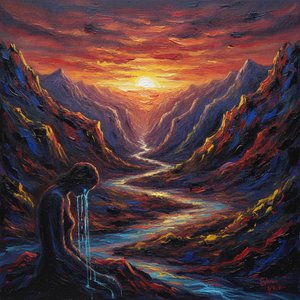
Capturing Emotion: A Journey Through the Soul of Expressionist Landscapes
Explore the profound emotional depth of Expressionist landscapes. Discover how Post-Impressionist masters moved beyond light to capture the soul through vibrant color and form. A curated journey for true art lovers seeking the beauty of expressive mastery.
Utforsk kunstverk organisert etter temaer, stiler og kjennetegn.


