


 Se i rommet
 Del som digitalt kort
 Del
Del
 Detaljer
 Studentguide

 Last ned
 Liknende objekter
 Røntgen
 Lysbildefremvisning
 Besøksstatistikk
PAYSAGE AVEC UNE STATUE DANS UNE NICHE


 Les mer
Giclée / Kunsttrykk
Giclée- eller lerretsprint av museumskvalitet med rask produksjon og fleksible valgmuligheter for etterbehandling. ( Bestill håndmalt reproduksjon Gå til digitalt bilde)




P118B Nkr10

P118H Nkr10

P118W Nkr10

P438Z Nkr10

P508JH Nkr12

P508YH Nkr12

P805H Nkr10

P805Z Nkr10

P919BZ Nkr10

P919G Nkr10

P919XJ Nkr10

P959ZH Nkr10

P968JZ Nkr12

W106C Nkr8

W218G Nkr10

W218JH Nkr8

W218Y Nkr10

W307PJ Nkr10

W316G Nkr10

W316PJ Nkr8

W316Y Nkr10

W398PJ Nkr8

W4111J Nkr10

W500HY Nkr15

W500JH Nkr15

W692G Nkr12

W849H Nkr8

W940BG Nkr15

W953PJ Nkr8




Standardformat
tilpasset
CM
INCH
Velg mellom våre forhåndsdefinerte størrelser som bevarer kunstverkets opprinnelige proporsjoner.
Loading sizes...

bredde
høyde
Skriv inn bredden og høyden du trenger, slik at den passer til din ramme eller vegg. Et trykk kan kun beskjæres, aldri gjøres større enn bildet, så et format med en annen form vil miste en del av motivet. Vi sender deg en digital mockup for godkjenning før vi trykker noe som helst. Bildet som vises på denne siden viser ikke den faktiske beskjæringen — det er kun mockuppen som gjør det.
Verdensomspennende levering () på 2 uker i stedet for standard 4/5 uker. (26 October)

Gratis ekspressfrakt over hele verden

Lerretsduk av høykvalitets lin

Full transportforsikring

Garanti for refusjon av toll og importavgifter

Garantert fargeekthet

100 dagers returrett ved fabrikasjonsfeil

100% pengene tilbake-garanti

Mengderabatt
 Glassalternativet er kun tilgjengelig i størrelser under 110 cm

PAYSAGE AVEC UNE STATUE DANS UNE NICHE
Giclée / Kunsttrykk
Format på reproduksjon
-


Totalpris
Nkr 656
A Vision of Decay and Remembrance: Hubert Robert’s Landscape with Statue in Niches
Hubert Robert, a name synonymous with evocative landscapes and the romantic allure of ruins, stands apart as one of the most distinctive figures in 18th-century French art. Born in Paris in 1733, his artistic journey unfolded against a backdrop of dramatic stylistic shifts—from the opulent Rococo to the burgeoning Neoclassicism—yet he steadfastly pursued a singular vision: capturing not merely what was seen but what lingered within memory and imagination.
Robert’s oeuvre is defined by an obsession with ruins, transforming crumbling monuments into canvases brimming with atmospheric drama. Unlike many of his contemporaries who sought to glorify grandeur and order, Robert deliberately confronted the inevitable passage of time, presenting scenes that simultaneously celebrated beauty and acknowledged mortality. This preoccupation isn't simply aesthetic; it reflects a broader intellectual current—the Romantic fascination with sublime landscapes and the melancholic contemplation of history’s fading glories.
Romanticism Meets Neoclassicism: Robert’s Unique Synthesis
Robert skillfully blended elements of both Romanticism and Neoclassicism, achieving an unparalleled effect. The Romantic impulse to infuse paintings with emotion and imagination is evident in his masterful depiction of light and shadow—particularly the diffused glow that illuminates the crumbling stone walls and foliage of his landscapes. Simultaneously, he adheres to neoclassical principles of composition and perspective, grounding these visions in a carefully constructed framework.
Considered “the painter of ruins,” Robert’s technique is characterized by visible brushstrokes—a deliberate rejection of the polished surfaces favored by earlier artists—that convey spontaneity and immediacy. He employs glazing techniques to subtly modulate color, creating luminous washes that heighten the sense of atmosphere. The artist meticulously renders architectural details with precision while simultaneously allowing for textural variation, mirroring the organic decay he portrays.
Symbolism Beyond Decoration: Echoes of Antiquity
More than just a visual spectacle, Robert’s paintings resonate with profound symbolic meaning. The ruins themselves serve as emblems of time's relentless march and the futility of human ambition—yet they are also imbued with an aura of timeless beauty. Nestled within an arched niche stands a statue, representing classical ideals of artistic excellence and moral virtue—a deliberate allusion to the grandeur of ancient Greece and Rome.
The figures depicted in Robert’s landscapes—often solitary wanderers contemplating crumbling ruins—are imbued with a sense of melancholy contemplation. They embody the Romantic spirit's preoccupation with emotion and introspection, inviting viewers to ponder the relationship between humanity and history. Ultimately, Robert’s art transcends mere decoration; it offers a meditation on beauty, decay, and the enduring legacy of civilization.
Spørsmål og svar
Hva handler "PAYSAGE AVEC UNE STATUE DANS UNE NICHE" om?
"PAYSAGE AVEC UNE STATUE DANS UNE NICHE" av Hubert Robert avbilder: ruins, sculpture, landscape, architecture, atmosphere, classical art, decay.
Hvor kan jeg kjøpe en håndmalt reproduksjon av "PAYSAGE AVEC UNE STATUE DANS UNE NICHE" av Hubert Robert?
Du kan bestille en håndmalt reproduksjon av "PAYSAGE AVEC UNE STATUE DANS UNE NICHE" av Hubert Robert direkte på dens Håndmalt reproduksjon-side: en håndmalt oljereproduksjon på linlerret, laget etter bestilling.
Kan jeg se et røntgenbilde av "PAYSAGE AVEC UNE STATUE DANS UNE NICHE" av Hubert Robert?
Røntgenvisningen av "PAYSAGE AVEC UNE STATUE DANS UNE NICHE" av Hubert Robert finnes på verkets Røntgen-side: en interaktiv undersøkelse av bildet gjennom elleve optiske lag.
Kunstnerbiografi
A Painter of Ruins and Visions: The World of Hubert Robert
Hubert Robert, a name inextricably linked to the evocative beauty of ruins and the romantic allure of bygone eras, stands as a singular figure in 18th-century French art. Born in Paris in 1733, his life unfolded against a backdrop of profound artistic transformation—a journey from the ornate elegance of the Rococo to the nascent spirit of Neoclassicism, culminating in the dramatic upheaval of the French Revolution and its aftermath. Robert’s genius wasn't merely in replicating decay; it resided in crafting meticulously detailed visions that resonated with both a poignant nostalgia for the past and an anticipatory gaze towards the future. His artistic odyssey began within the structured confines of formal training, initially under the tutelage of sculptor Michel-Ange Slodtz, who recognized Robert’s innate talent but wisely steered him toward painting, sensing a deeper calling—a capacity to capture light, atmosphere, and the subtle poetry inherent in form.Roman Reveries: Shaping an Artistic Identity
The defining moment in Robert's artistic development arrived with his extended sojourn to Rome between 1754 and 1765. This period wasn’t simply a vacation; it was a crucible where his artistic identity was forged. Accompanying Étienne-François de Choiseul, the young ambassador of France to the Papal court, Robert immersed himself in the city's ancient heart—a world saturated with history and architectural grandeur. For over a decade, Rome became his open-air studio, its crumbling temples, majestic arches, and overgrown gardens fueling an imagination that would forever shape his artistic vision. He didn’t merely document what he saw; he actively reimagined it, infusing the ruins with a sense of melancholic beauty—a poignant awareness of time's relentless passage. His early works, often categorized as *capricci*, reflected this approach. These fanciful compositions juxtaposed classical ruins with contemporary life, creating dreamlike scenarios that hinted at Robert’s unique ability to blend observation and imagination. Crucially, he spent considerable time working alongside Giovanni Paolo Panini, a master of topographical painting who specialized in rendering Roman ruins. While Robert initially imitated Panini's meticulous style, he quickly transcended mere replication, developing his own distinctive voice characterized by an unparalleled sensitivity to light, atmosphere, and the subtle nuances of form. His sketchbooks from this period—filled with hundreds of drawings—offer invaluable insights into his artistic process, revealing a keen eye for architectural detail and a profound understanding of landscape composition. The influence of Piranesi, another artist fascinated by Roman ruins, is also evident in Robert’s work, particularly his depictions of labyrinthine interiors and the interplay of light and shadow within ancient structures.Parisian Acclaim and Royal Patronage
Robert's return to Paris in 1765 marked a significant shift in his career trajectory. He swiftly gained recognition within the artistic establishment, securing admission to the Académie Royale de Peinture et de Sculpture with “The Port of Rome, Ornamented with Different Monuments of Architecture, Ancient and Modern.” This success propelled him into the spotlight, attracting the attention of discerning collectors and art critics alike. His subsequent exhibitions at the Salon—the official annual exhibition of the French Academy—garnered widespread acclaim, captivating audiences with his evocative depictions of ruins and picturesque landscapes. The critic Denis Diderot, a leading figure of the Enlightenment, famously praised Robert’s paintings for their ability to transport viewers to another time and place—a testament to the artist's remarkable skill in evoking atmosphere and emotion. This burgeoning popularity led to royal patronage, with commissions for decorative projects within grand palaces and gardens, as well as appointments as “Designer of the King’s Gardens” and later, “Keeper of the King’s Pictures.” He became a highly sought-after artist, not only for his easel paintings but also for his innovative designs for elaborate garden layouts—a reflection of the prevailing taste for *capriccio* painting, which appealed to collectors fascinated by history, archaeology, and the picturesque. Robert elevated this genre beyond mere decorative art, imbuing it with a unique sensibility that combined historical accuracy with imaginative vision.Revolution, Resilience, and Lasting Legacy
The French Revolution presented an unprecedented challenge for Robert, as for many artists of his time. While navigating the turbulent political climate, he demonstrated remarkable resilience, continuing to paint prolifically despite the upheaval. He even faced a brief period of imprisonment during the Reign of Terror—a harrowing experience that undoubtedly informed some of his later works. Following the Revolution, Robert was appointed curator of the newly established Muséum Central des Arts—the future Musée du Louvre—a significant recognition of his expertise and dedication to preserving France’s cultural heritage. He played a crucial role in organizing and cataloging the museum's burgeoning collection, ensuring that its artistic treasures were safeguarded for future generations. Hubert Robert died in Paris in 1808, leaving behind an extraordinary body of work—a testament to his unique vision and enduring legacy. His paintings continue to captivate viewers with their evocative beauty, blending historical accuracy with imaginative vision and solidifying his place as a pivotal figure bridging the Rococo and Neoclassical periods, and anticipating aspects of Romanticism with his fascination for history and imagination.- Key Influences: Giovanni Paolo Panini, Piranesi, the architectural landscape of Rome.
- Major Themes: Ruins, landscapes, *capriccio* paintings, historical memory, the passage of time.
- Artistic Style: Meticulous detail, atmospheric perspective, evocative lighting, blending observation with imagination.

Hubert Robert
1733 - 1808 , Frankrike
Kort om kunstneren
- Artistic Movement Or Style: Romantikk, Neoklassisisme
- Artists Or Movements Influenced By This Artist: ['Romantikk']
- Artists Who Influenced This Artist:
- Giovanni Panini
- Piranesi
- Date Of Birth: 22 mai 1733
- Date Of Death: 15 apr 1808
- Full Name: Hubert Robert
- Nationality: Fransk
- Notable Artworks:
- Port av Roma
- Galatea's flykt
- Louvrens galleri
- Place Of Birth: Paris, Frankrike
Relaterte artikler

The Timeless Elegance of Academic Classicism: A Journey Through Order, Precision, and the Pursuit of Perfection
Explore the profound beauty of Academic Classicism. Discover how masters used order, precision, and classical ideals to achieve timeless perfection in art history, from Neoclassical portraits to the pursuit of ideal beauty.

The Elegance of Neoclassicism: Rediscovering Order, Logic, and Timeless Beauty in Art History
Explore the profound elegance of Neoclassicism. Discover how the Enlightenment era replaced Rococo excess with the timeless beauty, order, and logic of Greco-Roman antiquity through masterfully rendered art and enduring classical ideals.

Capturing Eternal Glory: Impressionist Visions of the Roman Empire's Timeless Grandeur
Explore the breathtaking intersection of Roman grandeur and Impressionist light. Discover how masters like Monet reimagined classical ruins through vibrant, emotive brushstrokes. A cultural journey for true art lovers seeking to bring eternal glory into their homes.
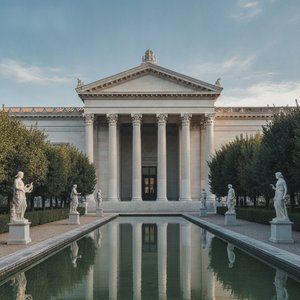
Neoclassicism Unveiled: Discovering the Timeless Elegance and Rational Order of Classical Art
Unveil the timeless elegance of Neoclassicism. Journey through an era defined by reason, order, and the revival of Greco-Roman ideals. Our expert exploration offers a sophisticated look at the transition from Rococo excess to classical precision for the true art enthusiast.
Utforsk kunstverk organisert etter temaer, stiler og kjennetegn.


