


 Se i rommet
 Del som digitalt kort
 Del
Del
 Detaljer
 Studentguide

 Last ned
 Liknende objekter
 Røntgen
 Lysbildefremvisning
 Besøksstatistikk
Spring Breeze
 Oil On Canvas
- WallArt
- Post-Impressionist Painting
 1905
1905- 19th Century
 79.0 x 79.0 cm
Experience 'Spring Breeze' by Igor Grabar, a captivating Post-Impressionist painting of a serene bedroom scene with divisionist technique and a cozy piano. Discover this beautiful artwork and bring its timeless charm into your space.
 Les mer
Igor Grabar (1871-1960) var en fremtredende russisk etterimpressionist maler kjent for sine snøkrengete landskap og viktig rolle i å modernisere Tretyakov-galleriet. Utforsk hans arv!
Kunstverket som vises på denne siden er beskyttet av opphavsretten, noe som betyr at vi ikke har juridisk tillatelse til å lage eller selge identiske reproduksjoner. Denne beskyttelsen håndheves i henhold til internasjonale avtaler som for eksempel Bernerkonvensjonen og av nasjonale lover, inkludert de som er fastsatt i Amerikansk opphavsrettslov – Tittel 17.
Som et respektfullt og lovlig alternativ tilbyr vi skreddersydde, håndmalte kunstverk inspirert av originalen. Våre dyktige og profesjonelle kunstnere studerer nøye originalens stil, stemning og kunstneriske essens for å skape et nytt og unikt verk som vekker den samme følelsen – samtidig som det forblir en original skapelse i seg selv.
Denne metoden er i fullt samsvar med opphavsrettslige regler, da den ikke innebærer kopiering eller duplisering av det beskyttede kunstverket. I stedet er det snakk om en kreativ nytolkning – et nytt maleri som er inspirert av originalen, men ikke identisk med den.
Håndlaget oljereproduksjon
Håndmalt olje på lerret i din valgte størrelse og ramme, laget på bestilling av våre kunstnere. ( Bytt til trykkversjon Gå til digitalt bilde)




P118B Nkr10

P118H Nkr10

P118W Nkr10

P438Z Nkr10

P508JH Nkr12

P508YH Nkr12

P805H Nkr10

P805Z Nkr10

P919BZ Nkr10

P919G Nkr10

P919XJ Nkr10

P959ZH Nkr10

P968JZ Nkr12

W106C Nkr8

W218G Nkr10

W218JH Nkr8

W218Y Nkr10

W307PJ Nkr10

W316G Nkr10

W316PJ Nkr8

W316Y Nkr10

W398PJ Nkr8

W4111J Nkr10

W500HY Nkr15

W500JH Nkr15

W692G Nkr12

W849H Nkr8

W940BG Nkr15

W953PJ Nkr8




Standardformat
tilpasset
CM
INCH
Velg mellom våre forhåndsdefinerte størrelser som bevarer kunstverkets opprinnelige proporsjoner.
Loading sizes...

bredde
høyde
Skriv inn bredden og høyden du trenger, slik at den passer til din ramme eller vegg. Dette er håndmalt, så for en størrelse med en annen form kan kunstneren male litt mer rundt bildet, eller beskjære det noe — du velger selv. Vi sender deg en digital mockup for godkjenning før maleriet påbegynnes. Bildet som vises på denne siden viser ikke det faktiske resultatet — kun mockuppen gjør det.
Eksempler på hva som kan endres: Erstatt ansikt med bilde av kunden; Legg til kjæledyr (f.eks. bytt ut katt med hund); Inkluder en skjult melding i bakgrunnen; Endre bakgrunnslandskap eller elementer.
Etter bestilling vil TopImpressionists.com-teamet sende e-post til kunden for instruksjoner og sende et utkast (mockup) som forhåndsvisning.
Etter bestilling vil TopImpressionists.com-teamet sende e-post til kunden for instruksjoner og sende et utkast (mockup) som forhåndsvisning.
Verdensomspennende levering () på 3–4 uker i stedet for standard 5 uker. (21 October). Ingen kompromisser med kvaliteten.

Gratis ekspressfrakt over hele verden

Lerretsduk av høykvalitets lin

Full transportforsikring

Garanti for refusjon av toll og importavgifter

Garantert fargeekthet

100 dagers returrett ved fabrikasjonsfeil

100% pengene tilbake-garanti

Mengderabatt
 Glassalternativet er kun tilgjengelig i størrelser under 110 cm

Spring Breeze
Reproduksjonsmetode
Format på reproduksjon
-


Totalpris
Nkr 2538
Igor Emmanuilovich Grabar’s ‘Spring Breeze’: A Window into Post-Impressionist Serenity
“Spring Breeze,” painted in 1905 by the Russian Post-Impressionist artist Igor Emmanuilovich Grabar, is more than just a depiction of a bedroom; it's an immersive experience of light, color, and quiet contemplation. Created during a pivotal period in Grabar’s career – his peak artistic output between 1903 and 1907 – the painting exemplifies his distinctive approach to divisionist technique, a method that sought to capture fleeting moments through meticulously placed dots of pure color, creating an almost shimmering effect. Measuring 79 x 79 cm on canvas, this intimate scene invites viewers into a world of warmth and tranquility, reflecting Grabar’s profound interest in capturing the subtle nuances of domestic life.
A Symphony of Color and Light – The Divisionist Technique
Grabar's mastery lies in his skillful deployment of the divisionist technique. Rather than blending colors on the canvas, he applied small, distinct brushstrokes—often described as bordering on pointillism—to build up the image. This approach isn’t simply a stylistic choice; it’s a deliberate attempt to mimic the way light itself is perceived – fragmented and shimmering. Observe how the sunlight streaming through the two windows is rendered not with smooth gradations, but with a mosaic of yellows, oranges, and whites, creating an ethereal glow that bathes the room in warmth. The careful arrangement of these color fragments generates a remarkable sense of depth and texture, drawing the eye across the canvas.
Historical Context: Post-Impressionism and the Russian Avant-Garde
‘Spring Breeze’ emerged from the broader context of Post-Impressionism, a movement that arose as a reaction against the Impressionists' focus on objective observation of light. While Impressionists sought to capture fleeting moments, Post-Impressionists aimed for something more – a deeper emotional and symbolic resonance within their work. Grabar, influenced by artists like Ilya Repin and Anton Azbe, pushed this movement further with his unique divisionist style. His work aligns with the broader Russian avant-garde of the early 20th century, exploring themes of domesticity and spirituality through a highly personal artistic lens.
Symbolism Within the Still Life – A Room of Quiet Reflection
Beyond its technical brilliance, ‘Spring Breeze’ is rich in subtle symbolism. The piano, positioned prominently in the corner, suggests both musical contemplation and perhaps a yearning for creative expression. The carefully arranged vases, each placed with intention, contribute to the overall sense of order and serenity. The potted plant adds a touch of nature, connecting the interior space with the outside world. The composition as a whole evokes a feeling of peaceful solitude – a sanctuary from the bustle of daily life. It’s a scene designed not just to be observed, but to be felt.
Technical Specifications
- Title: Spring Breeze
- Artist: Igor Emmanuilovich Grabar
- Date: 1905
- Medium: Oil on Canvas
- Size: 79 x 79 cm
This exceptional reproduction captures the essence of Grabar’s ‘Spring Breeze,’ offering a stunning addition to any art collection or interior design scheme. Its evocative beauty and masterful technique make it a timeless piece, reflecting the enduring appeal of Post-Impressionist artistry.
Spørsmål og svar
Hva er den fargemessige identiteten til "Spring Breeze" av Igor Emmanuilovich Grabar?
Fargeidentiteten til "Spring Breeze" av Igor Emmanuilovich Grabar: en Earthy-palett, dominert av Driftwood (#d2aa65).
Er "Spring Breeze" en god gaveidé?
"Spring Breeze" foreslås som en gave til Anniversary.
Hvor harmoniske er fargene i "Spring Breeze" av Igor Emmanuilovich Grabar?
Fargene i "Spring Breeze" av Igor Emmanuilovich Grabar viser en Strong Color Unity harmoni. Harmoni beskriver hvordan fargene forholder seg til hverandre.
Relaterte kunstverk


Kunstnerbiografi
Early Life and Education
Igor Emmanuilovich Grabar (Russian: И́горь Эммануи́лович Грабарь, 25 March 1871 – 16 May 1960) was a Russian Post-Impressionist painter, publisher, restorer and historian of art. Grabar, descendant of a wealthy Rusyn family, was trained as a painter by Ilya Repin in Saint Petersburg and by Anton Àžbe in Munich. He reached his peak in painting between 1903–1907 and was notable for a peculiar technique bordering on pointillism and his rendition of snow. His early life unfolded amidst the turbulent currents of late nineteenth-century Russia, shaped profoundly by his family’s fervent devotion to Rusyn heritage and traditions—a connection that instilled in him a deep appreciation for Russian culture. Born in Budapest (then Austro-Hungarian Empire), Grabar's father, Emmanuil Hrabar, was an ethnic Rusyn lawyer and politician who maintained close ties with the Russian embassy, fostering an environment steeped in imperial influence. From a young age, Igor’s fascination with art ignited during his formative years in Egoryevsk, where he attended high school—a period marked by exposure to influential publications documenting the assassination of Tsar Alexander II, which galvanized his artistic sensibilities. He continued his education at Mikhail Katkov's boarding school in Moscow, establishing connections with fellow students from the Moscow School of Painting, Sculpture and Architecture, nurturing a collaborative spirit that would characterize much of his subsequent career.Artistic Career and Notable Works
Grabar’s artistic journey commenced under the tutelage of Ilya Repin in Saint Petersburg and Anton Àžbe in Munich—experiences that honed his skills and broadened his artistic horizons. He swiftly ascended to prominence between 1903 and 1907, achieving mastery of divisionist painting technique, a method characterized by applying small dots of color onto the canvas—a stylistic choice that brilliantly captured the ethereal beauty of snow landscapes. Among Grabar’s most celebrated works are:- Landscape with a Haystack: This evocative piece exemplifies his ability to convey atmospheric depth and textural nuances, immersing viewers in the serene stillness of rural Russia.
- The Embroideress: Reflecting the realist traditions prevalent during the Victorian era, this portrait captures the dignity and quiet contemplation of its subject—a testament to Grabar’s meticulous observation and artistic sensitivity.
- Going to Work: This poignant depiction portrays the daily life of ordinary Russians, imbued with a humanist spirit that underscores Grabar's commitment to portraying authentic human experience.
Museum and Art Restoration
In 1913, Igor Grabar was appointed executive director of the Tretyakov Gallery in Moscow—a pivotal moment that propelled him into the vanguard of Russian art administration and scholarship. Recognizing the imperative for broadening the gallery’s scope beyond traditional artistic representations, he championed the inclusion of modern art movements, culminating in the publication of its inaugural comprehensive catalogue in 1917—a landmark achievement that established a new standard for scholarly discourse on Russian visual culture. Furthermore, Grabar served as professor of art restoration at Moscow State University (1921), shaping generations of artists and fostering a profound understanding of conservation principles. His influence extended beyond the academic realm, informing his role in overseeing the redistribution of confiscated church artworks following the Bolshevik Revolution—a task undertaken with unwavering dedication to preserving cultural heritage.Legacy and Later Life
Grabar’s artistic legacy endured throughout his lifetime, culminating in his passing on May 16, 1960. He continued to champion art restoration workshops (present-day Grabar Centre) from 1918–1930 and from 1944 to 1960—a testament to his lifelong devotion to safeguarding artistic treasures. Notably, he advised Joseph Stalin on the preservation of architectural heritage during World War II—demonstrating his unwavering commitment to protecting Russia’s cultural patrimony. Igor Grabar's contributions to Russian art history and visual culture remain indelible, securing his place as one of the foremost figures of the Post-Impressionist movement.- View more of Grabar's work on TopImpressionists
- Learn more about the Tretyakov Gallery on TopImpressionists
- Discover the novokuznetsk art museum's collection on TopImpressionists

Igor Emmanuilovich Grabar
1871 - 1960 , Ungarn
Kort om kunstneren
- Artistic Movement Or Style: Post-Impressionism
- Artists Who Influenced This Artist:
- Ilya Repin
- Anton Àžbe
- Date Of Birth: March 25, 1871
- Date Of Death: May 16, 1960
- Full Name: Igor Emmanuilovich Grabar
- Nationality: Russisk
- Notable Artworks:
- Landscape with a haystack
- The Embroideress
- Going to work
- Place Of Birth: Budapest, Hungary
Relaterte artikler

The Soul of Impressionism: Why Oil on Canvas Captures Eternal Light and Timeless Emotion
Discover the enchanting alchemy of Impressionism. Explore how the mastery of oil on canvas, through glazing and impasto, captures eternal light and emotion. Perfect for lovers of Monet and Van Gogh seeking the profound depth of hand-painted fine art.

The Timeless Beauty of Oil on Panel: Capturing Light and Texture through the Impressionist Lens
Discover the exquisite depth of oil on panel. Explore how Impressionist masters captured light and texture through tactile brushwork, and learn how to bring these museum-quality, hand-painted masterpieces into your home with expert curation.

The Magic of Lithography: Capturing Light and Texture in Every Impressionist Print
Discover the enchanting world of lithography through an Impressionist lens. Explore how this timeless technique captures the luminous light and delicate textures of masters like Monet and Renoir, offering a profound way to bring art history into your home with elegance and soul.
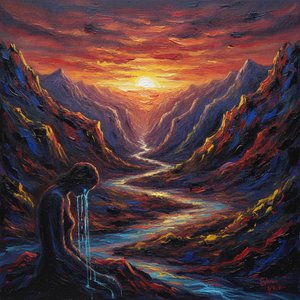
Capturing Emotion: A Journey Through the Soul of Expressionist Landscapes
Explore the profound emotional depth of Expressionist landscapes. Discover how Post-Impressionist masters moved beyond light to capture the soul through vibrant color and form. A curated journey for true art lovers seeking the beauty of expressive mastery.

Beyond the Light: Discovering the Soul and Emotional Depth of Post-Impressionism
Embark on a cultural journey through Post-Impressionism. Discover the profound emotional depth of masters like Van Gogh and Cézanne, exploring how they moved beyond light to capture the very soul of human experience through vibrant color and symbolic form.