

 Se i rommet
 Del som digitalt kort
 Del
Del
 Detaljer
 Studentguide

 Last ned
 Liknende objekter
 Røntgen
 Lysbildefremvisning
 Besøksstatistikk
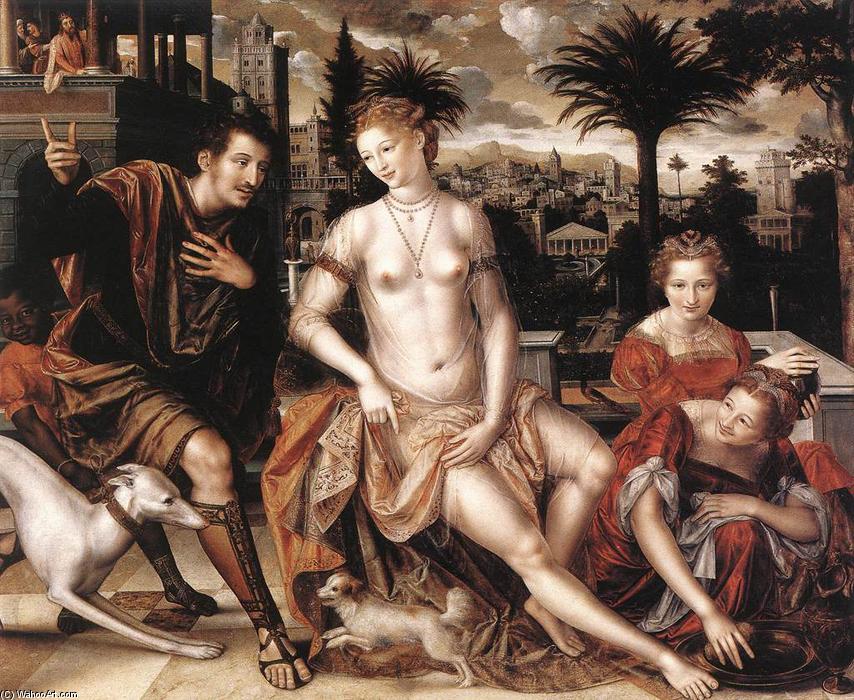
David and Bathsheba
 Oil On Canvas
- WallArt
- Baroque Renaissance Fusion
 1562
1562- Renaissance
 162.0 x 197.0 cm
 Louvre
Experience the dramatic chiaroscuro of Jan Massys's 1562 David and Bathsheba, a Renaissance masterpiece capturing an intimate biblical moment you will want to own.
 Les mer
Lær om Jan Massys, en sentral skikkelse i flamsk renessanse, kjent for sine religiøse verk og satiriske portretter fra Antwerpen-skolen.
Håndlaget oljereproduksjon
Håndmalt olje på lerret i din valgte størrelse og ramme, laget på bestilling av våre kunstnere. ( Bytt til trykkversjon Gå til digitalt bilde)




P118B Nkr10

P118H Nkr10

P118W Nkr10

P438Z Nkr10

P508JH Nkr12

P508YH Nkr12

P805H Nkr10

P805Z Nkr10

P919BZ Nkr10

P919G Nkr10

P919XJ Nkr10

P959ZH Nkr10

P968JZ Nkr12

W106C Nkr8

W218G Nkr10

W218JH Nkr8

W218Y Nkr10

W307PJ Nkr10

W316G Nkr10

W316PJ Nkr8

W316Y Nkr10

W398PJ Nkr8

W4111J Nkr10

W500HY Nkr15

W500JH Nkr15

W692G Nkr12

W849H Nkr8

W940BG Nkr15

W953PJ Nkr8




Standardformat
tilpasset
CM
INCH
Velg mellom våre forhåndsdefinerte størrelser som bevarer kunstverkets opprinnelige proporsjoner.
Loading sizes...

bredde
høyde
Skriv inn bredden og høyden du trenger, slik at den passer til din ramme eller vegg. Dette er håndmalt, så for en størrelse med en annen form kan kunstneren male litt mer rundt bildet, eller beskjære det noe — du velger selv. Vi sender deg en digital mockup for godkjenning før maleriet påbegynnes. Bildet som vises på denne siden viser ikke det faktiske resultatet — kun mockuppen gjør det.
Eksempler på hva som kan endres: Erstatt ansikt med bilde av kunden; Legg til kjæledyr (f.eks. bytt ut katt med hund); Inkluder en skjult melding i bakgrunnen; Endre bakgrunnslandskap eller elementer.
Etter bestilling vil TopImpressionists.com-teamet sende e-post til kunden for instruksjoner og sende et utkast (mockup) som forhåndsvisning.
Etter bestilling vil TopImpressionists.com-teamet sende e-post til kunden for instruksjoner og sende et utkast (mockup) som forhåndsvisning.
Verdensomspennende levering () på 3–4 uker i stedet for standard 5 uker. (23 October). Ingen kompromisser med kvaliteten.

Gratis ekspressfrakt over hele verden

Lerretsduk av høykvalitets lin

Full transportforsikring

Garanti for refusjon av toll og importavgifter

Garantert fargeekthet

100 dagers returrett ved fabrikasjonsfeil

100% pengene tilbake-garanti

Mengderabatt
 Glassalternativet er kun tilgjengelig i størrelser under 110 cm

David and Bathsheba
Reproduksjonsmetode
Format på reproduksjon
-


Totalpris
Nkr 2556
A Moment Frozen in Time: The Allure of Jan Massys’s David and Bathsheba
In the heart of Renaissance Antwerp, a period defined by both profound religious devotion and burgeoning worldly curiosity, Jan Massys captured a scene of unparalleled emotional and narrative tension. His 1562 masterpiece, David and Bathsheba, is far more than a mere biblical illustration; it is a window into the human psyche, capturing the exact moment where desire meets consequence. The painting recounts the clandestine encounter between King David and the Moabite woman, Bathsheba, a narrative of illicit passion that has captivated viewers for centuries. As we gaze upon this monumental canvas, we are drawn into an intimate tableau where every gesture and glance speaks of a secret shared between the figures and the observer.
The composition is masterfully orchestrated to guide the eye through a landscape of moral ambiguity. David, positioned with a commanding yet contemplative presence, gestures toward something unseen—perhaps a divine warning or a silent acknowledgment of the gravity of his transgression. Opposite him, Bathsheba lies in a state of palpable vulnerability, her upward gaze creating a powerful diagonal line of tension that connects the two protagonists. This intimacy is not solitary; Massys surrounds the central pair with supporting figures, including a servant attending to Bathsheba’s needs, which serves to remind us of the societal eyes and the inevitable repercussions that follow such private indiscretions. Even the small, quiet presence of a dog nestled near the edge of the scene adds a layer of symbolic depth, perhaps representing the lost innocence or the concept of fidelity amidst a moment of profound betrayal.
Mastery of Light and Texture in the Flemish Tradition
To behold this work is to witness the pinnacle of Renaissance oil technique. Massys utilized the medium of oil on canvas to achieve a level of realism that feels almost tactile. Through the meticulous application of paint, he renders the heavy, intricate folds of David’s robes with such precision that one can almost sense the weight of the fabric. This technical prowess extends to the delicate rendering of Bathsheba’s skin, where subtle glazing effects create a luminous, soft quality that contrasts beautifully with the more structured elements of the background.
Central to the painting's emotional impact is Massys’s use of chiaroscuro. By employing dramatic contrasts between deep shadows and brilliant highlights, the artist sculpts the figures out of the darkness, lending them a three-dimensional presence that commands the room. This manipulation of light does more than just define form; it heightens the atmospheric intensity, casting a somber, reflective mood over the entire scene. For the collector or the interior designer, such a piece offers a profound sense of drama and historical weight, making it an ideal centerpiece for spaces that value sophisticated storytelling and the timeless elegance of the Flemish masters.
Spørsmål og svar
Hvilken fargepalett brukes i "David and Bathsheba" av Jan Massys?
Fargepaletten i "David and Bathsheba" av Jan Massys beskrives som Earthy. Det er en kortfattet beskrivelse av verkets farger.
Oppbevares "David and Bathsheba" av Jan Massys i kunstnerens hjemland?
Nei – kunstverket oppbevares i utlandet. Jan Massys ble født i Belgia, og originalen av "David and Bathsheba" oppbevares i et museum i France.
Hva handler "David and Bathsheba" om?
Motivene i "David and Bathsheba" er biblical narrative, royal intrigue, sensuality, allegory, human emotion, renaissance painting, religious iconography.
Kunstnerbiografi
En flamsk mester som staker ut en ny kurs
Jan Massys, også kjent som Jan Massijs, står som en sentral skikkelse i det blomstrende kunstlandskapet i 1500-tallets Flandern. Han ble født rundt 1466 i Leuven, Belgia, og hans liv og virke representerer et fascinerende skjæringspunkt mellom tradisjon og innovasjon, religiøs hengivenhet og skarpsindig samfunnskritikk. Selv om legender i utgangspunktet malte et bilde av en smed som ble kunstner – en fortelling om en ydmyk opprinnelse drevet av lidenskap – avslører historiske kilder en familie med etablerte midler. Dette tyder på at Massys’ dedikasjon til maleriet sprang ut av kunstnerisk lyst snarere enn økonomisk nødvendighet. Karel van Mander antyder at sykdom fremskyndet hans skifte fra smia, noe som førte ham til å dekorere trykk for karnevalsfeiringer, en tidlig ventil for hans spirende kreativitet. Han mottok sannsynligvis sin grunnleggende opplæring i Leuven før han flyttet til Antwerpen rundt 1491, hvor han raskt steg i gradene innen Sankt Lukas-gildet. Her etablerte han seg som mestermaler og la grunnlaget for det som senere skulle bli kjent som Antwerpen-skolen. Det antas også at Joachim Patinir, berømt for sine stemningsfulle landskap, studerte under Massys’ veiledning, noe som bidro til de atmosfæriske bakgrunnene man finner i enkelte av hans verk – et vitnesbyrd om den samarbeidsviljen som preget kunstnerens verksted.Ekko av tradisjon og en fremvoksende stemme
Massys’ kunstneriske stil er dypt forankret i den flamske tradisjonen, der han bevisst gjenopplivet den nitidige detaljrikdommen og det ekspressive kraftverket til mestre som Jan van Eyck og Rogier van der Weyden. Han kombinerte mesterlig faste konturer med nyansert modellering, noe som oppnådde en bemerkelsesverdig klarhet og dybde i hans komposisjoner. Hans malerier er preget av en glødende rikdom hentet fra transparente pigmenter, noe som gir en eterisk kvalitet til både religiøse scener og verdslige portretter. Likevel var ikke Massys bare en etterligner av fortiden; han infuserte den med en distinkt personlig visjon. Han besatt en eksepsjonell evne til å fange oppriktige følelser og detaljerte gjengivelser, med et særlig fokus på teksturer – glimtet i smykker, de intrikate kantene på klesplagg og den subtile ornamentikken som løftet hans arbeid utover ren representasjon. Denne grundige tilnærmelse strakte seg også til hans utforskning av lys og skygge, der han skapte dempede, men fengslende effekter som trakk betrakteren inn i hjertet av hver scene. Han var ikke redd for å ta fatt på komplekse temaer, og flettet sømløst sammen religiøse fortellinger med innsiktsfulle observasjoner av menneskelig natur og samfunnsdynamikk.Satire, spiritualitet og varige inntrykk
Massys' kunstnerskap er bemerkelsesverdig mangfoldig, og omfatter alt fra dypt ærbødige religiøse altertavler til dristige, satiriske portretter som utfordret konvensjonelle normer. Blant hans mest berømte verk finner vi Den stygge hertuginnen (1513), et i dag ikonisk bilde som vakte debatt med sin uforferdede skildring av aldring og samfunnets skjønnhetsidealer; Portrett av en eldre mann (1513), som fortsetter denne linjen med sosial kommentar, og Vekselbytteren og hans kone (1514), en gripende fremstilling av grådighet og begjær innen handelsklassen. Disse satiriske verkene var banebrytende for sin tid og tilbød en relativt uvanlig form for kritikk gjennom portrettkunsten – et bevis på Massys’ mot og kunstneriske visjon. Utover disse slående portrettene skapte han en rekke religiøse altertavler og triptykoner, inkludert betydelige oppdrag til Sankt Peter-kirken i Leuven, noe som demonstrerer hans allsidighet og ferdigheter innen storslående fromhetsarbeider. Selv verk som Venus fra Kythera (1561) avslører en fascinasjon for klassiske temaer og kan potensielt reflektere en bevissthet rundt de kunstneriske utviklingene som utspilte seg i Italia.En arv smidd i Antwerpen
Jan Massys’ innflytelse strakte seg langt utover hans egen levetid, og sementerte hans posisjon som en grunnlegger av den høyt aktede Antwerpen-skolen, sammen med sin sønn Quinten Massys og bror Cornelis Massys. Han syntetiserte på dyktig vis innflytelser fra tidligere flamske mestre – Dirk Bouts, Hans Memling, Rogier van der Weyden og Jan van Eyck – samtidig som han inkorporerte elementer fra Italia og andre regioner i Nederlandene. Denne fusjonen skapte en unik kunstnerisk identitet som definerte Antwerpen-skolen for kommende generasjoner. Hans vektlegging av individuell karakterisering og realistisk fremstilling av menneskelige følelser ga gjenklang hos etterfølgende kunstnere og inspirerte dem til å utforske nye uttrykksformer. Senere i livet møtte Massys perioder med motgang, inkludert eksil fra Antwerpen på grunn av religiøs overbevisning, noe som førte til at han søkte tilflukt i Italia og Frankrike før han til slutt vendte hjem. Til tross for disse utfordringene fortsatte han å motta oppdrag, noe som vitner om hans vedvarende rykte og kunstneriske dyktighet frem til hans død i 1575. Hans ettermæle står støtt – et testament til en maler som ikke bare mestret sine forgjengeres teknikker, men som også våget å utfordre konvensjoner og tilby en unikt innsiktsfull visjon av verden rundt seg.Utforsk Jan Massys’ verden i dag
- Jan Massys' verksted: Oppdag dette fengslende maleriet fra det 16. århundre, som viser en sosial sammenkomst med detaljerte figurer og en rik atmosfære.
- Den hellige familie: Utforsk dette imponerende oljemaleriet fra den tidlige renessansen, og beundre de realistiske figurene, den overdådige detaljrikdommen, symbolikken og teknikken.
- Quinten Massys: Dykk ned i arbeidet til Jans sønn, en nøkkelfigur i flamsk renessansekunst, kjent for sine religiøse malerier og satiriske verk.

Jan Massys
1466 - 1530 , Belgia
Kort om kunstneren
- Artistic Movement Or Style: Renessansen
- Artists Or Movements Influenced By This Artist: ['Antwerp-skolen']
- Artists Who Influenced This Artist:
- Dirk Bouts
- Jan van Eyck
- Rogier van der Weyden
- Date Of Birth: ca. 1466
- Date Of Death: 1530
- Full Name: Jan Massys
- Nationality: Flandersk
- Notable Artworks:
- Den stygge hertuginnen
- Vekselbytter og hans kone
- Venus fra Kythera
- Place Of Birth: Leuven, Belgia
Relaterte artikler

Drama and Light: Discover the Captivating Grandeur of Baroque Art
Immerse yourself in the dramatic splendor of Baroque art. Explore the profound impact of light, shadow, and the Counter-Reformation through an expert historical lens, celebrating the masters who defined an era of unparalleled grandeur and emotional intensity.
Utforsk kunstverk organisert etter temaer, stiler og kjennetegn.
