


 Se i rommet
 Del som digitalt kort
 Del
Del
 Detaljer
 Studentguide

 Last ned
 Liknende objekter
 Røntgen
 Lysbildefremvisning
 Besøksstatistikk
Fear, Expression Head
 Pastel
- WallArt
- Rococo
 Early Modern
 40.0 x 30.0 cm
 Louvre
A palpable sense of quiet turmoil radiates from this Rococo pastel study by Jean-Baptiste Greuze featuring a young woman's expressive gaze, inviting you to explore the profound emotional depth of this 18th-century masterpiece.
 Les mer
Jean-Baptiste Greuze (1725–1805): En fransk maler kjent for sine følelsesladde genrebilder og portretter som fanget hverdagsliv og moralske lærdommer i en tid da følelser var i fokus.
Giclée / Kunsttrykk
Giclée- eller lerretsprint av museumskvalitet med rask produksjon og fleksible valgmuligheter for etterbehandling. ( Bestill håndmalt reproduksjon Gå til digitalt bilde)




P118B Nkr10

P118H Nkr10

P118W Nkr10

P438Z Nkr10

P508JH Nkr12

P508YH Nkr12

P805H Nkr10

P805Z Nkr10

P919BZ Nkr10

P919G Nkr10

P919XJ Nkr10

P959ZH Nkr10

P968JZ Nkr12

W106C Nkr8

W218G Nkr10

W218JH Nkr8

W218Y Nkr10

W307PJ Nkr10

W316G Nkr10

W316PJ Nkr8

W316Y Nkr10

W398PJ Nkr8

W4111J Nkr10

W500HY Nkr15

W500JH Nkr15

W692G Nkr12

W849H Nkr8

W940BG Nkr15

W953PJ Nkr8




Standardformat
tilpasset
CM
INCH
Velg mellom våre forhåndsdefinerte størrelser som bevarer kunstverkets opprinnelige proporsjoner.
Loading sizes...

bredde
høyde
Skriv inn bredden og høyden du trenger, slik at den passer til din ramme eller vegg. Et trykk kan kun beskjæres, aldri gjøres større enn bildet, så et format med en annen form vil miste en del av motivet. Vi sender deg en digital mockup for godkjenning før vi trykker noe som helst. Bildet som vises på denne siden viser ikke den faktiske beskjæringen — det er kun mockuppen som gjør det.
Verdensomspennende levering () på 2 uker i stedet for standard 4/5 uker. (23 October)

Gratis ekspressfrakt over hele verden

Lerretsduk av høykvalitets lin

Full transportforsikring

Garanti for refusjon av toll og importavgifter

Garantert fargeekthet

100 dagers returrett ved fabrikasjonsfeil

100% pengene tilbake-garanti

Mengderabatt
 Glassalternativet er kun tilgjengelig i størrelser under 110 cm

Fear, Expression Head
Giclée / Kunsttrykk
Format på reproduksjon
-


Totalpris
Nkr 656
A Window into the Soul: The Intimacy of Greuze’s Pastel Study
In the delicate realm of Rococo artistry, few works capture the fleeting nuances of human emotion as poignantly as Jean-Baptiste Greuze’s Fear, Expression Head. This intimate pastel study, executed around 1755, serves as a profound testament to the artist's ability to transcend mere portraiture, venturing instead into the depths of psychological exploration. The artwork centers on a young woman whose presence is felt through a palpable sense of contemplation and quiet vulnerability. Her hair, styled in loose curls that cascade softly over her shoulders, paired with a draped white garment, lends an aura of understated elegance to the composition. Yet, it is not her outward adornment that commands attention, but rather the subtle, haunting flicker of emotion captured within her gaze.
Greuze’s mastery of the pastel medium is on full display here, utilizing the soft, powdery texture of the medium to achieve a breathtakingly delicate effect. Through meticulous rendering of light and shadow, he creates a sense of three-dimensional depth that breathes life into the subject's features. The artist employs subtle tonal gradations to illuminate the woman's face, drawing the viewer's eye to the slight furrow in her brow and her averted gaze. This intentional use of lighting—sourced from the upper left—heightens the inherent drama of the piece, casting soft shadows that emphasize the texture of her skin and the fine strands of her hair, making the subject feel remarkably present and alive.
The Language of Sentiment and Symbolism
Beyond its technical brilliance, Fear, Expression Head is a masterpiece of emotional storytelling. During the Rococo era, there was a burgeoning fascination with portraying human psychology and the moral dilemmas found within domestic life. Greuze deliberately moved away from the grand, often distant mythological narratives favored by his contemporaries, choosing instead to engage with the more relatable, sentimental sensibilities of his time. In this work, the subject's expression—a mixture of apprehension, thoughtfulness, or perhaps a sudden moment of inner turmoil—invites the viewer into a private, silent dialogue.
The symbolism within the piece is found not in overt objects, but in the subtle gestures of the face itself. The slightly parted lips and the tension held in the brow suggest a state of being caught between thought and reaction, embodying the very essence of "expression heads" or têtes d’expression that Greuze became famous for. For the collector or interior designer, this piece offers more than just aesthetic beauty; it provides a focal point of profound introspection. A high-quality reproduction of this work brings a sense of historical depth and emotional sophistication to any space, acting as a quiet yet powerful anchor that encourages moments of reflection and grace.
Spørsmål og svar
Hva forklarer opphavsrettssituasjonen til "Fear, Expression Head" av Jean-Baptiste Greuze?
Opphavsrettslig status for "Fear, Expression Head" - i det frie domene – opphavsretten har utløpt - følger av kunstnerens dødsår i 1805.
Er "Fear, Expression Head" tilgjengelig som et kunsttrykk?
"Fear, Expression Head" er tilgjengelig som et kunsttrykk på bomullslerret eller arkivbestandig lerretspapir. Bestillinger legges inn på siden for Kunsttrykk i høy kvalitet, i den størrelsen du selv velger.
Er det mulig å laste ned "Fear, Expression Head"?
"Fear, Expression Head" av Jean-Baptiste Greuze kan lastes ned fra verkets Last ned-side, som nedlasting av et digitalt bilde i høy oppløsning.
Kunstnerbiografi
A Life Etched in Sentiment: The World of Jean-Baptiste Greuze
Jean-Baptiste Greuze, a name synonymous with poignant emotion and moralizing narratives, emerged from the quiet Burgundian town of Tournus in 1725 as one of the most distinctive figures in late eighteenth-century French art. His journey wasn’t one of grand academic pursuits or heroic historical scenes; instead, it was a deeply personal exploration of human feeling, meticulously rendered and imbued with the spirit of the Enlightenment. Initially discouraged from pursuing his artistic inclinations by his father, a roofer, young Greuze found an early mentor in Grandon, a Lyon artist who recognized within him a raw talent deserving cultivation. This formative connection set the stage for a career that would both captivate audiences and ultimately lead to profound disillusionment.The Rise of a Genre Painter
Greuze’s breakthrough arrived in 1755 with *Le Père de famille expliquant la Bible à ses enfants* (The Father Explaining the Bible to His Children). This painting wasn't merely a depiction of domestic life; it was an embodiment of Enlightenment ideals, portraying familial piety and moral instruction. The scene unfolded within a sparsely furnished room, bathed in carefully chosen light, focusing on a father patiently guiding his children through scripture. The emotional resonance of this work – the tenderness between parent and child, the quiet dignity of faith – immediately resonated with contemporary audiences. Remarkably, it was acquired by Ange-Laurent de La Live de Jully, a discerning collector known for his patronage of emerging artists, catapulting Greuze to immediate fame. He swiftly followed this success with a series of further genre scenes—intimate glimpses into everyday life, each brimming with emotional depth and subtle moral undertones. A pivotal year in his artistic development was 1755, when he embarked on a journey to Italy alongside the Abbé Louis Gougenot. This sojourn, intended to broaden his artistic horizons, proved surprisingly transformative. While he encountered classical masterpieces, Greuze found himself increasingly drawn to the realities of French society—the struggles and triumphs of ordinary people—rather than the idealized world of antiquity. His ability to capture genuine feeling – joy, sorrow, remorse – set him apart from many of his contemporaries, establishing him as a leading figure in the burgeoning Rococo style, albeit one with a distinctly moralizing bent.Mastering Emotion and Moral Narrative
Greuze’s artistic strength lay not in technical virtuosity or dramatic spectacle, but in his profound understanding of human psychology and his ability to translate that understanding into paint. His paintings are characterized by an intense focus on facial expressions—a subtle furrowed brow, a fleeting tear, a wistful gaze—each conveying a wealth of unspoken emotion. He possessed an extraordinary talent for capturing the nuances of feeling, rendering not just *what* someone was experiencing but *how* they were experiencing it. His compositions were often carefully staged, utilizing dramatic lighting and expressive gestures to heighten emotional impact. Consider *La Jeune Fille qui pleure son oiseau mort* (The Young Girl Weeping for Her Dead Bird), a heartbreaking depiction of grief that transcends mere representation; it’s an invitation to empathize with the girl's profound sorrow. Similarly, *Savoyard with a Dancing Doll* captures the fleeting joy and vulnerability of childhood, showcasing his skill in portraiture while simultaneously hinting at the complexities of human relationships. Denis Diderot, the influential philosopher and art critic of the Enlightenment, became a fervent champion of Greuze’s work, praising his ability to depict “morality in paint.” He saw in Greuze's scenes a reflection of the values he believed essential for a virtuous society.Key Works & Their Significance
- Le Père de famille expliquant la Bible à ses enfants (1755): A cornerstone of his early success, embodying Enlightenment ideals of familial piety and setting the tone for much of his subsequent work.
- La Jeune Fille qui pleure son oiseau mort (c. 1765): Demonstrates Greuze’s mastery of emotional expression and poignant storytelling, capturing a universal experience of loss with heartbreaking detail.
- Savoyard with a Dancing Doll (c. 1763): Captures the spirit and vulnerability of childhood, showcasing his skill in portraiture and subtly hinting at the complexities of family dynamics.
- Septimius Severus Reproaching Caracalla (1769): A failed attempt at historical painting that highlighted his strengths lay elsewhere – his ability to convey complex emotions through intimate scenes. It underscored his ambition to be recognized as a history painter, a goal ultimately denied to him by the Academy.
- The Broken Pitcher (c. 1770s): Represents a shift towards more sensual and morally ambiguous themes in his later work, exploring the consequences of transgression and the complexities of human relationships.
Later Years and Lasting Legacy
Despite achieving considerable success during his lifetime, Greuze’s career took a dramatic turn after he was rejected by the Académie Royale de Peinture et de Sculpture in 1769. His ambition to be recognized as a history painter—the most prestigious category within the Academy—was thwarted, leading to years of frustration and isolation. He withdrew from exhibiting at the Salon for many years, becoming increasingly reclusive and embittered. His later works often explored themes of seduction and moral transgression, sometimes bordering on the overtly sensual – a stark contrast to the innocence he had initially championed. These paintings, while technically proficient, lacked the emotional depth and moral clarity of his earlier masterpieces. Financial difficulties plagued his final years, a poignant reminder of the price of artistic ambition and public disapproval. He died in poverty within the Louvre itself in 1805, a far cry from the celebrated artist he once was. However, Jean-Baptiste Greuze’s influence on French art remains significant. He pioneered a new form of genre painting that focused on contemporary life and explored universal human emotions. His work paved the way for later artists who sought to depict the realities of everyday existence with honesty and sensitivity. He left behind a body of work that continues to captivate viewers with its emotional power, technical brilliance, and enduring relevance—a testament to his unique vision and profound understanding of the human heart.
Jean-Baptiste Greuze
1725 - 1805 , Frankrike
Kort om kunstneren
- Artistic Movement Or Style: Rococo, Genre maleri
- Artists Who Influenced This Artist: ['Grandon (eller Grondom)']
- Date Of Birth: 21. august 1725
- Date Of Death: 4. mars 1805
- Full Name: Jean-Baptiste Greuze
- Nationality: Fransk
- Notable Artworks:
- Fader forklarer Bibelen
- Ung jente gråter
- Savoyard med dukke
- Place Of Birth: Tournus, Frankrike
Relaterte artikler

10 Iconic Rococo Masterpieces That Defined an Era of Elegance
Step into the elegance of the 18th century. Explore 10 iconic Rococo masterpieces, from Fragonard to Watteau, through their stories and pastel beauty. Find museum-quality art reproductions and decor inspiration at TopImpressionists.com. Discover all masterpieces on TopImpressionists.com

The Elegance of Rococo Portraiture: A Journey Through Grace, Soft Light, and Pastel Dreams
Discover the exquisite world of Rococo portraiture. Explore the delicate beauty of 18th-century French art, from pastel light to graceful asymmetry, and learn how to bring this era of elegance into your home through masterfully hand-painted oil reproductions.
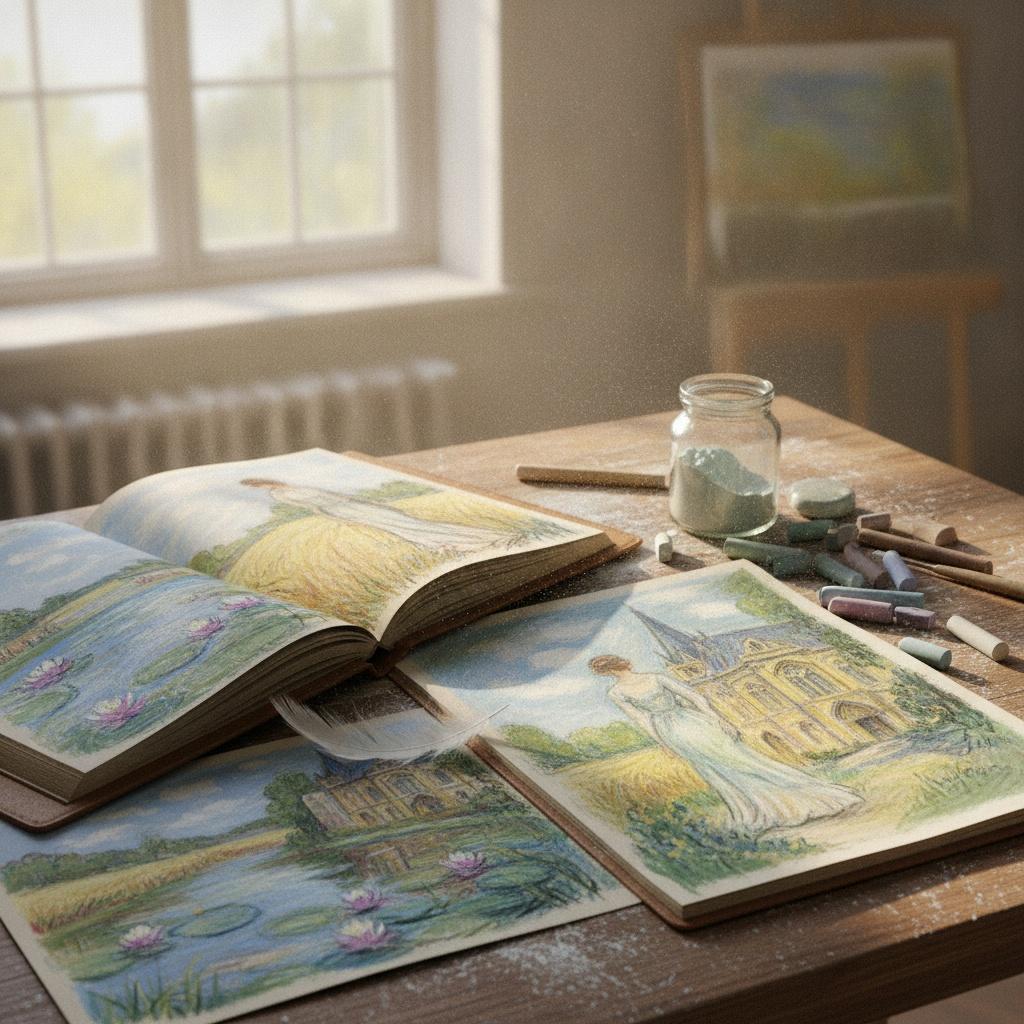
The Soft Magic of Chalk: Capturing Light, Texture, and the Ethereal Soul of Impressionist Masterpieces
Discover the ethereal beauty of pastel and chalk art. Explore how Impressionist masters like Van Gogh and Degas captured light and texture to create timeless, soulful masterpieces for the discerning collector.

10 Iconic Pastel Masterpieces That Revolutionized Art History
Journey through history with 10 iconic pastel masterpieces that redefined art. From Rococo elegance to Impressionist light, explore the stories behind these timeless works and find museum-quality reproductions for your decor. Discover all masterpieces on TopImpressionists.com.

Top 25 Masterpieces by David Moreau: A Journey Through Texture and Light
Immerse yourself in the tactile world of David Moreau. Explore our curated selection of his top 25 textured masterpieces, featuring heavy impasto and sculptural depth. Find museum-quality art reproductions for your collection. Discover all masterpieces on TopImpressionists.com.