


 Se i rommet
 Del som digitalt kort
 Del
Del
 Detaljer
 Studentguide

 Last ned
 Liknende objekter
 Røntgen
 Lysbildefremvisning
 Besøksstatistikk
Odalisque


Experience Jean-Joseph Benjamin-Constant’s ‘Odalisque,’ a captivating 1880 Orientalist painting featuring a reclining woman in opulent blue and red. This Romantic masterpiece, inspired by Morocco, offers an exquisite glimpse into a world of sensual beauty – discover or own this timeless artwork.
 Les mer
"meta_description": "Jean-Joseph Benjamin-Constant (1845-1902): en mester innen orientalistisk kunst og portrettering! Utforsk hans fascinerende malerier som kombinerer akademisk dyktighet med romantisk flair. Oppdag hans fargerike bilder av Marokko og historiske scener."
Giclée / Kunsttrykk
Giclée- eller lerretsprint av museumskvalitet med rask produksjon og fleksible valgmuligheter for etterbehandling. ( Bestill håndmalt reproduksjon Gå til digitalt bilde)




P118B Nkr10

P118H Nkr10

P118W Nkr10

P438Z Nkr10

P508JH Nkr12

P508YH Nkr12

P805H Nkr10

P805Z Nkr10

P919BZ Nkr10

P919G Nkr10

P919XJ Nkr10

P959ZH Nkr10

P968JZ Nkr12

W106C Nkr8

W218G Nkr10

W218JH Nkr8

W218Y Nkr10

W307PJ Nkr10

W316G Nkr10

W316PJ Nkr8

W316Y Nkr10

W398PJ Nkr8

W4111J Nkr10

W500HY Nkr15

W500JH Nkr15

W692G Nkr12

W849H Nkr8

W940BG Nkr15

W953PJ Nkr8




Standardformat
tilpasset
CM
INCH
Velg mellom våre forhåndsdefinerte størrelser som bevarer kunstverkets opprinnelige proporsjoner.
Loading sizes...

bredde
høyde
Skriv inn bredden og høyden du trenger, slik at den passer til din ramme eller vegg. Et trykk kan kun beskjæres, aldri gjøres større enn bildet, så et format med en annen form vil miste en del av motivet. Vi sender deg en digital mockup for godkjenning før vi trykker noe som helst. Bildet som vises på denne siden viser ikke den faktiske beskjæringen — det er kun mockuppen som gjør det.
Verdensomspennende levering () på 2 uker i stedet for standard 4/5 uker. (21 October)

Gratis ekspressfrakt over hele verden

Lerretsduk av høykvalitets lin

Full transportforsikring

Garanti for refusjon av toll og importavgifter

Garantert fargeekthet

100 dagers returrett ved fabrikasjonsfeil

100% pengene tilbake-garanti

Mengderabatt
 Glassalternativet er kun tilgjengelig i størrelser under 110 cm

Odalisque
Giclée / Kunsttrykk
Format på reproduksjon
-


Totalpris
Nkr 651
A Vision of Exotic Grace: Jean-Joseph Benjamin Constant’s Odalisque
The painting “Odalisque” by Jean-Joseph Benjamin-Constant stands as a quintessential emblem of Orientalism—a movement that captivated European artists and intellectuals throughout the late 19th century. More than just a depiction of beauty, it embodies a complex interplay of artistic convention and Romantic fascination with the sensual allure of Ottoman culture. Created in 1880, this masterpiece resides within the Baltimore Museum of Art’s collection, offering visitors an opportunity to immerse themselves in Constant's masterful execution and profound artistic vision.- Artist’s Background: Jean-Joseph Benjamin-Constant (1845–1902) emerged from the École des Beaux-Arts in Toulouse, where he honed his skills under Alexandre Cabanel—a lineage steeped in classical tradition. However, Constant's artistic trajectory took an extraordinary turn during his voyage to Morocco in 1872, sparking a lifelong devotion to capturing the exotic splendor of the Orient.
- Style and Technique: Employing oil on canvas, Constant skillfully blended academic precision with Romantic sensibilities. His brushstrokes are deliberate yet fluid, conveying both textural detail and an ethereal quality that elevates the scene beyond mere representation. The artist’s meticulous attention to light and shadow creates a palpable atmosphere of intimacy and contemplation.
- Subject Matter: At its core, “Odalisque” portrays a woman reclining gracefully on a bed or couch—a motif prevalent in Orientalist art. This pose harkens back to depictions of Venus and Aphrodite in classical sculpture, symbolizing feminine beauty and idealized repose. The woman is adorned in a sumptuous blue dress accented by a vibrant red scarf, reflecting the opulent fabrics favored in Ottoman harems.
- Symbolism: Beyond its aesthetic appeal, “Odalisque” carries symbolic weight. The gold necklace encircling her neck represents wealth and status—a visual shorthand for the privileged lifestyle enjoyed by women within the harem. Furthermore, the subtle gaze of the woman suggests a quiet confidence and awareness, hinting at themes of desire and contemplation.
- Historical Context: Produced during a period of intense European interest in Ottoman culture, “Odalisque” reflects broader anxieties about sexuality and exoticism. It exemplifies the Romantic movement’s preoccupation with emotion and imagination—transforming historical observation into evocative artistic expression.
TopImpressionists.’s Reproduction Expertise
Recognizing the enduring allure of Constant's “Odalisque,” TopImpressionists.com specializes in crafting exceptional handmade oil paintings that faithfully reproduce this iconic artwork. Utilizing premium pigments and meticulous techniques—inherited from a tradition spanning centuries—our artisans meticulously recreate the painting’s luminous colors and intricate details, ensuring that collectors and enthusiasts alike experience its original splendor.Discover More About Jean-Joseph Benjamin Constant
To delve deeper into the life and artistic legacy of Jean-Joseph Benjamin-Constant, visit TopImpressionists.com. Explore his broader oeuvre—spanning portraits, landscapes, and genre scenes—to appreciate the breadth of his creative vision. Furthermore, explore the Baltimore Museum of Art’s collection on TopImpressionists.com to gain invaluable insight into “Odalisque” within its artistic context.A Timeless Masterpiece
“Odalisque” transcends mere visual representation; it embodies a profound exploration of beauty, desire, and the transformative power of art. Its captivating composition—combined with Constant’s masterful command of technique—continues to inspire admiration and provoke contemplation decades after its creation. Experience the artistry of Jean-Joseph Benjamin Constant through TopImpressionists.’s exquisite reproductions—a testament to enduring artistic excellence.Spørsmål og svar
Ble "Odalisque" værende i kunstnerens hjemland?
Nei – kunstverket oppbevares i utlandet. "Odalisque" befinner seg i USA, mens Jean-Joseph Benjamin Constant ble født i Frankrike.
Hva er lysstyrken til "Odalisque" av Jean-Joseph Benjamin Constant?
Luminansen som er registrert for "Odalisque" av Jean-Joseph Benjamin Constant er Bright Balance.
Hvilket rom anbefales "Odalisque" av Jean-Joseph Benjamin Constant for?
En reproduksjon av "Odalisque" passer godt i et Living Room.
Kunstnerbiografi
A Life Immersed in Color and Light: The World of Jean-Joseph Benjamin-Constant
Jean-Joseph Benjamin-Constant, a name that resonates with the allure of the Orient and the precision of academic training, stands as a pivotal figure in 19th-century French art. Born in Paris in 1845, his artistic journey began within the hallowed halls of the École des Beaux-Arts in Toulouse, under the tutelage of Alexandre Cabanel. This formative period instilled within him a profound respect for classical techniques – meticulous rendering and a deep understanding of composition – skills that would become the bedrock upon which he built his distinctive style. Early works reflected this influence, showcasing an aptitude for dramatic historical scenes, imbued with a sense of grandeur and carefully constructed narratives. However, it was a transformative voyage to Morocco in 1872 that irrevocably altered the course of Benjamin-Constant’s artistic vision, igniting a passion for the exotic and setting him on a path toward becoming one of the most celebrated Orientalist painters of his time. This journey wasn't merely a change of scenery; it was an immersion into a world brimming with vibrant colors, unfamiliar customs, and captivating light – elements that would forever shape his artistic expression and define his unique perspective.The Allure of the Orient: Capturing Moroccan Life
Upon returning from Morocco, Benjamin-Constant abandoned his previous focus on historical painting in favor of depicting the landscapes and cultures he had encountered. He began to produce a series of romanticized scenes that captured not just what he saw, but how it *felt* to be immersed in this new world. Paintings like “Last Rebels,” “Justice in the Harem,” and “Moroccan Prisoners” quickly garnered attention, showcasing his remarkable talent for atmospheric detail and his ability to evoke a sense of exoticism. He possessed an uncanny ability to translate the sensory richness of Morocco – the scent of spices hanging heavy in the air, the warmth of the North African sun on skin, the intricate patterns woven into textiles – onto canvas. These weren’t simply representations; they were evocations designed to transport the viewer to a distant and alluring land. Beyond these intimate scenes, Benjamin-Constant also demonstrated his capacity for grand historical narratives with monumental canvases such as “The Entrance of Mahomet II into Constantinople,” a work that earned him recognition within the Parisian art world and solidified his reputation as a master of dramatic composition. His Orientalist works weren’t merely about depicting a different culture; they were about exploring themes of power, justice, and the human condition against a backdrop of breathtaking beauty and mystery – elements that resonated deeply with audiences of the time.Influences and Artistic Development
Benjamin-Constant's artistic development was profoundly shaped by several key influences. Initially, he studied under Alexandre Cabanel, absorbing the academic rigor and classical techniques associated with the École des Beaux-Arts. However, his exposure to the works of Eugène Delacroix proved particularly influential, inspiring him to embrace a more dramatic use of color and composition. The influence of Rubens and Watteau, masters of Baroque and Rococo painting respectively, also contributed to his stylistic evolution, adding layers of sophistication and elegance to his work. His travels through Spain before Morocco further broadened his artistic horizons, exposing him to diverse cultural traditions and inspiring new subject matter. It’s important to note that Benjamin-Constant wasn't simply imitating these masters; he skillfully synthesized their techniques with his own unique vision, creating a distinctive style characterized by both academic precision and romantic sensibility.A Versatile Hand: From Murals to Portraiture
Around 1880, Benjamin-Constant’s artistic focus underwent a significant shift. While his Orientalist paintings had established him as a rising star, he began to dedicate himself increasingly to mural decorations and portraiture, demonstrating an impressive versatility and adaptability. This transition wasn't a departure from his artistic principles but rather an expansion of them. He brought the same meticulous attention to detail and dramatic flair that characterized his earlier work to these new endeavors. His large-scale paintings, such as “Paris Convening the World” exhibited at the Musée de la Ville, showcased his skill in depicting complex scenes with numerous figures, creating dynamic compositions that drew viewers into a world of bustling activity and civic pride. This ability to handle grand scale and intricate detail led to commissions from some of the most prominent figures of the era. He painted portraits of Pope Leo XIII, Queen Alexandra of the United Kingdom, and Lord John Lumley-Savile, further cementing his reputation as a skilled portraitist capable of capturing not just physical likeness but also the essence of his subjects’ personalities.Recognition and Legacy: A Lasting Impression
Throughout his career, Benjamin-Constant received numerous accolades for his artistic achievements. He was awarded a medal of honor at the Salon in 1896 for “Mons Fils André,” a testament to his enduring skill and innovation. His election to the Institute in 1893 and subsequent appointment as a Commander of the Legion d’Honneur further underscored his standing within the French art establishment. Today, his work is represented in prestigious collections worldwide, including the Metropolitan Museum of Art – which houses his impressive mural “Justinian in Council” – the Musée des Augustins in Toulouse, and the U.S. National Gallery of Art in Washington D.C., ensuring that his artistic vision continues to inspire and captivate audiences for generations to come. Benjamin-Constant’s legacy lies not only in his technical mastery but also in his ability to synthesize academic training with a romantic sensibility. He created compelling works that captured both the grandeur of historical narratives and the alluring mystique of distant lands, establishing himself as an important figure in 19th-century French art. **He remains celebrated for his evocative depictions of Orientalist themes and his remarkable versatility as an artist.**
Jean-Joseph Benjamin Constant
1845 - 1902 , Frankrike
Kort om kunstneren
- Artistic Movement Or Style:
- Orientalisme
- Akademisk kunst
- Artists Or Movements Influenced By This Artist: ['Fransk kunst']
- Artists Who Influenced This Artist:
- Delacroix
- Rubens
- Watteau
- Date Of Birth: 10. juni 1845
- Date Of Death: 26. mai 1902
- Full Name: Jean-Joseph Benjamin-Constant
- Nationality: Fransk
- Notable Artworks:
- Siste opprørere
- Rettferdighet i harem
- Marokkanere fanger
- Place Of Birth: Paris, Frankrike
Relaterte artikler

1800-tallets Mesterverk: 10 Kunstverk som Definerer Epoken – TopImpressionists.no
Opplev 1800-tallets kunst gjennom 10 ikoniske mesterverk! Fra romantikk til impresjonisme – lær om Munch, Van Gogh og Monet. Finn museumskvalitets reproduksjoner & interiørinspirasjon på TopImpressionists.com. Utforsk samlingen online!

De 10 mest ikoniske malerier dominert av slåttegrå – Kunsthistorie og interiørinspirasjon
Oppdag de 10 mest ikoniske malerier dominert av slåttegrå – fra Monet til Van Gogh. Lær om kunsthistorien, fargetoner og teknikker bak disse mesterverkene. Finn din perfekte veggkunst og interiørinspirasjon på TopImpressionists.com! Utforsk samlingen online.
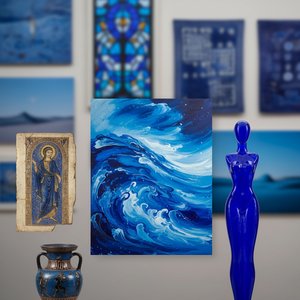
The Allure of Azure: Exploring the Symbolic & Aesthetic Depths of Blue in Art History
Explore the rich history of blue in art! Discover its symbolism, from ancient pigments to modern masterpieces by Kandinsky & Seurat. Uncover the psychological impact and cultural meanings behind this captivating hue.

Crimson Threads of Narrative: Exploring Symbolism & Representation in Artworks Featuring the Red Dress
Explore the rich symbolism of the red dress in art history! From ancient power displays to iconic portraits like Cézanne’s 'Madame Cezanne', discover the cultural and artistic significance behind this captivating color. Expert analysis & insights.

Azure Visions: Exploring Representations of the Blue Dress in Western Art History
Explore the rich history of the blue dress in Western art! Discover its symbolism, from Renaissance masterpieces to modern interpretations by artists like Martin & Schiele. Uncover cultural meanings and artistic techniques.
Utforsk kunstverk organisert etter temaer, stiler og kjennetegn.
