


 Se i rommet
 Del som digitalt kort
 Del
Del
 Detaljer
 Studentguide

 Last ned
 Liknende objekter
 Røntgen
 Lysbildefremvisning
 Besøksstatistikk
Head of a Negro


John Singleton Copley's 'Head of a Negro' (1777) is a striking portrait showcasing realism and dignity. Explore this Detroit Institute of Arts masterpiece.
 Les mer
Oppdag John Singleton Copley (1738-1815), en pioner innen amerikansk kunst som skapte detaljerte portretter og innovative historiske bilder. Utforsk hans unike kunstneriske visjon!
Giclée / Kunsttrykk
Giclée- eller lerretsprint av museumskvalitet med rask produksjon og fleksible valgmuligheter for etterbehandling. ( Bestill håndmalt reproduksjon Gå til digitalt bilde)




































Standardformat
tilpasset
CM
INCH
Velg mellom våre forhåndsdefinerte størrelser som bevarer kunstverkets opprinnelige proporsjoner.
Loading sizes...

bredde
høyde
Skriv inn bredden og høyden du trenger, slik at den passer til din ramme eller vegg. Et trykk kan kun beskjæres, aldri gjøres større enn bildet, så et format med en annen form vil miste en del av motivet. Vi sender deg en digital mockup for godkjenning før vi trykker noe som helst. Bildet som vises på denne siden viser ikke den faktiske beskjæringen — det er kun mockuppen som gjør det.
Verdensomspennende levering () på 2 uker i stedet for standard 4/5 uker. (26 October)

Gratis ekspressfrakt over hele verden

Lerretsduk av høykvalitets lin

Full transportforsikring

Garanti for refusjon av toll og importavgifter

Garantert fargeekthet

100 dagers returrett ved fabrikasjonsfeil

100% pengene tilbake-garanti

Mengderabatt
 Glassalternativet er kun tilgjengelig i størrelser under 110 cm

Head of a Negro
Giclée / Kunsttrykk
Format på reproduksjon
-


Totalpris
Nkr 656
Head of a Negro: A Portrait of Dignity and Complexity
John Singleton Copley's "Head of a Negro," created in 1777, is more than just a portrait; it’s a significant work within the context of 18th-century American art. Housed at the Detroit Institute of Arts, this oil on canvas painting offers a compelling glimpse into the social and artistic landscape of colonial America while prompting reflection on themes of race, identity, and representation.
Artistic Style and Technique
Copley, known for his realistic portraiture, employs a direct and unadorned style in "Head of a Negro." The subject is depicted against a neutral background, drawing the viewer's attention solely to his face and upper torso. Copley’s masterful use of oil paint allows for remarkable detail; you can observe the texture of the man’s brown shirt and the subtle nuances of his facial features. The brushstrokes are visible yet controlled, contributing to a sense of immediacy and realism. The lighting is soft and diffused, highlighting the subject's eyes and creating gentle shadows that emphasize his expression. This technique reflects Copley’s commitment to capturing not just likeness but also character.
Historical Context and Significance
The painting was created during a period of increasing awareness of slavery in America, though attitudes were complex and varied. While the portrait doesn't explicitly address the institution of slavery, its very existence—a formal portrait of a man of African descent—was noteworthy for the time. It suggests a degree of recognition of individual dignity, even within a society deeply entangled with racial inequality. Copley’s decision to portray this subject demonstrates an interest in exploring diverse representations beyond the typical portraits of wealthy colonial figures. The painting provides valuable insight into the social dynamics and artistic practices of 18th-century Boston.
Subject and Symbolism
The man depicted possesses a dignified presence, with open eyes and a subtle smile that conveys an air of approachability and intelligence. His gaze is direct, engaging the viewer in a silent dialogue. While the specific identity of the sitter remains unknown, his portrayal challenges stereotypical representations prevalent at the time. The painting can be interpreted as a statement about individual worth and humanity, transcending racial boundaries. The simple attire—a brown shirt—further emphasizes the subject’s inherent dignity rather than material possessions.
Emotional Impact and Legacy
"Head of a Negro" evokes a sense of quiet contemplation and respect. The painting's enduring power lies in its ability to transcend time, prompting viewers to consider issues of race, representation, and human connection. Copley’s work serves as a reminder of the complexities of American history and the importance of recognizing the humanity within every individual. Today, it stands as a testament to Copley’s skill as an artist and his willingness to challenge conventional norms.
Spørsmål og svar
Hva handler "Head of a Negro" om, og hvilken atmosfære formidler den?
"Head of a Negro" av John Singleton Copley skildrer portrait, negro, copley, 18thcentury, americanart, dignity, expression, historical i en Nostalgic stemning. Motiv og atmosfære beskriver verket sammen.
Hvilke motiver fremkommer i "Head of a Negro" av John Singleton Copley?
"Head of a Negro" av John Singleton Copley avbilder: portrait, negro, copley, 18thcentury, americanart, dignity, expression, historical.
Hvilken atmosfære tilfører "Head of a Negro" av John Singleton Copley et interiør?
"Head of a Negro" av John Singleton Copley har en Nostalgic atmosfære og anbefales for et Living Room. Stemningen er det verket tilfører rommet rundt seg.
Kunstnerbiografi
A Pioneer Bridging Worlds: The Life and Art of John Singleton Copley
John Singleton Copley, født i Boston i 1738, befinner seg i en unik og sentral posisjon i kunsthistorien – ikke bare som maler, men som en kulturell bro, som skapte en distinkt anglo-amerikansk estetikk under en periode med enorme politiske og sosiale omveltninger. Hans historie er en av selvlært briljans, utrettelig ambisjon og en bemerkelsesverdig evne til å fange ikke bare likheter, men essensen av sine motiver i konteksten av deres tid. Copleys tidlige liv var dypt forankret i den pulserende maritime verdenen i koloniboston, en by som strømmet av kjøpmenn, skipsbyggere og voksende velstand. Hans far, Richard Copley, fraværende kort tid etter John ble født, var tobakkhandler, mens hans mor, Mary Singleton Copley, drev en butikk på Long Wharf. Dette miljøet la grunnlaget for en skarp bevissthet om den materielle verden – teksturene av stoff, glansen av sølv, de subtile nyansene av sosial status – alle elementer som senere skulle definere hans kunstneriske stil. Hans stedfar, Peter Pelham, en graver og liminer (en kunstner som skapte portretter på vellum eller pergament), ga noen innledende veiledning, men Copleys talent var i stor grad selvutviklet gjennom grundig studier og øvelse. Han slukte enhver tilgjengelig grafikk, kopierte dem nøye for å mestre teknikken, og overgikk raskt sin stedfar sine evner.The Rise of a Colonial Portraitist
Ved 1760-tallet hadde Copley etablert seg som Bostons førsteklassiske portrettmaler, og betjente byens elite. Hans suksess var ikke bare basert på teknisk dyktighet; det var hans evne til å gi sine portretter en psykologisk dybde som sjelden ble sett i kolonial amerikansk kunst. Han gikk utover enkel representasjon, og strevde etter å fange karakteren og den sosiale statusen til sine motiver. Dette innebar nøye oppmerksomhet på detaljer – presis gjengivelse av stoff, smykker og møbler – men også en dyp forståelse for holdning, uttrykk og gestikulering. Copleys portretter var ikke bare bilder; de var uttalelser om rikdom, makt og sosial ambisjon. Han integrerte subtilt symbolsk elementer i komposisjonene sine, som forsiktig antydet motivernes yrker eller interesser. En kjøpmann kunne bli avbildet med importerte varer i bakgrunnen, en advokat med juridiske tekster, eller en marineoffiser med nautiske instrumenter. Denne oppmerksomheten på detaljer og symbolikk hevet hans arbeid over det enkle portretture, og forvandlet det til en form for sosial kommentar. Hans portretter av fremtredende figurer som *Mrs. Ezekiel Gondthwait (Elizabeth Lewis)* illustrerer denne tilnærmingen – den elegante holdningen, de luksuriøse stoffene og de subtile detaljene formidler en følelse av raffinement og status.Ambition and the Call of Europe
Til tross for sin suksess i Boston, hadde Copley ambisjoner som strekte seg utover den kolonial kunstverdenen. Han lengtet etter anerkjennelse fra de etablerte kunstmiljøene i London og Roma, og ønsket å teste sine ferdigheter mot europeiske mestere. I 1766 sendte han sitt *Boy with a Flying Squirrel* til Society of Artists i London, hvor det mottok betydelig ros fra Joshua Reynolds og Benjamin West – to ledende figurer i det britiske kunstmiljøet. Denne oppmuntringen drev Copleys ambisjoner om videre utdanning og eksponering. Likevel hindret familieforpliktelser og en blomstrende praksis ham i å bli værende i Boston i ytterligere ti år. Endelig, i 1774, med sin kone Susanna Farnsworth Clarke og deres barn, seilte han til Europa, med hensikten om å studere de gamle mesterne og etablere seg som en historisk maler. Den amerikanske revolusjonens utbrudd kort tid etter hans ankomst kompliserte forholdene, og tvang Copley til å navigere i et politisk ladet miljø mens han forfulgte sine kunstneriske mål.Historical Narratives and Lasting Legacy
I London fant Copley både muligheter og utfordringer. Han fortsatte å male portretter, sikret seg bestillinger fra fremtredende britiske figurer, men han vendte også sin oppmerksomhet mot historiemaleri – en sjanger som ble ansett som mer prestisjefull enn portretture på den tiden. Hans mest ambisiøse arbeid i denne sjangeren var *The Death of Major Peirson*, som avbildet et øyeblikk fra slaget ved Jersey under den amerikanske revolusjonen. Selv om det teknisk sett var imponerende, mottok det blandede anmeldelser, med noen kritikere tvilte på dets komposisjon og dramatiske virkning. Copleys senere historiemalerier, som *The Colapse of the Earl of Chatham in the House of Lords*, var mer vellykkede, demonstrerte hans evne til å fange komplekse følelser og dramatiske øyeblikk. Selv om han aldri oppnådde den anerkjennelsen han søkte i Europa, etterlot John Singleton Copley et uutslettelig preg på både amerikansk og britisk kunsthistorie. Han banet vei for en unikt anglo-amerikansk stil, som blandet europeiske teknikker med en distinkt kolonial følelse. Hans portretter er verdifulle historiske dokumenter, som gir innblikk i livet og verdiene til en svunnen æra. *Han huskes ikke bare for sin kunstneriske dyktighet, men også for sin rolle i å forme en nasjonal identitet gjennom kunsten sin.* Han døde i London i 1815, og etterlot seg et arv som inspirerer kunstnere og fanger publikums oppmerksomhet fortsatt i dag.Influences and Artistic Development
- Early Influences: Copleys tidlige kunstneriske utvikling ble sterkt påvirket av grafikkene han nøye kopierte, spesielt verk fra europeiske mestere som Rembrandt van Rijn og Antoine Watteau.
- Peter Pelham's Guidance: Hans stedfar, Peter Pelham, ga innledende veiledning i portrett- og graverteknikker, la grunnlaget for hans fremtidige suksess.
- Joshua Reynolds & Benjamin West: Oppmuntringen og tilbakemeldingen fra disse fremtredende britiske kunstnerne under Copleys tidlige innsendinger til London utstillinger var avgjørende for å forme hans ambisjoner og kunstneriske retning.
- Rococo Style: Copley omfavnet opprinnelig Rococo-stilen, som vist i hans bruk av delikate farger, elegante holdninger og utsmykede detaljer. Men han beveget seg gradvis mot en mer realistisk og dempet tilnærming.
- Historical Painting Inspiration: Hans eksponering for historiemalerier av kunstnere som Benjamin West inspirerte ham til å utforske denne sjangeren, selv om han ofte slitt med å fullt ut forene den med sin naturlige dyktighet i portretture.

John Singleton Copley
1738 - 1815 , Storbritannia
Kort om kunstneren
- Artistic Movement Or Style: Portrettkunst, Realisme
- Artists Or Movements Influenced By This Artist: ['Senere kunstnere']
- Artists Who Influenced This Artist:
- Rembrandt van Rijn
- Watteau
- Date Of Birth: 1738
- Date Of Death: 1815
- Full Name: John Singleton Copley
- Nationality: Anglo-Amerikansk
- Notable Artworks:
- Earl of Chatham
- Watson og Sjøløven
- Place Of Birth: Boston, Storbritannia
Relaterte artikler

The Unvarnished Truth: A Cultural Journey Through the Soul of American Realism
Explore the profound beauty of American Realism. From the Ashcan School's urban grit to intimate portraits, discover how artists captured the authentic soul of a nation through unvarnished truth and masterful observation.
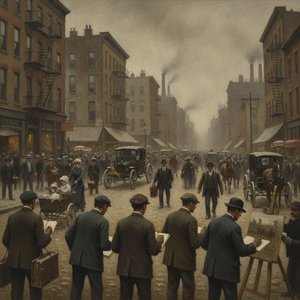
The Ashcan School: Capturing the Raw, Unfiltered Soul of Urban Life through American Realism
Discover the raw beauty of the Ashcan School. Explore how masters like Bellows and Henri captured the gritty, vibrant soul of early 20th-century New York through profound American Realism and evocative urban landscapes.
Utforsk kunstverk organisert etter temaer, stiler og kjennetegn.


