
 Forhåndsvisning
 Send
Send Del
Del
 Vis detaljer
 Utskriftsvennlig guide

 Last ned bilde
 Liknende objekter
 Røntgenundersøkelse
 Lysbildefremvisning
 Q&A
Q&A Statistikk
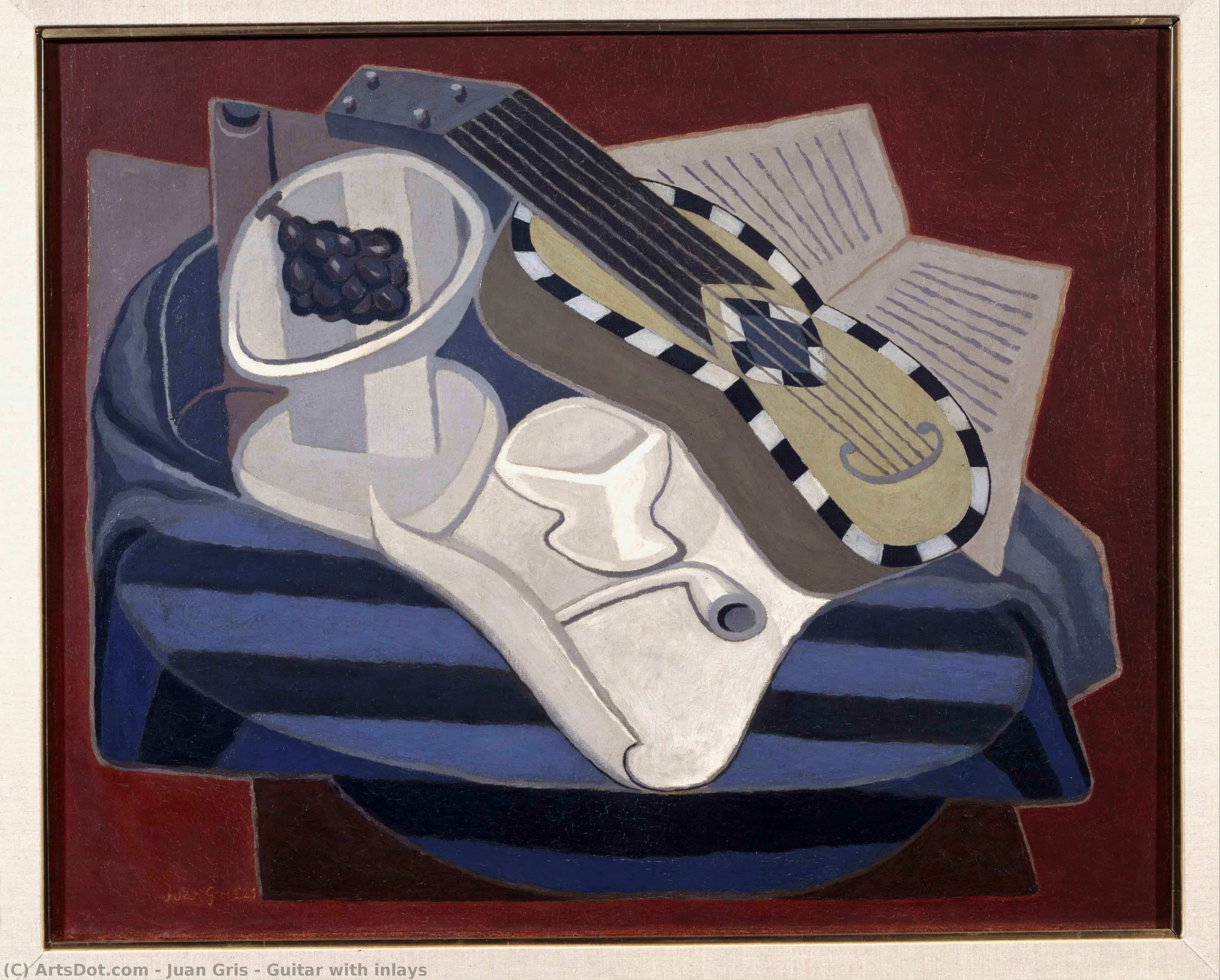
Guitar with inlays

- 92.0 x 73.0 cm


Explore Juan Gris’ ‘Guitar with Inlays,’ a masterpiece of Synthetic Cubism! Admire its geometric abstraction, muted colors & surreal composition. A unique 1925 artwork.
 Vis hele teksten
Oppdag Juan Gris (1887-1927), den spanske kubistiske mesteren! Utforsk hans geometriske stil, syntetisk kubisme og varig innflytelse på moderne kunst. Se kunstverk nå.
Giclée / Kunsttrykk
Giclée- eller lerretsprint av museumskvalitet med rask produksjon og fleksible valgmuligheter for etterbehandling. ( Kjøp håndmalt maleri Bytt til digitalt bilde)




P118B Nkr10

P118H Nkr10

P118W Nkr10

P438Z Nkr10

P508JH Nkr12

P508YH Nkr12

P805H Nkr10

P805Z Nkr10

P919BZ Nkr10

P919G Nkr10

P919XJ Nkr10

P959ZH Nkr10

P968JZ Nkr12

W106C Nkr8

W218G Nkr10

W218JH Nkr8

W218Y Nkr10

W307PJ Nkr10

W316G Nkr10

W316PJ Nkr8

W316Y Nkr10

W398PJ Nkr8

W4111J Nkr10

W500HY Nkr15

W500JH Nkr15

W692G Nkr12

W849H Nkr8

W940BG Nkr15

W953PJ Nkr8




Standardformat
skreddersydd
CM
INCH
Velg mellom våre forhåndsdefinerte størrelser som bevarer kunstverkets opprinnelige proporsjoner.
Loading sizes...

bredde
høyde
Skriv inn ønsket bredde og høyde for å tilpasse trykket til din ramme eller vegg. Et trykk kan kun beskjæres, aldri skaleres opp utover motivets opprinnelige størrelse, noe som betyr at et format med andre proporsjoner vil føre til tap av deler av bildet. Vi sender deg en digital mockup for godkjenning før vi starter trykkeprosessen. Bildet som vises på denne siden viser ikke den faktiske beskjæringen — det er kun mockuppen som viser dette.
Verdensomspennende levering () på 2 uker i stedet for standard 4/5 uker. (1 November)

Gratis ekspressfrakt over hele verden

Lerretsduk av lin av høy kvalitet

Full transportforsikring

Garanti for refusjon av toll og importavgifter

Garantert fargegjengivelse

100 dagers returrett ved fabrikasjonsfeil

100% pengene tilbake-garanti

Rabatt ved flere kjøp
 Glassalternativet er kun tilgjengelig i størrelser under 110 cm

Guitar with inlays
Giclée / Kunsttrykk
Størrelse på reproduksjon
-


Totalpris for valgte alternativer
Nkr 664
Juan Gris’s “Guitar with Inlays”: A Symphony of Geometric Deconstruction
“Guitar with Inlays,” painted in 1925 by the Spanish visionary Juan Gris, isn't merely a still life; it’s a meticulously constructed exploration of form and perception. This pivotal work exemplifies Gris’s masterful embrace of Synthetic Cubism, a style he helped define alongside Pablo Picasso and Georges Braque. Rather than simply depicting an object, Gris dissects it – fracturing its essence into geometric shards and reassembling them on the canvas with a deliberate, almost architectural precision.
The painting centers around a gleaming acoustic guitar, rendered in shades of grey, white, and subtle browns, resting upon a rich, deep red velvet cloth. Around this central subject cluster are carefully arranged elements: a bowl overflowing with dark purple grapes, a partially visible book, and a small ceramic object – details that contribute to the overall sense of controlled chaos. Notice how each element isn’t presented as a solid form but rather as a collection of overlapping planes, each reflecting light from multiple angles. This technique, characteristic of Cubism, creates an illusion of depth and movement within a relatively flat picture plane.
The Language of Synthetic Cubism
Gris's approach to Cubism moved beyond the analytical phase – characterized by the breaking down of objects into their constituent parts – towards a more synthetic style. “Guitar with Inlays” is a prime example of this evolution. He employs papier collé, or collage elements, subtly integrated within the painting’s structure. These aren't overtly pasted on; instead, they are seamlessly incorporated as part of the overall composition, adding texture and visual interest while reinforcing the fragmented nature of the subject.
The color palette is deliberately restrained – muted tones dominate, creating a sense of quiet contemplation. However, within this restraint lies a remarkable dynamism. Gris masterfully uses contrasting colors to define each element, drawing the eye across the canvas and highlighting the interplay between form and space. The deep red of the velvet provides a grounding anchor for the lighter, more fragmented forms above.
A Reflection on Time and Perspective
“Guitar with Inlays” is not simply about representing a guitar; it’s about capturing the *experience* of seeing an object. Gris deliberately presents multiple viewpoints simultaneously – as if we are observing the guitar from various angles at once. This fragmentation challenges our traditional notions of perspective, forcing us to actively engage with the artwork and reconstruct its form in our minds.
The inclusion of musical instruments like the guitar carries symbolic weight. Music often represents creativity, leisure, and perhaps even a touch of melancholy – themes that resonate throughout Gris’s oeuvre. The arrangement of the objects suggests a moment of quiet reflection, a pause amidst the complexities of modern life. It's a visual meditation on the relationship between form, space, and perception.
Collecting a Masterpiece: Reproduction Options
Owning a piece by Juan Gris is a privilege, and high-quality reproductions offer an accessible way to bring this extraordinary artwork into your home or office. We offer meticulously hand-painted oil on canvas reproductions that capture the essence of “Guitar with Inlays” with remarkable accuracy. Each reproduction is created by experienced artists using museum-grade materials, ensuring exceptional detail and longevity.
- Size Options: Available in a range of sizes to suit your space and budget.
- Hand-Painted Quality: Each reproduction is individually painted by skilled artisans, guaranteeing a unique and authentic piece.
- Museum-Quality Materials: Crafted with archival-quality oil paints and canvas for lasting beauty.
Explore our collection of Juan Gris reproductions today and experience the captivating world of Synthetic Cubism firsthand.
Spørsmål og svar
Er "Guitar with inlays" av Juan Gris i det frie domene?
Opphavsrettslig status for "Guitar with inlays" av Juan Gris: verket er fritt tilgjengelig – opphavsretten har utløpt. Dette avgjør om det er tillatt å lage frie reproduksjoner av bildet.
Hvordan relaterer stilen i "Guitar with inlays" seg til kunstnerens epoke?
"Guitar with inlays" tilhører Cubism-retningen, og kunstneren virket i Moderne tid-epoken.
Er "Guitar with inlays" typisk for det Juan Gris vanligvis skapte?
Juan Gris sine tilbakevendende temaer inkluderer cubist fragmentation, picasso's influence, spanish intellectualism, modernity, musical themes, leisure & contemplation, geometric precision, purist leanings; "Guitar with inlays" fokuserer på cubism, guitar, still life, geometric, red velvet, abstraction, composition, spanish art.
Om kunstneren
A Spanish Visionary of Cubism: The Life and Art of Juan Gris
José Victoriano González-Pérez, born in Madrid in 1887, embarked on a remarkable artistic journey that would cement his place as one of the most significant figures of early 20th-century art. Initially pursuing an engineering degree at the School of Arts and Sciences, a keen analytical mind hinted at a future far removed from blueprints and calculations. Even during these formative years, a creative spark ignited – contributions to local periodicals showcased a burgeoning talent for visual observation. It was in 1905 that he adopted the evocative pseudonym Juan Gris, a name resonating with newfound identity and purpose as he began his formal studies in painting under José Moreno Carbonero. This pivotal shift marked the beginning of his dedicated pursuit of artistic innovation.Parisian Awakening and the Embrace of Cubism
The year 1906 witnessed a transformative relocation to Paris, a city then brimming with an unparalleled energy of artistic expression. Gris immersed himself completely in this vibrant milieu, forging enduring friendships with luminaries such as Henri Matisse, Georges Braque, and Fernand Léger. Initially engaged in satirical illustration for publications like *L'Assiette au Beurre*, he honed his observational skills and developed a sharp wit – a foundation that would later inform the conceptual depth of his art. However, the profound influence of Pablo Picasso proved particularly compelling. Around 1910, Gris began to dedicate himself wholeheartedly to painting, deliberately moving away from caricature and embracing the burgeoning language of Cubism. This wasn’t mere imitation; it was a deliberate quest to distill the essence of form and space, seeking a new visual order – a radical departure from traditional representation.The Geometry of Perception: Style and Key Works
Juan Gris's artistic output is characterized by an extraordinary clarity and intellectual rigor. He didn't simply deconstruct objects; he meticulously reconstructed them, emphasizing geometric forms and a carefully considered palette. This approach led to what became known as his “crystal period,” exemplified in masterpieces such as *Still Life Before an Open Window* (1912) and *Place Ravignan* (1915). These works showcase a remarkable interplay of planes and angles, creating a sense of depth and solidity while simultaneously challenging conventional notions of perspective. The use of muted colors and fragmented forms created a unique visual experience, inviting the viewer to actively engage with the artwork. After 1913, Gris wholeheartedly embraced Synthetic Cubism, pioneering the innovative technique of *papier collé* – collage – incorporating real-world materials like newspaper clippings and textured papers into his compositions. This added another layer of complexity and tactility to his work, blurring the boundaries between painting and sculpture. Notable examples include *Guitar in front of the sea* (1925), a testament to his simplified forms and adherence to cubist principles, and *Homage à Pablo Picasso* (1912), which signaled his growing recognition within the avant-garde art world.Influences and Development
Gris’s artistic development was profoundly shaped by a confluence of influences. Initially captivated by Picasso's revolutionary approach, he quickly absorbed the core tenets of Cubism – fragmentation, multiple perspectives, and the rejection of traditional representation. However, Gris possessed a unique sensibility that distinguished his work from that of his contemporaries. He wasn’t merely replicating Picasso’s techniques; he was developing his own distinct style, characterized by an exceptional clarity and structural precision. The intellectual rigor of mathematicians like Henri Poincaré also exerted a subtle but significant influence on his approach to composition, leading him to seek geometric solutions for representing complex forms. Furthermore, his close friendships with artists like Matisse fostered a deep appreciation for color and harmony, which he skillfully integrated into his Cubist paintings.Legacy and Lasting Influence
Juan Gris’s contribution to Cubism extends far beyond mere stylistic innovation; he brought a unique intellectual depth and structural clarity to the movement. He moved past the analytical phase, towards a more organized and synthetic approach, emphasizing order and precision. His work profoundly influenced the Purist style championed by Amédée Ozenfant and Charles Edouard Jeanneret (Le Corbusier), advocating for a return to classical principles of form and composition. Gris’s emphasis on geometric forms, harmonious color palettes, and the integration of everyday objects into his art established him as a pivotal figure in 20th-century art. His legacy continues to inspire artists today, demonstrating the enduring power of Cubism and the visionary genius of Juan Gris – a Spanish master who reshaped our understanding of perception and representation.
Juan Gris
1887 - 1927 , Spania
Kort om kunstneren
- Artistic Movement Or Style: Kubisme, Kubisme syntetisk
- Artists Or Movements Influenced By This Artist:
- Purisme
- Amédée Ozenfant
- Artists Who Influenced This Artist:
- Pablo Picasso
- Henri Matisse
- Georges Braque
- Date Of Birth: 23 mars 1887
- Date Of Death: 11 mai 1927
- Full Name: José Victoriano González-Pérez
- Nationality: Spansk
- Notable Artworks:
- Still Life Before an Open Window
- Place Ravignan
- Guitar ved havet
- Place Of Birth: Madrid, Spania
Relaterte artikler

Juan Gris: Cubist Deconstruction & Synthesis – A Comprehensive Exploration
Explore the revolutionary art of Juan Gris – a master of Cubism. Discover his unique approach to deconstruction, vibrant Synthetic Cubist works, and lasting influence on modern art. Expert analysis for collectors.

Deconstructing Reality: Cubism's Revolutionary Impact on 20th-Century Art
Explore the revolutionary world of Cubism with TopImpressionists. Discover Picasso & Braque's groundbreaking techniques, its philosophical roots, and lasting impact on modern art. Expert insights for collectors.

Georges Braques 25 Mesterverk: En Kunstnerisk Reise for Din Bolig
Utforsk Georges Braques 25 mest ikoniske verk! Fordyp deg i kubismens verden, fargepaletter og kunstnerisk nyskapning. Finn inspirasjon til din bolig med museumskvalitets reproduksjoner på TopImpressionists.com.

Deconstructing Reality: A Comprehensive Exploration of Cubist Still Life
Explore the revolutionary world of Cubist Still Life with TopImpressionists. Discover Picasso & Braque's groundbreaking techniques, its philosophical roots, and lasting impact on modern art. Expert insights for collectors.

Deconstructing Reality: A Comprehensive Exploration of Synthetic Cubism's Evolution & Impact
Explore the revolutionary world of Synthetic Cubism! Discover its origins, key artists like Picasso & Braque, techniques, and lasting impact on modern art. A comprehensive guide for enthusiasts.
Utforsk kunstverk organisert etter temaer, stiler og kjennetegn.


