

Shown: · With its frame:
 Forhåndsvisning
 Send
Send Del
Del
 Vis detaljer
 Utskriftsvennlig guide

 Last ned bilde
 Liknende objekter
 Røntgenundersøkelse
 Lysbildefremvisning
 Q&A
Q&A Statistikk
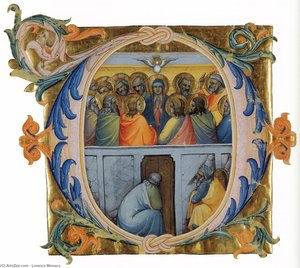
Antiphonary (Cod. Cor. 1, folio 111v)
 Tempera
- International Gothic
 1396
1396 340.0 x 378.0 cm
 Biblioteca Apostolica Vaticana
Nkr 2581
Håndlaget oljereproduksjon
Håndmalt olje på lerret i din valgte størrelse og ramme, laget på bestilling av våre kunstnere. ( Bytt til trykk Bytt til digitalt bilde)
Size
·Standardformat
skreddersydd
CM
INCH
Velg mellom våre forhåndsdefinerte størrelser som bevarer kunstverkets opprinnelige proporsjoner.
Loading sizes...

bredde
høyde
Skriv inn ønsket bredde og høyde for å tilpasse bildet til din ramme eller vegg. Siden dette er håndmalt, kan kunstneren male litt mer rundt motivet eller beskjære det noe dersom du velger et annet format — valget er ditt. Vi sender deg en digital mockup til godkjenning før maleriet påbegynnes. Bildet som vises på denne siden representerer ikke det faktiske resultatet — kun mockuppen viser det endelige uttrykket.
 Les mer om dette
Finish
·
White Nkr1

Blurside Nkr1

Extended Nkr1

P118B Nkr10

P118H Nkr10

P118W Nkr10

P438Z Nkr10

P508JH Nkr12

P508YH Nkr12

P805H Nkr10

P805Z Nkr10

P919BZ Nkr10

P919G Nkr10

P919XJ Nkr10

P959ZH Nkr10

P968JZ Nkr12

W106C Nkr8

W218G Nkr10

W218JH Nkr8

W218Y Nkr10

W307PJ Nkr10

W316G Nkr10

W316PJ Nkr8

W316Y Nkr10

W398PJ Nkr8

W4111J Nkr10

W500HY Nkr15

W500JH Nkr15

W692G Nkr12

W849H Nkr8

W940BG Nkr15

W953PJ Nkr8

H24-GOLD Nkr30

H24-SILVER Nkr30

H36-GOLD Nkr45

H36-SILVER Nkr45
Shipped in a protective tube, ready for your own framer.
Above 105 cm the frame is shipped as a kit for a professional framer — read the details.
Extras
optionalWhat do the extras include?
Examples of what can be changed: Replace face with customer photo; Add pet (e.g., replace cat with dog); Include hidden message in background; Change background landscape or elements.
After order, TopImpressionists.com team will email client for instructions and provide a mockup preview
After order, TopImpressionists.com team will email client for instructions and provide a mockup preview
Verdensomspennende levering () på 3–4 uker i stedet for standard 5 uker. (29 October). Ingen kompromisser med kvaliteten.
Beskyttende ferniss
Navneskilt
Detaljer om gravert bronseplate
This elegant plaque features the artist's name and the title of the artwork, finely engraved for a timeless presentation.
It is made from bronze with a refined, elegant finish. The text is precisely laser-engraved for a sharp and permanent result. Measuring 9x2 cm, the plaque is compact yet easy to read. It's built to be durable and scratch-resistant, offering a professional, museum-quality look. Mounting is simple thanks to the included adhesive backing.
Detaljer om gjennomsiktig akrylplate
The plaque includes essential engraved details such as the artist's name, the title of the artwork, the date it was created, the type of media used-like oil on canvas or watercolor-a brief description of the piece, and a QR code that links to the complete artwork information.
It is crafted from clear acrylic, offering a sleek, modern appearance. The text is UV-engraved in black to ensure strong visual contrast. With a size of 10x15 cm, it ensures optimal readability. It comes equipped with two metal hooks for secure wall mounting. The plaque is designed to be weather-resistant, making it suitable for various environments, and it includes interactive features that work seamlessly with smartphone scanning.
Detaljer om plakett i svart akryl
This elegant plaque includes engraved information such as the artist's name, the title of the artwork, the date it was created, the type of media used (like oil on canvas or watercolor), a short description of the artwork, and a QR code for quick access to more information.
The plaque itself is made from refined black acrylic with a premium finish. The text is laser-engraved in white for high contrast and readability. Its size is 10x15 cm, designed to be easy to read. It comes with two metal hooks for professional mounting. The design is sleek and fits any interior style. It is also weather-resistant and durable, with built-in digital integration for mobile compatibility.
Glassalternativet er kun tilgjengelig i størrelser under 110 cm
 Glassalternativet er kun tilgjengelig i størrelser under 110 cm
- Gratis ekspressfrakt over hele verden
- Lerretsduk av lin av høy kvalitet
- Full transportforsikring
- Garanti for refusjon av toll og importavgifter
- Garantert fargegjengivelse
- 100 dagers returrett ved fabrikasjonsfeil
- 100% pengene tilbake-garanti
- Rabatt ved flere kjøp


Beskrivelse av objektet
Lorenzo Monaco's 'Antiphonary Folio' (1396) showcases stunning illuminated details of a religious scene, reflecting the monk’s artistic vision and early Renaissance style.
Om kunstneren
Oppdag Lorenzo Monaco (1370-1425), en florentinsk maler som forbinder gotisk eleganse og tidlig renessanse innovasjon! Utforsk hans åndelige kunstverk, manuskriptillustrasjoner og unik stil.
About the painting
A Monastic Vision: Lorenzo Monaco’s Antiphonary Page
Within the hallowed halls of the Biblioteca Laurenziana in Florence resides a fragment of extraordinary beauty – a page from Lorenzo Monaco's Antiphonary, dating back to 1396. More than just a liturgical manuscript illumination, this piece offers a profound glimpse into the artistic and spiritual world of late medieval Italy, revealing the quiet intensity and contemplative nature of a Camaldolese monk’s vision. It is a testament to a time when art served not merely as decoration but as a conduit for faith, meticulously crafted with tempera and gold on parchment – materials that themselves speak volumes about the piece's value and enduring quality.
The image itself depicts a scene of profound significance: Pentecost. Monaco masterfully captures the moment when the Holy Spirit descends upon the apostles, transforming them into witnesses to Christ’s resurrection. The composition is remarkably balanced, despite the dense grouping of figures within the oval initial. A carefully constructed architectural setting – a simple house with an open doorway – provides a grounding element, while the vibrant colors—a rich palette dominated by reds, blues, and golds—create a luminous atmosphere that seems to radiate divine light. Notice particularly the subtle use of perspective; though not adhering to the emerging principles of linear perspective, Monaco skillfully employs atmospheric shading and spatial relationships to create a sense of depth and realism within the confines of the illuminated initial.
The Monk-Artist: Lorenzo Monaco’s Unique Style
Lorenzo Monaco's identity as a monk profoundly shaped his artistic practice. Born Piero di Giovanni around 1370 in Siena, he entered the Camaldolese order at Santa Maria degli Angeli and dedicated his life to prayer and illumination. This monastic commitment instilled within him a distinctive style characterized by a restrained palette, elongated figures, and a profound sense of introspection. Unlike the more flamboyant styles prevalent during the period, Monaco’s work possesses a quiet dignity and emotional restraint—a reflection of the contemplative life he led.
His artistic journey began under the tutelage of masters like Giotto, Spinello Aretino, and Agnolo Gaddi in Florence. However, it was his embrace of monasticism that truly defined him as “Lorenzo Monaco,” or “Lawrence the Monk.” This dedication to a life of contemplation profoundly influenced the character of his work, imbuing it with an introspective quality rarely found in secular art of the time. He wasn’t simply replicating religious scenes; he was translating spiritual experience into visual form, creating images that resonated with a deep sense of faith and humility.
Symbolism and Spiritual Resonance
The Antiphonary page is replete with symbolic details that enrich its meaning. The figures themselves—the Virgin Mary, the apostles, and the two onlookers—represent key elements of Christian theology and narrative. The presence of Matthias, chosen to replace Judas, subtly underscores themes of redemption and forgiveness. The architectural setting, a humble dwelling, symbolizes the arrival of grace in an ordinary space. The birds scattered throughout the scene are often interpreted as symbols of the Holy Spirit, further emphasizing the central event depicted.
Beyond these specific symbols, the entire page exudes a sense of spiritual resonance. The muted colors and elongated figures create a dreamlike atmosphere, inviting viewers to contemplate the mysteries of faith. The careful attention to detail—from the folds of the drapery to the expressions on the faces—demonstrates Monaco’s mastery of his craft and his deep understanding of the subject matter. It's not merely a depiction of an event; it is an invitation into a sacred space, a moment of quiet contemplation within the heart of faith.
A Legacy of Monastic Art
Lorenzo Monaco’s Antiphonary page stands as a remarkable example of monastic art—a testament to the enduring power of faith and beauty. Its creation reflects the artistic priorities of the Camaldolese order, where illumination was not simply an embellishment but a vital component of liturgical worship. The piece's survival through centuries speaks to its quality and significance, offering us a rare glimpse into the creative spirit of a dedicated monk-artist who sought to capture the essence of faith in his art.
Spørsmål og svar
Hvor kan jeg kjøpe en håndmalt reproduksjon av "Antiphonary (Cod. Cor. 1, folio 111v)" av Lorenzo Monaco?
Du kan bestille en håndmalt reproduksjon av "Antiphonary (Cod. Cor. 1, folio 111v)" av Lorenzo Monaco direkte på siden for Håndmalt oljereproduksjon: en håndmalt oljereproduksjon på linlerret, laget etter bestilling.
Er "Antiphonary (Cod. Cor. 1, folio 111v)" av Lorenzo Monaco blant de ettertraktede verkene innen International Gothic?
"Antiphonary (Cod. Cor. 1, folio 111v)" er registrert som Recognized blant International Gothic-verkene i katalogen.
Hvordan kan jeg se "Antiphonary (Cod. Cor. 1, folio 111v)" av Lorenzo Monaco som en lysbildefremvisning?
"Antiphonary (Cod. Cor. 1, folio 111v)" av Lorenzo Monaco kan vises som en lysbildefremvisning på verkets Bildekarusell-side.
Quick facts and art quiz
About Lorenzo Monaco

Lorenzo Monaco
1370 - 1425, Italia
Om kunstneren
A Florentine Monk’s Vision: The World of Lorenzo Monaco
Lorenzo Monaco, født Piero di Giovanni omkring 1370 i Siena, optager en fascinerende og afgørende position i overgangen fra den gotiske elegance af det trecento til de spirende renæssanceidealer af det kvartuscento. Selvom biografiske detaljer forbliver sparsomme, afslører hans kunstneriske rejse en overbevisende fortælling om tilpasning, innovation og dybtfølt spiritualitet. Han blev lærling i Firenze, hvor han absorberede lektionerne fra mestre som Giotto, Spinello Aretino og Agnolo Gaddi – kunstnere der etablerede et fundament for narrativ klarhed og følelsesmæssig resonans. Men det var hans omfavnelse af den munkeliv i 1390, ved at slutte sig til Camaldulenserordenen på Santa Maria degli Angeli, der virkelig formåede at forme både hans kunstneriske identitet og fortjente navnet, hvormed han er bedst kendt: Lorenzo Monaco, eller “Lawrence the Monk.” Denne forpligtelse til en kontemplativ eksistens påvirkede dybt karakteren af hans arbejde, og indgydede det med en introspektiv kvalitet og fokus på devotional temaer.Blending Gothic Elegance with Renaissance Stirrings
Monaco’s tidlige værker, der dukkede op i 1390'erne, demonstrerer en mesterlig beherskelse af den Internationale Gotiske stil, der var udbredt i hele Europa på det tidspunkt. Disse malerier er karakteriseret ved deres raffinerede elegance, delikate linjearkitektur og en palet, der i første omgang var begrænset i sit kromatiske område. Alligevel dukkede hints af hans individuelle kunstneriske stemme gradvist op selv inden for denne etablerede ramme. Han absorberede indflydelser fra samtidige som Lorenzo Ghiberti og Gherardo Starnina, og integrerede elementer af deres sofistikerede kompositioner og opmærksomhed på detaljer. Over tid udviklede Monaco’s stil sig yderligere, og blev mere mærket af forlængede figurer draperet i snoede, flydende klæder, en præference for skarpe kanter og luksuriøse farver – især de gyldne og lapis lazuli-nuancer – og en subtil, næsten æterisk kvalitet af lys. Hans gestus er ofte underdrevne, antyder indre følelser snarere end at vise dem åbent, og hans rumarrangementer har tendens til at prioritere symbolsk resonans frem for streng realisme. Han søgte konstant at male scener, der var fyldt med stærk åndelig værdi, ofte afstandtager sig fra jagten på rent naturalistisk repræsentation.Masterpieces of Faith and Artistic Innovation
Omfanget af Monaco’s kunstneriske output er imponerende, og omfatter panelmalerier, freskomaler og illuminerede manuskripter. *Pietà*, der nu pryder Galleria dell'Accademia i Firenze, er et vidnesbyrd om hans tidlige mesterskab, og viser en nervøs energi i dets linjer og en tydelig følelse af emotionel spænding. Den fantastiske *Coronation of the Virgin*, nu placeret i Uffizi-galleriet, eksemplificerer hans modne stil – et pulserende væv af helgener malet med snoede former og strålende farver. *Polyptych of Monteoliveto* i Galleria dell'Accademia afslører en dyb spiritualitet, der forudser arbejdet hos Fra Angelico. Måske er hans mest berømte præstation *Adoration of the Magi* (1420-1422), hvor hans innovative brug af perspektiv, selvom det mangler streng geometrisk perspektiv, skaber en overbevisende og visuelt slående komposition. Hans freskomaler i Bartolini Salimbeni-kapellen repræsenterer et af hans få overlevende murmalerier, og giver et glimt ind i hans færdigheder som storekæmper. Disse stykker demonstrerer ikke kun teknisk dygtighed, men også en dyb forståelse for teologisk symbolik og en forpligtelse til at formidle religiøse fortællinger med klarhed og værdighed.A Bridge Between Eras
Trods de revolutionerende kunststrømme, der rasede i Firenze under hans levetid – især de banebrydende innovationer af Masaccio og Filippo Brunelleschi inden for perspektiv og naturalisme – holdt Lorenzo Monaco fast ved sin distinkte stil og skabte en unik vej, der brolagde mellem sen gotisk tradition og den spirende renæssanceæstetik. Giorgio Vasari, i sine *Lives of the Artists*, anerkendte Monaco’s talent, mens han bemærkede hans tidlige død fra en ukendt infektion omkring 1425. Selvom biografiske detaljer er begrænsede, er hans bidrag til kunsthistorien uomtvisteligt. Han står som den sidste betydningsfulde fortolker af Giotto-stilen, bevarede dens arv og samtidig indarbejdede elementer, der forudså de kunstneriske transformationer, der skulle komme. Hans vægt på spiritualitet, stiliseret former og raffineret elegance repræsenterer en distinkt æstetik inden for florentinsk maleri, og efterlader et vedvarende præg på efterfølgende generationer af kunstnere.Legacy and Enduring Influence
Lorenzo Monaco’s værker fortsætter med at fange betragterens opmærksomhed med deres delikate skønhed, dybe hengivenhed og subtile innovationer. Han var ikke en revolutionær i samme grad som Masaccio, men hans bidrag ligger i hans evne til at syntetisere eksisterende traditioner ind i en harmonisk og dybt personlig stil. Han demonstrerede, at kunstnerisk excellence kunne blomstre inden for rammerne af etablerede konventioner, berigende dem med individuel udtryk og åndelig dybde. Hans indflydelse kan ses i arbejdet hos senere kunstnere, der værdsatte hans raffinerede teknik og devotional sanselighed. I dag tjener hans malerier som uvurderlige vinduer ind i et afgørende øjeblik i kunsthistorien – en tid med overgang, eksperimentering og den vedvarende kraft af tro udtrykt gennem kunstnerisk vision.Kort om kunstneren
- Artistic Movement Or Style: International Gothic
- Artists Or Movements Influenced By This Artist: ['Fra Angelico']
- Artists Who Influenced This Artist:
- Giotto
- Spinello Aretino
- Agnolo Gaddi
- Date Of Birth: c. 1370
- Date Of Death: c. 1425
- Full Name: Lorenzo Monaco
- Nationality: Italian
- Notable Artworks:
- Madonna and Child
- Praying Prophet
- Christ Giving the Keys to Saint Peter
- Place Of Birth: Florence, Italy
Utforsk kunstverk organisert etter temaer, stiler og kjennetegn.


Antiphonary (Cod. Cor. 1, folio 111v)
·