
 Forhåndsvisning
 Send
Send Del
Del
 Vis detaljer
 Utskriftsvennlig guide

 Last ned bilde
 Liknende objekter
 Røntgenundersøkelse
 Lysbildefremvisning
 Spørsmål og svar
 Statistikk
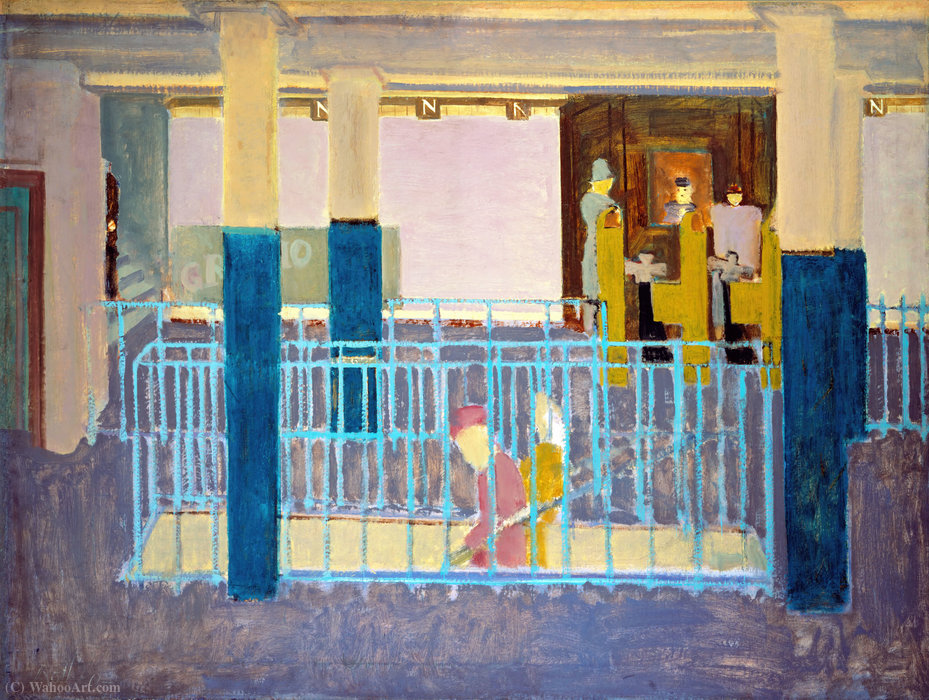
Entré til Subway


Mark Rothko sin «Entré til Subway» er et kraftfullt abstrakt verk som fanger atmosfæren i New Yorks tunnelbanesystem og utforsker temaer om anonymitet og menneskelige forbindelser.
 Vis hele teksten
Mark Rothko mestret Color Field-maleri med Seagram-veggmaleriene. Oppdag den emosjonelle kraften i hans ikoniske abstrakte verk i dag.
Kunstverket som vises på denne siden er beskyttet av opphavsretten, noe som betyr at vi ikke har juridisk tillatelse til å lage eller selge identiske reproduksjoner. Denne beskyttelsen håndheves i henhold til internasjonale avtaler som for eksempel Bernerkonvensjonen og av nasjonale lover, inkludert de som er fastsatt i Amerikansk lov om opphavsrett – Tittel 17.
Denne metoden er i fullt samsvar med opphavsrettslige regler, da den ikke innebærer kopiering eller duplisering av det beskyttede kunstverket. I stedet er det snakk om en kreativ nytolkning – et nytt maleri som er inspirert av originalen, men ikke identisk med den.
Giclée / Kunsttrykk
Giclée- eller lerretsprint av museumskvalitet med rask produksjon og fleksible valgmuligheter for etterbehandling. ( Kjøp håndmalt maleri Bytt til digitalt bilde)




P118B Nkr10

P118H Nkr10

P118W Nkr10

P438Z Nkr10

P508JH Nkr12

P508YH Nkr12

P805H Nkr10

P805Z Nkr10

P919BZ Nkr10

P919G Nkr10

P919XJ Nkr10

P959ZH Nkr10

P968JZ Nkr12

W106C Nkr8

W218G Nkr10

W218JH Nkr8

W218Y Nkr10

W307PJ Nkr10

W316G Nkr10

W316PJ Nkr8

W316Y Nkr10

W398PJ Nkr8

W4111J Nkr10

W500HY Nkr15

W500JH Nkr15

W692G Nkr12

W849H Nkr8

W940BG Nkr15

W953PJ Nkr8




Standardformat
skreddersydd
CM
INCH
Velg mellom våre forhåndsdefinerte størrelser som bevarer kunstverkets opprinnelige proporsjoner.
Loading sizes...

bredde
høyde
Skriv inn ønsket bredde og høyde for å tilpasse trykket til din ramme eller vegg. Et trykk kan kun beskjæres, aldri skaleres opp utover motivets opprinnelige størrelse, noe som betyr at et format med andre proporsjoner vil føre til tap av deler av bildet. Vi sender deg en digital mockup for godkjenning før vi starter trykkeprosessen. Bildet som vises på denne siden viser ikke den faktiske beskjæringen — det er kun mockuppen som viser dette.
Verdensomspennende levering () på 2 uker i stedet for standard 4/5 uker. (10 November)

Gratis ekspressfrakt over hele verden

Lerretsduk av lin av høy kvalitet

Full transportforsikring

Garanti for refusjon av toll og importavgifter

Garantert fargegjengivelse

100 dagers returrett ved fabrikasjonsfeil

100% pengene tilbake-garanti

Rabatt ved flere kjøp
 Glassalternativet er kun tilgjengelig i størrelser under 110 cm

Entré til Subway
Giclée / Kunsttrykk
Størrelse på reproduksjon
-


Totalpris for valgte alternativer
Nkr 670
Entrance to Subway (Subway Station.Subway Scene)
Mark Rothko's "Entrance to Subway" isn’t merely a depiction of a New York City subway station; it’s an immersion into the collective experience of urban life, a poignant meditation on anonymity and the fleeting nature of human connection. Painted in 1938 during a period of intense social and political upheaval – a time when the anxieties of war were beginning to surface – this large-scale oil painting captures not just a physical space but also an emotional landscape. Rothko, a key figure in the Abstract Expressionist movement, deliberately eschewed traditional representational techniques, opting instead for a bold simplification of form and color to evoke profound feelings within the viewer.
The dominant hues of blue and yellow immediately establish a dynamic atmosphere, far removed from the muted tones often associated with depictions of urban decay. These colors aren’t simply applied; they bleed into one another, creating a sense of movement and suggesting the constant flow of people through the station. The composition is anchored by two prominent benches – one centrally positioned, the other subtly placed on the right – offering momentary points of rest amidst the bustling scene. Notice how Rothko uses geometric forms—the rectangular shapes of the benches and the implied lines of the platform—to create a sense of structure within an otherwise amorphous space. These elements aren’t meant to define the scene precisely, but rather to provide a framework for the viewer’s interpretation.
The Language of Color: Rothko’s Abstract Expressionist Approach
Rothko’s technique is characterized by its deliberate lack of detail and emphasis on color fields. He applied paint in broad, sweeping strokes, allowing the colors to overlap and blend organically. This process—often described as “all-over” painting—means that there's no single focal point; instead, the viewer’s eye is invited to wander across the entire surface of the canvas, absorbing the interplay of hues and textures. The thickness of the paint itself contributes to the work’s tactile quality, inviting a physical engagement with the artwork.
It's crucial to understand Rothko’s artistic philosophy during this period. He wasn’t interested in creating images that could be easily identified or understood; rather, he sought to evoke primal emotions—a sense of awe, mystery, and perhaps even melancholy—through the pure experience of color. He famously stated, “Colors are performers,” suggesting that his paintings were meant to act upon the viewer’s subconscious, triggering a deeply personal response.
A Reflection of an Era: Contextualizing "Entrance to Subway"
“Entrance to Subway” was created during a time of significant social and political change in America. The Great Depression had left its mark on the nation, and anxieties about war were growing as Europe teetered on the brink of conflict. Rothko’s work reflects this atmosphere of uncertainty and displacement. The anonymous figures depicted in the painting—a collection of faces lost within the urban landscape—can be interpreted as symbols of the individual’s struggle to find meaning and connection in a rapidly changing world.
Interestingly, Rothko’s early career involved figurative work, depicting portraits and urban scenes. However, he gradually moved away from representational art, seeking a more direct means of expressing his emotions. This shift aligns with the broader trends of the Abstract Expressionist movement, which rejected traditional artistic conventions in favor of exploring new forms of expression.
Legacy and Reproduction: Bringing Rothko’s Vision to Life
Mark Rothko's influence extends far beyond the realm of abstract painting. Artists like Yayoi Kusama, known for her immersive installations that explore themes of infinity and self-obliteration, have cited Rothko as a key inspiration. His work continues to resonate with viewers today, prompting reflection on the nature of human experience and the complexities of modern life.
TopImpressionists is proud to offer meticulously crafted, hand-painted reproductions of “Entrance to Subway.” These aren’t simply prints; they are faithful interpretations of Rothko’s original masterpiece, capturing the vibrancy of color, the texture of paint, and the emotional depth of the artwork. Each reproduction is created by skilled artists who have a deep understanding of Rothko’s technique and philosophy. Explore the details and dimensions on TopImpressionists. For those seeking to delve deeper into Rothko’s life and work, we encourage you to visit Yayoi Kusama's website or explore the extensive resources available on Wikipedia: Wikipedia.
Spørsmål og svar
Finnes det verk som ligner på "Entré til Subway"?
Siden Lignende verk for "Entré til Subway" av Mark Rothko viser relaterte kunstverk.
Kan man se en lysbildefremvisning av "Entré til Subway" av Mark Rothko?
Du kan se diaporamabildet av "Entré til Subway" på verkets Bildekarusell-side.
Hvilken plass har "Entré til Subway" av Mark Rothko i kunsthistorien?
Historisk sett er "Entré til Subway" et Abstract Expressionism-verk fra den bredere Moderne tid-epoken.
Om kunstneren
Mark Rothkos tidlige liv
Mark Rothko ble født som Markus Yakovlevich Rothkowitz i 1903. Han ble født i Dvinsk, Russland, i et område som i dag er kjent som Daugavpils i Latvia. Familien hans levde innenfor bosetningsområdet for jøder, en region preget av politisk uro og den konstante skyggen av pogromer. Denne atmosfæren av ustabilitet fulgte familien da de emigrerte til USA i 1913. Etter å ha passert gjennom Ellis Island, slo de seg ned i Portland, Oregon.
Faren hans, Jacob, arbeidet som farmasøyt. Han var en intellektuell mann med sosialistiske sympatier som skapte et hjem sentrert rundt læring og debatt. Dette miljøet av dyp refleksjon ble avbrutt av et plutselig tap. Kort tid etter at familien hadde ankommet Amerika, døde Jacob av tykktarmskreft. Denne tidlige erfaringen med sorg, kombinert med utfordringene i immigranttilværelsen, ble et stille fundament for mannen han skulle bli.
Kunstnerisk utdanning og de tidlige årene i New York
Flyttingen til New York City i 1923 markerte et avgjørende skifte i hans kunstneriske fokus. Etter en tid ved Yale University, ble han trukket mot storbyens pulserende energi, noe som førte ham bort fra den formelle akademiske studien. Han søkte seg til Art Students League for å foredle sitt håndverk. I disse formative årene var penselen hans opptatt av det håndfaste og det nære. Han malte portretter og urbane scener, hvor han rettet en nitid oppmerksomhet mot menneskelige ansiktstrekk og det råe støvet i storbyens gater. Arbeidene var dypt forankret i realismen, og fanget den fysiske verden før overgangen mot abstraksjon for alvor tok tak.
Innen 1940 hadde han tatt beslutningen om å endre navn til Mark Rothko. Dette var en overgangsperiode preget av et brudd med den strukturerte representasjonen fra ungdomstiden. Blikket begynte å vandre bort fra byens gjenkjennelige objekter og mot noe langt mer udefinert. Han var på en søken etter en måte å uttrykke tyngden av den menneskelige erfaring på, uten å støtte seg til de bokstavelige formene i verden rundt seg.
Utviklingen mot abstrakt ekspresjonisme
Ettersom 1940-tallet skred frem, begynte den nøyaktige realismen fra hans tidligere år å vike. Fokus skiftet bort fra de gjenkjennelige detaljene i urbane scener og portretter. I stedet vendte han seg mot surrealismens språk og mytologiens dyp. Han benyttet disse temaene for å finne en måte å uttrykke tyngden av menneskelige følelser på. Maleriene fra denne perioden var ofte preget av biomorfe former; skikkelser som virket å sveve, fanget i en tilstand mellom det rent figurative og det helt abstrakte.
Denne perioden markerte hans tilknytning til den amerikanske abstrakte ekspresjonismen. Han beveget seg bort fra objektenes strukturerte verden for å utforske noe mer indre og sjelelig. Lerretene handlet mindre om hvordan en ting så ut, og mer om følelsen den bar med seg. Han søkte en metode for å kommunisere menneskehetens kompleksitet gjennom form og myte.
- Mother and Child (1934)
- The Pugilist
- The High Priest (1945)
Utviklingen av Color Field-maleriet
Mot slutten av 1940-tallet begynte arbeidet hans å endre karakter. Han beveget seg bort fra menneskelige figurer og mytologiske fortellinger, og skrelte bort gjenkjennelig avbildning for å finne noe mer direkte. Lerretene vokste i skala, fylt av store, rektangulære fargefelt som virket å sveve. Disse formene hvilte ikke bare på overflaten, men så ut til å eksistere i et grunt, pustende rom. Dette skiftet markerte begynnelsen på hans modne periode, en tid som er tett knyttet til fremveksten av Color Field-maleriet.
Påføringen av maling var en langsom og lagdelt prosess. Han brukte tynne vask av pigment for å bygge opp overflaten, noe som skapte subtile skift i tone og tekstur. Disse lagene gjorde at lyset virket å komme fra innsiden av selve lerretet. Kantene på de fargede formene var aldri skarpe; i stedet var de uklare og myke, noe som gjorde grensene mellom de ulike nyansene gjennomtrengelige. Denne metoden forvandlet lerretet til et sted preget av en stille, tung tilstedeværelse.
- No. 1
- Three
- No. 3/No. 13
- No. 10 (Brown Black Sienna on Dark Wine)
- Magenta, Black, Green on Orange
- White over Red
Teknikk og fargenes språk
Hans kunstneriske virke hviler på en helt særegen, lavmælt metode preget av lagvis oppbygging. Ved å påføre tynne vask av oljemaling, skapte han en overflate gjennom møysommelige, gjennomsiktige lag. Denne prosessen frembringer en fløyelsmyk tekstur som virker å holde lyset fanget inne i selve pigmentet, snarere enn bare å reflektere det fra overflaten. I stedet for skarpe linjer, er kantene på hans rektangulære former uklare og diffuse, noe som lar fargene blø inn i hverandre og sveve mot hverandre. Disse massive fargefeltene er ment å skape en følelse av dybde, som om selve lerretet puster.
Han strippet bort titler som kunne antyde et spesifikt motiv eller en fortelling. Mange av bildene bærer kun enkle numre, som No. 1 eller No. 6, noe som tvinger betrakteren til å møte fargen uten forhåndsfattede ideer. Dette valget fremtvinger et direkte møte med selve malingen. Han brukte disse lysende feltene for å strekke seg etter spesifikke, tunge menneskelige følelser: tragedie, ekstase og fortvilelse. Verkets skala er ment å omslutte mennesket som står foran det, og forvandler selve det å se til en stille, altoppslukende opplevelse.
- No. 10 (Brown Black Sienna on Dark Wine)
- No. 37 or No. 19
- White over Red
Store oppdrag og veggmaleri-prosjekter
Rothkos kunstneriske virke beveget seg ofte langt utover det enkelte lerretet, og søkte å fylle og transformere hele rom. Han viet betydelig tid til Seagram-veggmaleriene, en serie malerier som opprinnelig var ment for en restaurant i New York. Etter hvert innså han at omgivelsene ikke var de rette for verkene, og han valgte i stedet å donere dem til Tate Gallery i London. Hans dype interesse for hvordan farge interagerer med det fysiske rommet, ledet også til Harvard-veggmaleriene, som ble skapt for en spisesal ved Holyoke Center.
I Houston, Texas, etterlot han seg fjorten malerier til Rothko-kapellet. Dette er et trossamfunnsuavhengig rom som rommer verk i varierende nyanser av sort. Maleriene er plassert slik at de går i ett med kapellets arkitektur, noe som skaper en helt særegen atmosfære for stille refleksjon. Skalaen på disse verkene er ment å møte betrakteren der de står, og fyller hele synsfeltet med farge og emosjonell tyngde.
De siste årene og den tragiske slutten
Tyngden av hans eget kunstnerskap virket ofte å hvile tungt på ham. Gjennom hele livet kjempet Mark Rothko med depresjon, en vedvarende skygge som fulgte hans søken etter emosjonell sannhet. Han levde et beskjedent liv, og trakk seg ofte tilbake til de stille rommene som var nødvendige for å skape hans monumentale lerreter. Intensiteten i hans fokus på den menneskelige tilstand – tragedie, ekstase og fortvilelse – var ikke bare motiver for penselen, men en realitet han bar dypt inne i seg selv.
Mot slutten av livet ble kampen for tung å bære. Den 25. februar 1970 tok Mark Rothko sitt eget liv i atelieret sitt. Han var 66 år gammel. Hans død etterlot seg en enorm samling verk, inkludert mange uferdige malerier, som ble en del av det omfattende boet som hans familie og eksekutører senere måtte navigere gjennom komplekse juridiske tvister.
Hans varige kunstneriske arv
Tyngden av hans nærvær lever videre i måten hans lerreter fyller et rom på. Han etterlot seg en arv bestående av 798 malerier, en enorm samling som fortsetter å fungere som et anker i den moderne kunsthistorien. Hans overgang mot store, lysende rektangler av farge var med på å definere den abstrakte ekspresjonismen, og påvirket senere den minimalistiske bevegelsen. Disse verkene støtter seg ikke på gjenkjennelige former for å fange betrakterens oppmerksomhet; i stedet hviler de på fargens langsomme, rytmiske pust for å skape en dyp følelse av rom og dybde.
Hans innflytelse merkes i hvordan påfølgende generasjoner har nærmet seg lerretet som et rom for psykologisk og åndelig utforskning. Ved å skrelle bort narrativt kaos, endret han måten mennesker samhandler med maleriets fysiske virkelighet på. Hans malerier anerkjennes som noen av de mest betydningsfulle verkene i det 20. århundrets kunst, og finnes ofte i de permanente samlingene til store institusjoner som Museum of Modern Art i New York og Tate Modern i London. Omfanget av hans arbeid sluker ofte det perifere synsfeltet, noe som fremtvinger en stille, meditativ ro.
- No. 6 (Violet, Green and Red)
- Orange, Red, Yellow (1961)
- N.10 (1958)
Hvor du kan se hans verk i dag
Å stå foran hans lerreter er å erfare fargens tyngde i et stille rom. I New York huser Museum of Modern Art flere av hans verk. På den andre siden av Atlanteren tilbyr Tate Modern i London et lignende rom for å sitte sammen med hans monumentale former. I Washington, D.C., vokter National Gallery of Art en samling av hans malerier, hvor lyset treffer de lagdelte pigmentene på en måte som avslører dybden han søkte gjennom tynne vask av oljemaling.
Det finnes en helt særegen stillhet i Rothko Chapel i Houston, Texas. Dette er et ikke-konfesjonelt rom som rommer fjorten av hans malerier i varierende nyanser av svart. Bygningens arkitektur, en oktogon innskrevet i et gresk kors, var påvirket av kunstneren selv. Det forblir et sted for stille refleksjon, hvor verkets skala er ment å omslutte mennesket som står foran det.
I Daugavpils i Latvia er Rothko-museet huset i den historiske artillerigeværet i Daugavpils festning. Denne institusjonen er det eneste stedet i Europa som permanent stiller ut originale malerier på lån fra hans bo. Besøkende kan finne hans arbeid i Rothko-rommet, et rom designet for å romme disse spesifikke lerretene i en setting som hedrer hans opprinnelse.
- No. 1 (udatert)
- Three (udatert)
- No. 3/No. 13 (udatert)
- No. 10 (udatert)
- Magenta, Black, Green on Orange (udatert)
- White over Red (udatert)

Mark Rothko
1903 - 1970 , Latvia
Kort om kunstneren
- Artistic Movement Or Style:
- Color Field-maleri
- Abstrakt ekspresjonisme
- Artists Or Movements Influenced By This Artist: ['Minimalistisk bevegelse']
- Date Of Birth: 1903
- Date Of Death: 1970
- Full Name: Mark Rothko
- Nationality: Amerikansk
- Notable Artworks:
- Violet, Black, Orange, Yellow on White and Red
- White Center
- Earth ^ Green
- Orange and yellow
- Green and Tangerine on Red
- Four Darks in Red
- Black on Maroon
- Untitled Mural for End Wall
- Ochre and Red on Red
- Blue and gray
- Place Of Birth: Daugavpils, Latvia
Relaterte artikler

Color Field Painting: The Emotional Power of Pure Abstraction and Chromatic Depth
Explore the profound emotional depth of Color Field painting. Discover the history of mid-century abstraction, from Rothko to Newman, and learn how pure color transforms the viewer's experience through our expert art history guide.

Beyond the Brushstroke: A Definitive Guide to the Emotional Power of Color Field Painting
Explore the profound history and emotional depth of Color Field painting. From Mark Rothko to Barnett Newman, discover how pure color redefined modern art through our expert-led guide for students and collectors alike.

The Sublimity of Color: Exploring the Emotional Landscapes of Mark Rothko's Abstract Expressionism
Explore the profound emotional depth of Mark Rothko's abstract expressionism. Discover the history, techniques & lasting impact of this pivotal Color Field painter. Expert insights for collectors and art enthusiasts.

Mark Rothkos 25 Mesterverk: Følelser i Farge – Kunst for Ditt Hjem | TopImpressionists.no
Oppdag Mark Rothkos 25 mest ikoniske malerier! Fordyp deg i abstrakt ekspresjonisme, fargefeltmaling og emosjonell kunsthistorie. Finn inspirasjon til ditt hjem med museumskvalitets reproduksjoner på TopImpressionists.com.

Topp 10 mesterverk fra abstrakt ekspresjonisme – Kunst for ditt hjem | TopImpressionists.no
Oppdag de 10 mest ikoniske verkene fra abstrakt ekspresjonisme! Lær historien bak Jackson Pollock, Mark Rothko og andre mestere. Finn kunsttrykk av høy kvalitet for ditt hjem på TopImpressionists.com – museumskvalitet & inspirasjon.
Utforsk kunstverk organisert etter temaer, stiler og kjennetegn.


