
 Forhåndsvisning
 Send
Send Del
Del
 Vis detaljer
 Utskriftsvennlig guide

 Last ned bilde
 Liknende objekter
 Røntgenundersøkelse
 Lysbildefremvisning
 Spørsmål og svar
 Statistikk
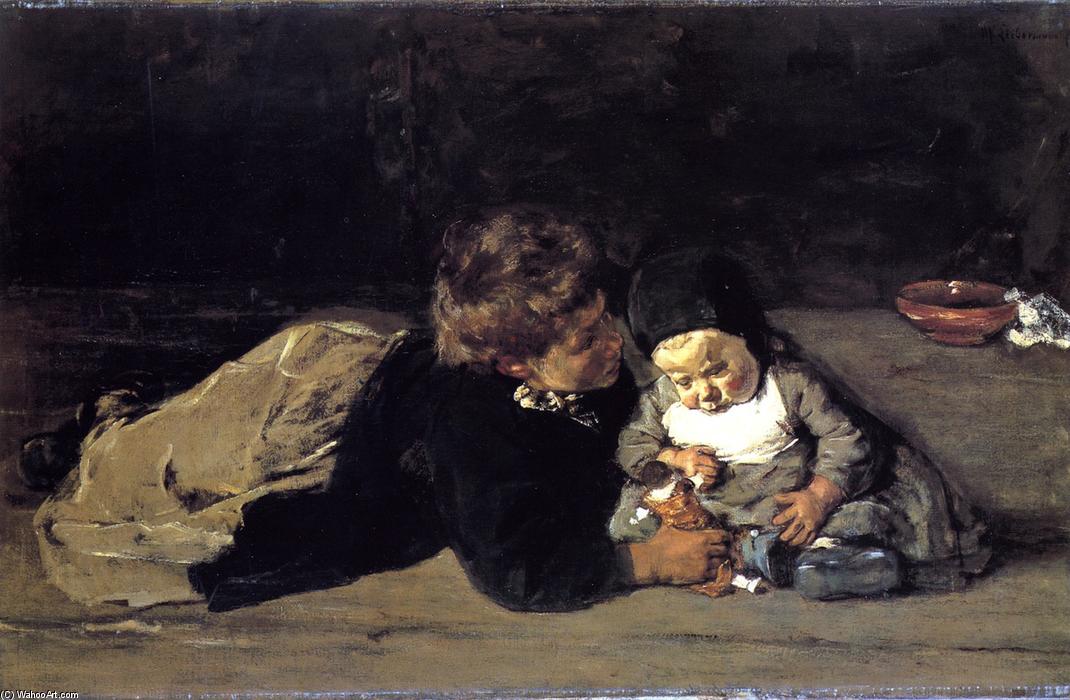
The Siblings


This painting by Max Liebermann exemplifies Impressionistic style, characterized by loose brushwork and tonal variations to depict a heartwarming scene of human interaction. Employing wet-on-wet technique on canvas, Liebermann skillfully captures fleeting moments with sensitivity to light and color, reflecting themes of caregiving and connection within an understated interior setting.
 Vis hele teksten
Max Liebermann (1847-1935): En fremtreden tysk impresjonist kjent for livlige byscener, innsiktsfulle portretter og fredelige hagebilder. Utforsk hans arv!
Få en utskriftsklar fil som går langt utover forhåndsvisningen på nett. Hvert digitale bilde vi selger er hentet fra en høyoppløselig master i vår database – vanligvis mellom 5 000 og 15 000 piksler bred – slik at du kan trykke stort, beskjære tett eller gjenskape fine detaljer med full trygghet.
Ingen filer forlater studioet vårt uten å bli bearbeidet. En digital ekspert kontrollerer fargene mot det originale maleriet og korrigerer dem ved behov, for deretter å forbedre klarhet og detaljrikdom med profesjonelle retusjeringsverktøy — alltid tro mot kunstnerens penselstrøk og stil. Resultatet er et bilde som fremstår som selve maleriet, ikke som en skann med filter.
Du godkjenner før ferdigstilling: vår ekspert sender bildet på e-post til din vurdering innen 72 timer. Ikke fornøyd? Be om forbedringer eller korrigeringer, eller be om refusjon dersom kvaliteten ikke svarer til forventningene.
Dette er kvaliteten forlag, designstudioer, gallerier og trykkerier stoler på.
Digitalt bilde
Last ned en høyoppløselig fil til personlig bruk, utskrift og kreative prosjekter. ( Bytt til trykk Kjøp håndmalt maleri)
Inkludert i alle bestillinger av digitale bilder
Ekspert på digital levering, garantert
Når du velger TopImpressionists.com, får du ikke bare et bilde – du mottar et profesjonelt etterbehandlet digitalt kunstverk, skapt med presisjon og med en garantert tilfredshetsgaranti. Her er alt som automatisk følger med din bestilling:

Rask levering på e-post
Din høyoppløselige digitale bildefil sendes til din e-post innen 72 timer etter bestilling – klar til umiddelbar bruk.

KI-forbedret digital fil
Ditt kunstverk blir profesjonelt optimalisert ved hjelp av avanserte AI-verktøy og manuell redigering, noe som sikrer maksimal detaljrikdom, klarhet og fargegjengivelse.

Gratis livslang nyutlevering
Har du ved et uhell slettet eller mistet filen din? Ingen bekymring – vi sender den på nytt når som helst, helt gratis.

Ingen importavgifter – noen gang
Nyt ditt kunstverk umiddelbart uten toll, avgifter eller leveringskostnader – digitale nedlastinger er alltid avgiftsfrie.

Garantert fargenøyaktighet
Vi sikrer at det digitale bildet gjenspeiler de originale fargene så nøyaktig som mulig ved hjelp av profesjonelle verktøy og fargehåndtering.

100 dagers fornøydhetsgaranti
Hvis du ikke er fornøyd med ditt digitale bilde, vil vi revidere det eller refundere 100% innen 100 dager – uten spørsmål.

100% Penggaranti
Ikke fornøyd? Få full refusjon innen 100 dager etter at du har mottatt din digitale fil – uten spørsmål.

Rabatt ved storkjøp
Kjøp 3 bilder, spar 10% - Kjøp 5, spar 15% - Kjøp 10+, spar 20%. Ideelt for kreative prosjekter, gallerier og byråer.
A Tender Encounter in Monochrome
In the quietude of Max Liebermann’s 1876 masterpiece, “The Siblings,” time seems to suspend its forward march, allowing a singular moment of human connection to breathe. This monochrome triumph is far more than a mere study of figures; it is a profound exploration of familial tenderness and the soft, unspoken language of intimacy. As the eye meets the canvas, one is immediately drawn into a world of diffused light and tonal harmony, where a man and a child are captured in a fleeting tableau of closeness. The painting transcends its simple subject matter to become a distillation of emotion, rendered with a precision that speaks to the soul as much as it does to the intellect.
The composition is masterfully understated, centering the viewer's attention on the intimate core of the foreground. Here, the figures occupy a simple ground plane, their proximity creating a palpable sense of warmth and protection. While subtle, indistinct individuals linger in the background, they serve only as contextual anchors, ensuring that the primary focus remains fixed upon the bond between the two central subjects. This arrangement creates an inviting depth, drawing collectors and admirers alike into a private, domestic sanctuary that feels both timeless and deeply personal.
Impressionistic Light and Fluid Technique
Liebermann, a leading proponent of Impressionism in Germany, utilizes a technique that prioritizes the ephemeral quality of light over the rigid constraints of photographic realism. Through the skillful application of a wet-on-wet technique, the artist allows colors and tones to blend seamlessly across the canvas, generating a soft, hazy luminescence. This method imbues the scene with an ethereal glow, as if the very air within the room is heavy with memory and quietude. The brushstrokes are loose and organic, characteristic of the Impressionist movement, favoring the suggestion of texture and form over meticulous, sharp-edged detail.
The monochromatic palette—a sophisticated arrangement of blacks, whites, and varying shades of gray—plays a crucial role in the painting's atmospheric success. By stripping away the distraction of color, Liebermann directs our attention to the subtle interplay of shadow and light. This tonal mastery creates a sense of depth and volume, where the soft edges of clothing and facial features emerge from the shadows with a gentle, rhythmic grace. For the interior designer, such a piece offers a sophisticated anchor for a room, providing a neutral yet emotionally resonant focal point that complements both classical and contemporary decor.
A Legacy of Emotion and Connection
To understand “The Siblings,” one must consider the historical currents flowing through Liebermann’s early career. Painted during his formative years in Paris and Weimar, the work reflects the burgeoning fascination with capturing everyday life and subjective experience that defined the era. Much like his contemporaries Monet and Renoir, Liebermann sought to move beyond academic stiffness, embracing a style that mirrored the shifting moods of the natural and domestic worlds. This piece stands as a testament to his ability to translate the essence of human experience onto canvas.
Beyond its technical brilliance, the painting carries a profound symbolic weight. The focus on the relationship between the man and the child evokes universal themes of caregiving, protection, and the enduring strength of familial bonds. There is a palpable sense of nostalgia and quiet contemplation within the frame, making it an ideal acquisition for those who seek art that offers more than mere decoration. It is a piece that invites long periods of reflection, offering a window into a moment of shared attention that remains as poignant today as it was in 1876.
Spørsmål og svar
Hvordan forenes medium og bevegelse i "The Siblings"?
"The Siblings" av Max Liebermann kombinerer Oil On Canvas-teknikken med Impressionistic Style-stilen. Teknikk og stilretning beskriver verkets utførelse og estetiske uttrykk.
Hvilken teknikk er "The Siblings" laget med?
"The Siblings" av Max Liebermann er utført i Oil On Canvas. Reproduksjonene har som mål å gjengi utseendet til denne teknikken.
Hvordan forenes kunstretning og epoke i "The Siblings" av Max Liebermann?
I "The Siblings" av Max Liebermann møtes Impressionistic Style-retningen og tallet-epoken.
Lignende kunstverk


Om kunstneren
A Life Immersed in Light: The World of Max Liebermann
Max Liebermann, født i Berlin i 1847, var en kunstner hvis vei til å bli en av Tysklands fremste impresjonister ikke var forutbestemt. I utgangspunktet ble han veiledet mot de anseelige yrkene juss og filosofi ved Universitetet i Berlin, men hans sanne kall resonerte langt sterkere fra lerretet enn fra domstolen. Denne tidlige perioden av intellektuell utforskning formet imidlertid uunngåelig hans observante øye og gjennomtenkte tilnærming til å skildre verden rundt ham. Det var en bevisst endring – studier i Weimar, Paris og Nederland – som virkelig tente hans kunstneriske lidenskap, og eksponerte ham for mangfoldige stiler og la grunnlaget for en karriere definert av å fange flyktende øyeblikk med en utsøkt følsomhet for lys og farge. Han malte ikke bare det han så; han overførte selve opplevelsens essens til lerretet. Liebermanns tidlige verk skildret ofte hverdagslige scener, spesielt de av arbeiderklassen, gjengitt med en naturalisme som utfordret den rådende romantiserte æstetikken på den tiden. Disse maleriene var ikke ment som sosial kommentar, men snarere som ærlige fremstillinger av menneskelig eksistens, fylt med verdighet og respekt.Embracing Impressionism in a German Context
Liebermanns kunstneriske utvikling ble dypt påvirket av hans eksponering for fransk realisme og, viktigst av alt, den blomstrende impresjonistbevegelsen. Ånden til Édouard Manet – hans mot, hans avvisning av akademisk konvensjon, hans fokus på samtidsliv – resonerte dypt med Liebermann. Men han kopierte ikke bare det han så i Paris; heller overførte han disse prinsippene til en tysk sanselighet, og skapte et impresjonisme unikt for ham selv. Hans palett ble lysere, penslene hans løsere og mer spontane, og hans motiver skiftet mot scener av borgerskapets fritid og den rolige skjønnheten i hagen hans nær Wannsee-sjøen. Denne hagen, spesielt, ble en gjentagende motiv gjennom hele hans karriere, og tilbød et fristed fra den raskt foranderlige verden utenfor og ga uendelig inspirasjon for hans utforskninger av lys og atmosfære. Han malte ikke bare blomster og blader; han fanget selve følelsen av sommeren, varmen i solen, den lette brisen som hvisket gjennom bladverket. Ut over landskap etablerte Liebermann seg som en høyt ansett portrettist, og fullførte over 200 bestilte arbeider, inkludert ikoniske fremstillinger av figurer som Albert Einstein og Paul von Hindenburg. Disse portrettene var ikke bare likheter; de var innsiktsfulle studier av karakter, som avslørte subjektets indre liv gjennom subtile gestikuleringer og uttrykk.A Champion of Artistic Freedom
Liebermann var ikke fornøyd med å bare male; han kjempet aktivt for kunstnerisk innovasjon og uavhengighet. Gjenkjennende de kvalme begrensningene som ble pålagt av den tradisjonelle kunstinstitusjonen, ble han en drivkraft bak Berlin Secession i 1898, og ledet denne avantgarde-gruppen i over ti år. Secessionen utfordret konvensjonelle normer, og ga en plattform for kunstnere som arbeidet utenfor rammen av akademisk tradisjon. Denne forpliktelsen til kunstnerisk frihet strekte seg utover hans eget arbeid; Liebermann mente hjertelig at kunstnere skulle være frie til å utforske sin visjon uten innblanding fra politiske eller ideologiske presser. Hans valg til den Preussiske Kunstakademiet i 1909 og etterfølgende presidentskap i 1920 var vitnesbyrd om hans økende innflytelse innen det tyske kunstmiljøet, men disse stillingene førte ham også ansikt til ansikt med den stigende tidevann av antisemittisme og nasjonalisme som ville true hans livsverk.Shadows of a Changing World: Legacy and Resilience
Den fremveksten av nazismen kastet en mørk skygge over Liebermanns senere år. Hans prinsipielle holdning mot diskriminering førte til sin avgang fra den Preussiske Kunstakademiet i 1933, en modig handling som signaliserte hans avslag på å kompromisse sine verdier. Til tross for økende forfølgelse fortsatte han å male, og fant tilflukt og formål i kunsten sin. Han døde i Berlin i 1935, og etterlot seg et rikt arv av malerier, trykk og en dyp forpliktelse til kunstnerisk frihet. Hans kone, Martha, tok tragisk sitt eget liv i 1943 for å unngå deportasjon, et hjerteskjærende vitnesbyrd om grusomhetene ved Holocaust. I mange år etter krigen ble Liebermanns arbeid noe oversett, men de siste tiårene har det vært en ny oppdagelse av hans bidrag til tysk impresjonisme og moderne kunsthistorie. I dag er han husket ikke bare som en fremragende maler, men også som en modig forkjemper for kunstnerisk uttrykk og et symbol på motstand mot tyranni. Hans malerier fanger fortsatt seerne med sin blendende skjønnhet, innsiktsfulle observasjoner og vedvarende menneskelighet.Key Achievements & Lasting Influence
- "The Twelve-Year-Old Jesus in the Temple": This early work sparked considerable debate due to its unconventional depiction of a Semitic-looking Jesus, challenging traditional religious iconography.
- Leadership of the Berlin Secession: His pivotal role in leading this avant-garde movement challenged artistic norms and paved the way for modern art in Germany.
- Presidency of the Prussian Academy of Arts: A significant recognition of his artistic merit, though ultimately compromised by the rise of Nazism.
- Masterful Portraiture: His ability to capture the essence of his subjects in over 200 commissioned portraits cemented his reputation as a leading portrait painter.
- Influence on German Impressionism: Liebermann successfully translated the principles of Impressionism into a uniquely German context, inspiring generations of artists.

Max Liebermann
1847 - 1935 , Tyskland
Kort om kunstneren
- Artistic Movement Or Style: Impressionisme
- Artists Or Movements Influenced By This Artist: ['Tysk Impressionisme']
- Artists Who Influenced This Artist: ['Manet']
- Date Of Birth: 20. juli 1847
- Date Of Death: 8. februar 1935
- Full Name: Max Liebermann
- Nationality: Tysk
- Notable Artworks:
- Jesus i tempelet
- Landsted
- Place Of Birth: Berlin, Tyskland