

 Forhåndsvisning
 Send
Send Del
Del
 Vis detaljer
 Utskriftsvennlig guide

 Last ned bilde
 Liknende objekter
 Røntgenundersøkelse
 Lysbildefremvisning
 Spørsmål og svar
 Statistikk
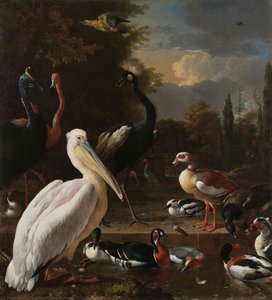
The Floating Feather

- 159.0 x 144.0 cm


A vibrant collection of exotic bird species gathers around a pond in this 1680 Baroque masterpiece by Melchior De Hondecoeter and you can bring this exquisite piece of Dutch Golden Age history into your home.
 Vis hele teksten
Explore Melchior de Hondecoetter’s exquisite bird paintings! Dutch animalier known for dynamic compositions of exotic birds & landscapes, a Baroque master.
Giclée / Kunsttrykk
Giclée- eller lerretsprint av museumskvalitet med rask produksjon og fleksible valgmuligheter for etterbehandling. ( Kjøp håndmalt maleri Bytt til digitalt bilde)




P118B Nkr10

P118H Nkr10

P118W Nkr10

P438Z Nkr10

P508JH Nkr12

P508YH Nkr12

P805H Nkr10

P805Z Nkr10

P919BZ Nkr10

P919G Nkr10

P919XJ Nkr10

P959ZH Nkr10

P968JZ Nkr12

W106C Nkr8

W218G Nkr10

W218JH Nkr8

W218Y Nkr10

W307PJ Nkr10

W316G Nkr10

W316PJ Nkr8

W316Y Nkr10

W398PJ Nkr8

W4111J Nkr10

W500HY Nkr15

W500JH Nkr15

W692G Nkr12

W849H Nkr8

W940BG Nkr15

W953PJ Nkr8




Standardformat
skreddersydd
CM
INCH
Velg mellom våre forhåndsdefinerte størrelser som bevarer kunstverkets opprinnelige proporsjoner.
Loading sizes...

bredde
høyde
Skriv inn ønsket bredde og høyde for å tilpasse trykket til din ramme eller vegg. Et trykk kan kun beskjæres, aldri skaleres opp utover motivets opprinnelige størrelse, noe som betyr at et format med andre proporsjoner vil føre til tap av deler av bildet. Vi sender deg en digital mockup for godkjenning før vi starter trykkeprosessen. Bildet som vises på denne siden viser ikke den faktiske beskjæringen — det er kun mockuppen som viser dette.
Verdensomspennende levering () på 2 uker i stedet for standard 4/5 uker. (4 November)

Gratis ekspressfrakt over hele verden

Lerretsduk av lin av høy kvalitet

Full transportforsikring

Garanti for refusjon av toll og importavgifter

Garantert fargegjengivelse

100 dagers returrett ved fabrikasjonsfeil

100% pengene tilbake-garanti

Rabatt ved flere kjøp
 Glassalternativet er kun tilgjengelig i størrelser under 110 cm

The Floating Feather
Giclée / Kunsttrykk
Størrelse på reproduksjon
-


Totalpris for valgte alternativer
Nkr 669
Melchior De Hondecoeter's The Floating Feather is a captivating oil on canvas painting that showcases the artist's exceptional skill in capturing the beauty and diversity of nature. Created in 1680, this masterpiece is housed at the Rijksmuseum Amsterdam, Netherlands.
A Vivid Depiction of Nature
The painting measures 159 x 144 cm and presents a lively scene of various bird species gathered around a water basin. At least 13 different bird species are depicted, each with its unique features and colors. Some birds stand on rocks or branches, while others perch on the ground, creating an interactive atmosphere. In addition to the birds, a person is present in the painting, observing the flock from a distance. This human presence adds an element of interaction between humans and nature, enhancing the natural beauty and charm of the scene.Artistic Significance
Melchior De Hondecoeter was renowned for his bird paintings, and The Floating Feather is one of his most celebrated works. The painting demonstrates his ability to capture the intricate details of birds and their natural habitats. The artist's use of oil on canvas allows for a rich and vibrant color palette, bringing the scene to life.Other Works by Melchior De Hondecoeter
Melchior De Hondecoeter created several other notable paintings, including A Pelican and other Birds near a Pool, Known as ‘The Floating Feather’, which is also housed at the Rijksmuseum Amsterdam. Another significant work is Ducks, measuring 93 x 116 cm.Reproductions Available
For art enthusiasts and collectors, TopImpressionists offers high-quality, handmade oil painting reproductions of Melchior De Hondecoeter's works. Visit https://TopImpressionists.com to explore these beautiful pieces and bring a touch of history into your home.- The Floating Feather by Melchior De Hondecoeter
- A Pelican and other Birds near a Pool, Known as ‘The Floating Feather’ by Melchior De Hondecoeter
- Ducks by Melchior De Hondecoeter
Spørsmål og svar
Er "The Floating Feather" et av Melchior De Hondecoetter sine mest populære verk?
"The Floating Feather" av Melchior De Hondecoetter har et Iconic popularitetsnivå. Denne klassifiseringen gjenspeiler hvor utbredt verket er anerkjent.
Hvilken størrelse bør jeg velge for trykk av "The Floating Feather" til rommet mitt?
Anbefalt trykkstørrelse for "The Floating Feather" av Melchior De Hondecoetter i et Living Room er Large.
Hvilken periode i Melchior De Hondecoetter sin karriere tilhører "The Floating Feather"?
I Melchior De Hondecoetter sin karriere tilhører "The Floating Feather" Mature Period. Denne perioden gjør det mulig å sammenligne verket med kunstnerens øvrige arbeider.
Om kunstneren
The Avian Majesty of Melchior de Hondecoeter
In the golden twilight of the Dutch Golden Age, few artists captured the vibrant pulse of the natural world as vividly as Melchior de Hondecoeter. A master of the Baroque era, his brush possessed a rare alchemy, capable of transforming mere pigment into the iridescent sheen of a peacock’s plume or the delicate, translucent down of a songbird. Born in Utrecht around 1636, Hondecoetter emerged not merely as a painter of animals, but as a storyteller of the exotic and the magnificent. His work serves as a window into a century defined by global exploration, where the arrival of rare species from distant lands ignited a profound fascination with the wonders of the natural order.
The foundation of his extraordinary talent was laid through rigorous discipline and an unwavering commitment to anatomical truth. Apprenticeship under the esteemed Willem van Royen provided him with the technical scaffolding necessary to master the complexities of light and shadow. Yet, Hondecoetter’s genius lay in his ability to transcend mere scientific documentation. While he approached his subjects with the precision of a naturalist—studying musculature and skeletal structure with almost clinical devotion—he infused every composition with a theatrical energy characteristic of the Baroque movement. His canvases are never static; they are stages where birds interact, preen, and take flight amidst lush, atmospheric landscapes.
A Symphony of Color and Motion
To gaze upon a Hondecoeter masterpiece is to experience a sensory deluge. He rejected the muted, somber palettes that often characterized much of Dutch genre painting, opting instead for a bold, expressive use of color that commands the viewer's attention. His technique was a sophisticated balance of precise observation and expressive bravura. Through masterful rendering of texture, he could differentiate between the heavy, waxy surface of a waterfowl’s wing and the soft, airy lightness of a forest dweller. This tactile quality creates an immersive experience, pulling the observer into a world where the rustle of feathers feels almost audible.
The development of his style saw him move toward increasingly complex and dynamic compositions. He became renowned for his ability to arrange multiple subjects within a single frame, creating a sense of organized chaos that mirrors the untamed beauty of nature. These works often featured:
- Exoticism: The inclusion of rare, brightly colored birds that symbolized wealth, discovery, and the expanding horizons of the Dutch Republic.
- Dramatic Lighting: A use of chiaroscuro that highlighted the intricate details of plumage while casting deep, mysterious shadows in the surrounding foliage.
- Narrative Depth: Scenes that suggested a larger story, whether it be a moment of predatory tension or a peaceful interlude in a sun-drenched garden.
Legacy and Historical Significance
Melchior de Hondecoeter’s influence extended far beyond the borders of the Netherlands. As an animalier, he helped establish a specialized genre that would captivate collectors across Europe, from the courts of kings to the homes of wealthy merchants. His ability to marry scientific accuracy with high art ensured that his work was valued both for its aesthetic splendor and its contribution to the era's burgeoning interest in natural history.
Though his life ended in 1695, his artistic footprint remains indelible. He did not simply paint birds; he elevated them to subjects of profound dignity and drama. In an age of discovery, Hondecoeter acted as a visual chronicler of the earth's splendor, leaving behind a legacy of canvases that continue to breathe with life, color, and an eternal sense of wonder. His work remains a testament to the power of art to bridge the gap between the observed world and the human imagination.
Melchior De Hondecoetter
1636 - 1695
Kort om kunstneren
- Full Name: Melchior de Hondecoetter
- Nationality: Dutch
- Date Of Birth: 1636
- Date Of Death: 1695
- Place Of Birth: Utrecht, Netherlands
- Notable Artworks:
- A Cock
- The Menagerie
- Birds, Butterflies and a Frog Among Plants and Fungi
- Artistic Movement Or Style: Baroque
- Artists Who Influenced This Artist: ['None Known']
- Artists Or Movements Influenced By This Artist: ['William Hendrik Wilhemus van Royen']
Relaterte artikler

De 10 Mesterverkene Som Definerte Nederlandsk Barokk – Kunst og Inspirasjon | TopImpressionists.no
Oppdag de 10 ikoniske mesterverkene som definerte nederlandsk barokk! Rembrandt, Vermeer og mer – lær historien bak kunsten og finn inspirasjon til ditt hjem. Museumskvalitet reproduksjoner på TopImpressionists.no. Utforsk samlingen online!

De 10 Mesterverkene som Definerte den Nederlandsk Gyldne Tidsalder – Kunst & Interiør
Oppdag de 10 ikoniske mesterverkene fra den nederlandske gullalderen! Lær om Rembrandt, Vermeer og andre store kunstnere. Finn inspirasjon til klassisk interiørdekorasjon og kjøp museumskvalitets reproduksjoner på TopImpressionists.com.

Golden Age Reflections: Dutch Baroque Painting & Cultural Innovation
Explore the Dutch Golden Age of painting! Discover key artists like Vermeer & ter Borch, their innovative techniques, and the rich cultural context behind these Baroque masterpieces. Learn about collecting & appreciating this iconic art period.

Illuminating Realism: Exploring the Dutch Golden Age of Painting (1600-1700)
Explore the Dutch Golden Age of painting (1600-1700) with TopImpressionists. Discover Rembrandt, Vermeer & other masters. Learn about techniques, history & find museum-quality reproductions.

Illuminating Innovation: Exploring the Dutch Golden Age of Painting
Explore the Dutch Golden Age of painting with TopImpressionists. Discover Rembrandt, Vermeer & other Masters. Learn about key characteristics, iconic artworks, and lasting influence. Expert insights for collectors & enthusiasts.