
Vist: · Med ramme:
 Forhåndsvisning
 Send
Send Del
Del
 Vis detaljer
 Utskriftsvennlig guide

 Last ned bilde
 Liknende objekter
 Røntgenundersøkelse
 Lysbildefremvisning
 Spørsmål og svar
 Statistikk

Nkr 2581
Håndlaget oljereproduksjon
Håndmalt olje på lerret i din valgte størrelse og ramme, laget på bestilling av våre kunstnere. ( Bytt til trykk Bytt til digitalt bilde)
Størrelse
·Standardformat
skreddersydd
CM
INCH
Velg mellom våre forhåndsdefinerte størrelser som bevarer kunstverkets opprinnelige proporsjoner.
Laster inn størrelser...

bredde
høyde
Skriv inn ønsket bredde og høyde for å tilpasse bildet til din ramme eller vegg. Siden dette er håndmalt, kan kunstneren male litt mer rundt motivet eller beskjære det noe dersom du velger et annet format — valget er ditt. Vi sender deg en digital mockup til godkjenning før maleriet påbegynnes. Bildet som vises på denne siden representerer ikke det faktiske resultatet — kun mockuppen viser det endelige uttrykket.
 Les mer om dette
Fullfør
·
Hvit kant Nkr1

Uskarp kantfinish Nkr1

Fortsatt motiv Nkr1

P118B Nkr10

P118H Nkr10

P118W Nkr10

P438Z Nkr10

P508JH Nkr12

P508YH Nkr12

P805H Nkr10

P805Z Nkr10

P919BZ Nkr10

P919G Nkr10

P919XJ Nkr10

P959ZH Nkr10

P968JZ Nkr12

W106C Nkr8

W218G Nkr10

W218JH Nkr8

W218Y Nkr10

W307PJ Nkr10

W316G Nkr10

W316PJ Nkr8

W316Y Nkr10

W398PJ Nkr8

W4111J Nkr10

W500HY Nkr15

W500JH Nkr15

W692G Nkr12

W849H Nkr8

W940BG Nkr15

W953PJ Nkr8

H24-GOLD Nkr30

H24-SILVER Nkr30

H36-GOLD Nkr45

H36-SILVER Nkr45
Sendes i et beskyttende rør, klar til å rammes inn av din egen innrammer.
Over 105 cm sendes rammen som et sett til en profesjonell rammemaker — les detaljene.
Tilleggstjenester
valgfrittHva inkluderer ekstratjenestene?
Eksempler på hva som kan endres: Erstatt ansikt med kundens eget bilde; Legg til kjæledyr (f.eks. bytt ut katt med hund); Inkluder en skjult melding i bakgrunnen; Endre landskap eller elementer i bakgrunnen.
Etter bestilling vil TopImpressionists.com-teamet sende e-post til kunden for instruksjoner og sende et utkast som forhåndsvisning
Etter bestilling vil TopImpressionists.com-teamet sende e-post til kunden for instruksjoner og sende et utkast som forhåndsvisning
Verdensomspennende levering () på 3–4 uker i stedet for standard 5 uker. (4 November). Ingen kompromisser med kvaliteten.
Beskyttende ferniss
Navneskilt
Detaljer om gravert bronseplate
This elegant plaque features the artist's name and the title of the artwork, finely engraved for a timeless presentation.
It is made from bronze with a refined, elegant finish. The text is precisely laser-engraved for a sharp and permanent result. Measuring 9x2 cm, the plaque is compact yet easy to read. It's built to be durable and scratch-resistant, offering a professional, museum-quality look. Mounting is simple thanks to the included adhesive backing.
Detaljer om gjennomsiktig akrylplate
The plaque includes essential engraved details such as the artist's name, the title of the artwork, the date it was created, the type of media used-like oil on canvas or watercolor-a brief description of the piece, and a QR code that links to the complete artwork information.
It is crafted from clear acrylic, offering a sleek, modern appearance. The text is UV-engraved in black to ensure strong visual contrast. With a size of 10x15 cm, it ensures optimal readability. It comes equipped with two metal hooks for secure wall mounting. The plaque is designed to be weather-resistant, making it suitable for various environments, and it includes interactive features that work seamlessly with smartphone scanning.
Detaljer om plakett i svart akryl
This elegant plaque includes engraved information such as the artist's name, the title of the artwork, the date it was created, the type of media used (like oil on canvas or watercolor), a short description of the artwork, and a QR code for quick access to more information.
The plaque itself is made from refined black acrylic with a premium finish. The text is laser-engraved in white for high contrast and readability. Its size is 10x15 cm, designed to be easy to read. It comes with two metal hooks for professional mounting. The design is sleek and fits any interior style. It is also weather-resistant and durable, with built-in digital integration for mobile compatibility.
Glassalternativet er kun tilgjengelig i størrelser under 110 cm
 Glassalternativet er kun tilgjengelig i størrelser under 110 cm
- Gratis ekspressfrakt over hele verden
- Lerretsduk av lin av høy kvalitet
- Full transportforsikring
- Garanti for refusjon av toll og importavgifter
- Garantert fargegjengivelse
- 100 dagers returrett ved fabrikasjonsfeil
- 100% pengene tilbake-garanti
- Rabatt ved flere kjøp


Beskrivelse av objektet
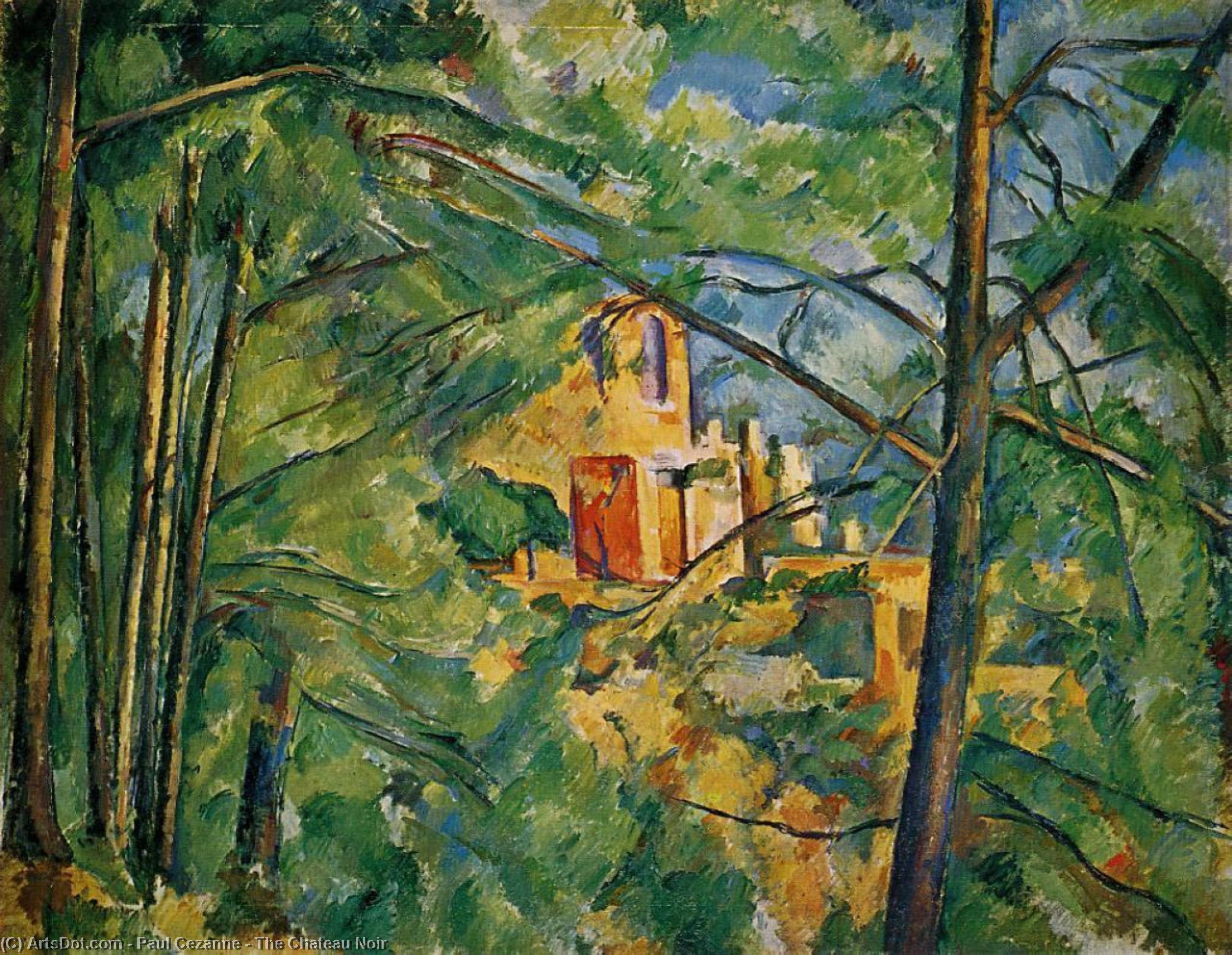
Paul Cézannes Château Noir er et ikonisk landskapsmaleri fra 1904 som utforsker perspektiv og fargebruk innenfor Postimpressionismen. Inspirerende kunstverk!
Om kunstneren
Key Works and Recurring Motifs</h2> Cézanne’s oeuvre is remarkably diverse
Om maleriet
The Chateau Noir: A Post-Impressionist Masterpiece by Paul Cézanne
Paul Cézanne’s *Château Noir*, completed around 1904, stands as an enduring emblem of the Post-Impressionist movement and a testament to Cézanne's unwavering pursuit of artistic innovation. More than just a depiction of a crumbling castle nestled amidst verdant foliage, it embodies a profound exploration of perception, space, color, and form—principles that would irrevocably reshape the landscape of modern art. This captivating panorama captures not merely what is seen but how it *feels*, inviting viewers into Cézanne’s meticulously crafted vision of Provence.The painting portrays Château Noir, a neo-Gothic edifice situated on a hillside overlooking expansive woodlands and rocky terrain—a location that held particular significance for Cézanne. He rented a modest room in the château from 1897 to 1902, returning repeatedly to capture its essence under varying conditions of light and atmosphere. Cézanne’s approach was revolutionary; he rejected Impressionist fleeting impressions in favor of constructing an image that prioritized underlying structure and geometric precision.
Cézanne employed a technique characterized by bold, repetitive brushstrokes—a hallmark of Post-Impressionism—and dense application of pigment to achieve remarkable textural depth. The artist’s masterful manipulation of color contributes significantly to the painting's mood, utilizing earthy tones punctuated by vibrant ochre hues that illuminate the château walls. Cézanne skillfully rendered light and shadow, creating a sense of solidity in both the edifice and its surroundings—a deliberate departure from Impressionist optical realism.
Historically, *Château Noir* reflects Cézanne’s later artistic period, marked by an intensified focus on abstraction and geometric simplification. Influenced profoundly by thinkers like Friedrich Nietzsche and Henri Bergson, Cézanne wrestled with questions of epistemology—how we know what we see—and sought to represent reality not as it appears but as it *is* beneath the surface. This preoccupation with form foreshadowed Cubism, propelling artists such as Pablo Picasso and Georges Braque toward a radical reimagining of artistic representation.
Symbolically, *Château Noir* speaks to themes of time, decay, and the relationship between human endeavor and natural forces. The château itself—partially obscured by dense vegetation—represents the inevitable passage of time and the encroachment of nature upon architectural grandeur. Cézanne’s deliberate use of color and brushwork evokes a feeling of contemplative serenity, inviting viewers to contemplate the beauty inherent in simplicity and the enduring power of observation.
Beyond its formal qualities, *Château Noir* resonates with an emotional depth that transcends mere visual depiction. Cézanne's artistic vision—characterized by unwavering dedication to his craft and a profound engagement with the natural world—continues to inspire artists and collectors alike. It stands as a cornerstone of Post-Impressionist legacy, demonstrating the transformative potential of art to convey complex ideas and emotions.
- Title: Château Noir
- Artist: Paul Cézanne
- Date: c. 1904
- Medium: Oil on Canvas
- Dimensions: 28 3/4 x 36 1/4 inches (73 x 92 cm)
- Location: Musée de Louvre, Paris
Photo Description: The painting is a Post-Impressionist piece by Paul Cézanne, featuring a castle in the middle of a forest. The scene is set on a sunny day with the sky visible above the castle. There are several trees surrounding the castle, creating a serene atmosphere.
Spørsmål og svar
Hvordan balanserer "Château Noir" lys og mørke?
De registrerte verdiene for "Château Noir" av Paul Cézanne er: middels lysstyrke lysstyrke, Myk skygge luminans.
Hvilket rom anbefales for "Château Noir" av Paul Cézanne?
En reproduksjon av "Château Noir" passer godt i et Stue og oppholdsrom.
Er "Château Noir" av Paul Cézanne et kjent kunstverk?
Popularitetsnivået som er registrert for "Château Noir" av Paul Cézanne, er Ikonisk.
Kort om verket og kunstquiz
Om Paul Cézanne

Paul Cézanne
1839 - 1906, Frankrike
Om kunstneren
Paul Cézanne: Fra Impresjonismens Skygger til Kubismens Fødsel
Paul Cézanne, født i Aix-en-Provence i 1839, representerer et monumentalt skillepunkt i kunsthistorien. Han bygget en bro mellom impresjonismens flyktige øyeblikksbilder og kubismens fragmenterte former, men hans vei var ikke preget av umiddelbar anerkjennelse. Snarere var det en langsom prosess med utforskning, fylt med tvil og kritikk, som til slutt resulterte i et arv som for alltid ville endre moderne kunst. Cézanne ble født inn i en velstående familie – hans far var opprinnelig hattemaker før han ble bankmann – noe som ga ham en økonomisk trygghet uvanlig for aspirerende kunstnere. Dette tillot ham å dedikere seg til sin lidenskap uten det umiddelbare presset av kommersiell suksess. Selv om faren først ønsket at han skulle følge en juridisk karriere, viste den kunstneriske kallingen seg for sterk, og han forlot loven til fordel for maleriet – et valg som definerte hans liv. Tidlige påvirkninger inkluderte romantikken fra hans ungdom og Barbizonskolens dedikasjon til landskapet, men det var gjennom møter med kunstnere som Paul Gauguin og Georges Seurat, og deres innovative tilnærminger til farge og form, at Cézanne begynte å smi sin egen distinkte vei.En Analytisk Reise: Utviklingen av en Unik Stil
Cézannes tidlige arbeider gjenspeilet ofte de dramatiske, emosjonelt ladede temaene som kjennetegner romantikken – mørke fargepaletter og uttrykksfulle penselstrøk dominerte hans lerret. Denne innledende fasen var imidlertid bare et springbrett mot en langt mer analytisk og banebrytende tilnærming. Misfornøyd med å kun fange flyktige inntrykk av lys, slik impresjonistene foretrakk, begav Cézanne seg ut på en søken etter å forstå og representere den underliggende strukturen i objektene selv. Han ønsket ikke bare *hva* han så, men *hvordan* han oppfattet de fundamentale formene som konstituerte virkeligheten. Dette førte ham til å bryte ned naturlige former i deres geometriske ekvivalenter – kjegler, sylindere, sfærer – og forutse kubistrevolusjonen flere tiår før den materialiserte seg. Hans teknikk ble preget av små, repetitive penselstrøk, omhyggelig lagt på hverandre for å bygge opp komplekse farge- og teksturfelter, og skape en følelse av soliditet og dybde som tidligere var usett i maleriet. Han var ikke interessert i illusjonistisk rom; i stedet presenterte han ofte objekter fra flere synsvinkler samtidig, utfordret tradisjonelle forestillinger om perspektiv og tvang betrakteren til å aktivt engasjere seg med den konstruerte naturen av hans komposisjoner. Denne bevisste forvrengningen var ikke vilkårlig, men snarere et forsøk på å formidle en mer fullstendig forståelse av formen, representere ikke bare et enkelt øyeblikk i tid, men en syntese av persepsjon.Landskapets Magi, Stilllivets Intimitet og Menneskekroppens Mysterier
Cézannes oeuvre er bemerkelsesverdig mangfoldig, og omfatter landskaper, stillliv, portretter og fremstillinger av badende kvinner. Likevel forenes alle verkene av hans unike tilnærming til form og farge. The Pond at Jas de Bouffan, malt i 1880, er et eksempel på hans landskapsarbeider, som viser hans evne til å fange essensen av naturen gjennom en nøye arrangement av former og toner. Portrait of Émile Zola, skapt i 1866, avslører hans utviklende stil og gir et overbevisende innblikk i den intellektuelle intensiteten hos sin nære venn og medforfatter. Hans stillliv, som de med epler og annen frukt, er ikke bare representasjoner av objekter, men snarere utforskninger av volum, lys og romlige forhold. Mont Sainte-Victoire-serien ble en besettelse for Cézanne, et tilbakevendende motiv som tillot ham å nådeløst undersøke form og perspektiv over flere tiår. Disse maleriene er ikke bare fremstillinger av et fjell; de er studier i hvordan vi oppfatter dybde, volum og samspillet mellom lys og skygge. Til slutt representerer hans serie med Bathers, som viser nakne figurer i idylliske landskaper, en dyp utforskning av menneskekroppen og dens forbindelse til naturen, ofte fylt med en følelse av tidløshet og stille kontemplasjon.En Varig Innflytelse: Cézannes Arv i Moderne Kunst
Paul Cézannes innvirkning på etterfølgende generasjoner kunstnere er umålelig. Han regnes som «den moderne kunstenes far» for sine banebrytende bidrag til billedspråket, og banet vei for mange av de store kunstbevegelsene i det 20. århundre. Pablo Picasso og Georges Braque var dypt takknemlige for Cézannes vektlegging av geometriske former og flere perspektiver, som ble sentrale prinsipper i kubismen. Hans dristige bruk av farge inspirerte også fauvistbevegelsen, ledet av kunstnere som Henri Matisse, som omfavnet livlige, ikke-naturalistiske nyanser. Selv surrealistiske kunstnere fant gjenklang i Cézannes utforskning av subjektiv persepsjon og psykologisk dybde. Utover spesifikke bevegelser frigjorde Cézannes insistering på kunstnerens personlige visjon og hans forkastelse av tradisjonelle akademiske begrensninger generasjoner av malere til å utforske nye uttrykksformer. Han utfordret selve definisjonen av representasjon, skiftet fokuset fra å etterligne virkeligheten til å konstruere en visuell opplevelse basert på underliggende struktur og subjektiv persepsjon. Hans død i 1906 markerte ikke en slutt, men en begynnelse – daggryet av en ny æra i kunsthistorien, en som ble dypt formet av hans revolusjonerende visjon.Kort om Paul Cézanne
- Artistic Movement Or Style: Post-impresjonisme
- Artists Or Movements Influenced By This Artist:
- Kubismen
- Fauvismen
- Artists Who Influenced This Artist:
- Romanticismen
- Barbizon skolen
- Date Of Birth: 19. januar 1839
- Date Of Death: 22. oktober 1906
- Full Name: Paul Cézanne
- Nationality: Fransk
- Notable Artworks:
- The Pond at Jas de Bouffan
- Portrait of Émile Zola
- Mont Sainte-Victoire
- Place Of Birth (City And Country): Aix-en-Provence, Frankrike
Lignende kunstverk


Utforsk kunstverk organisert etter temaer, stiler og kjennetegn.


Paul Cézanne
Château Noir
() ·
Med ramme: · Håndmalt med olje på lin
Totalt