

 Se i rommet
 Del som digitalt kort
 Del
Del
 Detaljer
 Studentguide

 Last ned
 Liknende objekter
 Røntgen
 Lysbildefremvisning
 Besøksstatistikk
The Talisman
 Oil
Oil- WallArt
- Post-Impressionism
 1888
1888- 19th Century
 21.0 x 27.0 cm
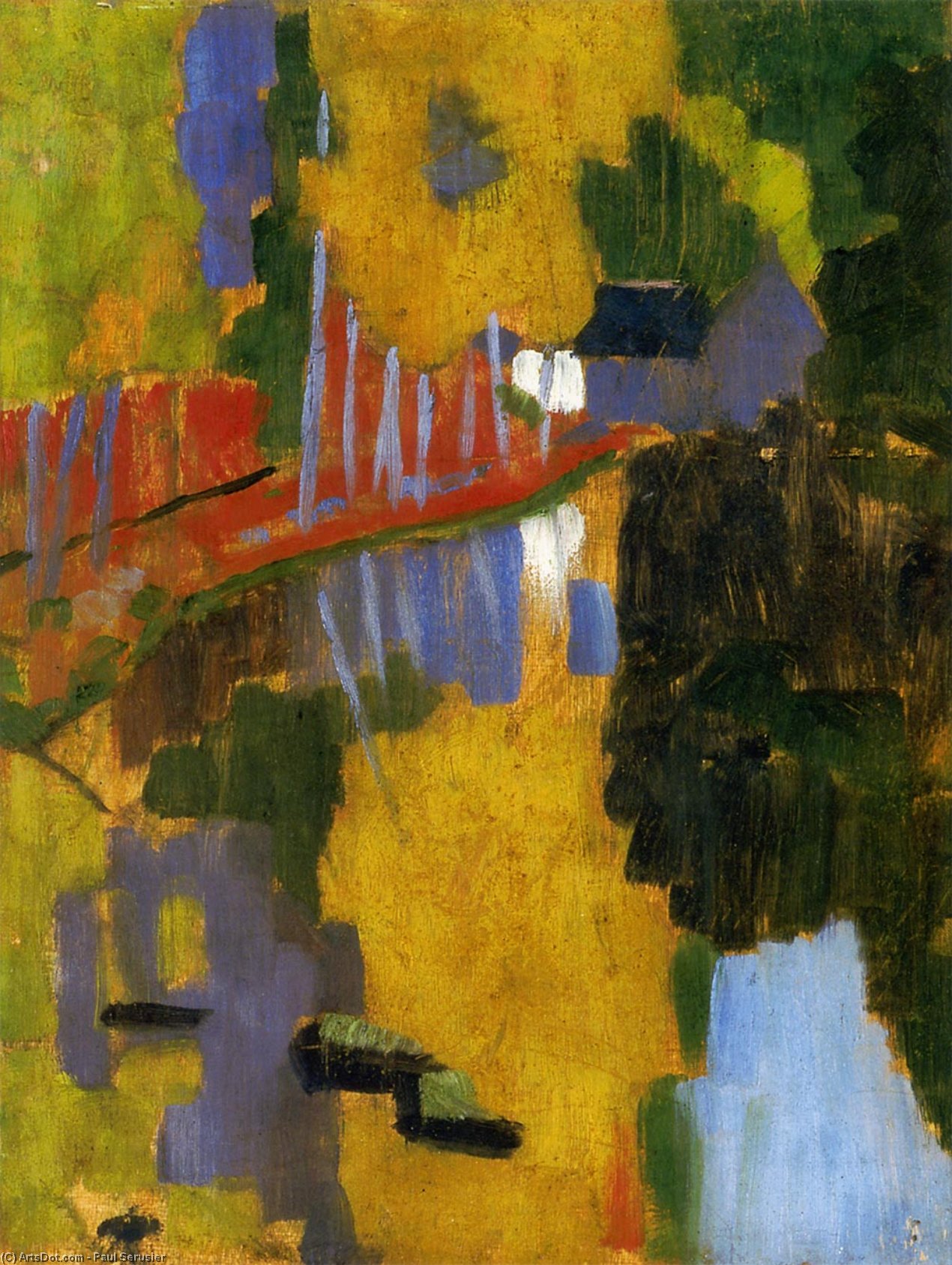
A vibrant explosion of color and abstraction defines this Post-Impressionist masterpiece The Talisman by Paul Sérusier, a seminal work of Cloisonnism that invites you to explore the roots of modern art.
 Les mer
Paul Sérusier (1864-1927) var en fransk maler som banet vei for abstrakt kunst og inspirerte Nabis-bevegelsen. Kjent for sin cloisonnism-stil og verk som "The Talisman", var han en pioner innen moderne kunst.
Giclée / Kunsttrykk
Giclée- eller lerretsprint av museumskvalitet med rask produksjon og fleksible valgmuligheter for etterbehandling. ( Bestill håndmalt reproduksjon Gå til digitalt bilde)




































Standardformat
tilpasset
CM
INCH
Velg mellom våre forhåndsdefinerte størrelser som bevarer kunstverkets opprinnelige proporsjoner.
Loading sizes...

bredde
høyde
Skriv inn bredden og høyden du trenger, slik at den passer til din ramme eller vegg. Et trykk kan kun beskjæres, aldri gjøres større enn bildet, så et format med en annen form vil miste en del av motivet. Vi sender deg en digital mockup for godkjenning før vi trykker noe som helst. Bildet som vises på denne siden viser ikke den faktiske beskjæringen — det er kun mockuppen som gjør det.
Verdensomspennende levering () på 2 uker i stedet for standard 4/5 uker. (25 October)

Gratis ekspressfrakt over hele verden

Lerretsduk av høykvalitets lin

Full transportforsikring

Garanti for refusjon av toll og importavgifter

Garantert fargeekthet

100 dagers returrett ved fabrikasjonsfeil

100% pengene tilbake-garanti

Mengderabatt
 Glassalternativet er kun tilgjengelig i størrelser under 110 cm

The Talisman
Giclée / Kunsttrykk
Format på reproduksjon
-


Totalpris
Nkr 656
A Visionary Fragment: The Birth of Abstraction
In the annals of modern art history, few small-scale works possess the seismic power of Paul Sérusier’s The Talisman. Painted in 1888, this miniature masterpiece serves as much more than a mere landscape; it is a manifesto captured in pigment. Created during a transformative summer in Pont-Aven, the painting emerged from a profound encounter between the young Sérusier and the seasoned Paul Gauguin. Under Gauguin’s rigorous guidance, Sérus deliberately moved away from the fleeting light of Impressionism toward a more structured, symbolic language. The result is a work that does not merely represent a bridge over water, but rather distills the very essence of nature into a rhythmic arrangement of pure color and form.
The composition invites the viewer to wander across a vibrant yellow archway that spans the canvas with architectural confidence. Below, the water reflects a kaleidoscope of hues, while the background is populated by lush, stylized trees that frame the scene in an embrace of verdant tones. The presence of small figures on the bridge and birds drifting through the sky adds a layer of lively, breathing energy to the piece, preventing the abstraction from feeling cold or detached. Instead, there is a palpable sense of movement and life, as if the viewer has stumbled upon a fleeting, magical moment in the French countryside.
The Mastery of Cloisonnism and Color
Technically, The Talisman is a triumph of Cloisonnism, a style characterized by bold, flat areas of color separated by dark, distinct outlines. This technique, reminiscent of medieval stained glass, allows Sérusier to experiment with the emotional weight of color rather than the literal accuracy of light and shadow. The palette is unapologetically bright and saturated; the brilliant yellows and deep greens work in harmony to create a visual vibration that captivates the eye. By reducing the landscape to its most essential geometric components, Sérusier paved the way for the Nabis movement and the eventual rise of pure abstraction.
For the discerning collector or interior designer, this painting offers an unparalleled opportunity to introduce a piece of art history into a contemporary space. The work’s compact dimensions—a mere 21 x 27 cm—make it an intimate jewel, perfect for a curated gallery wall or as a focal point in a sophisticated study. A high-quality reproduction of this masterpiece brings with it not just the aesthetic beauty of Post-Impressionism, but the intellectual weight of a painting that changed the course of Western art. It is a conversation starter, a burst of historical vitality, and a profound testament to the power of seeing the world through a lens of pure, unadulterated color.
Spørsmål og svar
Er Paul Sérusier, skaperen av "The Talisman", kjent under andre navn?
Paul Sérusier opptrer under de alternative navnene Louis-Paul-Henri Sérusier.
Hvor harmoniske er fargene i "The Talisman" av Paul Sérusier?
Fargeharmonien i "The Talisman" er beskrevet som Strong Color Unity.
Hvilken størrelse har "The Talisman" av Paul Sérusier i virkeligheten?
"The Talisman" måler 21 x 27 cm i sin originale form. Originalmålene er en nyttig referanse når du skal velge størrelse på en reproduksjon.
Relaterte kunstverk


Kunstnerbiografi
Early Life and Artistic Foundations
Paul Sérusier, born on November 9th, 1864, in the heart of Paris, was a painter whose journey toward abstract art began within the vibrant artistic circles of late 19th-century France. His upbringing, rooted in a prosperous middle-class family with Flemish heritage, provided him with both stability and exposure to cultural refinement. Unlike his father’s aspirations for a business career, young Paul harbored an unwavering passion for painting, a desire that led him to enroll at the Académie Julian in 1885. This institution, known for its progressive approach to art education, offered a space where he could hone his skills and encounter fellow artists who would profoundly influence his artistic development. Crucially, it was during this period that Sérusier encountered Maurice Denis, a kindred spirit who would later become a key figure in the revival of religious imagery within French painting. The Académie Julian’s environment fostered experimentation and challenged traditional academic styles, laying the groundwork for Sérusier's future explorations into new forms of expression.The Pont-Aven Years: Cloisonnism and Gauguin’s Influence
Sérusier’s artistic trajectory took a decisive turn in the summer of 1888 when he traveled to Pont-Aven, a small coastal village in Brittany. This location held particular significance as it served as a gathering place for a group of artists—including Paul Gauguin, Émile Bernard, and others—who were seeking inspiration from the region’s rugged landscapes and timeless traditions. Under the watchful eye of Gauguin, Sérusier embarked on a period of intense artistic experimentation, culminating in the creation of *Bois d’Amour* (The Lovers' Wood), often referred to as “The Talisman.” This painting stands as a pivotal work in Sérusier’s career, embodying the principles of cloisonnism—a technique characterized by bold, flat forms delineated by dark contours. Gauguin encouraged Sérusier to move beyond traditional representation and embrace a more symbolic approach, emphasizing color and form over precise detail. The influence of this period is undeniable; *Bois d’Amour* represents a radical departure from academic painting, foreshadowing the development of abstract art and establishing Sérusier as a pioneer in this nascent movement.The Nabis: A Collective Pursuit of Synthesis
Following his time at Pont-Aven, Sérusier became a founding member of the *Nabis*, a small but influential group of artists who sought to synthesize diverse artistic influences—including Post-Impressionism, Symbolism, and Japanese art. The name “Nabis” derives from the Hebrew word for “prophet,” reflecting the group’s ambition to create works that possessed spiritual depth and conveyed profound emotions. Alongside figures such as Paul Gauguin, Pierre Bonnard, Édouard Vuillard, and Maurice Denis, Sérusier explored themes of color, pattern, and decorative design, often employing a flattened perspective and simplified forms. The Nabis aimed to move beyond mere imitation of nature, instead focusing on capturing the essence of their subjects through evocative color palettes and symbolic imagery. Their work was characterized by a quiet intensity and a subtle sense of mystery, inviting viewers to engage with the paintings on an emotional level.Notable Works and Lasting Legacy
Throughout his career, Sérusier produced a body of work that is both visually striking and intellectually stimulating. Key works include *L’aversé* (The Shower), exhibited at the Musée d'Orsay in Paris, which showcases his masterful use of color and composition; *Portrait of Paul Ranson*, also held within the Musée d'Orsay, demonstrating his ability to capture personality through subtle gestures and expressions; and *Le Serpent Étranglement* (The Snake Eaters), a powerful depiction of a Breton legend housed at the National Museum in Warsaw. Beyond these individual pieces, Sérusier’s legacy lies in his pioneering role as a precursor to abstract art and his influence on subsequent generations of artists. His exploration of cloisonnism, his embrace of color and pattern, and his willingness to challenge conventional artistic norms paved the way for the development of modern art movements such as Synthetism and Cubism. Sérusier’s later years were dedicated to teaching at the École Ranson, where he imparted his knowledge and inspired a new cohort of artists. He passed away on October 7th, 1927, in Morlaix, leaving behind a rich artistic legacy that continues to resonate with art lovers today.Artistic Influences and Connections
Paul Sérusier’s artistic development was profoundly shaped by a confluence of influences. The teachings of Paul Gauguin at Pont-Aven were particularly transformative, encouraging him to prioritize color and form over traditional representation. Furthermore, his exposure to Japanese prints—which were gaining popularity in Europe during this period—inspired him to experiment with flattened perspectives and simplified compositions. Sérusier’s work also reflects the broader artistic currents of the late 19th century, including Post-Impressionism, Symbolism, and the Arts and Crafts movement. His connection to Maurice Denis was especially significant; Denis's emphasis on religious imagery and his belief in the power of color and line profoundly influenced Sérusier’s approach to painting. The Nabis group itself served as a crucible for artistic exchange, fostering experimentation and pushing the boundaries of contemporary art.
Paul Sérusier
1864 - 1927 , Frankrike
Kort om kunstneren
- Artistic Movement Or Style: Post-Impressionisme
- Artists Or Movements Influenced By This Artist: ['Les Nabis']
- Artists Who Influenced This Artist:
- Paul Gauguin
- Maurice Denis
- Date Of Birth: 9. november 1864
- Date Of Death: 7. oktober 1927
- Full Name: Louis-Paul-Henri Sérusier
- Nationality: Fransk
- Notable Artworks:
- L'averse (1893)
- Portrett av Paul Ranson (1890)
- Melancholy (1890)
- Slangeeterne (1894)
- Place Of Birth: Paris, Frankrike
Relaterte artikler

The Soul of Color: A Journey into the Emotional Resonance of Lyrical Abstraction
Embark on a cultural journey through Lyrical Abstraction. Explore how masters like Kandinsky used color and motion to translate emotion into visual poetry. Discover the profound beauty of abstract expressionism and learn to curate emotional resonance in your own art collection.

Capturing Emotion: A Journey Through the Soul of Expressionist Landscapes
Explore the profound emotional depth of Expressionist landscapes. Discover how Post-Impressionist masters moved beyond light to capture the soul through vibrant color and form. A curated journey for true art lovers seeking the beauty of expressive mastery.
Utforsk kunstverk organisert etter temaer, stiler og kjennetegn.


