

 Forhåndsvisning
 Send
Send Del
Del
 Vis detaljer
 Utskriftsvennlig guide

 Last ned bilde
 Liknende objekter
 Røntgenundersøkelse
 Lysbildefremvisning
 Q&A
Q&A Statistikk
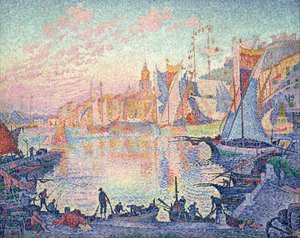
Antibes. Morning

- 120.0 x 80.0 cm


Explore Paul Signac's 'Antibes. Morning,' a stunning Neo-Impressionist seascape capturing the tranquil beauty of Antibes harbor with vibrant sailboats and a majestic lighthouse against rolling hills.
 Vis hele teksten
Paul Signac (1863-1935) var en fransk kunstner kjent for Pointillism og sine fargerike havnemotiver. Oppdag hans innovative teknikker og inspirerende kunst hos TopImpressionists!
Giclée / Kunsttrykk
Giclée- eller lerretsprint av museumskvalitet med rask produksjon og fleksible valgmuligheter for etterbehandling. ( Kjøp håndmalt maleri Bytt til digitalt bilde)




P118B Nkr10

P118H Nkr10

P118W Nkr10

P438Z Nkr10

P508JH Nkr12

P508YH Nkr12

P805H Nkr10

P805Z Nkr10

P919BZ Nkr10

P919G Nkr10

P919XJ Nkr10

P959ZH Nkr10

P968JZ Nkr12

W106C Nkr8

W218G Nkr10

W218JH Nkr8

W218Y Nkr10

W307PJ Nkr10

W316G Nkr10

W316PJ Nkr8

W316Y Nkr10

W398PJ Nkr8

W4111J Nkr10

W500HY Nkr15

W500JH Nkr15

W692G Nkr12

W849H Nkr8

W940BG Nkr15

W953PJ Nkr8




Standardformat
skreddersydd
CM
INCH
Velg mellom våre forhåndsdefinerte størrelser som bevarer kunstverkets opprinnelige proporsjoner.
Loading sizes...

bredde
høyde
Skriv inn ønsket bredde og høyde for å tilpasse trykket til din ramme eller vegg. Et trykk kan kun beskjæres, aldri skaleres opp utover motivets opprinnelige størrelse, noe som betyr at et format med andre proporsjoner vil føre til tap av deler av bildet. Vi sender deg en digital mockup for godkjenning før vi starter trykkeprosessen. Bildet som vises på denne siden viser ikke den faktiske beskjæringen — det er kun mockuppen som viser dette.
Verdensomspennende levering () på 2 uker i stedet for standard 4/5 uker. (1 November)

Gratis ekspressfrakt over hele verden

Lerretsduk av lin av høy kvalitet

Full transportforsikring

Garanti for refusjon av toll og importavgifter

Garantert fargegjengivelse

100 dagers returrett ved fabrikasjonsfeil

100% pengene tilbake-garanti

Rabatt ved flere kjøp
 Glassalternativet er kun tilgjengelig i størrelser under 110 cm

Antibes. Morning
Giclée / Kunsttrykk
Størrelse på reproduksjon
-


Totalpris for valgte alternativer
Nkr 664
Antibes. Morning: A Symphony of Light and Color by Paul Signac
Paul Signac’s “Antibes. Morning” stands as a cornerstone of Neo-Impressionism, embodying the movement's revolutionary approach to capturing visual experience through scientific observation and meticulous color theory. Painted in 1913–1914 during Signac’s formative years on the French Riviera—a period marked by intense artistic experimentation and collaboration with Georges Seurat—the canvas presents a tranquil seascape infused with vibrant hues that shimmer and dance under the influence of shifting sunlight. More than just a depiction of a picturesque coastal scene, “Antibes. Morning” represents Signac's unwavering commitment to unlocking the secrets of perception itself.The Science Behind Impressionism’s Evolution
Before delving into the artwork’s aesthetic qualities, it’s crucial to understand the intellectual impetus behind Neo-Impressionism. Following the groundbreaking innovations of Monet and Renoir—artists who championed Impressionism's focus on capturing fleeting moments of light—Signac and Seurat sought to transcend mere sensory representation. Inspired by Henri Poincaré’s theories on optics and color perception, they adopted Pointillism – a technique that deliberately eschewed blending brushstrokes altogether. Instead, artists painstakingly applied tiny dots of pure pigment onto the canvas, allowing the viewer's eye to synthesize these individual colors into a unified impression of light and atmosphere. This method wasn’t merely stylistic; it was a deliberate attempt to mimic how the human retina perceives color, grounding painting in scientific principles.A Detailed Examination of Composition and Technique
The painting’s composition is deceptively simple yet remarkably effective. Three sailboats dominate the foreground, positioned strategically against the backdrop of a rocky shoreline and punctuated by the prominent lighthouse beacon. Signac skillfully utilizes perspective to create depth, guiding the viewer's gaze from the boats towards the distant hills bathed in golden light. The artist’s meticulous application of Pointillism is evident throughout—a dense tapestry of minuscule dots meticulously arranged to reproduce the nuances of color and luminosity. Notice how Signac captures the subtle variations in hue as sunlight filters through the clouds, creating an ethereal glow that imbues the scene with a palpable sense of serenity.Symbolic Resonance: Antibes and Artistic Inspiration
Antibes itself holds significance beyond its visual beauty; it served as a crucible for artistic innovation during Signac’s time on the Riviera. The town welcomed artists like Monet and Cézanne, fostering an environment conducive to experimentation and intellectual discourse. Signac's fascination with the interplay of light and color—a preoccupation that permeates “Antibes. Morning”—reflects this broader cultural landscape. Furthermore, the lighthouse symbolizes guidance and vigilance, perhaps mirroring Signac’s own unwavering dedication to his artistic vision.Emotional Impact: Capturing Tranquility and Wonder
Ultimately, “Antibes. Morning” succeeds in conveying a profound sense of tranquility and wonder. The painting invites contemplation—encouraging viewers to immerse themselves in the beauty of nature and appreciate the transformative power of light. Signac’s masterful technique captures not just what he sees but how he feels—translating visual observation into an emotionally resonant experience that speaks to the enduring fascination with capturing sublime landscapes. It remains a testament to Signac's genius and a cornerstone of Neo-Impressionist legacy.Spørsmål og svar
Hvordan henger fargene i "Antibes. Morning" av Paul Signac sammen med verkets emosjonelle uttrykk?
"Antibes. Morning" av Paul Signac kombinerer en Neutrals fargepalett med en Tranquil stemning.
Hvordan laster jeg ned bildet av "Antibes. Morning" av Paul Signac?
Nedlasting er tilgjengelig for "Antibes. Morning": kunstverkets Last ned digitalt bilde-side tilbyr nedlasting av et digitalt bilde i høy oppløsning.
Hvilken følelse formidler "Antibes. Morning"?
"Antibes. Morning" er forbundet med en Tranquil følelse. Den emosjonelle tonen beskriver inntrykket verket gir.
Lignende kunstverk




Om kunstneren
The Harmonious Vision of Paul Signac
Paul Victor Jules Signac, født i Paris i 1863, steg frem som en sentral figur i utviklingen av moderne kunst, uløselig knyttet til fødselen og utviklingen av Neo-Impressionismen. I utgangspunktet tiltrukket han seg til arkitektur, men et ungt møte med Claude Monets utstilling vekket en varig lidenskap for maleri i ham, som førte ham på en vei som skulle definere farge teori og kunstnerisk uttrykk. Signac var ikke bare en maler; han var en dedikert utforsker av lys, farger og den vitenskapelige grunnlaget for visuell persepsjon. Hans tidlige verk, selv om de viste seg å være preget av Impressionistiske tendenser, utviklet seg raskt under det dype innflytelser fra Georges Seurat, og dannet et partnerskap som fødte Pointillismen – en teknikk kjennetegnet ved den metisiske påføringen av små, distinkte punkter av ren farge ment å blande optisk i betrakters øye. Dette var ikke bare estetikk; det var et forsøk på å systematiserer maleri, og forankre det i vitenskapelige prinsipper og utfordre konvensjonelle kunstneriske normer.A Dialogue with Seurat and the Birth of Neo-Impressionism
Møtet mellom Signac og Seurat i 1884 var transformativt for begge kunstnere. De delte en fascinasjon for Eugène Delacroix’ skrifter om farge teori, spesielt hans utforskning av komplementære kontraster og den emosjonelle effekten av nyanser. Sammen satte de seg ut på en grundig undersøkelse av disse prinsippene, og overførte dem til en revolusjonerende maleteknikk. Signac omfavnet Seurats visjon med entusiasme, forlot flyktige penselstrøk fra Impressionismen for den presise, beregnede påføringen av fargepunkter. *Boulevard de Clichy* (1886) står som et tidlig vitnesbyrd om denne nye tilnærmingen, og viser Signacs metisiske stil og hans forpliktelse til å fange livsverdenens pulserende energi gjennom et vitenskapelig perspektiv. Likevel var deres samarbeid ikke bare teknisk; det var også intellektuelt, drevet av et felles ønske om å heve maleri til nivået av en rigoristisk vitenskap. Signac ble en ivrig forkjemper for Seurats ideer, og promoterte Neo-Impressionismen utrettelig og forsvarte dens prinsipper mot kritikk. Den tragiske tidlige døden til Seurat i 1891 etterlot Signac som den sentrale lederen av deres felles kunstneriske visjon, en rolle han omfavnet med urokkelig dedikasjon.Coastal Reveries and Artistic Independence
Etter Seurats død tok Signacs kunstneriske reise på seg en ny dimensjon, dypt påvirket av hans dype kjærlighet til seiling og fristelsen fra Middelhavskysten. Han fant Saint-Tropez i 1892, etablerte et hjem der som ble et fristed for kunstnere og en kilde til endeløs inspirasjon. De skimrende vannene, solfylte havner og pittoreske kystbyer ga et ideelt sted å utforske lysets og fargenes spill. *The Red Buoy, Saint-Tropez* (1895) illustrerer denne perioden, og viser hans mesterskap i Pointillisme ved å fange havet livlige nyanser og dynamiske energi. Hans teknikk utviklet seg, ble mer flytende og uttrykksfull samtidig som den beholdt sin vitenskapelige grunnlag. Han begynte å eksperimentere med større penselstrøk og en bredere palett, og forlot strengt å følge Seurats presise punktvis metode. Signac reiste utenfor Frankrike, inkludert Italia, Nederland og til og med Konstantinopel, hver reise beriket hans kunstneriske vokabular og utvidet hans perspektiv.A Patron of the Avant-Garde and Lasting Legacy
I tillegg til sine egne kunstneriske bestrebelser spilte Signac en viktig rolle i å fremme utviklingen av moderne kunst gjennom sin ledelse innen Société des Artistes Indépendants. Som president fra 1908 til sin død i 1935, fremmet han kunstners frihet og ga en plattform for oppkommende talenter, inkludert Henri Matisse, André Derain og andre pionerer av Fauvisme og Kubisme. Han var blant de første som anerkjente og støttet deres banebrytende arbeid. Signacs engasjement for inkludering og hans villighet til å omfavne innovasjon hjalp med å forme kunstens utvikling i det 20. århundre. Hans teoretiske skrifter, spesielt *From Eugène Delacroix to Neo-Impressionism* (1899), forsterket ytterligere hans posisjon som en ledende intellektuell figur i kunstverdenen. Paul Signacs arv strekker seg langt utover hans fengslende malerier; han var en visjonær kunstner, en dedikert teoretiker og en generøs patron som dypt påvirket kunstens gang for kommende generasjoner.Key Dates & Achievements
- 1863: Born in Paris, France.
- 1884: Co-founded the Société des Artistes Indépendants with Georges Seurat.
- 1886: Painted *Boulevard de Clichy*, a key example of early Pointillism.
- 1895: Created *The Red Buoy, Saint-Tropez*, showcasing his mastery of coastal scenes.
- 1899: Published *From Eugène Delacroix to Neo-Impressionism*, a seminal work on color theory.
- 1908 – 1935: Served as President of the Société des Artistes Indépendants, championing avant-garde artists.
- 1935: Passed away in Paris at the age of 72, leaving behind a rich artistic legacy.

Paul Signac
1863 - 1935 , Frankrike
Kort om kunstneren
- Artistic Movement Or Style: Neo-Impressionisme, Divisionisme
- Artists Or Movements Influenced By This Artist:
- Henri Matisse
- Fauvism
- André Derain
- Artists Who Influenced This Artist:
- Claude Monet
- Georges Seurat
- Date Of Birth: 11. november 1863
- Date Of Death: 15. august 1935
- Full Name: Paul Victor Jules Signac
- Nationality: Fransk
- Notable Artworks:
- Boulevard de Clichy
- Den røde fyrtårn
- La Valleuse
- Velodromen
- Kyststrand, Collioure
- Place Of Birth: Paris, Frankrike
Relaterte artikler

Paul Klees 25 Mesterverk: En Reise i Farge og Form | TopImpressionists.no
Utforsk Paul Klees 25 mest ikoniske malerier! Fordyp deg i hans abstrakte verden, fargerike ekspresjonisme og unike stil. Finn inspirasjon til interiørdesign & kjøp museumskvalitets reproduksjoner på TopImpressionists.com. Oppdag mesterverkene nå!

Impressionismens landskapskunst: Topp 10 mesterverk som definerte en epoke | TopImpressionists.no
Opplev impressionismens magi! Utforsk 10 ikoniske landskapsmalerier av Monet, Renoir og Van Gogh. Lær om kunsthistorien bak mesterverkene & finn din perfekte veggkunst på TopImpressionists.com – museumskvalitet for ditt hjem.

Evocations of Place: A Historical Journey Through Landscape Art
Explore the rich history of landscape art with TopImpressionists. Discover renowned artists, movements like Impressionism & Romanticism, and expert guidance for collecting timeless pieces. Find your perfect serene escape today!

Paul Cézannes 25 Mesterverk: En Kunstnerisk Reise for Ditt Hjem
Utforsk Paul Cézannes 25 mest ikoniske malerier! Oppdag historien bak impresjonismens mesterverk, fra stilleben til landskap. Finn kunsttrykk av høy kvalitet og interiørinspirasjon på TopImpressionists.com.

The Science of Light: How Seurat and Signac Revolutionized Color with Pointillism
Explore the scientific revolution of Pointillism. Discover how Georges Seurat and Paul Signac utilized optical color mixing and light theory to transform modern art through Neo-Impressionist precision and luminous technique.
Utforsk kunstverk organisert etter temaer, stiler og kjennetegn.


