

 Forhåndsvisning
 Send
Send Del
Del
 Vis detaljer
 Utskriftsvennlig guide

 Last ned bilde
 Liknende objekter
 Røntgenundersøkelse
 Lysbildefremvisning
 Spørsmål og svar
 Statistikk
Begonia


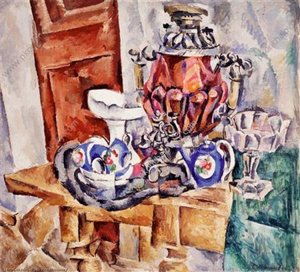
Explore Pyotr Konchalovsky's captivating Begonia – a still life masterpiece depicting vibrant red and pink flowers within elegant vases alongside delicate cups, capturing the spirit of Russian art history.
 Vis hele teksten
Pyotr Konchalovsky (1876-1956) var en fremtredende russisk maler kjent for sin innovative stil som blandet impresjonisme, fauvisme og sosialistisk realisme. Oppdag hans landskap, portretter & ikoniske verk!
Giclée / Kunsttrykk
Giclée- eller lerretsprint av museumskvalitet med rask produksjon og fleksible valgmuligheter for etterbehandling. ( Kjøp håndmalt maleri Bytt til digitalt bilde)




P118B Nkr10

P118H Nkr10

P118W Nkr10

P438Z Nkr10

P508JH Nkr12

P508YH Nkr12

P805H Nkr10

P805Z Nkr10

P919BZ Nkr10

P919G Nkr10

P919XJ Nkr10

P959ZH Nkr10

P968JZ Nkr12

W106C Nkr8

W218G Nkr10

W218JH Nkr8

W218Y Nkr10

W307PJ Nkr10

W316G Nkr10

W316PJ Nkr8

W316Y Nkr10

W398PJ Nkr8

W4111J Nkr10

W500HY Nkr15

W500JH Nkr15

W692G Nkr12

W849H Nkr8

W940BG Nkr15

W953PJ Nkr8




Standardformat
skreddersydd
CM
INCH
Velg mellom våre forhåndsdefinerte størrelser som bevarer kunstverkets opprinnelige proporsjoner.
Loading sizes...

bredde
høyde
Skriv inn ønsket bredde og høyde for å tilpasse trykket til din ramme eller vegg. Et trykk kan kun beskjæres, aldri skaleres opp utover motivets opprinnelige størrelse, noe som betyr at et format med andre proporsjoner vil føre til tap av deler av bildet. Vi sender deg en digital mockup for godkjenning før vi starter trykkeprosessen. Bildet som vises på denne siden viser ikke den faktiske beskjæringen — det er kun mockuppen som viser dette.
Verdensomspennende levering () på 2 uker i stedet for standard 4/5 uker. (10 November)

Gratis ekspressfrakt over hele verden

Lerretsduk av lin av høy kvalitet

Full transportforsikring

Garanti for refusjon av toll og importavgifter

Garantert fargegjengivelse

100 dagers returrett ved fabrikasjonsfeil

100% pengene tilbake-garanti

Rabatt ved flere kjøp
 Glassalternativet er kun tilgjengelig i størrelser under 110 cm

Begonia
Giclée / Kunsttrykk
Størrelse på reproduksjon
-


Totalpris for valgte alternativer
Nkr 670
A Portrait of Turbulent Russia: Exploring Pyotr Konchalovsky’s “Begonia”
Pyotr Petrovich Konchalovsky's "Begonia," painted circa 1908, stands as a poignant emblem of the Russian avant-garde’s fascination with capturing fleeting moments of beauty amidst societal upheaval. More than just a depiction of flowers—specifically a begonia blossom—the painting embodies a broader artistic impulse to distill emotion and intellect into visual form, reflecting the anxieties and aspirations of a nation grappling with rapid modernization.
Style & Technique: Konchalovsky’s approach aligns squarely with Neo-Impressionism, championed by artists like Georges Seurat and Paul Cézanne. Unlike Impressionists who sought to capture atmospheric effects, Konchalovsky meticulously applied small dots of pure pigment—primarily reds, pinks, and yellows—to build up tonal variations within the flower petals and vases. This technique, known as Pointillisme, wasn’t merely a stylistic choice; it represented a deliberate rejection of traditional brushstrokes in favor of scientific observation and mathematical precision. The artist painstakingly analyzed how light interacts with color, striving to reproduce its nuances with unparalleled accuracy.
Historical Context: Painted during the Belle Époque—a period characterized by optimism and artistic experimentation—"Begonia" speaks to a Russia undergoing significant transformations under Tsar Nicholas II’s reign. While outward appearances suggested prosperity and grandeur (the opulent palaces of St. Petersburg), beneath the surface simmered discontent fueled by social inequalities and burgeoning revolutionary sentiment. The painting's stillness contrasts sharply with this turbulent backdrop, inviting contemplation on themes of fragility and resilience.
Symbolism & Composition: The begonia itself carries considerable symbolic weight. Traditionally associated with femininity, beauty, and rebirth—often depicted as a symbol of resurrection—the flower’s delicate petals symbolize the ephemeral nature of life and the importance of savoring every moment. The vases serve as containers for this beauty, mirroring the role of art in preserving and transmitting cultural values. Furthermore, the arrangement of objects – the vases, cups, and begonia – contributes to a carefully constructed visual narrative that emphasizes balance and harmony despite the underlying tension.
Emotional Impact: Viewing “Begonia” evokes a sense of quiet contemplation and melancholic beauty. The artist’s masterful use of color and technique captures not only the physical appearance of the flower but also its emotional essence—a subtle suggestion of vulnerability amidst grandeur, mirroring the complexities of Russian society at the turn of the century. It's a piece that lingers in the mind long after viewing, prompting reflection on themes of beauty, decay, and the enduring power of artistic expression.
- Artist: Pyotr Petrovich Konchalovsky
- Year Painted: Circa 1908
- Style: Neo-Impressionism
- Technique: Pointillisme (Dot Painting)
Spørsmål og svar
Hvilken emosjonell tone preger Russian Symbolism-stilen i "Begonia"?
"Begonia" har en Tranquil emosjonell tone innenfor Russian Symbolism-retningen.
Hvilken følelse skaper fargene i "Begonia" av Pyotr Konchalovsky?
Den Neutrals fargepaletten i "Begonia" av Pyotr Konchalovsky harmonerer med verkets Tranquil stemning. Farge er en av måtene et kunstverk formidler følelser på.
Hvor bør en reproduksjon av "Begonia" av Pyotr Konchalovsky henges opp?
Format (Portrait) og anbefalt rom (Living Room) er de to plasseringsegenskapene som er registrert for "Begonia" av Pyotr Konchalovsky.
Lignende kunstverk




Om kunstneren
A Life Immersed in the Russian Artistic Spirit
Pyotr Petrovich Konchalovsky, født 21. februar 1876 i landsbyen Slavianka nær Kharkiv, var mer enn bare en maler; han var en visuell skildrer av Russland som gjennomgikk en dyp transformasjon. Hans kunstneriske reise speilet nasjonens egne turbulente tider, preget av et konstant søk etter nye uttrykksformer. Konchalovskys barndom dyppet ham i en atmosfære rik på intellektuelle og kreative strømninger. Faren hans, Petr Petrovich Konchalovsky, var en respektert oversetter og kunstforhandler hvis Moskvas hjem ble et levende senter som besøkes av ledende kunstnere fra sin tid – Valentin Serov, Mikhail Vrubel, Vasily Surikov alle gjestet deres hjem etter at familien flyttet til hovedstaden i 1889. Dette tidlige eksponeringen var ikke bare observasjonell; den la grunnlaget for hans fremtidige vei ved å gi ham en dyp forståelse og kjærlighet for kunstnerisk uttrykk. Helger brukt på å absorbere mesterverkene på Tretyakov Gallery formet hans estetiske sanser med kraften til russiske mestere.From Parisian Influences to Avant-Garde Innovation
Konchalovskys formelle opplæring begynte ved Moskvas Kunst-, Skulptur- og Arkitekturskole, men en avgjørende periode fulgte i Paris fra 1896 til 1898 ved Académie Julian. Denne fordypningen i det franske kunstmiljøet var transformativ. Han møtte de banebrytende verkene til Paul Cézanne og Vincent van Gogh, kunstnere som utfordret konvensjonell representasjon og utforsket nye måter å oppfatte form og farge på. En etterfølgende reise til Arles ga ham en dypere forståelse av Van Goghs kunstneriske visjon – en pilegrimsferd inn i hjertet av uttrykksintensitet. Tilbake i Russland fortsatte han studiene ved den keiserlige kunstakademiet i St. Petersburg, og ble dimittert i 1907. Imidlertid var det på hjemkomsten at Konchalovsky virkelig begynte å forme sin egen distinkte stil. Han ble en sentral figur i den russiske avant-gardebevegelsen, og grunnla det innflytelserike "Jack of Diamonds" (Knave of Diamonds) selskabet i 1910. Dette selskapet avviste akademiske tradisjoner og fremmet eksperimentering, søkte inspirasjon ikke bare fra vesteuropeisk modernisme, men også fra Russland’s egen folkelivskunst – ikoner, skilt fra tavernaer, og fargerike populære trykk kjent som *lubok*. Som den første formann i gruppen, spilte han en viktig rolle i å forme dens retning og fremme dens radikale ideer.Navigating Shifting Ideologies: Style and Subject Matter
Konchalovskys kunstneriske stil utviklet seg gjennom hele karrieren, gjenspeillet både personlig utforskning og det skiftende politiske klimaet i Russland. Opprinnelig påvirket av fauvisme og Cézanne, var hans tidlige verk preget av dristige farger, forenklede former og fokus på struktur. Malerier som "Still Life med en kaffekopp" illustrerer denne perioden, og viser en livlig palett og en dynamisk komposisjon. Etter tjeneste i den russiske hæren under første verdenskrig, begynte Konchalovskys stil å skifte. Oppkomsten av sosialistrealisme under Sovjetunionen krevde kunst som tjente ideologiske formål, feiring av sosiale idealer og fremstilling av fremtredende figurer. Selv om dette representerte et avvik fra hans tidligere avantgardeforskning, tilpasset han seg, og ble kjent for sine seremonielle portretter. Til tross for disse endringene, beholdt han en distinkt kunstnerisk stemme, og innlemmet selv i hans mer politisk ladede verk en følelse av soliditet og monumentalitet. Gjennom sin produktive karriere – anslått til over 5000 stykker – utforsket han stadig stilliv, landskap og portretter, demonstrerte en bemerkelsesverdig allsidighet og en urokkelig forpliktelse til kunsten å male. Han var ikke bare konformistisk; han fant måter å uttrykke sin kunstneriske sans utenfor de begrensningene av en ny æra.Key Achievements and Historical Significance
Pyotr Konchalovsky’s bidrag til russisk kunst er uomtvisteligt. Han brot mellom tidlig modernisme og sosialistrealisme, navigerte komplekse politiske strømninger samtidig som han forble en betydelig kunstnerisk kraft. Hans første solos utstilling på Tretyakov Gallery i 1922 solidifiserte hans rykte som en av Russlands ledende kunstnere. Ut over sin egen arbeid, fremmet Konchalovsky en familie dypt involvert i kunsten; hans sønn, Mikhail Petrovich Konchalovsky, ble en berømt filmskaper, og hans datter, Natalia Konchalovskaya, var en dyktig kunstner selv. Hans malerier er ikke bare estetisk tiltalende objekter, men historiske dokumenter som gjenspeiler den turbulente perioden de ble skapt i. De gir verdifulle innsikter i utviklingen av russisk kunst og utfordringene ansiktet av kunstnere som opererer innenfor et raskt foranderlig samfunn. Konchalovskys evne til å tilpasse seg samtidig som han opprettholder en distinkt stil, sikret hans plass som en nøkkelfigur i russisk kunsthistorie, og etterlater seg et arv som fortsatt inspirerer og fenger publikum i dag. Hans arbeid står som et vitnesbyrd om kunstnerisk uttrykks motstandskraft i møte med politisk opprør, og hans innflytelse kan fortsatt sees i samtida russisk kunst.
Pyotr Konchalovsky
1876 - 1956 , Russland
Kort om kunstneren
- Artistic Movement Or Style: Post-Impressionisme, Realisme
- Artists Or Movements Influenced By This Artist:
- Jack of Diamonds
- Mir Iskusstva
- Artists Who Influenced This Artist:
- Paul Cézanne
- Van Gogh
- Date Of Birth: 21 feb 1876
- Date Of Death: 2 feb 1956
- Full Name: Pyotr Petrovich Konchalovsky
- Nationality: Russisk
- Notable Artworks:
- Still Life med kaffekanne
- Novgorodianere
- Place Of Birth: Kharkiv, Russland
Relaterte artikler

Victor Vasnetsov: Myth, Nationalism & the Revival of Russian Fairy Tale Painting
Explore the captivating world of Victor Vasnetsov, a co-founder of Russian folklorist painting. Discover his iconic works, influence on national identity, and lasting legacy in this expert guide.

Blossoming Symbolism: A Historical Journey Through Flowers in Western Painting
Explore the rich history of flower symbolism in Western painting! Discover how artists from the Renaissance to Modernism used blossoms to convey meaning, emotion & beauty. Learn about iconic artworks and movements.

Silent Narratives: Exploring the Enduring Appeal of Still Life Painting Across Centuries
Explore the rich history of still life painting with TopImpressionists. Discover Dutch Masters, decode vanitas symbolism & learn about collecting timeless art. Expert insights and museum-quality reproductions.

Ivan Bilibin: A Synthesis of Folklore, Modernism & National Identity in Russian Illustration
Explore the enchanting world of Ivan Bilibin, a master Russian illustrator who synthesized folklore, Art Nouveau & national identity. Discover his iconic fairy tale illustrations and legacy with TopImpressionists.

Paul Cézannes 25 Mesterverk: En Kunstnerisk Reise for Ditt Hjem
Utforsk Paul Cézannes 25 mest ikoniske malerier! Oppdag historien bak impresjonismens mesterverk, fra stilleben til landskap. Finn kunsttrykk av høy kvalitet og interiørinspirasjon på TopImpressionists.com.
Utforsk kunstverk organisert etter temaer, stiler og kjennetegn.
