


 Se i rommet
 Del som digitalt kort
 Del
Del
 Detaljer
 Studentguide

 Last ned
 Liknende objekter
 Røntgen
 Lysbildefremvisning
 Besøksstatistikk
Barnet med duve


Pablo Picassos ikoniske "Barnet med duve" fra Blue Period fascinerer med sin enkelhet og symbolikk – et tidløst verk om barndommens uskyld og fredens betydning. Kunsthistorisk mesterverk!
 Les mer
Discover the evocative scenes of Ridolfo Schadow's 19th-century paintings – Parisian life, intimate moments, & serene landscapes. Explore his unique style!
Håndlaget oljereproduksjon
Håndmalt olje på lerret i din valgte størrelse og ramme, laget på bestilling av våre kunstnere. ( Bytt til trykkversjon Gå til digitalt bilde)




P118B Nkr10

P118H Nkr10

P118W Nkr10

P438Z Nkr10

P508JH Nkr12

P508YH Nkr12

P805H Nkr10

P805Z Nkr10

P919BZ Nkr10

P919G Nkr10

P919XJ Nkr10

P959ZH Nkr10

P968JZ Nkr12

W106C Nkr8

W218G Nkr10

W218JH Nkr8

W218Y Nkr10

W307PJ Nkr10

W316G Nkr10

W316PJ Nkr8

W316Y Nkr10

W398PJ Nkr8

W4111J Nkr10

W500HY Nkr15

W500JH Nkr15

W692G Nkr12

W849H Nkr8

W940BG Nkr15

W953PJ Nkr8




Standardformat
tilpasset
CM
INCH
Velg mellom våre forhåndsdefinerte størrelser som bevarer kunstverkets opprinnelige proporsjoner.
Loading sizes...

bredde
høyde
Skriv inn bredden og høyden du trenger, slik at den passer til din ramme eller vegg. Dette er håndmalt, så for en størrelse med en annen form kan kunstneren male litt mer rundt bildet, eller beskjære det noe — du velger selv. Vi sender deg en digital mockup for godkjenning før maleriet påbegynnes. Bildet som vises på denne siden viser ikke det faktiske resultatet — kun mockuppen gjør det.
Eksempler på hva som kan endres: Erstatt ansikt med bilde av kunden; Legg til kjæledyr (f.eks. bytt ut katt med hund); Inkluder en skjult melding i bakgrunnen; Endre bakgrunnslandskap eller elementer.
Etter bestilling vil TopImpressionists.com-teamet sende e-post til kunden for instruksjoner og sende et utkast (mockup) som forhåndsvisning.
Etter bestilling vil TopImpressionists.com-teamet sende e-post til kunden for instruksjoner og sende et utkast (mockup) som forhåndsvisning.
Verdensomspennende levering () på 3–4 uker i stedet for standard 5 uker. (26 October). Ingen kompromisser med kvaliteten.

Gratis ekspressfrakt over hele verden

Lerretsduk av høykvalitets lin

Full transportforsikring

Garanti for refusjon av toll og importavgifter

Garantert fargeekthet

100 dagers returrett ved fabrikasjonsfeil

100% pengene tilbake-garanti

Mengderabatt
 Glassalternativet er kun tilgjengelig i størrelser under 110 cm

Barnet med duve
Reproduksjonsmetode
Format på reproduksjon
-


Totalpris
Nkr 2557
Ridolfo Schadow’s “Girl with Doves”: A Testament to Neoclassical Innocence
Ridolfo Schadow (1786 – 1822) stands as a pivotal figure in German Romanticism, yet his artistic output largely resided within the confines of neoclassical aesthetics—a stylistic choice that profoundly shaped his oeuvre and cemented its enduring appeal. “Girl with Doves,” completed in 1820, exemplifies this commitment to classical ideals while simultaneously conveying a poignant exploration of human emotion. This marble sculpture, housed at Schloss Weissenstein near St Petersburg, transcends mere representation; it embodies a carefully considered dialogue between form and feeling that continues to fascinate viewers today.- Subject Matter: The sculpture depicts a young woman seated gracefully on a pedestal, her gaze directed upwards with an expression of serene contemplation. Her left arm gently curves towards her head, suggesting introspection or perhaps conveying a subtle gesture of yearning—a characteristic motif found throughout Schadow’s work.
- Style & Technique: Schadow's masterful sculpting technique is evident in the meticulous detailing of drapery folds and facial features. The artist skillfully captures the texture of fabric, mirroring the precision demanded by neoclassical sculpture. Unlike the expressive brushstrokes favored by Romantic artists, Schadow opted for a smooth surface finish—a deliberate decision that prioritizes clarity and idealized beauty.
- Historical Context: Created during Schadow’s formative years in Rome, “Girl with Doves” reflects the influence of Antonio Canova and Bertel Thorvaldsen – titans of neoclassical sculpture who championed anatomical accuracy and emotional restraint. The sculpture emerged from a broader artistic movement that sought to revive classical forms and ideals after the turbulent upheavals of the French Revolution.
- Symbolism: The dove itself holds significant symbolic weight, representing peace, purity, and divine grace—themes central to Schadow’s artistic vision. Its placement in the woman's hand underscores the sculpture’s aspiration to embody moral virtue and spiritual contemplation.
- Emotional Impact: “Girl with Doves” possesses a remarkable ability to evoke feelings of tranquility and serenity. The sculpture’s stillness, combined with its idealized depiction of femininity, invites viewers to contemplate notions of innocence and inner harmony—a timeless message that resonates powerfully across generations.
Spørsmål og svar
Hvilken kunstretning er "Barnet med duve" av Ridolfo Schadow en del av?
Retningen knyttet til "Barnet med duve" av Ridolfo Schadow er Blue Period. Denne klassifiseringen plasserer verket blant relaterte kunstnere og kunstverk.
Finnes det en lysbildefremvisning for "Barnet med duve" av Ridolfo Schadow?
Diaporamaet av "Barnet med duve" kan ses på verkets Lysbildefremvisning-side.
Kan jeg se en forhåndsvisning av "Barnet med duve" av Ridolfo Schadow før jeg bestiller?
En forhåndsvisning av "Barnet med duve" av Ridolfo Schadow er tilgjengelig på kunstverkets Forhåndsvisning-side.
Kunstnerbiografi
Early Life and Training in the Shadow of a Master
Ridolfo Schadow, born Rudolf Schadow on July 9, 1786, in Rome, entered a world already steeped in artistic tradition. His father, Johann Gottfried Schadow, was a prominent German sculptor whose Neoclassical style profoundly shaped the art scene in Berlin. From an early age, Ridolfo benefited from his father’s tutelage, receiving foundational training within the family studio. This initial period saw him exhibiting statues and reliefs at the prestigious Berlin Akademie between 1802 and 1810, demonstrating a burgeoning talent for both mythological and religious subjects. However, it was his subsequent journey to Rome in 1810 that would truly define his artistic trajectory. The allure of Italy—the heartland of classical sculpture—proved irresistible, offering an environment ripe with inspiration and opportunity.Roman Influences and the Pursuit of Individual Style
Upon arriving in Rome, Ridolfo quickly immersed himself in the city’s vibrant art community. He received invaluable guidance from masters like Antonio Canova and Bertel Thorvaldsen, giants whose work epitomized Neoclassical ideals. While initially absorbing their influence, Schadow soon began to forge his own path, seeking a balance between classical precision and a more realistic, genre-based approach. His early Roman sculpture, *Paris*, though ultimately destroyed, signaled this emerging individuality. It was the companion piece—a captivating depiction of a *Woman Spinning*—that truly captured the attention of the art world. This work, portraying a young woman absorbed in her task, resonated with viewers for its serene beauty and naturalism. Multiple versions were commissioned by prominent collectors, including the King of Prussia and the Duke of Devonshire, testament to its widespread appeal. The sculpture’s success stemmed not merely from technical skill but from Schadow's ability to imbue classical forms with a sense of intimate humanity.Themes of Innocence and Religious Conversion
Schadow’s artistic focus often centered on themes of innocence, domesticity, and quiet contemplation. *Girl with Doves (Innocence)*, completed in 1820, exemplifies this sensibility. The sculpture depicts a young girl tenderly holding doves, symbolizing peace and purity. This work, now housed in the Alte Nationalgalerie in Berlin, showcases Schadow’s refined technique and his ability to evoke emotional resonance through subtle gestures and expressions. A pivotal moment in Schadow's life occurred in 1814 with his conversion to Catholicism, influenced by his brother Wilhelm and Friedrich Overbeck. This spiritual shift profoundly impacted his later work, leading him to create statues of religious figures such as *John the Baptist* and the *Virgin and Child*. These sculptures reflect a newfound depth of emotion and devotion, further solidifying his reputation as a sensitive and skilled artist.Legacy and Historical Significance
Despite a tragically short life—Ridolfo Schadow died in Rome on January 31, 1822, at the age of thirty-five—he left an indelible mark on the landscape of 19th-century sculpture. His untimely death interrupted his work on *Achilles with the Body of Penthesilea*, a colossal group intended for the King of Prussia. Though unfinished in marble, the plaster model was widely admired for its antique character and ambitious scale. Schadow’s contribution lies not only in his individual works but also in his ability to bridge the gap between Neoclassical formality and Romantic expressiveness. He infused classical ideals with a sense of realism and emotional depth that resonated with audiences seeking art that spoke to their own experiences and sensibilities. His sculptures, characterized by grace, serenity, and subtle symbolism, continue to captivate viewers today, offering a glimpse into the artistic world of early 19th-century Rome and the enduring power of human emotion.
Ridolfo Schadow
1786 - 1822 , Italy
Kort om kunstneren
- Full Name: Ridolfo Schadow
- Nationality: German
- Date Of Birth: 1786
- Date Of Death: 1822
- Place Of Birth: Rome, Italy
- Notable Artworks:
- Woman Tying Her Sandal
- Paris
- Girl with Doves (Innocence)
- Artistic Movement Or Style: Neoclassical sculpture
- Artists Who Influenced This Artist:
- Johann Gottfried Schadow
- Antonio Canova
- Bertel Thorvaldsen
Relaterte artikler

De 10 mest ikoniske malerier dominert av slåttegrå – Kunsthistorie og interiørinspirasjon
Oppdag de 10 mest ikoniske malerier dominert av slåttegrå – fra Monet til Van Gogh. Lær om kunsthistorien, fargetoner og teknikker bak disse mesterverkene. Finn din perfekte veggkunst og interiørinspirasjon på TopImpressionists.com! Utforsk samlingen online.

Kubismens Mesterverk: Topp 10 Verk som Definerte En Kunstbevegelse | TopImpressionists
Utforsk kubismens revolusjonerende verden! Oppdag topp 10 mesterverk av Picasso, Braque og andre. Lær om kunsthistorien bak maleriene & finn inspirasjon til interiøret på TopImpressionists.com.

Kubismens Portretter: Topp 10 Mesterverk for Kunstelskere – TopImpressionists.com
Utforsk kubismens revolusjonerende portretter! Oppdag Picasso, Braque og Gris’ mesterverk. Lær om stilhistorien og finn inspirasjon til interiørdesign med museumskvalitets reproduksjoner på TopImpressionists.com.
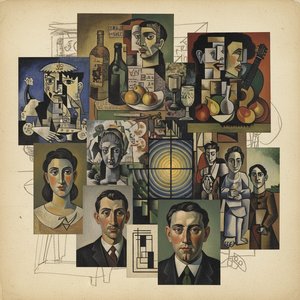
Kubismens 10 Mesterverk: Kunst som Forandret Våre Øyne – TopImpressionists.no
Utforsk kubismens 10 mest ikoniske mesterverk! Oppdag Picassos revolusjonerende stil, Braques banebrytende teknikker og fargepalettene som forandret kunsten. Finn museumskvalitets reproduksjoner & interiørinspirasjon på TopImpressionists.no – din kilde til tidløs kunst.

Serene Blue Backgrounds: Discover Soulful Art to Transform Your Space with Timeless Elegance
Transform your home with soulful blue art. From serene Monet impressions to modern textured sculptures, discover curated masterpieces designed to inspire calm. Explore expert art consultations and bespoke hand-painted reproductions to create your personal sanctuary.
Utforsk kunstverk organisert etter temaer, stiler og kjennetegn.
