

 Forhåndsvisning
 Send
Send Del
Del
 Vis detaljer
 Utskriftsvennlig guide

 Last ned bilde
 Liknende objekter
 Røntgenundersøkelse
 Lysbildefremvisning
 Spørsmål og svar
 Statistikk
Maria Sethe at the Harmonium

- 118.0 x 84.0 cm


Experience Theo van Rysselberghe's luminous Neo-Impressionist masterpiece, ‘Maria Sethe at the Harmonium,’ capturing serene beauty with meticulous pointillism and a cozy domestic atmosphere.
 Vis hele teksten
Théo van Rysselberghe: En pioner innenfor neo-impressionismen! Fascinerende farger, lys og portretter fra hans reiser til Marokko og Belgia. Utforsk kunstnerens unike stil!
Giclée / Kunsttrykk
Giclée- eller lerretsprint av museumskvalitet med rask produksjon og fleksible valgmuligheter for etterbehandling. ( Kjøp håndmalt maleri Bytt til digitalt bilde)




P118B Nkr10

P118H Nkr10

P118W Nkr10

P438Z Nkr10

P508JH Nkr12

P508YH Nkr12

P805H Nkr10

P805Z Nkr10

P919BZ Nkr10

P919G Nkr10

P919XJ Nkr10

P959ZH Nkr10

P968JZ Nkr12

W106C Nkr8

W218G Nkr10

W218JH Nkr8

W218Y Nkr10

W307PJ Nkr10

W316G Nkr10

W316PJ Nkr8

W316Y Nkr10

W398PJ Nkr8

W4111J Nkr10

W500HY Nkr15

W500JH Nkr15

W692G Nkr12

W849H Nkr8

W940BG Nkr15

W953PJ Nkr8




Standardformat
skreddersydd
CM
INCH
Velg mellom våre forhåndsdefinerte størrelser som bevarer kunstverkets opprinnelige proporsjoner.
Loading sizes...

bredde
høyde
Skriv inn ønsket bredde og høyde for å tilpasse trykket til din ramme eller vegg. Et trykk kan kun beskjæres, aldri skaleres opp utover motivets opprinnelige størrelse, noe som betyr at et format med andre proporsjoner vil føre til tap av deler av bildet. Vi sender deg en digital mockup for godkjenning før vi starter trykkeprosessen. Bildet som vises på denne siden viser ikke den faktiske beskjæringen — det er kun mockuppen som viser dette.
Verdensomspennende levering () på 2 uker i stedet for standard 4/5 uker. (7 November)

Gratis ekspressfrakt over hele verden

Lerretsduk av lin av høy kvalitet

Full transportforsikring

Garanti for refusjon av toll og importavgifter

Garantert fargegjengivelse

100 dagers returrett ved fabrikasjonsfeil

100% pengene tilbake-garanti

Rabatt ved flere kjøp
 Glassalternativet er kun tilgjengelig i størrelser under 110 cm

Maria Sethe at the Harmonium
Giclée / Kunsttrykk
Størrelse på reproduksjon
-


Totalpris for valgte alternativer
Nkr 669
A Symphony of Light and Stillness
In the quiet corners of late nineteenth-century European art, few works capture the delicate intersection of domestic peace and intellectual depth as poignantly as Théo van Rysselberghe’s 1891 masterpiece, Maria Sèthe at the Harmonium. This oil on canvas is far more than a mere portrait; it is an immersive experience that invites the viewer into a moment of profound, silent contemplation. The scene depicts a woman, Maria Sèthe, seated before the harmonium, her gaze drifting upward as if caught in the middle of a musical thought or a sudden, beautiful realization. There is a palpable sense of stillness in the room, an atmosphere where time seems to slow down, allowing the soft light of a Belgian afternoon to dance across the surfaces of a private, scholarly sanctuary.
The setting itself tells a story of a life enriched by both art and intellect. Surrounded by the comforting presence of books and the gentle touch of nature provided by a vase of flowers, the room exudes a sophisticated yet cozy ambiance. For the discerning collector or interior designer, this painting offers a unique emotional anchor—a piece that brings a sense of tranquility, warmth, and cultured refinement to any space. It is an artwork that does not demand attention through loud colors or dramatic action, but rather earns it through a subtle, luminous grace that rewards prolonged observation.
The Magic of the Pointillist Dot
To look closely at this work is to witness the revolutionary spirit of Neo-Impressionism. Van Ryssebheghe, heavily inspired by the groundbreaking methods of Georges Seurat and Paul Signac, employs the technique of Pointillism to breathe life into the canvas. Rather than traditional blending, the artist meticulously applies tiny, distinct dots of pure pigment side by side. This scientific approach to color relies on the viewer's eye to perform an optical blend, creating a shimmering, vibrating effect that mimics the true behavior of light. In Maria Sèthe at the Harmonium, this technique is used to extraordinary effect; the woman’s dress, rendered in muted ochre and mauve, seems to catch a subtle, internal glow, while the textures of the wooden instrument and the surrounding shadows possess a luminous depth that feels almost tactile.
This painstaking method requires immense patience and precision, resulting in a surface that feels alive with energy despite the subject's outward stillness. The way the light scatters across the scene—simulating the soft diffusion of sunlight through a window—creates a sense of atmosphere that is both ethereal and grounded. For those seeking a high-quality reproduction, capturing this specific optical vibration is essential, as it is the very soul of the painting, transforming a static domestic scene into a breathing, luminous window into the past.
A Legacy of Elegance for the Modern Interior
Beyond its technical brilliance, the painting serves as a bridge between the traditional realism of the Academy and the modern fascination with light and perception. Van Rysselberghe’s ability to infuse a portrait with such symbolic resonance—suggesting an intellectual pursuit through the presence of books and a musical soul through the harmonium—makes this work a timeless addition to any curated collection. It embodies a period of European history where the domestic sphere was a site of profound cultural cultivation.
Integrating a reproduction of this masterpiece into a contemporary interior design scheme offers an opportunity to introduce narrative depth and historical prestige. Whether placed in a sunlit reading nook or as a focal point in a formal living area, the painting’s soft palette and serene subject matter provide a calming influence. It is an ideal choice for those who appreciate art that speaks of quiet sophistication, offering a sophisticated touch of Belgian Neo-Impressionism that remains as captivating today as it was in 1891.
Spørsmål og svar
Når og innen hvilken stilretning ble "Maria Sethe at the Harmonium" laget?
"Maria Sethe at the Harmonium" ble skapt i 1891 som et verk innenfor Neo-Impressionism-retningen. Datoen og kunstretningen forankrer verket i kunsthistorien.
Bruker "Maria Sethe at the Harmonium" av Théo van Rysselberghe sterke kontraster eller myke harmonier?
Fargekomposisjonen i "Maria Sethe at the Harmonium" av Théo van Rysselberghe forener en Bold kontrast med en Softly Mixed Palette harmoni.
Hvor gammel var Théo van Rysselberghe da "Maria Sethe at the Harmonium" ble skapt?
Da "Maria Sethe at the Harmonium" ble skapt i 1891, var Théo van Rysselberghe – født i 1862 – 29 år gammel.
Lignende kunstverk
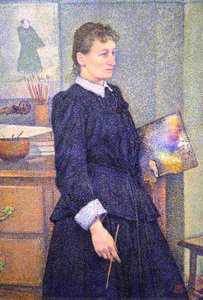

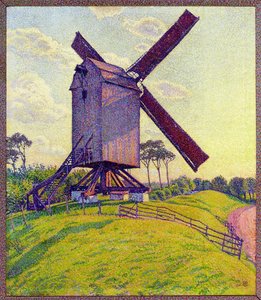


Om kunstneren
Théo van Rysselberghe: En Pioner av Lys – Liv og Kunst
Théophile “Théo” van Rysselberghe, født i Ghent, Belgia i 1862, steg frem som en sentral figur som broget gapet mellom impresjonismen og neo-impresjonismen. Hans reise var ikke én av umiddelbar stilistisk overbevisning, men snarere en utviklende utforsking drevet av reiser, intellektuell utveksling og en vedvarende søken etter å fange lysets essens. Kommer fra en velstående fransk-talende familie, mottok van Rysselberghe sin første kunstneriske opplæring ved Ghents akademi under Theo Canneel, fulgt av studier ved det prestisjetunge Académie Royale des Beaux-Arts i Brussel. Disse formative årene la grunnlaget for ham i tradisjonell realisme, som er tydelig i tidlige verk som *Self-Portrait with Pipe* (1880), preget av dystre toner og nøyaktig detalj – et speilbilde av Belgiens dominerende kunstneriske klima. Likevel, selv innenfor disse tidlige arbeidene dukket det opp en voksende følsomhet for lys og farge, som varslet hans fremtidige bane. Et sentralt verk fra denne perioden, *Child in an Open Spot of the Forest* (1880), markerte et subtilt avvik, som antydet en lysere palett og løsere penselstrøk – en forløsning for hans senere stil.Morokkens Inntrykk og Fødslen av Les XX
En transformativ fase utfoldet seg med van Rysselberghe’s reiser til Marokko mellom 1882 og 1888. Disse utvidede oppholdene fordypte ham i en verden av livlige farger, intenst sollys og eksotiske landskap – en sterk kontrast til de dempede tonene i hans tidligere arbeid. Malerier som *Arabian Street Cobbler* (1882), *Arabian Boy* (1882) og *Resting Guard* (1883) demonstrerer en økende fascinasjon med å fange lysets virkning på form, og beveger seg bort fra streng realisme mot en mer impresjonistisk sanselighet. Den marokkanske opplevelsen var ikke bare visuell observasjon; det var en fordypning i en annen kultur som utvidet hans kunstneriske horisonter og la grunnlag for en livslang kjærlighet til reiser. Ved hjemkomsten til Brussel ble van Rysselberghe en drivkraft i den belgiske kunstscenen, og dannet det innflytelsesrike gruppen *Les XX* (De Tyve) i 1883 sammen med Octave Maus og Émile Verhaeren. Denne kollektivet tjente som en plattform for å vise frem avantgarde kunst, introdusere nye bevegelser som impresjonismen og symbolismen til et belgisk publikum som stort sett var ukjent med slike innovasjoner. *Arabian Phantasia* (1884), et stort format eksotisk maleri, ble hans mest berømte verk fra denne perioden, demonstrerte hans mesterskap i lys og komposisjon.Omfavnelse av Neo-Impresjonisme: En Vitenskapelig Tilnærming til Farge
Det virkelige vendepunktet i van Rysselberghe’s kunstneriske utvikling kom med hans møte med Georges Seurat’s *A Sunday on La Grande Jatte* på åttende impresjonistutstillingen i Paris i 1886. I utgangspunktet skeptisk til Seurats metoder – den systematiske anvendelsen av små, nøye påførte prikker av rene farger for å intensivere opplevelsen av lys – begynte van Rysselberghe gradvis å sette pris på dens vitenskapelige grunnlag og potensial for å oppnå lyseffekter. Han begynte å eksperimentere med divisjonismen, den neo-impresjonistiske metoden for å separere farger i deres sammensatte deler og la betrakters øye blande dem optisk. Dette var ikke bare en teknisk endring; det representerte en fundamental endring i hans tilnærming til maleri – et skifte mot en mer analytisk og objektiv representasjon av lys og farge. Han inngikk nære vennskap med andre neo-impresjonistiske malere som Paul Signac, og reiste med ham langs den franske rivieraen og utvekslet ideer om teknikk og teori. Van Rysselberghe skilte seg ut innenfor bevegelsen ved å anvende divisjonismen ikke bare på landskap, men også på portretter, og skapte slående livlige og psykologisk innsiktsfulle likbilde av sine familie og venner – verk som *Madame Charles Maus* (1890) er et godt eksempel.Utover Divisjonisme: Et Varig Arv
Selv om han var dypt forpliktet til neo-impresjonismen i en betydelig periode, beveget van Rysselberghe seg til slutt utover dens strenge prinsipper på slutten av 1890-tallet. Han søkte større frihet i penselstrøkene og komposisjonene sine. Han fortsatte å være en produktiv kunstner, og arbeidet i forskjellige medier inkludert møbeldesign, bokillustrasjoner og dekorativ kunst. Hans innflytelse utvidet seg langt utenfor Belgia, og påvirket kunstnere som Piet Mondrian og Jan Toorop, som ble inspirert av hans innovative bruk av farge og lys. Van Rysselberghe’s arv ligger ikke bare i hans vakre malerier, men også i hans rolle som en katalysator for kunstendring – en forkjemper for modernismen som hjalp til med å introdusere nye ideer og teknikker til den belgiske kunstscenen. Hans verk er nå beholdt i fremtredende museam samlinger over hele verden, inkludert Musée du Luxembourg i Paris og Museum voor Schone Kunsten i Ghent, og sikrer at hans bidrag til kunsthistorien fortsetter å bli feiret og verdsatt av kommende generasjoner. *Hans dedikasjon til å utforske lysets, fargens og formens samspill etablerte ham som en ekte pioner innen moderne maleri.*Nøkkelord
Neo-Impresjonisme, Belgia, kunst, farge, lys, Les XX, portrett, divisjonisme, modernisme.
Théo van Rysselberghe
1862 - 1926 , Belgia
Kort om kunstneren
- Artistic Movement Or Style: Neo-Impressionisme
- Artists Or Movements Influenced By This Artist:
- Les XX
- Piet Mondrian
- Artists Who Influenced This Artist:
- Georges Seurat
- Paul Signac
- Date Of Birth: 23. november 1862
- Date Of Death: 13. desember 1926
- Full Name: Théophile van Rysselberghe
- Nationality: Belgia
- Notable Artworks:
- Arabian Phantasia
- Sevillan Kvinne
- Place Of Birth: Ghent, Belgia
Relaterte artikler

Rembrandts Mesterverk: Topp 25 Kunstverk for Din Vegg | TopImpressionists.no
Utforsk Rembrandts 25 mest ikoniske kunstverk! Oppdag historiene bak mestermalerier, portretter og bibelske scener fra den nederlandske barokken. Finn museumskvalitets reproduksjoner & interiørinspirasjon på TopImpressionists.com.

Theo van Doesburg: Pioneering De Stijl & the Evolution of Neo-Plasticism
Explore the revolutionary De Stijl movement & Neo-Plasticism with our expert guide. Discover Piet Mondrian, Theo van Doesburg, and the lasting impact of this influential art style. Learn about collecting & investing in De Stijl masterpieces.

Théo van Rysselberghe: Pioneering Belgian Pointillism & the Pursuit of Luminosity
Explore the captivating world of Théo van Rysselberghe, a pioneer of Belgian Neo-Impressionism. Discover his masterpieces, artistic journey, and lasting impact on modern art. Learn more at TopImpressionists.

The Science of Light: Decoding the Optical Precision of Neo-Impressionism
Explore the scientific brilliance of Neo-Impressionism. Discover how masters like Georges Seurat revolutionized art through optical mixing, color theory, and the precision of Pointillism to capture the true essence of light.

Postimpresjonismens 10 Mesterverk: Kunst som Forandret Verden – TopImpressionists.no
Oppdag postimpresjonismens 10 mest ikoniske mesterverk! Van Gogh, Monet, Cézanne og Gauguin – lær historien bak disse fargerike maleriene. Finn museumskvalitets kunsttrykk & inspirasjon til ditt hjem på TopImpressionists.com.
Utforsk kunstverk organisert etter temaer, stiler og kjennetegn.
