

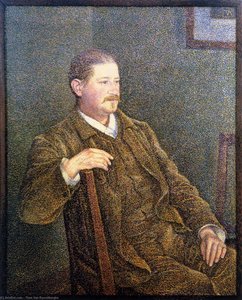
![Self Portrait With Pipe [sketch] — Théo Van Rysselberghe](/media/artworks/images-full/9e/7b/9e7bce3a3cf712911704726cb84ae06e.jpg)
 Forhåndsvisning
 Send
Send Del med andre
 Vis detaljer
 Veiledning

 Last ned bildet
 Liknende objekter
 Røntgenundersøkelse
 Lysbildefremvisning
 Statistikk
Self Portrait with Pipe [sketch]


Explore Théo van Rysselberghe's evocative Self Portrait with Pipe (1880), a seminal Neo-Impressionist masterpiece capturing light and introspection—a cornerstone of Belgian art history.
 Vis hele teksten
Théo van Rysselberghe: En pioner innenfor neo-impressionismen! Fascinerende farger, lys og portretter fra hans reiser til Marokko og Belgia. Utforsk kunstnerens unike stil!
Kjøp et høyoppløselig, forbedret digitalt bilde som er langt bedre enn forhåndsvisningen på nettet.
Hver fil er omhyggelig klargjort av våre egne spesialister ved hjelp av avanserte verktøy og profesjonell manuell retusjering. Vi sørger for at hvert bilde har eksepsjonell klarhet, presis fargegjengivelse og fine detaljer.
Den endelige filen leveres via e-post innen 72 timer, optimalisert for umiddelbar bruk i profesjonelle, redaksjonelle og trykte miljøer. Dette er den samme kvaliteten som benyttes av ledende designstudioer, utgivere og gallerier.
Digitalt bilde
Last ned en høyoppløselig fil for personlig bruk, utskrift og kreative prosjekter. ( Bytt til trykk Kjøp håndlaget maleri)
Inkludert i alle bestillinger av digitale bilder
Ekspert digital levering, garantert
Når du velger TopImpressionists.com, får du ikke bare et bilde – du mottar et profesjonelt forbedret digitalt kunstverk, skapt med presisjon og med en garantert tilfredshetsgaranti. Her er alt som automatisk følger med din bestilling:

Rask digital levering
Din høyoppløselige digitale bildefil sendes til din e-post innen 72 timer etter bestilling – klar til umiddelbar bruk.

KI-forbedret digital fil
Ditt kunstverk blir profesjonelt optimalisert ved hjelp av avanserte AI-verktøy og manuell redigering, noe som sikrer maksimal detaljrikdom, klarhet og fargegjengivelse.

Gratis livslang nyutlevering
Har du ved et uhell slettet eller mistet filen din? Ingen bekymring – vi sender den på nytt når som helst, helt gratis.

Ingen importavgifter – noen gang
Nyt ditt kunstverk umiddelbart uten toll, avgifter eller leveringskostnader – digitale nedlastinger er alltid avgiftsfrie.

Garantert fargenøyaktighet
Vi sikrer at ditt digitale bilde gjenspeiler de originale fargene så nøyaktig som mulig ved hjelp av profesjonelle verktøy og fargehåndtering.

100 dagers tilfredshetsgaranti
Hvis du ikke er fornøyd med ditt digitale bilde, vil vi revidere det eller refundere 100% innen 100 dager – uten spørsmål.

100% Penggaranti
Ikke fornøyd? Få full refusjon innen 100 dager etter at du har mottatt din digitale fil – uten spørsmål.

Rabatt ved storkjøp
Kjøp 3 bilder, spar 10% - Kjøp 5, spar 15% - Kjøp 10+, spar 20%. Ideelt for kreative prosjekter, gallerier og byråer.
A Quiet Contemplation Captured in Light
In the intimate stillness of 1880, Theo van Rysselberghe captured more than just his own likeness; he captured a moment of profound psychological depth. In his Self Portrait with Pipe [sketch], the artist presents us with an earnest, unblinking gaze that bridges the gap between the canvas and the observer. Seated indoors, the subject is enveloped in an atmosphere of quiet introspection, where every detail—from the subtle texture of his attire to the steady presence of his pipe—serves to deepen the narrative of a man lost in thought. This is not merely a study of a face, but an invitation into the artist's inner sanctum, offering a window into the contemplative soul that would later define much of the Neo-Impressionist movement.
The technical mastery displayed in this early work hints at the revolutionary path van Rysselberghe was destined to tread. While his later fame rests upon the scientific precision of pointillism, this piece showcases a remarkable command of oil on canvas and a burgeoning sensitivity to light. The artist utilizes a meticulous approach reminiscent of the cloisonné technique, applying layers that create a rich, textural landscape of shadow and luminosity. Through a subdued palette, he achieves a sense of serene melancholy, using harmonious tones to build a composition that feels both physically grounded and spiritually ethereal. For the discerning collector or interior designer, this painting offers a sophisticated anchor for any space, providing a focal point that commands attention through subtlety rather than spectacle.
Symbolism and the Spirit of an Era
Beyond the visual surface, the artwork is steeped in the intellectual currents of late 19th-century Belgium. The inclusion of the pipe is far from incidental; it acts as a potent symbol of philosophical engagement, solitude, and the slow, deliberate passage of time. It represents the intellectual pursuit that characterized the era's burgeoning interest in psychology and self-awareness. As the viewer meets the artist's direct gaze, the pipe becomes a companion in thought, suggesting that the act of looking is itself an act of deep reflection.
Historically, this work emerges from a period of intense artistic experimentation. As van Rysselberghe moved away from the fleeting impressions of his predecessors toward a more structured exploration of color theory, this sketch stands as a vital precursor to his mature style. It embodies the tension between traditional realism and the scientific advancements in optical research that were beginning to reshape the art world. To possess a reproduction of this piece is to hold a fragment of art history—a moment where the weight of tradition meets the dawn of modern perception, making it an exquisite addition to any curated collection seeking both historical gravity and timeless emotional resonance.
Lignende kunstverk



Om kunstneren
Théo van Rysselberghe: En Pioner av Lys – Liv og Kunst
Théophile “Théo” van Rysselberghe, født i Ghent, Belgia i 1862, steg frem som en sentral figur som broget gapet mellom impresjonismen og neo-impresjonismen. Hans reise var ikke én av umiddelbar stilistisk overbevisning, men snarere en utviklende utforsking drevet av reiser, intellektuell utveksling og en vedvarende søken etter å fange lysets essens. Kommer fra en velstående fransk-talende familie, mottok van Rysselberghe sin første kunstneriske opplæring ved Ghents akademi under Theo Canneel, fulgt av studier ved det prestisjetunge Académie Royale des Beaux-Arts i Brussel. Disse formative årene la grunnlaget for ham i tradisjonell realisme, som er tydelig i tidlige verk som *Self-Portrait with Pipe* (1880), preget av dystre toner og nøyaktig detalj – et speilbilde av Belgiens dominerende kunstneriske klima. Likevel, selv innenfor disse tidlige arbeidene dukket det opp en voksende følsomhet for lys og farge, som varslet hans fremtidige bane. Et sentralt verk fra denne perioden, *Child in an Open Spot of the Forest* (1880), markerte et subtilt avvik, som antydet en lysere palett og løsere penselstrøk – en forløsning for hans senere stil.Morokkens Inntrykk og Fødslen av Les XX
En transformativ fase utfoldet seg med van Rysselberghe’s reiser til Marokko mellom 1882 og 1888. Disse utvidede oppholdene fordypte ham i en verden av livlige farger, intenst sollys og eksotiske landskap – en sterk kontrast til de dempede tonene i hans tidligere arbeid. Malerier som *Arabian Street Cobbler* (1882), *Arabian Boy* (1882) og *Resting Guard* (1883) demonstrerer en økende fascinasjon med å fange lysets virkning på form, og beveger seg bort fra streng realisme mot en mer impresjonistisk sanselighet. Den marokkanske opplevelsen var ikke bare visuell observasjon; det var en fordypning i en annen kultur som utvidet hans kunstneriske horisonter og la grunnlag for en livslang kjærlighet til reiser. Ved hjemkomsten til Brussel ble van Rysselberghe en drivkraft i den belgiske kunstscenen, og dannet det innflytelsesrike gruppen *Les XX* (De Tyve) i 1883 sammen med Octave Maus og Émile Verhaeren. Denne kollektivet tjente som en plattform for å vise frem avantgarde kunst, introdusere nye bevegelser som impresjonismen og symbolismen til et belgisk publikum som stort sett var ukjent med slike innovasjoner. *Arabian Phantasia* (1884), et stort format eksotisk maleri, ble hans mest berømte verk fra denne perioden, demonstrerte hans mesterskap i lys og komposisjon.Omfavnelse av Neo-Impresjonisme: En Vitenskapelig Tilnærming til Farge
Det virkelige vendepunktet i van Rysselberghe’s kunstneriske utvikling kom med hans møte med Georges Seurat’s *A Sunday on La Grande Jatte* på åttende impresjonistutstillingen i Paris i 1886. I utgangspunktet skeptisk til Seurats metoder – den systematiske anvendelsen av små, nøye påførte prikker av rene farger for å intensivere opplevelsen av lys – begynte van Rysselberghe gradvis å sette pris på dens vitenskapelige grunnlag og potensial for å oppnå lyseffekter. Han begynte å eksperimentere med divisjonismen, den neo-impresjonistiske metoden for å separere farger i deres sammensatte deler og la betrakters øye blande dem optisk. Dette var ikke bare en teknisk endring; det representerte en fundamental endring i hans tilnærming til maleri – et skifte mot en mer analytisk og objektiv representasjon av lys og farge. Han inngikk nære vennskap med andre neo-impresjonistiske malere som Paul Signac, og reiste med ham langs den franske rivieraen og utvekslet ideer om teknikk og teori. Van Rysselberghe skilte seg ut innenfor bevegelsen ved å anvende divisjonismen ikke bare på landskap, men også på portretter, og skapte slående livlige og psykologisk innsiktsfulle likbilde av sine familie og venner – verk som *Madame Charles Maus* (1890) er et godt eksempel.Utover Divisjonisme: Et Varig Arv
Selv om han var dypt forpliktet til neo-impresjonismen i en betydelig periode, beveget van Rysselberghe seg til slutt utover dens strenge prinsipper på slutten av 1890-tallet. Han søkte større frihet i penselstrøkene og komposisjonene sine. Han fortsatte å være en produktiv kunstner, og arbeidet i forskjellige medier inkludert møbeldesign, bokillustrasjoner og dekorativ kunst. Hans innflytelse utvidet seg langt utenfor Belgia, og påvirket kunstnere som Piet Mondrian og Jan Toorop, som ble inspirert av hans innovative bruk av farge og lys. Van Rysselberghe’s arv ligger ikke bare i hans vakre malerier, men også i hans rolle som en katalysator for kunstendring – en forkjemper for modernismen som hjalp til med å introdusere nye ideer og teknikker til den belgiske kunstscenen. Hans verk er nå beholdt i fremtredende museam samlinger over hele verden, inkludert Musée du Luxembourg i Paris og Museum voor Schone Kunsten i Ghent, og sikrer at hans bidrag til kunsthistorien fortsetter å bli feiret og verdsatt av kommende generasjoner. *Hans dedikasjon til å utforske lysets, fargens og formens samspill etablerte ham som en ekte pioner innen moderne maleri.*Nøkkelord
Neo-Impresjonisme, Belgia, kunst, farge, lys, Les XX, portrett, divisjonisme, modernisme.
Théo van Rysselberghe
1862 - 1926 , Belgia
Kort om kunstneren
- Artistic Movement Or Style: Neo-Impressionisme
- Artists Or Movements Influenced By This Artist:
- Les XX
- Piet Mondrian
- Artists Who Influenced This Artist:
- Georges Seurat
- Paul Signac
- Date Of Birth: 23. november 1862
- Date Of Death: 13. desember 1926
- Full Name: Théophile van Rysselberghe
- Nationality: Belgia
- Notable Artworks:
- Arabian Phantasia
- Sevillan Kvinne
- Place Of Birth: Ghent, Belgia