


 Se i rommet
 Del som digitalt kort
 Del
Del
 Detaljer
 Studentguide

 Last ned
 Liknende objekter
 Røntgen
 Lysbildefremvisning
 Besøksstatistikk
The Recitation


Explore 'The Recitation' by Thomas Wilmer Dewing – a melancholic Impressionist painting of two women in a serene landscape. Discover its layered texture & evocative mood.
 Les mer
Oppdag de stemningsfulle tonalistmaleriene til Thomas Wilmer Dewing (1851-1938). Kjent for sine vakre portretter av aristokratiske kvinner og drømmende scener, var Dewing en sentral figur i amerikansk estetisisme og grunnlegger av The Ten.
Giclée / Kunsttrykk
Giclée- eller lerretsprint av museumskvalitet med rask produksjon og fleksible valgmuligheter for etterbehandling. ( Bestill håndmalt reproduksjon Gå til digitalt bilde)




P118B Nkr10

P118H Nkr10

P118W Nkr10

P438Z Nkr10

P508JH Nkr12

P508YH Nkr12

P805H Nkr10

P805Z Nkr10

P919BZ Nkr10

P919G Nkr10

P919XJ Nkr10

P959ZH Nkr10

P968JZ Nkr12

W106C Nkr8

W218G Nkr10

W218JH Nkr8

W218Y Nkr10

W307PJ Nkr10

W316G Nkr10

W316PJ Nkr8

W316Y Nkr10

W398PJ Nkr8

W4111J Nkr10

W500HY Nkr15

W500JH Nkr15

W692G Nkr12

W849H Nkr8

W940BG Nkr15

W953PJ Nkr8




Standardformat
tilpasset
CM
INCH
Velg mellom våre forhåndsdefinerte størrelser som bevarer kunstverkets opprinnelige proporsjoner.
Loading sizes...

bredde
høyde
Skriv inn bredden og høyden du trenger, slik at den passer til din ramme eller vegg. Et trykk kan kun beskjæres, aldri gjøres større enn bildet, så et format med en annen form vil miste en del av motivet. Vi sender deg en digital mockup for godkjenning før vi trykker noe som helst. Bildet som vises på denne siden viser ikke den faktiske beskjæringen — det er kun mockuppen som gjør det.
Verdensomspennende levering () på 2 uker i stedet for standard 4/5 uker. (25 October)

Gratis ekspressfrakt over hele verden

Lerretsduk av høykvalitets lin

Full transportforsikring

Garanti for refusjon av toll og importavgifter

Garantert fargeekthet

100 dagers returrett ved fabrikasjonsfeil

100% pengene tilbake-garanti

Mengderabatt
 Glassalternativet er kun tilgjengelig i størrelser under 110 cm

The Recitation
Giclée / Kunsttrykk
Format på reproduksjon
-


Totalpris
Nkr 656
A Symphony of Silence: The Essence of The Recitation
In the quietude of Thomas Wilmer Dewing’s 1891 masterpiece, The Recitation, viewers are invited into a world where time seems to suspend itself. This quintessential example of Tonalist painting transcends a mere depiction of two women in an outdoor setting; it is a profound exploration of mood and atmosphere. The scene unfolds with a gentle, melancholic grace, presenting a woman dressed in black seated prominently in the foreground, while another figure stands slightly behind her, her gaze lost toward the distant horizon. There is a palpable sense of stillness here, an invitation to step away from the clamor of the modern world and enter a space of pure, uninterrupted contemplation.
The emotional weight of the piece is carried by Dewing’s masterful use of color and light. The palette is dominated by a harmonious range of muted greens—from delicate pale celadon to deeper, more somber olive shades. These tones do not merely decorate the landscape; they breathe life into the atmosphere, imbuing the environment with a serenity that is tinged with a subtle, haunting melancholy. The lighting is soft and diffused, casting a gentle glow across the figures without the intrusion of harsh shadows, which further enhances the dreamlike, ethereal quality of the moment.
Technique and the Tonalist Vision
To behold The Recitation is to witness the meticulous skill of an artist deeply rooted in the English Aesthetic tradition. Dewing employs a technique characterized by the layering of thin glazes of oil paint onto the canvas, a process that builds a rich texture and an incredible sense of depth. His brushwork, while appearing loose and expressive, serves a deliberate purpose: to capture the fleeting nuances of light and shadow that define the Tonalist style. This approach allows for a soft, organic blurring of shapes, where lines are not sharply delineated but rather emerge from the atmospheric haze.
This painterly method creates an illusionistic depth that feels remarkably immersive. The texture appears layered and complex, inviting the eye to wander through the lush greenery and settle upon the subtle gradations of color. For the collector or interior designer, this technique offers a sophisticated visual richness; the painting does not demand attention through jarring contrasts but rather commands it through a steady, captivating presence that complements a refined and tranquil interior space.
Symbolism and the Human Experience
Beyond its aesthetic beauty, The Recitation serves as a poignant meditation on solitude and the inner life. The posture of the seated woman—calm, yet deeply absorbed in her own thoughts—suggests a deliberate retreat from external distractions. There is a beautiful tension in the composition between the two figures; the distance between them can be interpreted as a symbol of emotional separation or perhaps an unfulfilled longing. As one figure gazes toward the unreachable horizon, the painting touches upon themes of introspection and the human desire to connect with something beyond the immediate present.
This work stands as a testament to the power of art to capture the intangible. It is a piece that speaks to the soul, offering a sense of peace and a reminder of the beauty found in quiet moments of reflection. Whether viewed as a historical triumph of the American Tonalist movement or as a timeless portrait of human emotion, The Recitation remains an evocative masterpiece, perfect for those who seek to surround themselves with art that inspires deep thought and emotional resonance.
Spørsmål og svar
Hvilken bruk og hvilket rom anbefales for "The Recitation" av Thomas Wilmer Dewing?
Bruk (Accent) og plass (Living Room) er de to anbefalingene som er oppgitt for "The Recitation" av Thomas Wilmer Dewing.
Hvor anbefales det å stille ut Panoramic-formatet av "The Recitation"?
Format (Panoramic) og anbefalt rom (Living Room) er de to plasseringsegenskapene som er registrert for "The Recitation" av Thomas Wilmer Dewing.
Hva er formatet på "The Recitation"?
"The Recitation" av Thomas Wilmer Dewing har et Panoramic-format. Formatet beskriver komposisjonens proporsjoner.
Relaterte kunstverk


Kunstnerbiografi
Tidlig liv og kunstnerisk utdannelse
Thomas Wilmer Dewing, født 4. mai 1851 i Boston, Massachusetts, representerer en særskilt stemme innen amerikansk malerkunst på slutten av 1800-tallet og begynnelsen av 1900-tallet. Hans kunstneriske reise startet ikke med pensel og lerret, men med en læreplass i litografi. Denne tidlige erfaringen ga ham et solid teknisk fundament, men det var hans senere studier ved Académie Julian i Paris, fra 1887, som virkelig formet hans stilistiske utvikling. Under veiledning av Gustave Boulanger og Jules Lefebvre fordypet Dewing seg i den akademiske tradisjonen, samtidig som han begynte å utforske de subtile nyansene i tonalismen.
Tonalismens mester: Stil og karakteristiske verk
Dewings navn er uløselig knyttet til tonalismen – en kunstretning som fremhevet atmosfære, stemning og fargeharmoni over detaljert representasjon. Inspirert av engelsk estetisisme skapte han malerier preget av drømmeaktige landskap og portretter av aristokratiske kvinner. Disse kvinnene var sjelden avbildet i dynamisk aktivitet; heller ble de presentert i introspektive øyeblikk, ofte mens de spilte instrumenter eller fordypet seg i tanker. Et sentralt verk fra denne perioden er “Kvinne i svart: Portrett av Maria Oakey Dewing” (1887), et intimt portrett av hans kone, selv en dyktig malerinne med omfattende formell utdannelse. Maleriet vitner om Dewings evne til å fange både ytre likhet og indre liv. Senere kom “Dame i gull” (1912), som nå finnes på Brooklyn Museum, til å bli et ikonisk eksempel på hans mesterskap innen tonalismen, med sin subtile bruk av lys og skygge for å skape en aura av mystikk og eleganse.
Undervisning, fellesskap og innflytelse
Dewing var ikke bare en fremragende maler, men også en engasjert pedagog. Han var medstiftende medlem av The Ten American Painters i 1898 – en gruppe kunstnere som ønsket å bryte med de tradisjonelle salongene og skape et mer uavhengig kunstmiljø. I tillegg underviste han ved Art Students League of New York, hvor han delte sin kunnskap og inspirerte nye generasjoner av malere. Hans tilknytning til Society of Landscape Painters, grunnlagt i 1899, understreket hans posisjon innen tonalistbevegelsen og hans interesse for landskapets poetiske kvaliteter.
Et varig ettermæle: Samlinger og betydning
Selv om Dewings kunstneriske produksjon avtok etter 1920, har hans verk bevart sin appell gjennom tidene. Freer Gallery of Art ved Smithsonian Institution har dedikert et helt rom til hans malerier, noe som vitner om hans betydelige bidrag til amerikansk kunsthistorie. Samlinger som John Gellatly og Charles Lang Freers samlinger inneholder også viktige eksempler på Dewings arbeid. Hans evne til å skape stemningsfulle portretter og landskap har inspirert mange kunstnere, og han regnes i dag som en av de viktigste representantene for tonalismen.
- Se Thomas Wilmer Dewings samling på TopImpressionists
- Mer om Thomas Dewing på Wikipedia
- Utforsk Freer Gallery of Art ved Smithsonian Institution for flere tonalistiske mesterverk.
Senere liv og bortgang
Thomas Wilmer Dewing døde i New York 5. november 1938. Han etterlot seg et rikt kunstnerisk arv, preget av vakre, eteriske portretter som fortsetter å fascinere og inspirere kunstentusiaster over hele verden. Hans malerier er ikke bare visuelt tiltalende; de inviterer betrakteren inn i en drømmeaktig tilstand, hvor stemning og følelser står sentralt.

Thomas Wilmer Dewing
1851 - 1938 , USA
Kort om kunstneren
- Artistic Movement Or Style: Tonalisme, Estetisisme
- Artists Who Influenced This Artist:
- Gustave Boulanger
- Jules Lefebvre
- Date Of Birth: 4. mai 1851
- Date Of Death: 5. november 1938
- Full Name: Thomas Wilmer Dewing
- Nationality: Amerikaner
- Notable Artworks:
- Woman in Black
- Lady in Gold
- Place Of Birth (City And Country): Boston, USA
Relaterte artikler
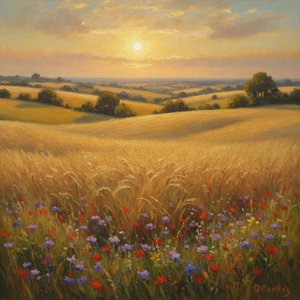
Golden Fields & Sun-Drenched Meadows: Capturing the Soul of Impressionist Landscapes
Immerse yourself in the luminous world of Impressionist landscapes. Discover how masters like Monet and Gauguin captured ephemeral light through plein air painting, and learn to bring the soul of sun-drenched meadows into your home with exquisite, hand-painted oil reproductions.

Capturing the Soul of Nature: A Journey Through the Sublime Majesty of American Romanticism
Explore the breathtaking beauty of American Romanticism. Discover how Hudson River School masters captured the sublime spirit of the wilderness through luminous oil landscapes and emotional depth. A journey into the soul of nature for the true art enthusiast.

Capturing the Soul: The Most Emotionally Moving Impressionist and Post-Impressionist Masterpieces
Discover the profound emotional depth of Impressionist and Post-Impressionist masterpieces. Explore how legends like Monet, Van Gogh, and Gauguin captured light and soul through evocative landscapes and vibrant brushwork for a timeless connection to art history.
Utforsk kunstverk organisert etter temaer, stiler og kjennetegn.