

Shown: · With its frame:
 Forhåndsvisning
 Send
Send Del
Del
 Vis detaljer
 Utskriftsvennlig guide

 Last ned bilde
 Liknende objekter
 Røntgenundersøkelse
 Lysbildefremvisning
 Q&A
Q&A Statistikk

Nkr 2588
Håndlaget oljereproduksjon
Håndmalt olje på lerret i din valgte størrelse og ramme, laget på bestilling av våre kunstnere. ( Bytt til trykk Bytt til digitalt bilde)
Size
·Standardformat
skreddersydd
CM
INCH
Velg mellom våre forhåndsdefinerte størrelser som bevarer kunstverkets opprinnelige proporsjoner.
Loading sizes...

bredde
høyde
Skriv inn ønsket bredde og høyde for å tilpasse bildet til din ramme eller vegg. Siden dette er håndmalt, kan kunstneren male litt mer rundt motivet eller beskjære det noe dersom du velger et annet format — valget er ditt. Vi sender deg en digital mockup til godkjenning før maleriet påbegynnes. Bildet som vises på denne siden representerer ikke det faktiske resultatet — kun mockuppen viser det endelige uttrykket.
 Les mer om dette
Finish
·
White Nkr1

Blurside Nkr1

Extended Nkr1

P118B Nkr10

P118H Nkr10

P118W Nkr10

P438Z Nkr10

P508JH Nkr12

P508YH Nkr12

P805H Nkr10

P805Z Nkr10

P919BZ Nkr10

P919G Nkr10

P919XJ Nkr10

P959ZH Nkr10

P968JZ Nkr12

W106C Nkr8

W218G Nkr10

W218JH Nkr8

W218Y Nkr10

W307PJ Nkr10

W316G Nkr10

W316PJ Nkr8

W316Y Nkr10

W398PJ Nkr8

W4111J Nkr10

W500HY Nkr15

W500JH Nkr15

W692G Nkr12

W849H Nkr8

W940BG Nkr15

W953PJ Nkr8

H24-GOLD Nkr30

H24-SILVER Nkr30

H36-GOLD Nkr45

H36-SILVER Nkr45
Shipped in a protective tube, ready for your own framer.
Above 105 cm the frame is shipped as a kit for a professional framer — read the details.
Extras
optionalWhat do the extras include?
Examples of what can be changed: Replace face with customer photo; Add pet (e.g., replace cat with dog); Include hidden message in background; Change background landscape or elements.
After order, TopImpressionists.com team will email client for instructions and provide a mockup preview
After order, TopImpressionists.com team will email client for instructions and provide a mockup preview
Verdensomspennende levering () på 3–4 uker i stedet for standard 5 uker. (31 October). Ingen kompromisser med kvaliteten.
Beskyttende ferniss
Navneskilt
Detaljer om gravert bronseplate
This elegant plaque features the artist's name and the title of the artwork, finely engraved for a timeless presentation.
It is made from bronze with a refined, elegant finish. The text is precisely laser-engraved for a sharp and permanent result. Measuring 9x2 cm, the plaque is compact yet easy to read. It's built to be durable and scratch-resistant, offering a professional, museum-quality look. Mounting is simple thanks to the included adhesive backing.
Detaljer om gjennomsiktig akrylplate
The plaque includes essential engraved details such as the artist's name, the title of the artwork, the date it was created, the type of media used-like oil on canvas or watercolor-a brief description of the piece, and a QR code that links to the complete artwork information.
It is crafted from clear acrylic, offering a sleek, modern appearance. The text is UV-engraved in black to ensure strong visual contrast. With a size of 10x15 cm, it ensures optimal readability. It comes equipped with two metal hooks for secure wall mounting. The plaque is designed to be weather-resistant, making it suitable for various environments, and it includes interactive features that work seamlessly with smartphone scanning.
Detaljer om plakett i svart akryl
This elegant plaque includes engraved information such as the artist's name, the title of the artwork, the date it was created, the type of media used (like oil on canvas or watercolor), a short description of the artwork, and a QR code for quick access to more information.
The plaque itself is made from refined black acrylic with a premium finish. The text is laser-engraved in white for high contrast and readability. Its size is 10x15 cm, designed to be easy to read. It comes with two metal hooks for professional mounting. The design is sleek and fits any interior style. It is also weather-resistant and durable, with built-in digital integration for mobile compatibility.
Glassalternativet er kun tilgjengelig i størrelser under 110 cm
 Glassalternativet er kun tilgjengelig i størrelser under 110 cm
- Gratis ekspressfrakt over hele verden
- Lerretsduk av lin av høy kvalitet
- Full transportforsikring
- Garanti for refusjon av toll og importavgifter
- Garantert fargegjengivelse
- 100 dagers returrett ved fabrikasjonsfeil
- 100% pengene tilbake-garanti
- Rabatt ved flere kjøp


Beskrivelse av objektet
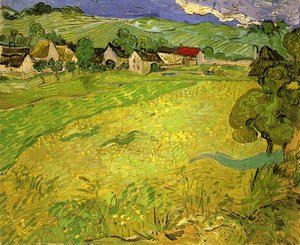
Experience Vincent van Gogh's 'Cottages,' a serene depiction of rural life brimming with vibrant colors and Post-Impressionist charm. A hand-painted reproduction captures the beauty of Dutch countryside.
Om kunstneren
Vincent van Gogh (1853-1890): Utforsk livet og kunsten til den nederlandske postimpresjonistiske mesteren bak 'Stjernenatten' og 'Solsikker'. Oppdag hans dristige stil og varige innvirkning på moderne kunst.
About the painting
Cottages: A Window into Post-Impressionist Tranquility
Vincent van Gogh’s “Cottages,” painted in 1883, isn't merely a depiction of a rural village; it’s an immersive experience—a carefully constructed tableau designed to evoke a profound sense of peace and nostalgia. This oil on canvas, residing within the broader series exploring peasant life, offers a glimpse into Van Gogh’s evolving artistic vision during a pivotal period in his career. The scene unfolds with a quiet dignity: humble cottages, their thatched roofs blending seamlessly with the surrounding greenery, nestled beneath a serene sky. It's a landscape imbued with a palpable sense of warmth and community, yet simultaneously tinged with a subtle melancholy—a characteristic hallmark of Van Gogh’s mature style.
The painting’s genesis lies within the burgeoning Post-Impressionist movement, an era defined by artists seeking to move beyond the fleeting impressions of light and color favored by their predecessors. Post-Impressionism wasn't a rigid school but rather a diverse collection of artists—including Van Gogh himself, Paul Cézanne, Paul Gauguin, and Georges Seurat—who experimented with subjective expression, symbolic content, and emotional depth. Van Gogh’s “Cottages” exemplifies this shift; he abandons the purely observational approach of earlier Impressionists, instead layering his own feelings and interpretations onto the scene. The vibrant yellows dominating the cottages aren't simply a representation of color but rather convey warmth, light, and perhaps even a hint of optimism—a deliberate choice to imbue the humble dwellings with an aura of comfort and security.
The Language of Color and Texture
Van Gogh’s distinctive technique is immediately apparent. He employs thick, impasto brushstrokes – literally building up layers of paint directly onto the canvas – creating a tactile surface that invites close inspection. The individual strokes are visible, contributing to the painting's dynamism and energy. Notice how he uses short, broken lines to depict the thatched roofs, suggesting their texture and movement in the breeze. The greens and blues of the landscape aren’t blended smoothly; instead, they’re applied with a sense of urgency, conveying a feeling of vitality and growth. This deliberate manipulation of color and texture is central to Van Gogh's expressive style—a means of communicating not just what he *saw*, but how he *felt* about what he saw.
The composition itself is carefully considered. The cottages are arranged in a loose, asymmetrical grouping, creating a sense of visual interest and preventing the scene from feeling static. A few figures—likely peasants engaged in daily tasks—are scattered throughout the landscape, adding to the painting’s narrative quality. These figures aren't idealized or romanticized; they appear as ordinary people going about their lives, contributing to the overall sense of authenticity and realism.
Symbolism and Emotional Resonance
Beyond its visual appeal, “Cottages” is rich in symbolism. The humble cottages represent a connection to rural life, a theme that was increasingly important to Van Gogh during this period. He saw in these simple dwellings a sense of stability and community—a stark contrast to the alienation and uncertainty he often experienced in urban environments. The sky, painted in shades of blue and grey, suggests both tranquility and melancholy – reflecting the artist’s own complex emotional state. The presence of animals, likely dogs, adds another layer of meaning, symbolizing loyalty, companionship, and a connection to nature.
Van Gogh's fascination with rural life stemmed from his desire to understand the lives of ordinary people—particularly the working class. He believed that art should serve as a means of social commentary, offering insights into the experiences of those often overlooked by society. “Cottages” is therefore not just a pretty picture; it’s a poignant meditation on themes of poverty, community, and the beauty of the natural world.
Bringing "Cottages" Home: A Hand-Painted Reproduction
At TopImpressionists.com, we are proud to offer meticulously hand-painted oil reproductions of Van Gogh's “Cottages,” capturing the essence of this iconic artwork with unparalleled detail and authenticity. Our skilled artists utilize only the finest materials—traditional oil paints on archival canvas—to faithfully recreate every brushstroke, color nuance, and textural element of the original. Each reproduction is a testament to our commitment to preserving Van Gogh’s legacy and making his art accessible to collectors and admirers worldwide.
Whether you're an avid art collector, an interior designer seeking to add a touch of Post-Impressionist charm to your home, or simply someone who appreciates the beauty of Van Gogh’s work, our hand-painted reproduction of “Cottages” offers a unique opportunity to own a piece of art history. Explore our collection and discover how you can bring this timeless masterpiece into your life today. Special offer on oil paintings.
Spørsmål og svar
Er bildet av "Cottages" av Vincent Van Gogh i det frie domene?
Opphavsrettslig status for "Cottages" av Vincent Van Gogh: verket er fritt tilgjengelig – opphavsretten har utløpt. Dette avgjør om det er tillatt å lage frie reproduksjoner av bildet.
Hvilken plassering passer best til formatet på "Cottages" av Vincent Van Gogh?
Landscape-formatet til "Cottages" av Vincent Van Gogh anbefales for et Living Room. Format og romfølelse fungerer sammen som en veiledning for plassering av en reproduksjon.
Hvor mye lys ser fargene i "Cottages" ut til å reflektere?
Luminansen som er registrert for "Cottages" av Vincent Van Gogh, er Soft Shadow.
Quick facts and art quiz
About Vincent Van Gogh

Vincent Van Gogh
1853 - 1890, Nederland
Om kunstneren
Et liv malt med lidenskap: Vincent van Gogh
Vincent Willem van Gogh, et navn synonymt med levende farger og rå emosjoner, forblir en av de mest gjenkjennelige og elskede skikkelsene i kunsthistorien. Han ble født 30. mars 1853 i Zundert i Nederland, og hans reise fra en urolig ung mann på søken etter mening til en kunstnerisk visjonær er en gripende fortelling om dedikasjon, kamp og, til slutt, en evigvarende arv. Selv om han oppnådde lite kommersiell suksess i sin levetid – med salget av kun ett maleri, Den røde vinmark, før sin død – er Van Goghs innvirkning på moderne kunst umålelig; han banet vei for ekspresjonismen og påvirket utallige kunstnere som fulgte etter ham. Hans historie handler ikke bare om penselstrøk og lerreter; det er et vitnesbyrd om menneskelig uttrykksevne i møte med motgang.
De tidlige år og den kunstneriske oppvåkningen
Van Goghs tidlige liv var preget av en rekke uoppfylte ambisjoner. Han prøvde seg på ulike yrker – som kunsthandler, lærer og til og med misjonær – før han endelig viet seg til malerkunsten i en relativt sen alder av 27 år. Disse tidlige erfaringene formet hans verdensbilde dypt og fant veien inn i kunsten hans. Hans første verk, som skildret scener fra bondelivet på den belgiske landsbygda, reflekterer en dyp empati for arbeiderklassen og en dyster palett som speilet deres harde kår. Inspirert av kunstnere som Jean-François Millet, søkte Van Gogh å fange verdigheten og motstandskraften til disse menneskene gjennom en rå realisme. Det var imidlertid flyttingen til Paris i 1886 som viste seg å være transformativ. Der kom han i kontakt med impresjonismen og postimpresjonismen, og absorberte teknikkene til mestre som Monet, Renoir og Pissarro. Denne eksponeringen utvidet hans kunstneriske horisont og førte ham til å eksperimentere med lysere farger og løsere penselstrøk, selv om han beholdt en distinkt emosjonell intensitet som manglet hos mange av hans samtidige. Hans bror Theo, som var kunsthandler, spilte en avgjørende rolle i denne perioden ved å tilby økonomisk støtte og fungere som et livsviktig bindeledd til den parisiske kunstverdenen. Deres omfattende korrespondanse gir uvurderlig innsikt i Van Goghs kunstneriske utvikling og personlige kamper.
Det sørlige lyset og eksplosiv kreativitet
I søken etter et mer levende landskap og en følelse av fornyelse, flyttet Van Gogh til Arles i Sør-Frankrike i 1888. Denne flyttingen markerte en periode med intens kreativ produksjon, preget av en eksplosjon av farger og en særegen impasto-teknikk – der malingen påføres tykt på lerretet for å skape en teksturert overflate som virker å pulsere av energi. Det var her han skapte noen av sine mest ikoniske verk: Solblomster, Nattkafeen og Stjernenatten. Det intense sollyset i Provence så ut til å tenne hans fantasi, noe som førte til at han fremstilte landskap og stilleben med en uovertruffen vitalitet. Hans ønske om kunstnerisk samarbeid førte til at han inviterte Paul Gauguin til Arles, i håp om å etablere en utopisk kunstnerkoloni. Forholdet mellom dem viste seg imidlertid å være ustabilt, og kulminerte i en dramatisk konfrontasjon som resulterte i at Van Gogh mutilerte sitt eget øre. Denne hendelsen understreket skjørheten i hans mentale tilstand og markerte begynnelsen på en periode med institusjonalisering og økende psykisk lidelse.
De senere år og en evigvarende arv
Etter sitt sammenbrudd ble Van Gogh frivillig innlagt på et asyl i Saint-Rémy, hvor han fortsatte å male produktivt og fanget de omkringliggende landskapene med både skjønnhet og uro. Verk som Stjernenatten, malt i denne perioden, er gjennemsyret av en følelse av kosmisk undring og dyp emosjonell dybde. Han flyttet senere til Auvers-sur-Oise under pleie av Dr. Paul Gachet, men kampene vedvarte. Den 29. juli 1890, i en alder av 37 år, døde Van Gogh tragisk av et selvpåført skuddsår. Til tross for at han oppnådde lite anerkjennelse i sin levetid, begynte arbeidet hans å vinne posthum berømmelse, i stor grad takket være den utrettelige innsatsen til hans svigerinne, Johanna van Gogh-Bonger, som arvet boet og viet sitt liv til å fremme hans kunst. I dag feires Van Goghs malerier over hele verden for sin emosjonelle intensitet, sine innovative teknikker og sin tidløse skjønnhet. Hans arv strekker seg langt utover lerretet; han har blitt et symbol på kunstnerisk lidenskap, utholdenhet i møte med motgang, og kunstens kraft til å uttrykke de dypeste menneskelige følelser.
Viktige påvirkninger og kunstnerisk utvikling
- Tidlig realisme: Jean-François Millets skildringer av bondelivet påvirket Van Goghs tidlige verk.
- Impresjonisme og postimpresjonisme: Møtet med Monet, Renoir, Pissarro og andre i Paris utvidet hans palett og teknikk.
- Japanske tretrykk: Van Gogh ble dypt påvirket av japanske tresnitt, som han samlet ivrig på. Deres dristige komposisjoner og flate fargefelt preget hans egen stil.
- Emosjonelt uttrykk: Fremfor alt søkte Van Gogh å formidle følelser gjennom sin kunst, der han prioriterte den subjektive opplevelsen over objektiv representasjon. Dette fokuset på emosjonell intensitet ble et definerende trekk ved hans arbeid og banet vei for ekspresjonismen.
Quick facts about Vincent Van Gogh
- Artistic Movement Or Style: Post-Impressionisme
- Artists Or Movements Influenced By This Artist:
- Expressionisme
- Fauvisme
- Artists Who Influenced This Artist:
- Rembrandt
- Millet
- Date Of Birth: 30 mars 1853
- Date Of Death: 29 juli 1890
- Full Name: Vincent Willem van Gogh
- Nationality: Nederlands
- Notable Artworks:
- Potetspiserne
- Solblomster
- Stjernekvelds nat
- Place Of Birth: Zundert, Nederland
Lignende kunstverk



Utforsk kunstverk organisert etter temaer, stiler og kjennetegn.


Vincent Van Gogh
Cottages
() ·
With its frame: · Hand-painted in oil on linen
Total